Plot Explained Spoilers guaranteed!
Plot Explained

Browse by genre

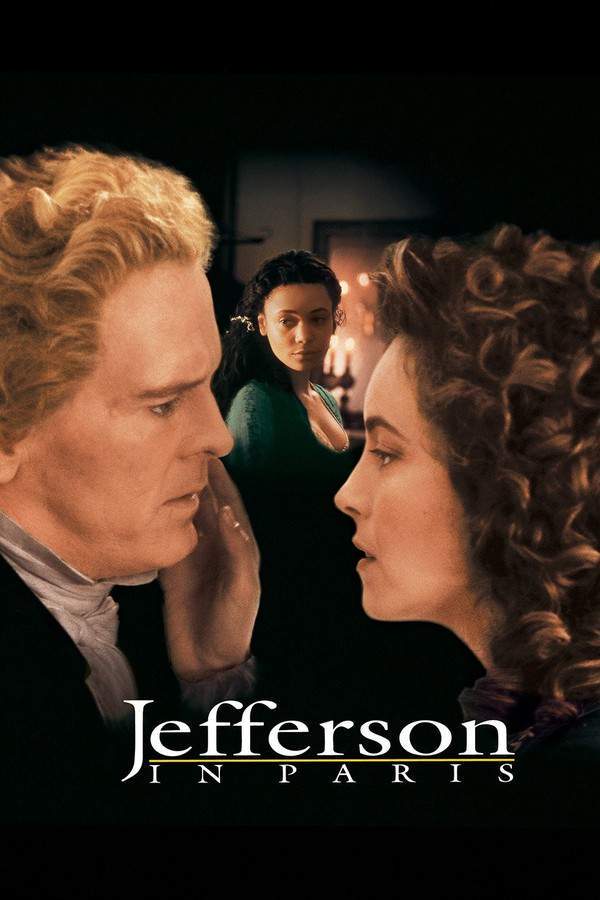
Jefferson in Paris (1995) movie poster

Plot Summary

Jefferson in Paris (1995) Plot Summary Explained

Release, runtime and language
1995 · 139 min · English
Loading streaming availability…
Directed by
James Ivory
Starring
Nick Nolte

While serving as the American ambassador to France in the 1780s, Thomas Jefferson, still mourning his wife, becomes entangled in a passionate relationship with artist Maria Cosway. His personal life is further complicated by the arrival of his daughter and her enslaved companion, Sally Hemings. Navigating the lavish world of 18th-century Paris, Jefferson must reconcile his duties, his desires, and the challenging realities of love, family, and the societal constraints of the era.

On this page (6)
  1. 1 Where to watch
  2. 2 What happens: full plot
  3. 3 Plot questions answered
  4. 4 Movie threads
  5. 5 Movies like Jefferson in Paris
  6. 6 Every angle
Loading streaming availability…

Full plot summary · contains spoilers

What Happens in Jefferson in Paris: Full Plot Summary

The whole story of Jefferson in Paris (1995) explained, from the opening scene to the final frame: every key event, every twist and what it all adds up to. Read it as a quick recap before the sequel, to check a scene you missed, or to finally understand what really happened.

An understated yet captivating portrayal of historical events featuring an exceptional cast, Jefferson in Paris showcases the significant years from 1784 to 1789, when the American actor Nick Nolte embodies Thomas Jefferson, the United States Minister to France during the early days of the French Revolution.

The narrative begins decades later in the Midwest, where a journalist ventures far and wide to interview Madison Hemings, Jefferson’s wayward son, played by James Earl Jones. Madison shares poignant insights, highlighting that Jefferson died in financial ruin, with his mother Sally and uncle James revealing their connections to Jefferson’s late wife, Martha.

While the film does not depict it, we learn that John Wales, Jefferson's father-in-law, was a Virginia slave trader and prominent statesman who left Jefferson his estate and slaves upon his passing in 1773. Furthermore, Jefferson and Martha had six children, yet only two daughters lived into adulthood.

Upon arriving in Paris, Jefferson takes his eldest surviving daughter, Martha "Patsy" Jefferson, portrayed by Gwyneth Paltrow, and enrolls her in a Catholic academy for girls. Despite being Protestant, Patsy is allowed to maintain her beliefs and integrity among her peers.

Throughout his time in Europe, Jefferson grapples with a debt-ridden Congress and significant financial obligations due to French military aid during the American Revolution. He mingles with influential figures like the adversarial British Ambassador, played by Anthony Valentine, and the regal King Louis XVI (Michael Lonsdale) and Queen Marie Antoinette (Charlotte de Turckheim). Amidst this, he seeks loans from Dutch bankers to sustain the American government.

The film uses the extravagant costumes and rituals of the French elite, creating a satire that illustrates Jefferson's role as a key player in shaping America's history. This makes the film an excellent educational piece for high school and college students, challenging them to look beyond the superficialities of aristocratic life to focus on the substantial political victories and shortcomings.

The stark disparity between the opulent French elite and the struggling common people is highlighted, as peasants face starvation amidst the king and queen's luxurious existence. While Jefferson is in Paris, tensions rise with the onset of the French Revolution.

James Hemings, portrayed by Seth Gilliam, is an educated slave and Jefferson's manservant who works alongside skilled chefs in Jefferson’s kitchen. His introduction to distilled spirits, initially rejected due to his financial constraints, becomes a turning point in his life in France—a land where slavery has no place. Jefferson's encouragement leads James to seek compensation, as he realizes that he is not bound by the same laws that restrict his education back in America.

Patsy, like her father, falls into a gloomy state of homesickness and beseeches Jefferson to bring their younger daughter Polly to Paris. When Polly (Estelle Eonnet) arrives, she is accompanied by Jefferson’s teenage slave and maidservant, Sally Hemings, played by Thandy Newton.

Through Nick Nolte's remarkable performance, Thomas Jefferson emerges as a dynamic statesman plagued by personal struggles. His romantic entanglement with Maria Cosway, the wife of a nobleman (played by Simon Callow), adds complexity to his character. Jefferson's adventurous spirit leads him to a minor injury during a horseback ride, which serves as a metaphor for his tumultuous life.

Director James Ivory offers an intimate glimpse into Jefferson's psyche, portraying him as a widower wrestling with despair, with emotional pain beautifully captured on screen. The tender bond between him and Sally Hemings evolves, hinting at an undeniable affection nurtured by their shared experiences.

As the narrative unfolds, confrontations arise among the various women in Jefferson's life, adding to the film’s depth. Despite being a story with heavy themes like slavery, polygamy, and unacknowledged lineage, Jefferson faces these issues with a sense of courage and charisma.

At a pivotal moment, when confronted with Sally’s pregnancy by her brother James, Jefferson calls upon his daughter Patsy to witness his solemn promise to emancipate them eventually upon their return to Virginia, thereby raising the dramatic stakes.

The film concludes with updates about Jefferson’s political journey and his controversial relationship with Sally Hemings, a relationship not fully explored onscreen but crucial for understanding the context of his life.

It's significant to note that following his return to Virginia in 1789 with his daughters and slaves, Jefferson was invited by President Washington to join his Cabinet as Secretary of State, a role he embraced from 1790 to 1793. His political endeavors continued with a presidential campaign in 1796, and despite losing to John Adams, he became Vice President until he eventually secured the presidency in 1801.

Jefferson’s leadership marked the inclusion of new states while advocating against slavery in the territories. He also facilitated the Louisiana Purchase, dramatically expanding the United States' land holdings. Serving as president for two terms, he was a peaceful yet assertive leader who handled foreign threats decisively.

Standing nearly 6 foot 3 inches tall, Jefferson was an imposing figure whose intellect and physical presence commanded respect among allies and adversaries alike. Biographer James Parton once noted that Jefferson possessed an exceptional skill set, capable of numerous trades and talents, which are echoed throughout Nolte’s portrayal.

Jefferson in Paris ultimately paints Jefferson not just as a political figure but as a complex human being, whose personal imperfections juxtapose his revolutionary ideals and his significant role in American history. He represents a blend of elegance and simplicity, merging diplomacy and powerful rhetoric, all while leaving a lasting legacy as the principal author of The Declaration of Independence. Indeed, the film’s stunning visuals capture his renowned calligraphy skills, showcasing his brilliance both on and off the page.
Last updated: November 03, 2024 at 12:56

Was this helpful?

Plot questions answered

Jefferson in Paris Plot Explained: Your Questions Answered

The questions people ask most about Jefferson in Paris (1995): what happens in the confusing scenes, why the characters do what they do, the twists, hidden details and what the ending means. Each answer contains spoilers.

Q1

Why does Thomas Jefferson begin a relationship with Maria Cosway?

Jefferson, still mourning his late wife Martha, finds himself emotionally vulnerable while living in Paris as the American ambassador. Maria Cosway, the wife of a nobleman, becomes a source of comfort and connection during this lonely period. Their romantic entanglement develops through shared cultural interests and emotional intimacy, with Jefferson's minor injury during a horseback ride serving as a pivotal moment that brings them closer.

  • maria cosway
  • romance
  • thomas jefferson
  • paris
  • emotional vulnerability
Q2

What changes for James Hemings while in France?

James Hemings, Jefferson's educated slave, experiences a transformative period in France where slavery is not legally recognized. Working alongside skilled French chefs in Jefferson's kitchen, he gains exposure to a society that does not practice slavery. This experience empowers him to recognize that he is not bound by the same restrictions he faced in America, leading him to seek compensation for his labor, a significant turning point in his personal awakening.

  • james hemings
  • slave
  • france
  • freedom
  • compensation
  • transformation
Q3

Why does Sally Hemings come to Paris?

Sally Hemings accompanies Polly Jefferson to Paris when Polly is brought from Virginia to join her father and sister. As Jefferson's teenage slave and maidservant, Sally's arrival marks the beginning of her direct presence in Jefferson's household during his diplomatic mission. This reunion sets the stage for the complex relationship that develops between them.

  • sally hemings
  • paris
  • polly jefferson
  • slave
  • arrival
Q4

What promise does Jefferson make to Sally Hemings?

When Sally reveals she is pregnant by her brother James, Jefferson calls upon his daughter Patsy to witness a solemn promise: he will eventually emancipate Sally and their children upon their return to Virginia. This pivotal moment forces Jefferson to confront the moral contradictions between his abolitionist ideals and his status as a slave owner, raising the dramatic stakes of the entire narrative.

  • emancipation
  • promise
  • sally hemings
  • pregnancy
  • virginia
  • freedom
Q5

Why is Jefferson struggling financially in Paris?

Jefferson faces significant financial difficulties because Congress is deeply in debt, and he bears the burden of obligations related to French military aid during the American Revolution. To sustain the American government, he must seek loans from Dutch bankers while managing his personal expenses. This financial strain creates constant tension throughout his diplomatic mission.

  • debt
  • finances
  • paris
  • dutch bankers
  • congress
  • american revolution
Q6

Why does Patsy Jefferson want Polly to come to Paris?

Patsy experiences profound homesickness while living in Paris, feeling isolated and far from family. Like her father, she falls into a gloomy state and beseeches Jefferson to bring their younger daughter Polly to Paris. This request highlights the emotional toll of living abroad on the Jefferson family and their longing for unity and familiarity.

  • patsy jefferson
  • homesickness
  • polly
  • paris
  • daughter
  • family
Q7

What is the purpose of the opening interview with Madison Hemings?

The film opens with a journalist in the Midwest interviewing Madison Hemings, Jefferson's son, who provides retrospective context about Jefferson's life. Madison reveals that Jefferson died in financial ruin and that his mother Sally and uncle James had connections to Jefferson's late wife Martha. This framing device establishes the historical significance and personal complexity of Jefferson's story while foreshadowing the themes of unacknowledged lineage and family secrets.

  • madison hemings
  • interview
  • framing
  • historical context
  • legacy
Q8

How does the French Revolution affect Jefferson's stay in Paris?

While Jefferson is in Paris, tensions rise dramatically as the French Revolution begins to unfold. The film highlights the stark disparity between the opulent French elite, including King Louis XVI and Queen Marie Antoinette, and the struggling common people facing starvation. These events create a volatile backdrop to Jefferson's diplomatic mission and ultimately prompt his departure from France in 1789.

  • french revolution
  • louis xvi
  • marie antoinette
  • paris
  • revolution
  • tension
Q9

Why does Jefferson send Patsy to a Catholic academy?

Upon settling in Paris, Jefferson enrolls his eldest daughter Martha (Patsy) in a Catholic academy for girls, prioritizing her education despite her Protestant background. The school allows her to maintain her religious beliefs while receiving instruction in a foreign culture. This decision reflects Jefferson's strong commitment to his daughter's education and well-being, even if it means placing her in an environment with different religious traditions.

  • patsy jefferson
  • catholic academy
  • education
  • paris
  • protestant
Q10

How does Jefferson's relationship with Sally Hemings develop?

The film depicts a tender bond evolving between Jefferson and Sally Hemings as they share experiences in Paris. Their relationship develops from the employer-slave dynamic into something more intimate, with the film hinting at undeniable affection. Director James Ivory portrays this connection as an undeniable aspect of Jefferson's personal life, adding complexity to his character as both a statesman and a flawed human being.

  • sally hemings
  • relationship
  • affection
  • thomas jefferson
  • paris
  • intimacy

Movie threads

More Movies Like Jefferson in Paris, by Mood & Story

Curated lists built around what makes Jefferson in Paris tick: the same mood, the same kind of story or the same emotional payoff. Each list explains why these movies belong together.

Biographical Dramas of Moral Complexity like Jefferson in Paris

Stories where famous historical figures face personal and political turmoil. This section features movies like Jefferson in Paris, focusing on biographical dramas where historical figures navigate complex personal dilemmas and political duties. If you enjoyed the intimate portrait of a founding father's private struggles, you'll find similar stories of leadership, legacy, and moral compromise here.

  • historical
  • reflective
  • oppressive
  • melancholic
  • intimate
  • political
  • Tone: melancholic, reflective
  • Pacing: slow, deliberate
Why these movies?

The story pattern: The narrative pattern follows a celebrated individual through a pivotal period, often highlighting a conflict between their public persona and private desires or moral failings. The journey typically involves political intrigue, complicated relationships, and a bittersweet reckoning with the legacy of their choices.

Why they belong together: Movies are grouped here for their shared focus on biographical historical dramas with a melancholic tone, heavy emotional weight, and a central theme of moral contradiction. They offer a slow-paced, reflective look at the human flaws behind iconic figures.

Movies with Forbidden Romance in Historical Settings like Jefferson in Paris

Passionate affairs that bloom within the strict confines of high society. Discover films similar to Jefferson in Paris that feature forbidden romance set within the ornate constraints of historical high society. If you liked the story of Thomas Jefferson's complicated relationships in Paris, you'll find more tales of passionate, taboo love affairs amidst political and social turmoil.

  • forbidden romance
  • historical
  • oppressive
  • melancholic
  • intimate
  • bittersweet
  • Tone: melancholic, romantic, oppressive
  • Pacing: slow, intimate
Why these movies?

The story pattern: The story unfolds within a lavish but restrictive setting, where a powerful or prominent character engages in a romance that challenges social norms, class boundaries, or political allegiances. The central conflict arises from the impossible choice between public duty and private desire, often resulting in secrecy, sacrifice, and emotional fallout.

Why they belong together: These movies share a core theme of forbidden love set against a historical backdrop, combined with a slow, melancholic pace and a bittersweet emotional resolution. The experience is defined by the clash between opulent settings and the painful constraints of societal expectations.

If you liked this

Movies Like Jefferson in Paris

Similar movies to Jefferson in Paris: the same genre, themes or kind of story. Each one comes with its own plot summary, timeline and ending explained.

Browse all movie summaries

Every angle

Jefferson in Paris (1995) Explained: Plot, Timeline & Characters

Everything about Jefferson in Paris in one place: what happens in the plot summary, the timeline in chronological order, the characters and meaning and a spoiler-free summary. What's After the Movie adds the cast, box office and post-credit scenes.

Coming soon on iOS and Android

The Plot Explained Movie Summary App

Plot summaries, endings explained and timelines on your phone. Catch up on any movie in minutes, save your favorites and never miss a twist again.

Be the first to know when we launch. Your email stays private, always.

Learn more about the app