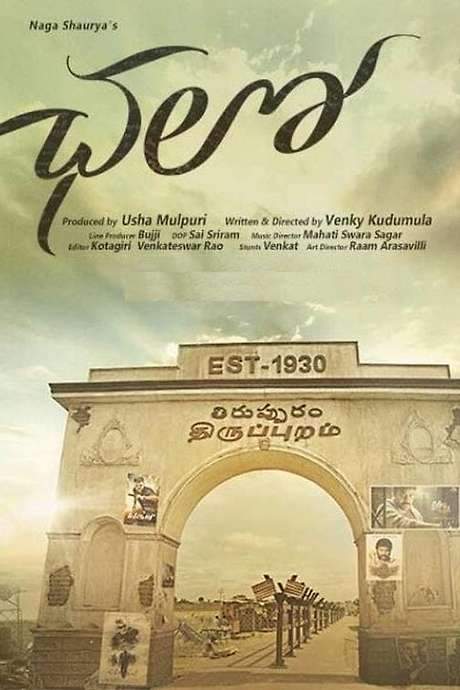
Thirty years ago, a phone call shocks Veerabhadran when he learns that Indrasimhan is being released from jail, a man who had killed Veerabhadran's father. Driven by revenge, Indrasimhan heads out to finish what he started. Meanwhile, Narasimhan, Indrasimhan's elder brother, urges him to strike Veerabhadran down, arguing that he too lost his wife and child to Veerabhadran's kin. In a fierce confrontation between Indrasimhan and Veerabhadran, Indrasimhan is slain and Veerabhadran is left gravely injured. When Veerabhadran returns home, his wife Sumithra fights fear as rivals close in on them, threatening their safety and their young son. Veerabhadran ultimately dies from blood loss, and Sumithra flees the village with their child, carrying the weight of a violent past. In the aftermath, Narasimhan convinces his two sons, Suryasimhan and Chandrasimhan, to kill Veerabhadran's son on arrival, setting in motion a cycle of vengeance that spans generations.
Fast forward to Pune, where Raman—a rice mill worker—drives goods around on a battered bicycle. A blustery rebuke from the factory owner costs him his job, so he decides to buy an Auto Rickshaw to keep his livelihood intact. To reclaim what his parents invested for him before their deaths, Raman heads to his ancestral village, Ramapuram. On the train, he befriends Krishnendu, Narasimhan's daughter, and they share a growing sense of camaraderie during the journey. Upon arriving home, Raman trails Krishnendu to return a forgotten book, and his path crosses with Narasimhan and his son Suryasimhan in a temple. They warmly welcome him as a guest, and Raman learns that Krishnendu is the fiancée of Rajeev, a doctor settled in America, adding a layer of complexity to the unfolding drama.
Over a family lunch, a grave revelation arrives: Suryasimhan discloses that Raman is Veerabhadran's son, igniting the house’s vigilante code—no drop of blood may fall inside the home, lest the goddess turn evil. Raman realizes the danger and begins to maneuver carefully, using every possible ruse to stay alive within the confines of the house. The next day, while everyone attends Rajeev and Krishnendu's engagement, Raman seizes the moment to slip away as his pursuers close in. He locks [Suryasimhan] in a room and escapes, but the chase is far from over; doors and windows are battered as [Chandrasimhan] and his gang grow more determined to end Raman’s life.
Amid the tension, Krishnendu confesses to Rajeev that her heart belongs to Raman, not to the arranged future with Rajeev. Rajeev consoles [Narasimhan] about Raman and Krishnendu’s bond, but the elder man cannot help his anger, and a blow is dealt on him as the conflict thickens. Raman and Krishna reconnect on a bridge, where she proposes elopement, and she realizes that Raman’s fear is the relic of Narasimhan’s vengeful past. As Narasimhan and his sons converge with a gang, the siege to eliminate Raman intensifies. They torment him with brutal force, and just as Raman stands on the brink of death, Krishna leaps into the river, desperate to save him.
Raman rescues Krishna from the danger, and Narasimhan’s sons hesitate, choosing not to finish the act. The salvation moment shifts the balance: Narasimhan steps in and halts his sons, sparing Raman, and the family’s thirst for revenge begins to soften. In the end, the former enmities fade, and Raman and Krishna find a path to union. The closing credits emphasize a gentle transformation: Narasimhan’s mother urges him and his son to vow never to harm or wield weapons again. The film closes with Raman and Krishna riding away together on a bicycle, symbolizing a fragile peace and a new beginning.