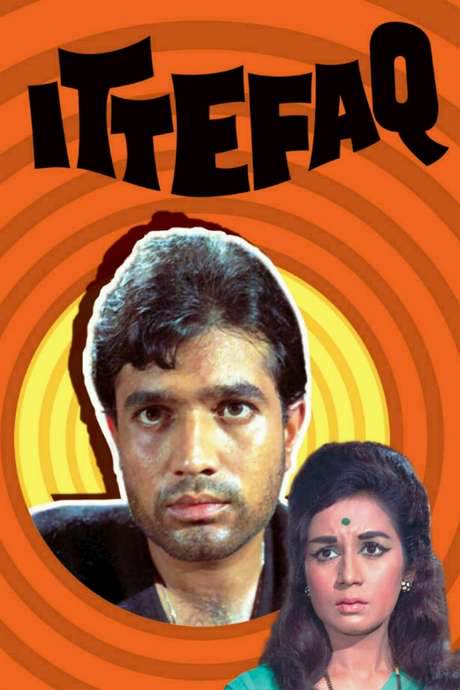
Year: 1969
Runtime: 104 mins
Language: Hindi
Director: Yash Chopra
Taking place almost entirely over the course of one stormy night, a woman is terrified when an accused murderer escapes from a mental hospital and seeks refuge in her home.
Warning: spoilers below!
Haven’t seen Ittefaq yet? This summary contains major spoilers. Bookmark the page, watch the movie, and come back for the full breakdown. If you're ready, scroll on and relive the story!
Explore the full timeline and setting of Ittefaq (1969). Follow every major event in chronological order and see how the environment shapes the story, characters, and dramatic tension.
Last updated: October 04, 2025 at 14:32
Meet the key characters of Ittefaq (1969), with detailed profiles, motivations, and roles in the plot. Understand their emotional journeys and what they reveal about the film’s deeper themes.
Last updated: October 04, 2025 at 14:32
Explore the central themes of Ittefaq (1969), from psychological, social, and emotional dimensions to philosophical messages. Understand what the film is really saying beneath the surface.
Last updated: October 04, 2025 at 14:32
Browse frequently asked questions about Ittefaq (1969) focused on characters, relationships, themes, symbols, setting, and story context. This movie info FAQ gives spoiler-aware explanations for character arcs, world details, and thematic interpretation so readers can better understand what the film is really about.
The movie takes place in a modern urban wealthy metropolitan area. Most of the action unfolds in Rekha's house and Dilip's house during a stormy night that traps the characters indoors. A hospital and police precinct provide the procedural backdrop, while Calcutta is mentioned as a distant connection to Rekha's husband.
Ittefaq is set in the contemporary era, though no specific year is given. The modern urban setting reflects 1960s Indian metropolitan life with access to mental hospitals, police procedures, and wealthy neighborhoods.
The film centers on conflicting narratives where memory gaps, evasions, and insinuations create uncertainty about who killed Sushma. Each character's account invites doubt, transforming deduction into a tense game of interpretation. The final reveal forces a reassessment of what really happened and who bears the guilt.
Dr. Trivedi's clinical evaluation places Dilip under psychological scrutiny, turning the mind into a crime-solving tool. The hospital setting frames behavior as data, influencing perceptions of innocence and culpability. The psychological insight shapes the trial and audience beliefs, while exposing how professionals can be drawn into dramatic machinations.
Love and betrayal entangle Rekha with others in the investigation, complicating motive and loyalty. Her affair with Inspector Diwan reveals a dangerous nexus of desire and deception. Rekha's actions catalyze violence and tragedy, driving the plot toward a fatal reckoning as guilt pervades the characters and relationships fracture under pressure.
Dilip Roy is a passionate painter who suddenly finds himself the prime suspect after his wife's death. He battles rage, memory loss, and a stubborn sense of injustice as the investigation closes in. His volatile temperament and incomplete recall of the fateful night propel the dramatic tension.
Rekha is a wealthy socialite who shelters Dilip during his flight from authorities. She becomes entangled in secrets, including an affair with Inspector Diwan. Her actions are driven by self-preservation and guilt, making her both alluring and dangerous as the investigation peels back her layers of vulnerability and calculation.
Dr. Trivedi is the psychologist who evaluates Dilip and recommends extended hospitalization. His clinical analysis provides a lens on Dilip's memory gaps and emotional volatility, shaping how guilt and innocence are interpreted. His observations become a tool for the story's tension and a weapon in the dramatic machinations.
Inspector Diwan is a policeman who moves in Rekha's social orbit. His past visits to her and possible collusion with her cast doubt on his reliability. He embodies the tension between authority and secrecy, with his actions proving pivotal to the plot's shifting loyalties and twists.
Renu is Sushma's sister who initially appears to be merely a witness in the case. As the investigation progresses, she is gradually revealed as the true killer of Sushma, driven by hidden motives and family tensions that emerge through the narrative's unfolding.
Inspector Karwe is the methodical investigator who uncovers crucial evidence that ultimately clears Dilip and points to the real killer. His systematic approach contrasts with the emotional drama surrounding the other characters, providing a moral counterweight to the story's chaos.
Ittefaq features a dominantly tense tone driven by suspense and constant audience uncertainty about who to trust. The single stormy night setting creates a confined, claustrophobic environment that intensifies psychological pressure. The atmosphere prioritizes grim realism over humor or romance, with emotional weight dealing directly with murder, infidelity, suicide, and severe psychological distress.
Ittefaq unfolds almost entirely over the course of one stormy night, creating fast-paced storytelling with rapid-fire revelations. The narrative is complex, featuring multiple murders, an unreliable protagonist with memory issues, shifting accusations, and a final twist that recontextualizes the initial crime. The ending is mixed, the protagonist is exonerated but this comes after another character's suicide and revelation of betrayal, leaving a somber residue.
Discover curated groups of movies connected by mood, themes, and story style. Browse collections built around emotion, atmosphere, and narrative focus to easily find films that match what you feel like watching right now.
High-stakes psychological battles confined to one location and a ticking clock.If you liked the high-tension, single-night setting of Ittefaq, explore more movies that use a compressed timeline and confined space to create unbearable suspense. These stories feature characters trapped with imminent danger, leading to rapid psychological unraveling and shocking twists.
The narrative pattern involves a confined setting, a limited timeframe (often a single night), and a central crisis that forces characters to their psychological limits. Secrets are exposed under pressure, allegiances shift rapidly, and the plot progresses through a series of tense discoveries rather than expansive action.
Movies are grouped here for their shared use of temporal and spatial constraints to generate extreme tension. They prioritize a fast pace, high intensity, and a feeling of claustrophobia, making the viewer feel as trapped and desperate as the characters.
Stories where perception is distorted and the truth is a shifting target.Fans of Ittefaq's complex web of deception and shifting accusations will enjoy these movies where the truth is elusive. These films feature characters whose testimony is questionable, forcing the audience to piece together a puzzle from conflicting perspectives, often culminating in a major revalation.
The narrative journey is defined by doubt and re-evaluation. Information is presented through a potentially biased or compromised lens, forcing the audience to actively question what they see. The plot typically involves a central crime or mystery, but the investigation is as much about the characters' psyches as it is about forensic evidence, leading to a final twist that recontextualizes everything.
These films are connected by their core focus on subjective reality and moral ambiguity. They share a complex narrative structure, a heavy emotional weight dealing with betrayal and psychological distress, and a tone that is consistently tense and unsettling as the viewer's certainty is systematically dismantled.
Don't stop at just watching - explore Ittefaq in full detail. From the complete plot summary and scene-by-scene timeline to character breakdowns, thematic analysis, and a deep dive into the ending - every page helps you truly understand what Ittefaq is all about. Plus, discover what's next after the movie.
Read a complete plot summary of Ittefaq, including all key story points, character arcs, and turning points. This in-depth recap is ideal for understanding the narrative structure or reviewing what happened in the movie.
Track the full timeline of Ittefaq with every major event arranged chronologically. Perfect for decoding non-linear storytelling, flashbacks, or parallel narratives with a clear scene-by-scene breakdown.
Discover movies like Ittefaq that share similar genres, themes, and storytelling elements. Whether you’re drawn to the atmosphere, character arcs, or plot structure, these curated recommendations will help you explore more films you’ll love.
Ittefaq (1969) Plot Summary & Movie Recap
Ittefaq (1969) Scene-by-Scene Movie Timeline
Ittefaq (1969) Spoiler-Free Summary & Key Flow
Movies Like Ittefaq – Similar Titles You’ll Enjoy
Talaash (2012) Full Summary & Key Details
Ittefaq (2017) Full Summary & Key Details
Khamoshh… Khauff Ki Raat (2005) Spoiler-Packed Plot Recap
Aggar (2007) Movie Recap & Themes
In Pursuit (2001) Detailed Story Recap
Qayamat: City Under Threat (2003) Plot Summary & Ending Explained
Yakeen (2005) Movie Recap & Themes
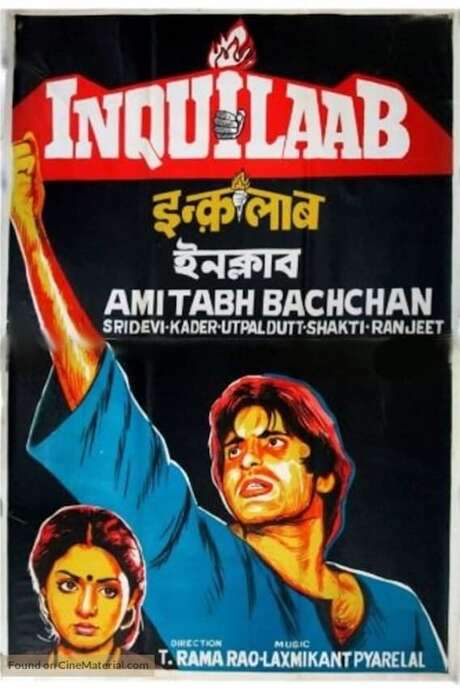
Inquilaab (1984) Full Summary & Key Details
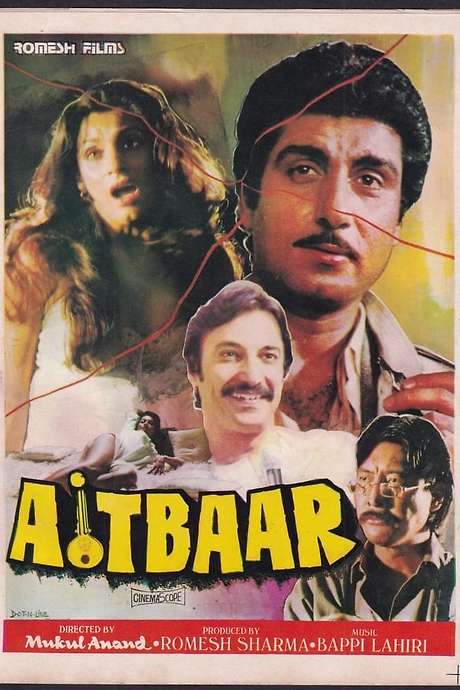
Aitbaar (1985) Detailed Story Recap
Chehre (2021) Movie Recap & Themes
Iratta (2023) Story Summary & Characters
Benaam (1974) Story Summary & Characters
Majboor (1974) Full Summary & Key Details
Teesri Manzil (1966) Plot Summary & Ending Explained
Visfot (2024) Complete Plot Breakdown