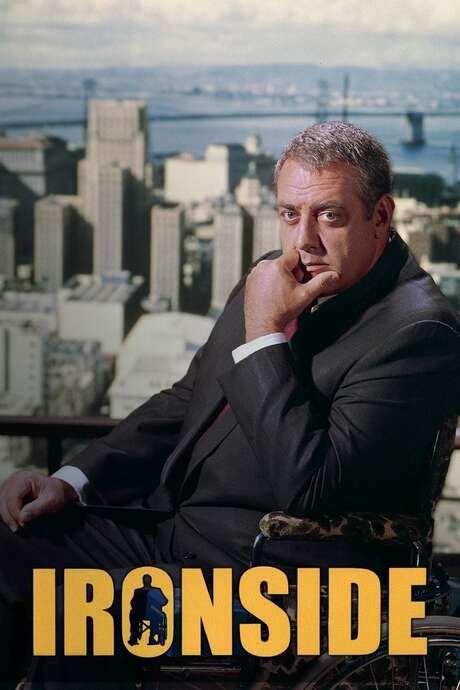
The series centers on former San Francisco Police Department Chief of Detectives Robert T. Ironside, Raymond Burr, a Navy veteran and widower who, after a sniper’s bullet paralyzes him from the waist down, relies on a wheelchair to continue serving the city he loves. In the pilot television movie, Ironside demonstrates remarkable resilience and ingenuity, stepping into a groundbreaking role as a “special department consultant.” He achieves this by staging a press conference and persuading Police Commissioner Dennis Randall, Gene Lyons, to meet his unconventional terms. By the end of the pilot, Ironside not only solves the ambush that changed his life but also seeds a new team, requesting Ed Brown and Eve Whitfield to be his private law enforcement squad, forging a partnership built on trust, wit, and tenacity. Don Galloway embodies Det. Sgt. Ed Brown, a tough yet loyal ally, while Barbara Anderson brings a keen sense of morality and charm to Eve Whitfield, the plainclothes officer who becomes an indispensable part of Ironside’s operation.
The heart of the show lies in Ironside’s cerebral approach to crime-solving. Rather than rely on brute force, he leverages strategy, observation, and a deep understanding of people to crack cases that might baffle others. His private squad includes a mix of seasoned policing and personal insight, with Ed Brown providing procedural heft and Eve Whitfield offering street-level flair and compassion. The dynamic between Ironside and his team evolves as they encounter a range of suspects, allies, and moral dilemmas, all set against a backdrop of a bustling San Francisco precinct.
A key early element is Ironside’s headquarters: a fourth-floor room that serves as living space, office, and command post within the old Hall of Justice, the building that houses the city’s police headquarters. This intimate setting underscores Ironside’s resourcefulness and the way he repurposes what’s around him to pursue justice. On the road to solving cases, Ironside sometimes brings in Mark Sanger, Don Mitchell, a suspect who ultimately joins the team and grows into an important assistant role. Sanger’s arc—from opposition to partnership—helps illustrate Ironside’s ability to see potential in people others overlook.
To tackle investigations, Ironside relies on a small but highly capable setup. He acquires a specially equipped, former fleet-modified Ford patrol wagon—an eye-catching, bulletproof-glasstopped vehicle with a high-performance V-8 engine—that becomes a symbol of his unconventional methods and independence. The show even features a dramatic moment when this vehicle is destroyed during a scheme to outwit a corrupt sheriff in the episode “Poole’s Paradise.” After that, the team moves to a different, even more compact transport: a custom, one-ton Ford Econoline Window Van from 1969, reflecting the show’s ongoing commitment to practical, inventive crime-fighting gear.
As the series progressed, Ironside’s persona—gruff yet good-hearted, principled, and relentlessly curious—helped the show find its footing with audiences. The NBC run stretched to seven-and-a-half seasons, drawing solid audience engagement and critical note for its emphasis on intellect over violence. The show also developed a distinctive in-between-life cycle: as NBC aired its final season and faced midseason counts, Universal packaged earlier episodes for syndication under a separate banner, The Raymond Burr Show, a creative attempt to differentiate network broadcasts from syndicated reruns. When the network canceled the series, the syndicated episodes eventually returned to the Ironside title, signaling the enduring appeal of the character and the investigative approach that defined the program.
In supporting roles, the cast contributed memorable textures to Ironside’s world. Stuart Margolin appears in News Show Staff capacity in some episodes, while other familiar faces, including Wally Cox as a Scoutmaster, add color to Ironside’s San Francisco. The ensemble work—grounded by Burr’s steady presence and the strong chemistry with Brown and Whitfield—helps the series strike a balance between sharp procedural plotting and character-driven storytelling. The setting, the unconventional team, and Ironside’s resilient spirit combine to make the show a landmark in television crime drama, a careful blend of intellect, empathy, and determination that invites viewers to ride along as mysteries unfold and justice is pursued with patience and ingenuity.