Plot Explained Spoilers guaranteed!
Plot Explained

Browse by genre

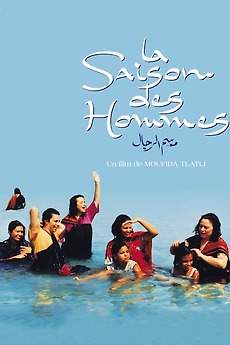
Inch’Allah dimanche (2001) movie poster

Plot Summary

Inch’Allah dimanche (2001) Plot Summary Explained

Release, runtime and language
2001 · 98 mins · Arabic
Directed by
Yamina Benguigui
Starring
Jalil Lespert, Mathilde Seigner, Marie-France Pisier, Zinedine Soualem, Roger Dumas, Rabia Mokeddem

Zouina departs her native country with her three children to reunite with a husband who has spent ten years in France. Confronted by an alien culture, she endures the tyrannical control of her mother‑in‑law and her husband’s lingering bitterness and distrust, battling the weight of old‑world traditions while coping with exile, striving to build a life.

On this page (4)
  1. 1 What happens: full plot
  2. 2 Plot questions answered
  3. 3 Movie threads
  4. 4 Every angle

Full plot summary · contains spoilers

What Happens in Inch’Allah dimanche: Full Plot Summary

The whole story of Inch’Allah dimanche (2001) explained, from the opening scene to the final frame: every key event, every twist and what it all adds up to. Read it as a quick recap before the sequel, to check a scene you missed, or to finally understand what really happened.

Zouina, Fejria Deliba, sees her life upend when Ahmed leaves Algeria in the 1970s to work in France. Under the 1974 Family Reunification law, passed by Prime Minister Jacques Chirac, Zouina is allowed to join her husband in France. She leaves her mother behind, and together with her mother-in-law, Aïcha and their three children, the family makes the journey to a new life in a country whose customs feel unfamiliar and at times harsh.

The move marks the start of a difficult adjustment. Life in France brings language barriers, cultural gaps, and a sense of isolation as Zouina tries to carve out a place for herself. She becomes a prisoner to the tightening grip of Aïcha and to Ahmed’s failures to shield and protect her, a tension that threads through daily routines and small acts of hope. The new home holds both fragments of welcome and signs of alienation, as neighbors circle in and out, offering help or judgment in equal measure. Among the people who orbit Zouina’s world are Mr. Donze and Mrs. Donze, neighbors who become a mirror for the tension between belonging and estrangement.

On Sundays, when Ahmed routinely takes his mother out for the day, Zouina and the children are left to wander the unfamiliar streets in search of a familiar face or a shared memory of Algeria. The quest to reconnect with another Algerian family becomes a beacon of possible kinship and true human contact, a beacon that shines after several tense weeks of waiting. Eventually, Zouina finds a family that seems to offer the warmth she’s been missing, but that fragile connection is swiftly severed by rejection, echoing the sense of being torn away from the life she knew and the new life she’s trying to build.

This journey unfolds as a hard-won education in resilience. Zouina discovers her own inner strength, drawing courage from the women around her who increasingly form a network of support. The community of women she encounters provides a sense of home and belonging that had been missing, a solace reinforced by conversations on radio programs like Ménie Grégoire. Through these voices, Zouina glimpses a space where feminist dialogue can flourish, offering new ideas and a sense of agency that transcends the daily grind of adaptation. The story threads together immigration, cultural contrast, family duty, and the slow building of self-reliance, painting a portrait of a woman finding steadiness amid upheaval and, in the process, redefining what it means to belong in a place far from where she began.

Last updated: February 20, 2026 at 18:45

Was this helpful?

Plot questions answered

Inch’Allah dimanche Plot Explained: Your Questions Answered

The questions people ask most about Inch’Allah dimanche (2001): what happens in the confusing scenes, why the characters do what they do, the twists, hidden details and what the ending means. Each answer contains spoilers.

Q1

Why doesn't Ahmed protect Zouina from his mother-in-law?

Ahmed fails to protect Zouina from Aïcha's tyranny because he is emotionally disconnected and overwhelmed by his own struggles in France. After ten years apart, the marriage bond has weakened, and he seems paralyzed between his loyalty to his mother and his duty to his wife. Rather than intervening, he withdraws further, routinely escaping by taking his mother out on Sundays, leaving Zouina alone to endure the oppressive household dynamics.

Foreshadowing: Earlier scenes show Ahmed's distance immediately upon arrival, hinting at his inability to bridge the gap between the two women in his life.

  • Ahmed
  • Aïcha
  • protection
  • marriage
  • control
Q2

Why does the found Algerian family reject Zouina?

The Algerian family rejects Zouina and her children because they represent a painful reminder of the homeland they too left behind. Connecting with another Algerian family forces them to confront their own displacement and grief. Their rejection reflects the broader theme that belonging in exile is fragile, every attempt to reconnect risks reopening old wounds of loss and alienation.

Foreshadowing: The search itself is marked by tension and uncertainty from the start, showing that hope for connection is always precarious in the immigrant experience.

  • rejection
  • Algerian family
  • immigration
  • belonging
Q3

What does the title "Inch'Allah dimanche" mean and represent?

"Inch'Allah dimanche" means "God willing, Sunday" in Arabic. The title refers to the recurring Sundays when Ahmed takes his mother out, granting Zouina temporary freedom to search for connection. It represents hope for a better life and the constant waiting immigrant women endure, hoping for liberation, for community, for belonging. The phrase carries both resignation and faith in eventual change.

Foreshadowing: The title establishes early on that Sundays hold special significance, marking them as the only moments of autonomy in Zouina's constrained life.

  • title meaning
  • Inch'Allah
  • dimanche
  • sunday
  • hope
Q4

How does Zouina find inner strength after being rejected?

After the rejection, Zouina discovers resilience she didn't know she possessed. The disappointment forces her to look inward rather than outward for validation. She learns to trust her own judgment, advocates for herself within the household, and begins to define her worth beyond her roles as wife and mother. This internal shift marks her transition from passive victim to active agent in her own life.

Foreshadowing: Her earlier attempts to find connection were acts of courage that foreshadowed this deeper self-discovery.

  • strength
  • resilience
  • self-discovery
  • growth
  • rejection
Q5

Why is Aïcha so controlling over Zouina?

Aïcha exerts tyranny over Zouina because she views her daughter-in-law as a threat to her own authority within the household. Having dominated Ahmed for years, she sees Zouina's arrival as a challenge to her position. Additionally, Aïcha channels her own displacement and loss onto controlling what she can, namely, the household and its rules. Her dominance is a coping mechanism for feeling powerless in a foreign country.

Foreshadowing: Early scenes show Aïcha asserting control over simple household decisions, establishing her need for domination from the start.

  • Aïcha
  • control
  • mother-in-law
  • power
  • household
Q6

What is the Family Reunification law and why is it important?

The Family Reunification law of 1974, passed under Prime Minister Jacques Chirac, allows family members of foreign workers to join them in France. This law is the narrative catalyst that enables Zouina to leave Algeria and reunite with Ahmed. It represents both opportunity and peril, the law promises reunion but ultimately brings Zouina into a situation where she faces new forms of imprisonment under her mother-in-law's control and cultural isolation.

Foreshadowing: The film's opening explicitly names this law, framing it as the turning point that sets Zouina's difficult journey in motion.

  • Family Reunification law
  • 1974
  • Chirac
  • immigration
  • legal
Q7

How do the radio shows like Ménie Grégoire help Zouina?

Radio talk shows like Ménie Grégoire provide Zouina with feminist dialogue that validates her struggles. The discussions encourage women to articulate their rights and desires, offering ideas about agency and self-worth that she hasn't previously encountered. These programs become a window to a world where women's voices matter, providing intellectual and emotional support that helps her gradually claim her own voice and sense of empowerment.

Foreshadowing: Zouina is shown listening to the radio during moments of isolation, suggesting these programs are a consistent source of comfort and insight.

  • radio
  • Ménie Grégoire
  • feminist
  • dialogue
  • empowerment
Q8

What is the significance of the Sunday routine in the film?

On Sundays, Ahmed takes his mother out for the day, temporarily freeing Zouina from domestic control. This routine becomes crucial because it provides the only regular opportunity for Zouina and her children to explore their neighborhood and seek connection with other Algerian families. The Sunday outings represent both freedom and desperation, they are the sole windows of possibility in an otherwise constrained existence.

Foreshadowing: The pattern is established early and consistently, showing that these Sundays are the only reliable moments of autonomy Zouina receives.

  • Sunday
  • routine
  • freedom
  • exploration
  • Algerian family
Q9

How does Zouina's sense of belonging change by the end?

By the end, Zouina's sense of belonging shifts from seeking validation from others to cultivating it within herself. Rather than depending on family, neighbors, or the Algerian community to define her place in France, she builds belonging through female friendships and her own growing strength. The ending is hopeful, she discovers that home is not just a place but a state of self-acceptance and solidarity she can carry with her regardless of location.

Foreshadowing: The gradual increase in her confidence and the formation of her support network foreshadow this transformation.

  • ending
  • belonging
  • transformation
  • community
  • growth
Q10

What role do the neighbors play in Zouina's story?

The neighbors, particularly Mr. and Mrs. Donze, mirror the tension between belonging and alienation in Zouina's immigrant experience. Some offer cold indifference, deepening her sense of exclusion, while others provide small kindnesses that hint at the possibility of connection. Through these varied encounters, Zouina learns that belonging is neither entirely given nor entirely denied, it must be navigated through trial and error, with both rejection and acceptance shaping her journey.

Foreshadowing: Early neighbor interactions establish the mixed reception Zouina will face throughout her time in France.

  • neighbors
  • Donze
  • community
  • alienation
  • kindness

Movie threads

More Movies Like Inch’Allah dimanche, by Mood & Story

Curated lists built around what makes Inch’Allah dimanche tick: the same mood, the same kind of story or the same emotional payoff. Each list explains why these movies belong together.

Melancholic immigrant resilience stories like Inch’Allah dimanche

Stories of finding strength and community while navigating cultural displacement. Movies like Inch’Allah dimanche that explore immigrant experiences with melancholic tone and slow pacing. If you enjoyed watching Zouina's journey of cultural adaptation and female resilience, you'll appreciate these similar stories.

  • melancholic
  • isolating
  • resilient
  • contemplative
  • hopeful
  • oppressive
  • Tone: melancholic, hopeful
  • Pacing: slow, contemplative
Why these movies?

The story pattern: Stories typically follow a protagonist facing cultural isolation and domestic pressures while gradually building unexpected connections. The narrative arc moves from initial alienation toward small but meaningful victories of agency and belonging.

Why they belong together: These films share a specific emotional texture: melancholic yet hopeful, focusing on daily struggles rather than dramatic events. They balance heavy emotional weight with resilient character arcs in immigrant contexts.

Slow burn domestic oppression stories like Inch’Allah dimanche

Quiet stories of women breaking free from family control. If you liked Inch’Allah dimanche's portrayal of a woman challenging family control, explore these similar movies about female resilience against domestic oppression with slow pacing and emotional depth.

  • oppressive
  • resilient
  • domestic
  • controlling
  • liberating
  • emotional
  • Tone: oppressive, resilient
  • Pacing: slow, deliberate
Why these movies?

The story pattern: The pattern follows women initially confined by traditional or oppressive family dynamics who gradually build networks of support and assert their independence. The liberation is often quiet but emotionally significant.

Why they belong together: They share a specific focus on female agency within domestic spaces, combining slow pacing with heavy emotional weight. The stories emphasize gradual character transformation rather than sudden dramatic turns.

Every angle

Inch’Allah dimanche (2001) Explained: Plot, Timeline & Characters

Everything about Inch’Allah dimanche in one place: what happens in the plot summary, the timeline in chronological order, the characters and meaning and a spoiler-free summary. What's After the Movie adds the cast, box office and post-credit scenes.

Coming soon on iOS and Android

The Plot Explained Movie Summary App

Plot summaries, endings explained and timelines on your phone. Catch up on any movie in minutes, save your favorites and never miss a twist again.

Be the first to know when we launch. Your email stays private, always.

Learn more about the app