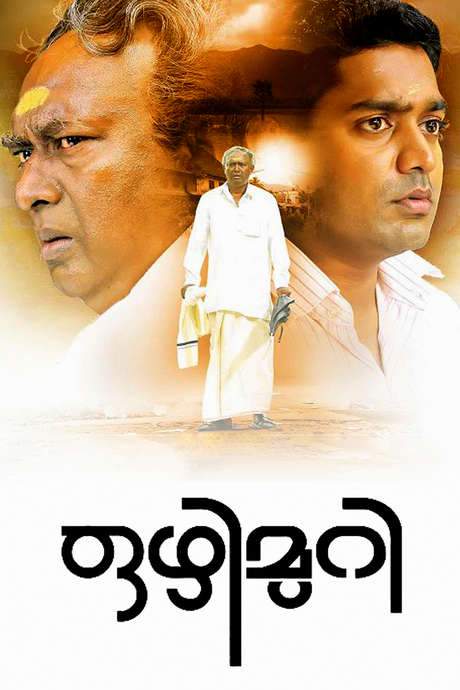
The story unfolds through the eyes of Thanu Pillai, a man whose life is defined by ego clashes and the weight of a period's rigid hierarchies. It centers on the complex web woven by three women in his world—his formidable mother, Kali Pillai; his devoted wife, Meenakshi Pillai; and the wife of his son—whose presence gradually lays bare the tensions beneath a traditional family dynamic.
Meenakshi Pillai, a fifty-five-year-old woman, files for divorce against her husband and seeks the return of properties she had transferred to him during their marriage. The defense lawyer, Balamani, tries to persuade Meenakshi and her son, Sarath Chandran, to withdraw the case on several occasions. Sarath Chandran explains that his father was abusive toward both him and his mother, and he recounts the weight of the family history: Thanu Pillai’s mother, Kali Pillai, once wielded significant power in local politics within a matrilineal system, yet Thanu Pillai despised that very tradition and married Meenakshi from a patrilineal Nair family. Still, Kali Pillai had loved Meenakshi and urged her to stand up to patriarchy, even as Meenakshi chose to submit for years. Amidst these revelations, the bond between Sarath Chandran and Balamani begins to deepen.
As the case progresses, layers of the past unfold through the perspectives of those who knew Thanu Pillai and the women around him. Meenakshi endured cycles of abuse because she believed her husband’s love for his son justified—or demanded—her submission. The narrative reveals that Sarath’s health owes much to his father’s influence, a revelation that slowly reshapes his view of Thanu Pillai. It also recalls that Sivan Pillai, Thanu Pillai’s father, was a wrestler who died penniless after Kali Pillai divorced him to be with a younger, educated man. This painful history leaves a deep scar on Thanu Pillai, fueling his harshness toward his mother and his wife, even as he acknowledges his love for both.
Kali Pillai’s death weighs heavily on Thanu Pillai. Before she dies, she asks Meenakshi to call him, but he refuses, an act that drives Kali Pillai to depart in a storm, ending her life on the streets. The memory of his mother’s death haunts Thanu Pillai, contributing to a later heart attack that briefly weakens him. After recovering, he confronts Meenakshi, asking why his mother left and accusing his wife of causing her pain, even labeling her a slave. This confrontation strengthens Meenakshi’s resolve to seek independence.
A second heart attack tests Thanu Pillai, who is kept alive with Meenakshi’s care. In court, Thanu Pillai, Sarath Chandran, and Balamani hope that Meenakshi Amma will withdraw the divorce petition because she tended to him in his illness. Instead, Meenakshi stands firm and declares she wants a life free from domination. Thanu Pillai, though pained, accepts the turn of events. He opens up to his son, admitting his past abusive behavior stemmed from fear of his own father’s fate, and he praises Balamani as a strong, formidable partner in life while advising Sarath Chandran to never fear her.
Returning home, Thanu Pillai and Sarath Chandran are surprised to find Meenakshi waiting with a sweet dish, prepared as a gesture of care—but she does so not as his wife, but as a free, self-determined woman. Meenakshi then chooses to spend the rest of her life in the house that Kali Pillai had gifted her, living with pride and self-respect, guided by the memory and strength of Kali Pillai herself.