








Plot Explained Spoilers guaranteed!
Plot Explained

Browse by genre

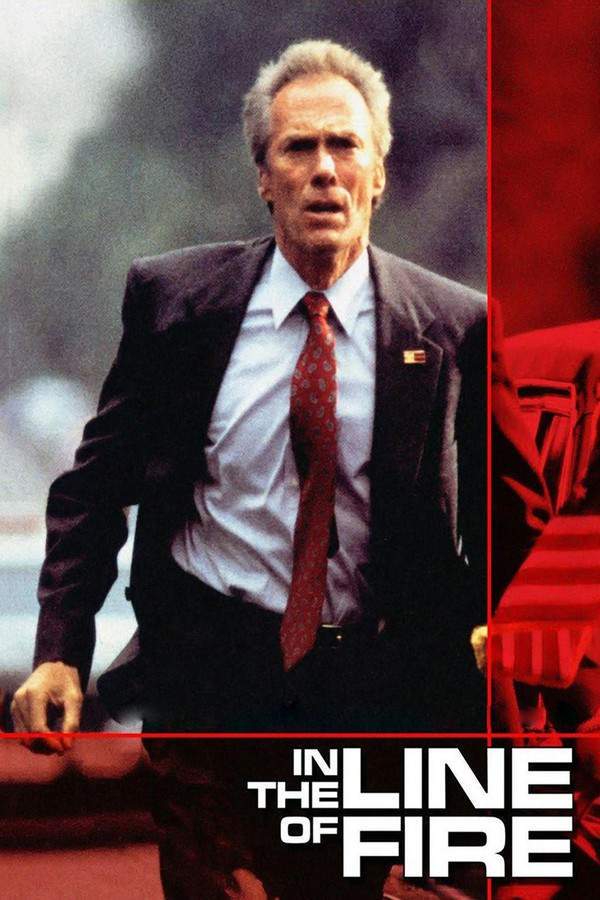
In the Line of Fire (1993) movie poster

Timeline

In the Line of Fire (1993) Timeline Explained – Every Event in Order

Release, runtime and language
1993 · 128 min · English
JustWatch #4,186 28
Directed by
Wolfgang Petersen
Starring
Clint Eastwood, John Malkovich, Rene Russo
Budget
$40M

A Secret Service agent is burdened by his past failure to protect President Kennedy. Years later, he finds himself targeted by a former CIA operative with a hidden agenda. As the agent investigates a potential threat to the current president, he must confront his personal demons and unravel a dangerous plot while protecting the highest office in the nation.

On this page (5)
  1. 1 Where to watch
  2. 2 Events in order (14)
  3. 3 Timeline questions answered
  4. 4 Movie threads
  5. 5 Every angle

Where to watch

Where to Watch In the Line of Fire (1993)

Where can you watch In the Line of Fire? Stream, rent or buy it in the US, including on MGM Plus, YouTube TV and Amazon Video: current JustWatch availability with up-to-date prices.

Streaming availability powered by JustWatch

14 events in order · contains spoilers

In the Line of Fire Timeline: Events in Chronological Order

Every key event of In the Line of Fire (1993) in order, scene by scene, with when and where it takes place. Use it to untangle flashbacks, time jumps and parallel storylines, to refresh your memory before the sequel or to find the exact scene you are thinking of.

  1. Frank Horrigan's Investigation Begins

    United States Secret Service agent Frank Horrigan starts what seems to be a straightforward investigation. However, he soon discovers that a sinister plot to assassinate the President is underway, revealing the gravity of the situation he has entered.

  2. Mysterious Calls from Booth

    Horrigan receives unsettling phone calls from a shadowy figure known as Booth. These calls not only threaten the President but also expose Horrigan's troubled past, deepening his internal struggle and sense of guilt.

  3. Booth's Elusive Threats

    Booth escalates his threats by making calls from public payphones, which the Secret Service attempts to track. As the investigation progresses, it becomes clear that Booth is toying with Horrigan, exploiting his weaknesses.

  4. Discovery of Mitch Leary

    A palm print found on a vehicle leads the FBI to Mitch Leary, a former CIA operative turned assassin. Leary's brutal reputation and motivation for revenge against his past employers make him a dangerous adversary.

  5. Leary's Infiltration Plan

    Leary uses his technological skills to bypass security measures and infiltrates a high-profile fundraising event. Horrigan understands the severity of the situation and knows he must confront his personal demons to stop the impending disaster.

    Where
    Fundraising Event
  6. D'Andrea's Confession

    Horrigan learns that his partner D'Andrea is considering retirement due to traumatic memories of a near-death experience. Horrigan persuades D'Andrea to remain on the case, emphasizing the importance of their collaboration.

  7. Chase Across the Rooftops

    Horrigan and D'Andrea embark on an exhilarating chase across the rooftops of Washington to catch Leary. The pursuit takes a tragic turn when D'Andrea is shot fatally by Leary, leaving Horrigan in a precarious situation.

    Where
    Washington
  8. Dilemma of Choices

    In a critical moment, Leary presents Horrigan with a heart-wrenching decision: save the President or his own life. Ultimately, Horrigan chooses survival, allowing Leary to escape while grappling with the loss of his partner.

  9. The Assassination Attempt

    At the fundraising event, Horrigan identifies Leary disguised and aiming for the President. In a heroic act, he jumps in front of the Commander-in-Chief, warning others while enduring gunfire, which his bullet-proof vest mitigates.

    Where
    Fundraising Event
  10. Hostage Situation

    After the shooting, Leary takes Horrigan hostage and drags him into a glass-walled elevator. Unknown to Leary, Horrigan uses a concealed microphone to communicate with the Secret Service, planning to turn the tables.

  11. Confrontation in the Elevator

    As the crisis unfolds, Leary finds himself hanging by his fingertips after falling through a broken window. In a moment of dark irony, Horrigan offers to help him, but Leary chooses to evade capture and falls to his death.

  12. Horrigan Becomes a Hero

    Upon returning to his Washington residence, Horrigan is celebrated as a hero after thwarting the assassination. He decides to retire, inviting Raines to see his apartment, revealing the personal life behind his public facade.

    Where
    Washington Residence
  13. Leary's Farewell

    As Horrigan and Raines listen to an emotional farewell message from Leary on his answering machine, they reflect on the deep connection forged through their tumultuous experiences. The message echoes the sentiments of love and loss intertwined in their lives.

  14. Romantic Moment at Lincoln Memorial

    The narrative culminates at the Lincoln Memorial, where Horrigan shares a romantic moment with Raines. This poignant scene symbolizes the triumph over adversity, marking a new beginning as they find solace in each other amid their struggles.

    Where
    Lincoln Memorial

Last updated: November 21, 2024 at 08:57

Was this helpful?

Timeline questions answered

In the Line of Fire Timeline Explained: Your Questions Answered

When does it happen, and why in that order? The questions people ask about the chronology of In the Line of Fire (1993): time jumps, flashbacks, cause and effect between scenes and the correct order of events, each answered with spoilers.

Q1

Why is Frank Horrigan so guilt-ridden about President Kennedy's assassination?

Frank Horrigan was one of JFK's bodyguards on the day of the assassination in Dallas. Despite being part of the protective detail, he failed in his mission to keep the President safe. This failure has haunted him for decades, transforming him into a cynical, whiskey-dependent man who struggles with personal connections. The guilt stems from his direct involvement and perceived inadequacy during one of American history's most traumatic moments.

Foreshadowing: Early scenes show Horrigan drinking alone, establishing his fractured mental state before Booth's threats begin.

  • frank horrigan
  • jfk assassination
  • guilt
  • secret service
  • kennedy
Q2

Who is Booth and why does he target Frank Horrigan specifically?

Booth is actually Mitch Leary, a former CIA operative who suffered a mental breakdown and became a ruthless assassin seeking revenge against his former employers. He deliberately chose to target Horrigan because he knew of the agent's connection to JFK's assassination. By calling himself 'Booth' (referencing John Wilkes Booth), Leary is making a symbolic parallel to the original presidential assassination, while also exploiting Horrigan's deepest psychological wound.

Foreshadowing: Booth's threatening calls reveal intimate knowledge of Horrigan's past, hinting at a personal vendetta rather than random targeting.

  • booth
  • mitch leary
  • cia operative
  • assassin
  • revenge
Q3

Why does Mitch Leary want to assassinate the President?

Leary's motivation is revenge against the CIA, his former employer. After experiencing a mental breakdown, he blames the agency for psychologically breaking him during his time as an operative. Attacking the President represents the ultimate statement against the institution that destroyed him. His choice of target is deliberate, killing the sitting President would deal the maximum blow to the government he resents.

Foreshadowing: The timeline notes reveal Leary as a former CIA operative with a brutal reputation, establishing his anti-government motive early.

  • mitch leary
  • motivation
  • cia
  • revenge
  • assassination plot
Q4

How does Mitch Leary bypass security at the fundraising event?

Leary uses his technological savvy and understanding of security systems to circumvent metal detectors and infiltrate the fundraiser. He hides small weapons within innocent-looking items, allowing him to pass through security checkpoints undetected. His background in CIA operations gave him the expertise to exploit weaknesses in protective details, making him a particularly dangerous adversary for the Secret Service.

Foreshadowing: Earlier mentions establish Leary as technologically skilled and knowledgeable about security protocols.

  • security bypass
  • fundraiser
  • weapons
  • secret service
  • infiltration
Q5

Why does D'Andrea want to retire from the Secret Service?

D'Andrea confides in Horrigan that he wants to retire due to haunting nightmares from a near-death experience. The traumatic event has left him psychologically shaken, and the psychological toll of the job has become overwhelming. Despite Horrigan's persuasion to stay on the case, D'Andrea's mental state ultimately proves fatal, he is shot by Leary during the rooftop chase, fulfilling his premonition of doom.

Foreshadowing: D'Andrea's confession about nightmares foreshadows his fate, as the narrative establishes early that he expects not to survive.

  • d'andrea
  • retirement
  • nightmares
  • secret service
  • death
Q6

Why does Frank Horrigan let Leary escape during the rooftop chase?

When Leary presents Horrigan with a harrowing choice, save the President or preserve his own life, Horrigan's survival instincts take over. He chooses to save himself, allowing Leary to escape while D'Andrea lies dead. This decision haunts Horrigan, as he prioritizes his own life over immediately pursuing the assassin, a choice that nearly costs the President his life later at the fundraiser.

Foreshadowing: Leary's taunting question forces Horrigan to choose between duty and self-preservation, setting up his later heroic redemption.

  • rooftop chase
  • choice
  • survival
  • d'andrea death
  • escaped
Q7

Why does Leary choose to fall to his death instead of being saved by Horrigan?

When Horrigan offers to pull Leary up from the broken window ledge, Leary deliberately lets go and falls to his death. This choice reflects his complete rejection of capture and the system he spent his life serving and later destroying. Rather than face trial and potential interrogation that could expose the CIA's darker operations, Leary chooses to die on his own terms, maintaining control even in defeat.

Foreshadowing: Leary's earlier characterization as a bitter, revenge-driven operative foreshadows his refusal to be taken alive.

  • leary death
  • suicide
  • capture
  • fall
  • elevator
Q8

What message does Leary leave on Horrigan's answering machine at the end?

Leary leaves an emotional farewell message on Horrigan's answering machine, expressing sentiments that reflect the strange connection formed between them through their cat-and-mouse game. The message echoes themes of love and loss, suggesting Leary viewed Horrigan as the only person who truly understood him, a worthy adversary who shared his burden of violence and duty.

Foreshadowing: The answering machine message was set up earlier as a plot point, and Leary's final choice to call rather than flee suggests unresolved feelings toward Horrigan.

  • answering machine
  • farewell message
  • emotional
  • lear
  • connection
Q9

How does Horrigan use the hidden microphone to trap Leary in the elevator?

After being taken hostage by Leary in the glass-walled elevator, Horrigan activates a concealed microphone that he has been wearing. This device allows him to secretly communicate with Raines and the Secret Service marksmen outside. Through this covert channel, he coordinates the plan that ultimately brings Leary down, turning the hostage situation to his advantage.

Foreshadowing: The microphone is established as a standard Secret Service tool, and Horrigan's decision to wear it shows his preparation despite his personal struggles.

  • hidden microphone
  • elevator
  • hostage
  • secret service
  • communication
Q10

Why does Frank Horrigan decide to retire after stopping the assassination?

Horrigan decides to retire following the traumatic events, having finally achieved redemption by stopping the assassination he was haunted by for decades. The combination of his partner's death, the psychological toll of confronting Leary, and his successful completion of duty all contribute to his decision. He invites Raines to his apartment, symbolically opening his private life to someone for the first time, signaling his readiness to move beyond his career as a Secret Service agent.

Foreshadowing: Horrigan's arc moves from guilt and isolation to redemption and connection, with retirement representing the closing of his painful chapter.

  • retirement
  • frank horrigan
  • ra
  • redemption
  • new beginning
Q11

Why does the assassin use the name 'Booth' when calling Horrigan?

Leary adopts the name 'Booth' as a deliberate reference to John Wilkes Booth, the man who assassinated Abraham Lincoln. This name choice is not random, it represents Leary's view of himself as a historic figure carrying out a significant political act. By using this name, he frames his assassination attempt as part of a lineage of presidential killings, while also psychologically tormenting Horrigan with historical parallels to the original presidential assassination.

Foreshadowing: Booth's calls immediately establish a JFK assassination theme, connecting past and present presidential threats.

  • booth
  • john wilkes booth
  • name reference
  • assassination symbolism
Q12

How does Frank Horrigan save the President at the fundraiser?

At the fundraising event, Horrigan spots Leary in disguise and aiming at the President. He reacts with lightning-fast reflexes, throwing himself in front of the Commander-in-Chief while shouting a warning. Though shot by Leary, Horrigan's bullet-proof vest saves his life. This act of self-sacrifice allows the Secret Service to close in and neutralize the threat, turning what could have been a successful assassination into a foiled attempt.

Foreshadowing: Horrigan's earlier choice to survive the rooftop dilemma sets up his redemption arc, leading to his willingness to sacrifice himself for the President.

  • president
  • fundraiser
  • saved
  • shooting
  • heroic act

Movie threads

More Movies Like In the Line of Fire, by Mood & Story

Curated lists built around what makes In the Line of Fire tick: the same mood, the same kind of story or the same emotional payoff. Each list explains why these movies belong together.

Cat-and-Mouse Thrillers like In the Line of Fire

Intelligent adversaries match wits in a deadly race against time. If you enjoyed the high-tension pursuit in 'In the Line of Fire,' you'll find similar excitement in these movies. This thread gathers other films featuring a clever agent or investigator locked in a deadly game of wits against a dangerous and intelligent adversary, where the stakes are incredibly high.

  • tense
  • suspenseful
  • urgent
  • anxious
  • cat-and-mouse
  • high-stakes
  • Tone: tense, urgent
  • Pacing: fast, relentless
Why these movies?

The story pattern: The narrative follows a linear, fast-paced escalation of threats and counter-moves. A protagonist, often burdened by duty or past failure, is relentlessly tested by an antagonist who is direct, personal, and seemingly always one step ahead. The climax is a direct, physical, and psychological final confrontation.

Why they belong together: These movies are grouped by their core dynamic: a tense, focused duel between two opposing forces. They share a high-intensity, fast-paced feel where suspense is derived from the intellectual and tactical clash, rather than complex plotting or deep mystery.
Movies with Guilt-Ridden Protagonists like In the Line of Fire

Characters driven to redemption by the weight of a traumatic mistake. Fans of Frank Horrigan's journey in 'In the Line of Fire' will appreciate these stories of professionals seeking redemption. This collection features movies where a character's dedication to their job is intensified by a need to overcome a past traumatic failure, adding emotional depth to the action.

  • guilt-ridden
  • melancholic
  • tense
  • redemptive
  • duty-bound
  • traumatic past
  • Tone: melancholic, tense
  • Pacing: steady, character-driven
Why these movies?

The story pattern: The story uses a present-day crisis as a mirror to a past trauma. The protagonist's journey is as much about solving the external threat as it is about achieving internal peace. The ending often provides professional success but leaves a bittersweet echo of the personal cost and the scars that remain.

Why they belong together: These films are connected by a specific character archetype: the skilled but wounded professional. The shared experience is one of emotional weight layered onto a tense plot, where the protagonist's internal struggle amplifies the external stakes.

Every angle

In the Line of Fire (1993) Explained: Plot, Timeline & Characters

Everything about In the Line of Fire in one place: what happens in the plot summary, the timeline in chronological order, the characters and meaning and a spoiler-free summary. What's After the Movie adds the cast, box office and post-credit scenes.

Coming soon on iOS and Android

The Plot Explained Movie Summary App

Plot summaries, endings explained and timelines on your phone. Catch up on any movie in minutes, save your favorites and never miss a twist again.

Be the first to know when we launch. Your email stays private, always.

Learn more about the app