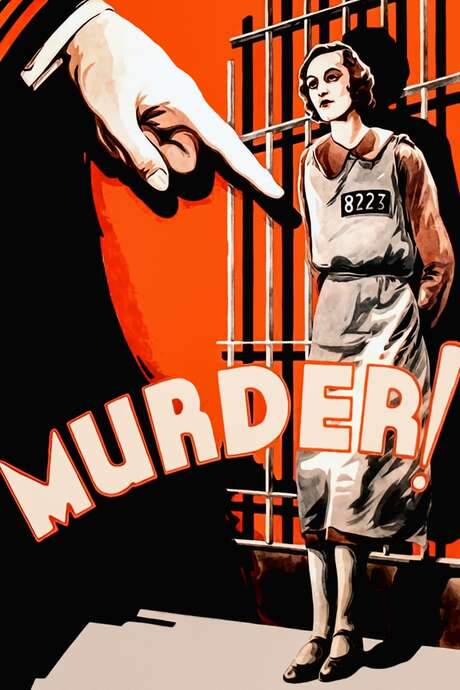
Opening night at Luigi’s nightclub, Harry Semels plays Luigi, the club’s magnetic host who keeps the show tight and the crowd buzzing. At the same time, gossip columnist Ralph Forbes Tommy Tilton arrives with his photographer, Marion Shilling Smitty, ready to chronicle every whisper and showy detail of the evening. The room crackles with music, chatter, and the kind of glamour that hides a thousand motives, setting the stage for a night where loyalty and deception walk hand in hand.
Behind the scenes, a clash erupts between the dancer Valerie Delroy (Claire Rochelle) and the nightclub’s featured singer Nadia Renee (Agnes Anderson) that ends with Luigi firing Valerie and her partner Walton (Gayne Kinsey). The tension between performance and power threads through every corner of the club, clouding the air with suspicion. Amid the commotion, the troubled relationship of Ted Benson (Malcolm McGregor) and his fiancée Vi Van Ostrum (Charlotte Barr-Smith) hangs heavy, especially as Ted becomes the target of Nadia’s blackmail over old love letters he once wrote.
When Tilton agrees to persuade Nadia to relinquish the incriminating letters, she initially yields, only to change her mind after a glance at Benson. A sudden, sharp moment follows: Benson grabs a stiletto in a burst of anger just as Nadia extinguishes the lights, and chaos erupts. In the ensuing scramble, Luigi swiftly rehires Valerie and Walton, trying to restore order to a night already tipping toward danger. Tilton, ever the observer, heads to Nadia’s dressing room hoping to locate Benson, only to discover Nadia dead instead. He pulls the letters from the scene, locks the dressing room, and calls the police to begin the investigation.
As the police move through their questions, Captain Flynn (John Cowell) presses for Benson’s arrest, convinced the young man is the murderer. Tilton, however, remains convinced Benson is innocent and vows to use his newspaper column to unmask the true killer. Benson himself reappears later at Tilton’s apartment, heightening the tension and blurring the lines between ally and suspect. The next day, Valerie reads Tilton’s column and arranges a private meeting, only to be murdered before they can talk, elevating the stakes and sharpening the chase for the truth.
Tilton advances a crucial clue: a receipt for a $15,000 diamond bracelet found in Nadia’s dressing room, suggesting a motive tied to Hugo Van Ostrum (William Bailey). With Valerie dead, Tilton persuades Benson to surrender for his own safety, a move that may protect him yet place Tilton in greater danger. The investigation deepens as Tilton learns Nadia once worked for a Chicago nightclub called Rossi, and that Luigi—then known as Rossi—was its former owner. Luigi is ruled out as the killer thanks to an airtight alibi, but the mystery remains tantalizingly unsolved. To heighten the intrigue, Tilton promises to name the murderer the next day, a gambit designed to make himself a target and flush out the killer, all while the night’s glittering veneer slowly peels away to reveal a darker, more personal motive behind the tragedy.
Throughout the night, the tension between performers, patrons, and power brokers remains palpable, with every interaction hinting at secrets kept under the glossy surface. The cast’s intertwining fates—Luigi’s control, Tilton’s crusading column, Nadia’s dangerous past, Valerie’s bold talent, and Benson’s fragile loyalty—collide in a suspenseful tapestry that builds to a climactic reveal. As the story unfolds, the film balances wit and menace, keeping the viewer guessing about who benefits most from the night’s turmoil and who will pay the ultimate price when the truth finally surfaces. The rhythm of noir-era nightclub life, the shifting alliances, and the pursuit of a killer make this tale a careful study of vanity, desire, and retribution, all set against a backdrop where every smile may hide a motive and every alibi could be a mask.