Plot Explained Spoilers guaranteed!
Plot Explained

Browse by genre

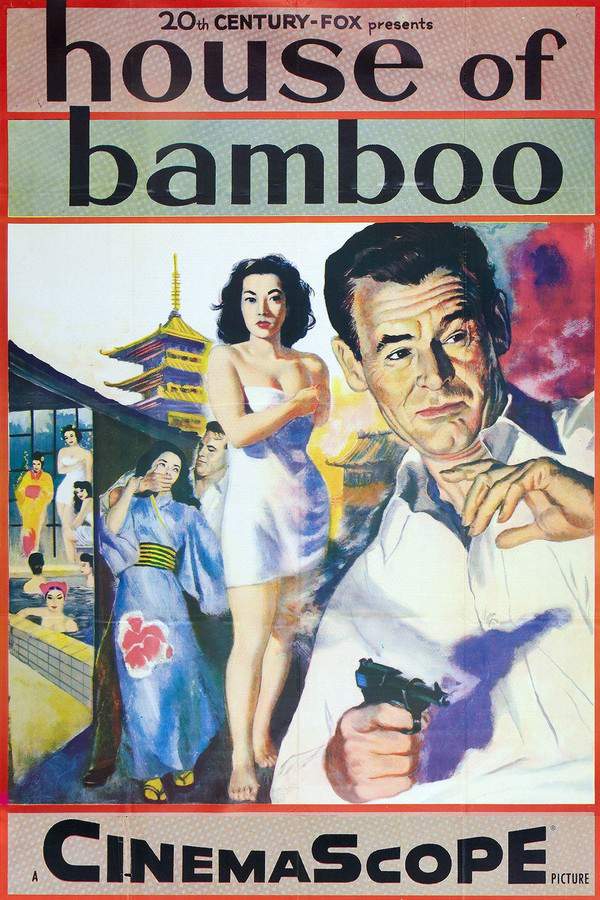
House of Bamboo (1955) (2011) movie poster

Characters & Themes

House of Bamboo (1955) (2011) Characters, Setting & Themes Explained

Release, runtime and language
2011 · 102 min · English
Loading streaming availability…
Directed by
Samuel Fuller
Starring
Robert Ryan, Robert Stack

In 1950s Tokyo, a U.S. Army agent goes undercover to investigate a dangerous gang led by the former soldier Sandy Dawson. He infiltrates their organization, gaining their trust while attempting to expose their crimes. The agent finds himself caught in a complex situation, entangled in a forbidden romance with Mariko, the wife of a deceased gang member. The story unfolds against a backdrop of corruption, betrayal, and escalating violence.

On this page (8)
  1. 1 Where to watch
  2. 2 Characters explained (3)
  3. 3 Character relationship map
  4. 4 Where & when it takes place
  5. 5 Themes & meaning (2)
  6. 6 Character & meaning questions
  7. 7 Movie threads
  8. 8 Every angle
Loading streaming availability…

3 main characters · contains spoilers

House of Bamboo (1955) Characters Explained: Who Is Who

The main characters of House of Bamboo (1955) (2011), heroes and villains: what drives them, how they change over the course of the story and what each of them reveals about the film's bigger ideas.

  • Eddie Kenner (Robert Stack)

    Eddie Kenner, originally an American soldier, assumes the identity of a criminal infiltrator to uncover the mystery of Webber's demise. His charm and resolve are reflected in his determination to seek justice for Mariko while navigating Tokyo's dangerous underbelly. Kenner’s internal conflict between loyalty and duty adds depth to his character and drives the plot's tension.

    • 👮‍♂️ Undercover
    • 💔 Conflict
  • Sandy Dawson (Robert Ryan)

    Sandy Dawson is the tough leader of a gang of ex-servicemen, drawn to Eddie's audacity but wary of betrayal. Initially hostile, his character reveals complexity as he grapples with loyalty to his gang and his burgeoning connection with Eddie. Dawson's unpredictability is underscored by his decisions, oscillating between savior and antagonist in the narrative.

    • 👤 Gang Leader
    • ⚔️ Antagonist
  • Mariko Nagoya

    Mariko Nagoya is the widow of the slain thief Webber, caught in a web of deception and loyalty. Torn between her husband's criminal past and her feelings for Eddie, she embodies the emotional stakes of the narrative. Her strength and resilience shine through as she agrees to help Eddie and navigate the aftermath of tragedy.

    • 👧 Widow
    • 💞 Forgiveness

Last updated: October 28, 2026 at 21:18

Was this helpful?

6 characters · 8 connections · contains spoilers

House of Bamboo (1955) Character Relationship Map

Who is connected to whom in House of Bamboo (1955): family, love, friendships, rivalries and hidden ties, colour-coded. Pick a character to see their side of the story, or a connection to see what brings two characters together.

How much of the story to show
EKEddie KennerRobert StackSDSandy DawsonRobert RyanMNMariko NagoyaWWebberCCharlieCCeram

Last updated: October 28, 2026 at 21:18

Was this helpful?

Setting

Where and When Does House of Bamboo (1955) Take Place?

The setting of House of Bamboo (1955) (2011): the year and time period, the places and locations, and how they shape the characters, the mood and the tension of the story.

Time period

1950s

The 1950s were a time of post-war recovery and social transformation in Japan, as the country rebuilt itself after World War II. This era saw the emergence of organized crime, as former soldiers and displaced individuals sought new paths amidst the chaos. The movie captures this transformative period, highlighting the clash between American influences and Japanese society.

Location

Tokyo

Tokyo, the vibrant capital of Japan, is known for its bustling streets, rich cultural heritage, and juxtaposition of traditional and modern architecture. The city serves as a backdrop for a gripping crime drama, revealing its dark underbelly amid lurking dangers. Throughout the film, Tokyo's complex environment reflects the tension and secrecy that permeates the characters' lives.

  • 🏙️ City
  • 🇯🇵 Japan

Last updated: October 28, 2026 at 21:18

Was this helpful?

2 major themes

House of Bamboo (1955) Meaning: Themes & Message Explained

What is House of Bamboo (1955) (2011) really about? The emotional, social and philosophical themes the film keeps returning to, its symbolism and the message beneath the surface.

  • Deception

    Deception is a central theme in 'House of Bamboo,' as characters navigate a treacherous world filled with secrets and lies. Eddie Kenner's undercover operation embodies the lengths to which individuals go to uncover the truth while maintaining facades. Trust is frequently tested, leading to betrayal and unexpected alliances as the characters grapple with their pasts and loyalties.

  • Loyalty and Betrayal

    The film poignantly explores the duality of loyalty and betrayal, particularly through the relationships between Eddie, Mariko, and Sandy. Loyal to his duty and to Mariko, Eddie faces moral dilemmas as he tries to unveil the truth behind Webber's death. Meanwhile, Sandy's evolving trust in Eddie blurs the lines between friend and foe, leading to devastating consequences.

Last updated: October 28, 2026 at 21:18

Was this helpful?

Character & theme questions

House of Bamboo (1955) Characters & Meaning: Your Questions Answered

The questions people ask about House of Bamboo (1955) (2011): who the characters really are, their relationships, what the symbols mean, where it takes place and what the movie is really about. Each answer contains spoilers.

Q1

Where is House of Bamboo set?

House of Bamboo is set in Tokyo, Japan. The film uses the city's vibrant yet dangerous atmosphere as a backdrop, showcasing its bustling streets and contrasting traditional and modern architecture. Tokyo's complex urban environment mirrors the tension and secrecy that defines the characters' world.

  • tokyo setting
  • japan
  • tokyo locations
  • film setting
Q2

What time period does House of Bamboo depict?

The film takes place in the 1950s, during Japan's post-war recovery period. This era was marked by significant social transformation as the country rebuilt itself after World War II. The 1950s saw the emergence of organized crime, with former soldiers and displaced individuals seeking new paths amid the chaos.

  • 1950s
  • post-war japan
  • era
  • time period
  • 1950s japan
Q3

Why is Tokyo important to House of Bamboo?

Tokyo serves as more than just a backdrop, it reflects the film's themes of deception and duality. The city's dark underbelly, with its lurking dangers and secret worlds, mirrors the underground criminal operations Eddie Kenner infiltrates. The contrast between Tokyo's modern appearance and its hidden criminal networks parallels the characters' facades and hidden agendas.

  • tokyo significance
  • tokyo crime
  • setting importance
  • japanese underworld
Q4

What are the main themes in House of Bamboo?

House of Bamboo centers on two primary themes: deception and loyalty versus betrayal. The film explores how characters navigate a treacherous world filled with secrets and lies, particularly through Eddie Kenner's undercover operation. The duality of loyalty is examined through the complex relationships between Eddie, Mariko, and Sandy Dawson, where trust is constantly tested.

  • deception
  • loyalty
  • betrayal
  • themes
  • film themes
Q5

How does deception function in House of Bamboo?

Deception is the engine of the plot. Eddie Kenner assumes a criminal identity to infiltrate Sandy Dawson's gang and investigate Webber's death. Throughout the film, characters maintain facades while grappling with their true loyalties. This web of lies leads to betrayal, unexpected alliances, and ultimately devastating consequences as the truth slowly emerges.

Foreshadowing: The film's title itself hints at the precarious, constructed nature of the world the characters inhabit.

  • deception theme
  • undercover
  • identity
  • lies
  • double life
Q6

Who is Eddie Kenner?

Eddie Kenner is a U.S. Army agent who goes undercover in Tokyo, assuming the identity of a criminal to investigate the death of a man named Webber. Originally an American soldier, he uses his charm and determination to infiltrate Sandy Dawson's gang of ex-servicemen. He seeks justice for Mariko, the widow of the deceased, while navigating the dangerous criminal underworld.

  • eddie kenner
  • robert stack
  • protagonist
  • undercover agent
Q7

Who is Sandy Dawson?

Sandy Dawson is the leader of a gang composed of ex-servicemen operating in Tokyo. Portrayed as a tough and unpredictable figure, he is initially hostile toward Eddie but grows to trust him, blurring the lines between friend and foe. Dawson represents the complexities of loyalty, as he grapples with his commitment to his gang while forming a dangerous connection with Eddie.

  • sandy dawson
  • robert ryan
  • gang leader
  • villain
Q8

Who is Mariko Nagoya?

Mariko Nagoya is the widow of Webber, the slain thief whose death Eddie investigates. She is caught between her late husband's criminal world and her growing feelings for Eddie. Her character embodies the emotional stakes of the narrative, showing strength and resilience as she helps Eddie while navigating the aftermath of tragedy.

  • mariko nagoya
  • widow
  • love interest
  • mariko character
Q9

What does House of Bamboo say about loyalty?

The film presents loyalty as complex and often contradictory. Eddie is loyal to his duty as an American agent while also developing genuine feelings for Mariko. Sandy's loyalty to his gang conflicts with his growing trust in Eddie. The movie suggests that loyalty in a world of deception is fragile, easily manipulated and often leads to devastating betrayals.

Foreshadowing: Sandy's gradual acceptance of Eddie foreshadows the tragic consequences of mis-placed loyalty.

  • loyalty theme
  • betrayal theme
  • moral dilemma
  • character loyalty
Q10

Why is the 1950s Japan setting significant?

The 1950s Japan setting reflects the film's themes of transformation and conflict. Post-war Japan was a society in flux, where traditional values collided with American influences. This era's lawlessness, with former soldiers turning to crime, provides context for the gang's existence. The cultural clash between American and Japanese characters underscores the film's exploration of loyalty, trust, and identity.

  • post-war japan
  • american influence
  • japanese society
  • 1950s crime
Q11

Is House of Bamboo considered a film noir?

Yes, House of Bamboo is classified as a film noir. The genre is reflected in its dark, shadowy cinematography of Tokyo's underworld, its morally ambiguous protagonist living a double life, and its themes of deception, betrayal, and fatalistic outcomes. The film combines American film noir sensibilities with the unique setting of post-occupied Japan, creating a distinctive crime drama.

  • film noir
  • genre
  • crime drama
  • noir style

Movie threads

More Movies Like House of Bamboo (1955), by Mood & Story

Curated lists built around what makes House of Bamboo (1955) tick: the same mood, the same kind of story or the same emotional payoff. Each list explains why these movies belong together.

Undercover crime thrillers like House of Bamboo (1955)

An agent infiltrates a criminal underworld, risking everything in a web of deceit. For viewers who enjoyed the high-stakes tension of House of Bamboo, this thread gathers movies about deep-cover agents infiltrating dangerous organizations. Discover similar stories of betrayal, moral conflict, and the psychological toll of living a lie, where the hero's survival hinges on their ability to maintain a fragile deception.

  • tense
  • paranoid
  • dangerous
  • suspenseful
  • deceptive
  • high-stakes
  • Tone: tense, dangerous, morally ambiguous
  • Pacing: steady, methodical build-up
Why these movies?

The story pattern: The narrative follows an agent as they assume a false identity to gain the trust of a powerful criminal syndicate. The plot is driven by escalating risks, close calls with discovery, and the internal conflict of forming bonds with the very people they must betray. The climax typically involves a violent confrontation where the protagonist's cover is finally blown.

Why they belong together: Movies in this thread are united by the specific tension of an undercover operation. They share a mood of sustained paranoia, a high-intensity tone, and a plot structure built on deception and the inevitable, explosive unmasking.
Gritty foreign crime dramas with a noir feel like House of Bamboo (1955)

A morally conflicted protagonist navigates a corrupt and gritty foreign landscape. If you liked the post-war Tokyo setting and grim atmosphere of House of Bamboo, this thread features movies that blend crime narratives with a strong sense of place. Explore similar neo-noir stories set in corrupt foreign underworlds, where outsiders become entangled in local conflicts and forbidden relationships.

  • grimy
  • melancholic
  • atmospheric
  • corrupt
  • alienation
  • anxious
  • Tone: tense, melancholic, bleak
  • Pacing: steady, atmospheric
Why these movies?

The story pattern: The narrative follows an outsider, often a soldier, detective, or fugitive, who enters a foreign cityscape riddled with crime. They become embroiled in a central conflict that forces them to challenge the local power structure. A fraught romance with a local often provides personal stakes, complicating their mission and highlighting their isolation. The resolution is typically bittersweet, involving significant loss amidst a hard-won victory.

Why they belong together: These movies are grouped by their shared atmosphere and world-building. The combination of a tense, heavy crime plot with a specific, evocative foreign setting creates a unique vibe of melancholy, alienation, and grimy realism that defines the thread.

Every angle

House of Bamboo (1955) (2011) Explained: Plot, Timeline & Characters

Everything about House of Bamboo (1955) in one place: what happens in the plot summary, the timeline in chronological order, the characters and meaning and a spoiler-free summary. What's After the Movie adds the cast, box office and post-credit scenes.

Coming soon on iOS and Android

The Plot Explained Movie Summary App

Plot summaries, endings explained and timelines on your phone. Catch up on any movie in minutes, save your favorites and never miss a twist again.

Be the first to know when we launch. Your email stays private, always.

Learn more about the app