Plot Explained Spoilers guaranteed!
Plot Explained

Browse by genre

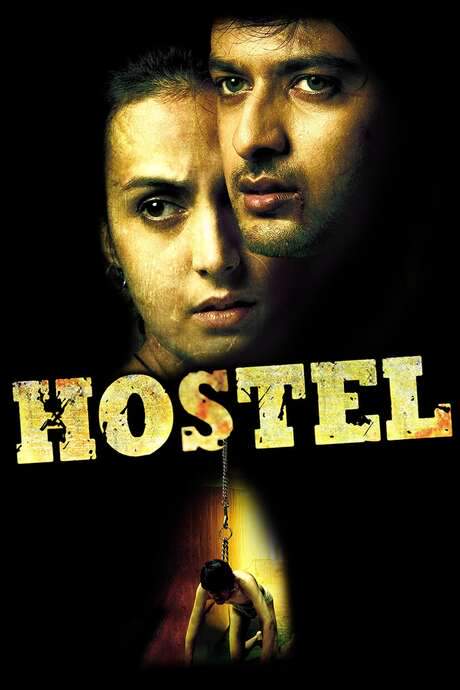
Hostel (2011) movie poster

Plot Summary

Hostel (2011) Plot Summary Explained

Release, runtime and language
2011 · 155 mins · Hindi
Loading streaming availability…
Directed by
Manish Gupta
Starring
Vatsal Sheth, Mukesh Tiwari, Tulip Joshi

A hostel, a student's second home, becomes a nightmarish torture house when ragging turns deadly. The narrative follows students preyed upon by cruel rituals, highlighting the psychological and physical torment they endure. This gripping thriller explores the consequences of hazing, showing how a place meant for safety can descend into terror.

On this page (5)
  1. 1 Where to watch
  2. 2 What happens: full plot
  3. 3 Plot questions answered
  4. 4 Movie threads
  5. 5 Every angle
Loading streaming availability…

Full plot summary · contains spoilers

What Happens in Hostel: Full Plot Summary

The whole story of Hostel (2011) explained, from the opening scene to the final frame: every key event, every twist and what it all adds up to. Read it as a quick recap before the sequel, to check a scene you missed, or to finally understand what really happened.

At Jaigarh University, the boys’ hostel becomes a brutal proving ground where power and fear rule. A senior named Feroz and his merciless gang systematically harass the freshmen, turning humiliation into a routine spectacle. One stark night, Vishnu Pandey, a shy science student, is stripped, molested, and shamed in front of many, his attempts to seek help going unanswered as the corrupt hostel warden looks the other way. engineering freshman Vatsal Sheth as Karan arrives at the scene and soon forms a fragile circle of friends—Vishnu, Nilesh, and Bobby—offering a possible shield against the mounting cruelty. When Akshay, a gang leader, tries to squeeze money from Karan in broad daylight, the young newcomer stands his ground and is violently beaten, then dragged to Feroz who imposes a degrading punishment: a forced drink of urine, followed by a spit-soaked rebuke when Karan refuses. The encounter lays bare the hostel’s hierarchy and the deep corruption that sustains it.

The chilling truth about Feroz’s hold begins to emerge through Vishnu’s eyes: the harassment is a calculated weapon, a path to control, with a web of influence extending into local politics and the warden’s complicity. The ruthless leader has anchored himself as the general secretary, making it almost impossible for anyone to challenge him. Karan’s pleas for help are met with indifference, and the path to safety seems to narrow as Feroz tightens his grip. The regime of fear grows bolder as Feroz’s gang expands into drug dealing, preying on new students while the others either submit or quietly retreat. In the midst of this, Karan and Tulip Joshi as Payal form a tender connection; Payal, a science student, becomes a steady beacon for Karan as the violence escalates around them. The pair’s budding romance provides a much-needed warmth amid the hostel’s cold brutality.

The guardianship of order frays further when Karan stands up to Akshay, who brings a crew to harass Payal and test Karan’s nerve. A fierce confrontation ensues, with Karan managing to beat back the intruders and even convincing a gangster ally of Feroz’s manipulation. Yet the attempt to restore balance is only partial: Feroz ousts Akshay from the gang and issues a chilling warning that warns Karan to stay out of it, while the abuse continues to torment other freshmen. The cycle of ragging, exploitation, and coercion keeps chipping away at the atmosphere, and the hostel’s dark underbelly reshapes the loyalties of Vishnu, Nilesh, and Bobby, who have become complicit in Feroz’s rule. Some students endure the torment with quiet resolve, others choose to leave.

A naïve new freshman, Pawan, arrives and quickly encounters the gang’s corrupted fabric. In his room, he discovers Vishnu, Nilesh, and Bobby now fully aligned with Feroz, their beliefs twisted to equate ragging with manhood. The strain on Karan’s friendship with Payal grows as Pawan becomes a focal point of danger. When Feroz brings a prostitute into the hostel and tasks Pawan with an unprotected encounter to be witnessed by the gang and the warden, Karan acts to shield him, taking blows in the process. The tension intensifies as Karan helps Pawan study, while Feroz and his crew watch degrading material, their lust and power fueling a brutal atmosphere. The moment of reckoning comes when Pawan is sexually assaulted by the gang, a horror that ends in tragedy as he hangs himself from a ceiling fan, blood staining the floor—an act that reveals the depths of the hostel’s cruelty.

The administration’s response is compromised. The dean, pressured by trustees, blames Pawan’s suicide on his supposed psychological issues, effectively silencing the cries for accountability. Feroz’s threats toward Payal—rife with coercion and fear—prompt Karan to distance himself from her to protect her. Gripped by rage and a resolve to end the torment, Karan arms himself with a gun, a choice fueled by desperation and fear for those he cares about. He seals the hostel gates, confronts Feroz in his lair, and begins a violent final confrontation: Vishnu, Bobby, Nilesh, and the warden fall to his gun, while he clashes with Feroz in a brutal showdown. The struggle culminates in a lethal volley—Feroz is shot multiple times, and the gang’s reign of terror in the hostel collapses under the weight of Karan’s vengeance.

The film resolves with a stark message: a campus once ruled by fear and complicity can be overturned by courage, moral courage, and the willingness to protect the vulnerable even at great personal cost. What follows is a somber reflection on justice, accountability, and the long road to healing in a community scarred by abuse and silence.

Last updated: November 22, 2025 at 15:59

Was this helpful?

Plot questions answered

Hostel Plot Explained: Your Questions Answered

The questions people ask most about Hostel (2011): what happens in the confusing scenes, why the characters do what they do, the twists, hidden details and what the ending means. Each answer contains spoilers.

Q1

Why does Vishnu join Feroz's gang?

Vishnu, originally a victim of Feroz's harassment, gradually succumbs to the toxic culture after months of sustained torture. The relentless abuse and the hostel environment where submission is rewarded and resistance is punished warp his beliefs. By the time Pawan arrives, Vishnu, along with Nilesh and Bobby, have fully aligned with Feroz and genuinely believe that ragging is a rite of passage into manhood. This transformation shows how the cycle of abuse perpetuates itself through complicity.

Foreshadowing: Early in the film, Vishnu is shown as a shy student desperately seeking help, which makes his later transformation into a perpetrator more shocking.

  • vishnu
  • ferez gang
  • ragging
  • hostel abuse
  • complicity
Q2

Why does Karan break up with Payal before the final confrontation?

Karan ends his relationship with Payal to protect her from Feroz's threats. Earlier, Feroz had explicitly threatened Payal, using coercion and fear to intimidate her. Knowing that his planned confrontation with Feroz would be violent and dangerous, Karan decides to push her away to ensure she stays safe and out of the retaliation crossfire. This sacrifice demonstrates his genuine love for her despite the painful breakup.

Foreshadowing: The film shows Feroz threatening Payal and making lewd comments about her, establishing the danger she faces.

  • karan
  • payal
  • breakup
  • protection
  • feroz threat
Q3

Why does Pawan hang himself?

Pawan commits suicide after being sexually assaulted by Feroz and his gang in his room. The trauma of this horrific violation, combined with the hostel environment that offers no justice or protection, drives him to take his own life. The sexual assault is the final breaking point after witnessing and experiencing relentless abuse throughout his short time at the hostel.

Foreshadowing: Pawan's arrival coincides with the darkest phase of Feroz's reign, and his innocence contrasts sharply with the corruption he encounters.

  • pawan
  • suicide
  • rape
  • sexual assault
  • hostel tragedy
Q4

Why does the dean blame Pawan's suicide on psychological issues?

The dean blames Pawan's suicide on supposed psychological problems because he is pressured by trustees to cover up the incident and protect the university's reputation. Rather than holding Feroz and his gang accountable, the dean fabricates a narrative that shifts blame to the victim. This reflects the systemic corruption that protects powerful perpetrators and silences victims, a central theme highlighting institutional failure.

Foreshadowing: Throughout the film, the warden's complicity establishes the pattern of authorities protecting perpetrators rather than victims.

  • dean
  • suicide cover-up
  • trustees
  • blame victim
  • institutional corruption
Q5

How does Feroz maintain control over the hostel?

Feroz maintains control through a combination of intimidation, political connections, and institutional complicity. He manipulates exam results to remain in the hostel indefinitely, extends his influence into local politics, and ensures the warden remains loyal through corruption. His position as general secretary makes him nearly untouchable, while fear keeps other students silent. The hostel becomes his personal fiefdom where resistance is met with brutal violence.

Foreshadowing: Early in the film, Vishnu reveals that Feroz's harassment is a calculated weapon for control, hinting at his political ambitions.

  • feroz
  • control
  • power
  • political connections
  • warden complicity
Q6

Why does Karan resort to using a gun against Feroz?

Karan uses a gun because all other avenues for justice have been exhausted. Despite numerous attempts to seek help from the warden, the dean, and the system, Karan receives no support. After Pawan's suicide and Feroz's threats against Payal, Karan reaches a breaking point. Armed with desperation and fear for those he cares about, he chooses violent retaliation as the only remaining option to end the cycle of abuse. The gun represents his final, tragic resort to self-justice.

Foreshadowing: Karan's repeated pleas for help throughout the film are consistently ignored, building toward his desperate final act.

  • karan
  • gun
  • violence
  • retribution
  • desperation
Q7

Why does the warden support Feroz instead of protecting students?

The warden, Sharad Saxena, supports Feroz because he is corrupted and benefits from the arrangement. His complicity allows Feroz's operations to continue unchecked, and he actively looks the other way when students are harassed. The warden even witnesses Karan being beaten without intervention. This corruption creates an environment where Feroz's gang can operate with impunity, as there is no adult authority willing to protect the freshmen.

Foreshadowing: The timeline establishes early that the warden remains loyal to Feroz and offers no help to Karan when he requests it.

  • warden
  • corruption
  • complicity
  • feroz
  • authority failure
Q8

What happens to Feroz at the end of the film?

Feroz is killed in the final confrontation. Karan locks the hostel gates, confronts Feroz in his lair, and shoots him multiple times, in total, nine times. This violent confrontation ends Feroz's reign of terror over the hostel. The film ends with Karan's violent retribution as the only solution that breaks the cycle of abuse, though the resolution is somber, acknowledging the heavy cost of such justice.

Foreshadowing: Feroz's warning to Karan to stay out of his way foreshadows the inevitable violent clash between them.

  • feroz
  • death
  • final confrontation
  • karan
  • violent end
Q9

Why does Karan lock the hostel gates before confronting Feroz?

Karan locks the hostel gates to prevent anyone from escaping or interfering during his confrontation with Feroz. By sealing the exits, he ensures that Feroz and his gang cannot flee accountability and that no one else can stop him from carrying out his plan. This act demonstrates his determination to end the situation decisively, regardless of the consequences.

Foreshadowing: The buildup shows Karan'sresolve to take decisive action after being pushed to his limit.

  • karan
  • hostel gates
  • confrontation
  • trapped
  • accountability
Q10

Why does the harassment escalate throughout the year?

The harassment escalates because Feroz faces no consequences for his actions, emboldening him to push further. As students either submit or leave, Feroz's power grows, and he expands into drug dealing. The warden's complicity and the dean's inaction create a vacuum where cruelty thrives. Each successful act of intimidation removes obstacles and encourages more extreme behavior, culminating in sexual assault and murder.

Foreshadowing: The timeline shows a clear progression from humiliation to violence, with each stage emboldening Feroz further.

  • escalation
  • harassment
  • abuse
  • drug dealing
  • cruelty

Movie threads

More Movies Like Hostel, by Mood & Story

Curated lists built around what makes Hostel tick: the same mood, the same kind of story or the same emotional payoff. Each list explains why these movies belong together.

Thrillers about institutional cruelty like Hostel

Confronting the horror of cruelty sanctioned by institutions meant for safety. If you liked Hostel, explore more movies about systemic abuse and institutional horrors. This thread gathers films where schools, prisons, or other organizations become settings for sanctioned cruelty and harrowing psychological torment, similar to the intense drama of Hostel.

  • oppressive
  • brutal
  • claustrophobic
  • desperate
  • grim
  • systemic horror
  • Tone: dark, oppressive, grim
  • Pacing: steady, escalating dread
Why these movies?

The story pattern: The narrative typically follows protagonists who enter a seemingly normal institution only to discover a hidden world of brutal rituals and systemic abuse. The story unfolds as a descent, charting their victimization, psychological breakdown, and eventual, often violent, rebellion against the corrupt system that entraps them.

Why they belong together: Movies are grouped here for their shared focus on the unique horror of systemic abuse. They generate tension not from a supernatural threat, but from the chilling reality of cruelty enabled by power structures, creating a feeling of claustrophobia and desperate struggle against an overwhelming foe.

Movies about desperate revenge with bittersweet endings like Hostel

Stories where vengeance is achieved, but at a great and heavy personal cost. For viewers who appreciated the climax of Hostel, this section collects films with similar arcs of desperate revenge and bittersweet justice. These stories explore the heavy price of vengeance, culminating in an ending that acknowledges the cost of victory, much like the emotional conclusion of Hostel.

  • vengeance
  • desperate
  • cathartic
  • grim
  • bittersweet
  • moral cost
  • Tone: dark, grim, cathartic
  • Pacing: steady, building to a violent climax
Why these movies?

The story pattern: The plot follows a character enduring extreme suffering, which galvanizes them into a path of violent retribution. The climax is a cathartic but brutal confrontation. The story concludes not with pure victory, but with a somber reflection on the trauma endured and the moral ambiguity of the revenge taken, resulting in a bittersweet emotional payoff.

Why they belong together: These films are united by a specific emotional arc: the journey from victimhood to violent agency, culminating in an ending that balances catharsis with melancholy. They appeal to viewers who appreciate complex resolutions where justice is served but happiness is scarred by the experiences that led to it.

Every angle

Hostel (2011) Explained: Plot, Timeline & Characters

Everything about Hostel in one place: what happens in the plot summary, the timeline in chronological order, the characters and meaning and a spoiler-free summary. What's After the Movie adds the cast, box office and post-credit scenes.

Coming soon on iOS and Android

The Plot Explained Movie Summary App

Plot summaries, endings explained and timelines on your phone. Catch up on any movie in minutes, save your favorites and never miss a twist again.

Be the first to know when we launch. Your email stays private, always.

Learn more about the app