Plot Explained Spoilers guaranteed!
Plot Explained

Browse by genre

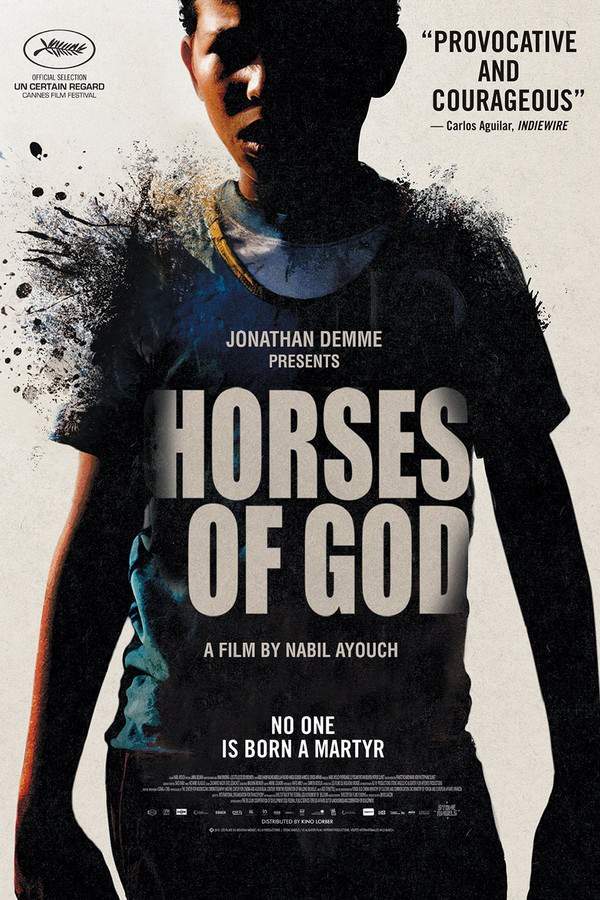
Horses of God (2014) movie poster

Plot Summary

Horses of God (2014) Plot Summary Explained

Release, runtime and language
2014 · 115 min · Arabic
JustWatch #29,157 1
Directed by
Nabil Ayouch

Set in the deprived Sidi Moumen slum, the film follows two young brothers struggling to find their place. Hamid's circumstances lead him toward a dangerous path, and imprisonment marks the beginning of his radicalization into Islamic fundamentalism. After his release, he enlists his friend Yachine and others, following the guidance of Imam Abou Zoubeir as they pursue a violent cause.

On this page (6)
  1. 1 Where to watch
  2. 2 What happens: full plot
  3. 3 Plot questions answered
  4. 4 Movie threads
  5. 5 Movies like Horses of God
  6. 6 Every angle

Where to watch

Where to Watch Horses of God (2014)

Where can you watch Horses of God? Stream, rent or buy it in the US, including on Kino Film Collection, Hoopla and Kanopy: current JustWatch availability with up-to-date prices.

Streaming availability powered by JustWatch

Full plot summary · contains spoilers

What Happens in Horses of God: Full Plot Summary

The whole story of Horses of God (2014) explained, from the opening scene to the final frame: every key event, every twist and what it all adds up to. Read it as a quick recap before the sequel, to check a scene you missed, or to finally understand what really happened.

The film begins in 1994, introducing us to Yachine, known as Tarek, his aggressive older brother Hamid, and their friends Nabil, the son of local prostitute and singer Tamou, pot-smoking Fouad, and Khalil. They all live in severe poverty in Sidi Moumen, a shanty town on the outskirts of Casablanca, Morocco. Hamid resorts to becoming a drug mule for income, engaging in criminal activities. In one shocking scene, the boys steal alcohol from Khalil's father's wedding, leading to a tragic moment where Hamid assaults a drunken Nabil in front of the others.

By 1999, the shanty town has expanded considerably, coinciding with the death of Hassan II of Morocco. Here, Yachine, Nabil, Fouad, and Khalil spend their days smoking marijuana. Yachine harbors feelings for Ghislaine, Fouad's sister. Meanwhile, Hamid has become a notable drug dealer, keeping a corrupt policeman called Pitbull in his pocket and pushing Yachine away from a life of drugs. The political climate becomes hostile as religious zealots drive Tamou from their community. After throwing a rock at Pitbull's car, Hamid receives a two-year prison sentence. Yachine faces expulsion from the marketplace, leading Nabil to secure him a job with repairman Ba'Moussa.

Following the September 11 attacks, Hamid emerges from prison, renouncing drugs in favor of radical Islam. In a twist of fate, Yachine is forced to kill Ba'Moussa after the man attempts to assault Nabil. With Hamid's help, they conceal the crime and find refuge in an Islamic compound hidden in the town. It's here that Yachine and Nabil come under the influence of Abou Zoubeir, who indoctrinates them into radical Islamic beliefs. Khalil and Fouad are coerced into joining as well, and they begin training in jujutsu. As guilt over the murder weighs heavily on Yachine, he seeks comfort from Nabil but is also captivated by Zoubeir's teachings on forgiveness through radicalism.

Fast forward to November 2002: Tarek (the former Yachine), along with Nabil and Fouad, fully embrace their new ideology. They are welcomed into the inner circle of the radical group, which enrages Hamid. A montage dramatically illustrates the transformation of the friends. However, Tarek faces heartache when he learns that Ghislaine is set to marry someone else.

In February 2003, law enforcement disrupts a radical Islamic gathering, where Tarek is assaulted. Abou Zoubeir begins to emphasize the concept of martyrdom. Tamou tries to reach out to Nabil, but he rebuffs her advances and gifts. An enigmatic emir arrives with an even stronger message of becoming martyrs, advising the young men, > “Take care, children of Islam, never to become like those who cling to life down here and fear to become martyrs. Fly, horses of God, and the gates of paradise will open for you.” This further fuels Hamid's jealousy towards Tarek.

As May 9, the day of the planned attack, nears, tensions rise. Abou Zoubeir panics and flees as police close in, prompting the attack to be postponed until May 16. The group ventures into the picturesque foothills near Casablanca, marveling at the wealth and lush landscapes, a stark contrast to their barren life. They camp in a forest, eagerly anticipating their violent mission. During this time, Tarek dreams that after becoming a martyr, Ghislaine will remember him fondly. Hamid struggles to dissuade Tarek from going through with the attack.

On May 15, they return to the shanty town to finalize their preparations with the rest of their cell. The next day, Hamid, Fouad, Tarek, and Nabil explore Casablanca, ultimately arriving at the Casa de España restaurant. Despite Hamid's attempts to protect Tarek from the dire fate ahead, Tarek pushes him away. Fouad chooses flight over fate, leaving Tarek and Nabil to carry out the horrific act. The screen fades to black as the brothers set off their bombs.

In a haunting conclusion, children in Sidi Moumen play football in the night, momentarily pausing to absorb the distant explosions reverberating through the city. The end credits elaborate on the 2003 Casablanca bombings, detailing the locations and casualties of that tragic day.
Last updated: November 15, 2024 at 18:51

Was this helpful?

Plot questions answered

Horses of God Plot Explained: Your Questions Answered

The questions people ask most about Horses of God (2014): what happens in the confusing scenes, why the characters do what they do, the twists, hidden details and what the ending means. Each answer contains spoilers.

Q1

Why does Hamid become radicalized after leaving prison?

After his two-year prison sentence, Hamid emerges a changed man. Following the September 11 attacks, he renounces drug dealing and embraces radical Islam instead. This transformation reflects how the post-9/11 political climate and his time in prison exposed him to extremist ideologies, providing him with a new belief system that replaces his criminal past with religious conviction.

  • hamid
  • radicalization
  • prison
  • islam
  • september 11
Q2

Why does Yachine kill Ba'Moussa?

Yachine kills Ba'Moussa after the repairman attempts to sexually assault his friend Nabil. When Ba'Moussa attacks Nabil, Yachine intervenes and kills him in what starts as an act of protection. This murder becomes pivotal because the guilt from this crime drives Yachine toward Abou Zoubeir's extremist teachings, as he seeks forgiveness for his violent act.

  • yachine
  • ba'moussa
  • murder
  • nabil
  • assault
Q3

How does Abou Zoubeir influence Yachine and the others?

Abou Zoubeir operates from an Islamic compound in Sidi Moumen where he indoctrinates vulnerable young men into radical Islamic beliefs. He preaches that violent martyrdom offers forgiveness and paradise, using Yachine's guilt over Ba'Moussa's murder as psychological leverage. His teachings emphasize abandoning fear of death and becoming "horses of God" destined for martyrdom.

  • abou zoubeir
  • indoctrination
  • radicalism
  • yachine
  • brainwashing
Q4

Why does Fouad leave before the bombing?

Fouad abandons the mission at the last moment, choosing flight over fate. Despite being fully indoctrinated and having gone through all the preparations, he cannot go through with the suicide attack. This leaves Tarek and Nabil to carry out the bombing alone at Casa de España, highlighting how even those deeply radicalized can falter at the final moment.

  • fouad
  • flee
  • bombing
  • cowardice
  • casa de españa
Q5

Why is Hamid jealous of Tarek joining the martyr group?

Hamid becomes envious when his younger brother Tarek is welcomed into the inner circle of the radical cell. Despite being the one who introduced Tarek to the mosque and radical Islam, Hamid finds himself excluded from the group's core. This jealousy intensifies as Tarek embraces martyrdom more fully, creating bitter tension between the brothers in their final days.

  • hamid
  • tarek
  • jealousy
  • martyrdom
  • brotherhood
Q6

Why was the Casablanca bombing postponed?

The attack was postponed from May 9 to May 16 because police closed in on Abou Zoubeir, forcing him to panic and flee. This near-discovery created panic within the cell, but rather than abandoning their plan, they simply delayed the execution. The postponed date coincides with the actual 2003 Casablanca bombings that occurred on May 16.

  • postponed
  • may 16
  • police
  • casa de españa
  • bombing
Q7

What does the title Horses of God mean?

The title refers to a speech given by the emir who tells the young men they are "horses of God" destined to fly to paradise as martyrs. This metaphorical language frames suicide bombing as a sacred duty, promising divine reward. The title encapsulates how extremist recruiters use religious symbolism to manipulate vulnerable youth into believing their violent sacrifice is noble and ordained.

  • horses of god
  • title
  • martyrdom
  • paradise
  • symbolism
Q8

Why does Nabil reject his mother Tamou's outreach?

Nabil rejects Tamou's attempts to reconnect despite her gifts and advances. Tamou, the local prostitute and singer who was driven out by religious zealots, represents his shameful past. Under the influence of radical ideology, Nabil views her as impure and incompatible with his new identity, choosing ideological purity over family connection.

  • nabil
  • tamou
  • mother
  • rejection
  • prostitute
Q9

What causes Yachine's transformation into Tarek?

Yachine's transformation results from multiple factors converging: guilt over killing Ba'Moussa, his brother's radical influence after prison, and Abou Zoubeir's teachings promising redemption. The murder creates psychological vulnerability that extremist ideology exploits, while poverty and lack of opportunity make the promised brotherhood and purpose attractive. He legally changes his name to Tarek, symbolizing his complete break from his former self.

  • yachine
  • tarek
  • transformation
  • radicalization
  • guilt
Q10

What is the significance of Tarek's dream about Ghislaine?

Before the attack, Tarek dreams that after becoming a martyr, Ghislaine will remember him fondly. This dream reveals his lingering emotional attachment to Ghislaine despite knowing she is marrying someone else. It also shows how radicalization mixes with personal desires, the promise of martyrdom offers not just divine reward but eternal significance in the eyes of those he loved.

  • tarek
  • ghislaine
  • dream
  • love
  • martyrdom
Q11

Why does Hamid attack Nabil at Khalil's father's wedding?

During a moment of youthful rebellion, the boys steal alcohol from Khalil's father's wedding. When Nabil becomes drunk and disorderly, Hamid violently assaults him in front of the others. This incident showcases Hamid's aggression and foreshadows the violence he will later embrace, while also highlighting the turbulent dynamics among the group of friends.

  • hamid
  • nabil
  • wedding
  • assault
  • violence
Q12

What is the significance of Hamid's relationship with Pitbull?

Pitbull is a corrupt policeman that Hamid keeps "in his pocket" as a drug dealer. This relationship demonstrates how poverty and crime create symbiotic corruption in the slum. When Hamid throws a rock at Pitbull's car, he faces a two-year prison sentence, a turning point that removes him from the drug trade and sets the stage for his later radicalization.

  • pitbull
  • corruption
  • police
  • hamid
  • drug dealer
Q13

Why do children play football at the end during the explosions?

The ending shows children in Sidi Moumen playing football at night, pausing to hear distant explosions. This haunting image illustrates how violence and terrorism have become normalized in their environment. The children continue playing despite the tragedy, suggesting the cycle of radicalization will likely claim future generations from this community.

  • children
  • football
  • ending
  • explosions
  • cycle

Movie threads

More Movies Like Horses of God, by Mood & Story

Curated lists built around what makes Horses of God tick: the same mood, the same kind of story or the same emotional payoff. Each list explains why these movies belong together.

Bleak Descents into Radicalization like in Horses of God

Movies that trace the grim, heartbreaking path from desperation to violent extremism. Find movies like Horses of God that explore the dark journey of radicalization. These similar drama stories focus on characters pushed to extremes by poverty, ideology, and despair, offering a heavy, tragic viewing experience for those interested in intense social realism.

  • tragic
  • desperate
  • somber
  • oppressive
  • anxious
  • gritty
  • Tone: dark, tragic, desperate
  • Pacing: steady, escalating
Why these movies?

The story pattern: Narratives in this thread often follow a linear but emotionally escalating path, showing how vulnerable individuals are groomed and transformed. The journey typically moves from a state of hardship or searching to indoctrination, culminating in a tragic, violent act that seals their fate.

Why they belong together: These movies are grouped by their shared focus on the process of radicalization, their dark and oppressive tone, and their heavy emotional weight. They create a coherent experience of witnessing a personal and societal tragedy unfold.

Gritty Social Realism movies like Horses of God

Unflinching portraits of life in impoverished, oppressive environments with little hope. Discover films similar to Horses of God that deliver a gritty, realistic look at life in slums and deprived communities. If you liked the authentic portrayal of poverty and social decay, these movies offer similarly heavy, somber, and impactful drama stories.

  • gritty
  • oppressive
  • somber
  • desperate
  • anxious
  • tragic
  • Tone: dark, somber, gritty
  • Pacing: steady, deliberate
Why these movies?

The story pattern: Stories in this thread are often episodic or linear explorations of life within a specific, decaying setting. The plot is driven by the environment itself, as characters navigate systemic obstacles, crime, and moral compromises, with narratives that feel grounded and unforgiving.

Why they belong together: These films share a commitment to authenticity, a gritty visual style, and an oppressive mood born from their settings. They are united by their focus on poverty, social decay, and the heavy emotional impact of witnessing lives constrained by circumstance.

If you liked this

Movies Like Horses of God

Similar movies to Horses of God: the same genre, themes or kind of story. Each one comes with its own plot summary, timeline and ending explained.

Browse all movie summaries

Every angle

Horses of God (2014) Explained: Plot, Timeline & Characters

Everything about Horses of God in one place: what happens in the plot summary, the timeline in chronological order, the characters and meaning and a spoiler-free summary. What's After the Movie adds the cast, box office and post-credit scenes.

Coming soon on iOS and Android

The Plot Explained Movie Summary App

Plot summaries, endings explained and timelines on your phone. Catch up on any movie in minutes, save your favorites and never miss a twist again.

Be the first to know when we launch. Your email stays private, always.

Learn more about the app