Plot Explained Spoilers guaranteed!
Plot Explained

Browse by genre

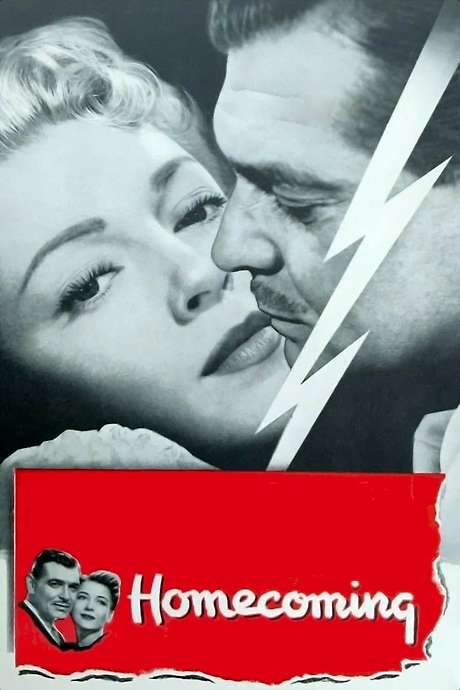
Homecoming (1948) movie poster

Timeline

Homecoming (1948) Timeline Explained – Every Event in Order

Release, runtime and language
1948 · 113 mins · English
Directed by
Mervyn LeRoy
Starring
Clark Gable, Gladys Cooper, Cameron Mitchell, Anne Baxter, Ray Collins, Arthur O'Connell

Self‑absorbed Dr. Lee Johnson enlists in the Army Medical Corps during World II, more out of a sense that it’s “the thing to do” than genuine patriotism. On his first day he’s assigned to the spirited nurse known as “Snapshot,” whose sarcasm soon sparks a romance. As their affair deepens, Lee wrestles with guilt over betraying his wife, Penny, who waits for him back home.

On this page (5)
  1. 1 Events in order (12)
  2. 2 Timeline questions answered
  3. 3 Movie threads
  4. 4 Movies like Homecoming
  5. 5 Every angle

12 events in order · contains spoilers

Homecoming Timeline: Events in Chronological Order

Every key event of Homecoming (1948) in order, scene by scene, with when and where it takes place. Use it to untangle flashbacks, time jumps and parallel storylines, to refresh your memory before the sequel or to find the exact scene you are thinking of.

  1. Frame narration begins on the return trip

    On the transport boat home, a war correspondent questions Johnson about his experiences. He begins to tell his story, hinting at the life he will recount in flashbacks. The frame sets up the wartime memory that follows.

    When
    1945
    Where
    Transport boat
  2. 1941: Johnson's hospital career and enlistment

    Johnson is the chief surgeon at a civilian hospital, known for keeping emotion out of patient care. He decides to join the Army, signaling a shift from civilian medicine to wartime service. At a cocktail party with Penny, Dr. Sunday accuses him of selfish motives, and Penny defends him, ending with a night together.

    When
    1941
    Where
    Hospital; Penny's home
  3. Meeting Snapshot aboard the transport ship

    On the journey to the front, Johnson meets Lt. Jane Snapshot McCall. They initially clash, but soon discover shared experiences and values. Their encounter plants the seeds of a complicated bond that will be tested later.

    When
    1942
    Where
    Transport ship
  4. Monkevickz's death and Johnson's remorse

    Sergeant Monkevickz dies from a malaria-ruptured spleen, a tragedy that reminds Johnson of the warning about Chester Village. He realizes he treated Monkevickz without enough humanity. To atone, he asks Penny to visit Monkevickz's father.

    When
    During WWII
    Where
    Base hospital; Chester Village area
  5. Penny's visit and the jealousy revelation

    Penny visits Monkevickz's father and encounters Dr. Sunday, who stirs tension. She confesses jealousy of Snapshot and suspects an affair between Johnson and Snapshot. The confrontation adds strain to their fragile relationships.

    When
    During WWII
    Where
    Monkevickz's father's house
  6. Snapshot reassigned; first kiss

    Snapshot is reassigned to a different unit, creating distance between them. Before parting, Johnson and Snapshot share a kiss that deepens their bond. They depart in opposite directions, unsure how their paths will cross again.

    When
    During WWII
    Where
    Base
  7. Reunion in Paris and renewed romance

    The lovers meet again in Paris and rekindle their romance, discovering anew how much they mean to each other. The war's pressures intensify their connection as they fall back in love. Their relationship becomes both a refuge and a responsibility.

    When
    1944–1945
    Where
    Paris
  8. Rescue mission for the 299th division

    Johnson and Snapshot dive into a perilous mission to rescue the 299th division, taking fire in the Battle of the Bulge. The chaos tests their courage and commitment as a couple and as soldiers. The experience deepens Johnson's sense of duty and vulnerability.

    When
    Dec 1944–Jan 1945
    Where
    Battle of the Bulge frontlines
  9. Homecoming: war ends, Johnson returns changed

    War ends and Johnson returns home as a world-weary man. The domestic life he re-enters contrasts sharply with the ordeals he endured overseas. Penny must confront the transformed reality of the man she loves.

    When
    Postwar
    Where
    Home (United States)
  10. Confession and the price of love

    Johnson apologizes to Dr. Sunday for ignoring malaria warnings and confesses his love for Snapshot. He reveals to Penny that Snapshot died from a shell fragment wound. The revelation unsettles the marriage but also offers a path toward truth and forgiveness.

    When
    Postwar
    Where
    Home
  11. A hopeful but unresolved ending

    The film closes with the sense that Johnson and Penny may patch up their differences, though the outcome remains uncertain. The audience is left with a hopeful note rather than definitive closure. The frame suggests reconciliation while acknowledging lingering consequences of memory and choice.

    When
    Postwar
    Where
    Home
  12. Memory as catalyst for Johnson's choices

    Snapshot's memory lingers as a driving force behind Johnson's decisions. Her presence explains both his moral reckonings and the depth of his love and regrets. The film uses this memory to fuse past and present in Johnson's ongoing life.

    When
    Postwar
    Where
    Memory/flashbacks

Last updated: October 09, 2025 at 09:23

Was this helpful?

Timeline questions answered

Homecoming Timeline Explained: Your Questions Answered

When does it happen, and why in that order? The questions people ask about the chronology of Homecoming (1948): time jumps, flashbacks, cause and effect between scenes and the correct order of events, each answered with spoilers.

Q1

Why did Dr. Johnson join the Army Medical Corps?

Dr. Johnson enlisted in the Army Medical Corps more out of a sense that it was "the thing to do" rather than genuine patriotism. His colleague Dr. Sunday openly accuses him of selfish motives, suggesting Johnson wanted to escape his comfortable civilian life and seek glory rather than serve meaningfully. The film presents this enlistment as a turning point that forces Johnson to confront his emotional detachment.

Foreshadowing: The film's opening frame establishes Johnson as someone who keeps emotional distance from patients, hinting at the selfishness Sunday later criticizes.

  • dr johnson
  • army medical corps
  • enlistment
  • motivation
  • clark gable
Q2

What caused the conflict between Johnson and Dr. Sunday at the party?

At the farewell cocktail party, Dr. Sunday directly accuses Johnson of unsentimental arrogance and suggests his army enlistment was driven by selfish motives rather than genuine patriotism or duty. This confrontation reveals the tension between their differing approaches to medicine and life, Sunday values emotional connection with patients while Johnson maintains clinical detachment.

Foreshadowing: This early clash foreshadows Johnson's later remorse when he recognizes his own failure to treat patients with full humanity.

  • dr sunday
  • conflict
  • party
  • accusation
  • colleague rivalry
Q3

How did Johnson and Snapshot's relationship begin?

Johnson and Snapshot met aboard the transport ship heading to the front lines. They initially clashed, but as their conversations deepened, they discovered common ground and shared resilience. What began as friction gradually evolved into a genuine friendship and then a tender romance, deepened by the distance, danger, and demands of wartime duty.

Foreshadowing: The transport ship meeting establishes the pivotal relationship that will drive Johnson's emotional journey throughout the film.

  • snapshot
  • johnson
  • romance
  • transport ship
  • lanA turner
Q4

Why does Johnson ask Penny to visit Sergeant Monkevickz's father?

After Monkevickz dies from a malaria-ruptured spleen, Johnson recognizes his own earlier failings, he treated Monkevickz with clinical detachment rather than full humanity. Seeking atonement, he asks Penny to visit Monkevickz's father in Chester Village (Monkevickz's boyhood home) to show that he has learned to value every life beyond the operating theater.

Foreshadowing: This act marks Johnson's first step toward moral reckoning, setting up his later apologies to Sunday and his deeper emotional transformation.

  • monkevickz
  • father
  • visit
  • atonement
  • malaria
Q5

What happened to Snapshot at the end of the movie?

Snapshot died from a shell fragment wound during the war. Johnson reveals this tragic truth to Penny when he returns home, explaining that she was killed in the chaos of the Battle of the Bulge rescue mission. Her death weighs heavily on Johnson and becomes a central source of his guilt and emotional burden.

Foreshadowing: The perilous rescue mission for the 299th division during the Battle of the Bulge foreshadows the ultimate price Johnson and Snapshot will pay.

  • snapshot
  • death
  • shell fragment
  • battle of the bulge
Q6

Why does Johnson confess his love for Snapshot to Penny?

Upon returning home, Johnson confesses his deep affection for Snapshot to both Dr. Sunday and Penny. This confession is part of his broader moral reckoning, he seeks forgiveness from Sunday for not heeding the malaria warnings and comes clean about his emotional affair, likely driven by guilt and the desire for honest reconciliation after experiencing Snapshot's death.

Foreshadowing: The confession completes Johnson's transformation from emotionally distant to emotionally honest, a journey the film has been building toward.

  • confession
  • affair
  • penny
  • forgiveness
  • marriage
Q7

Why does Johnson apologize to Dr. Sunday about malaria?

Johnson apologizes to Sunday for not heeding his warnings about malaria in Chester Village, the boyhood home of Sergeant Monkevickz. This apology acknowledges Sunday's earlier criticism that Johnson was arrogant and dismissive of legitimate medical concerns. It represents Johnson's recognition of his past failures and his growth toward humility.

Foreshadowing: This moment connects back to the earlier conflict at the party and shows Johnson's moral arc completing.

  • malaria
  • apology
  • sunday
  • chester village
  • warning
Q8

What does the ending imply about Johnson's marriage to Penny?

The ending suggests Johnson and Penny may rebuild their marriage and reach a new understanding. The film closes with a hopeful but unresolved note, the possibility of reconciliation exists, though the outcome remains uncertain. The lingering memories of the war and Snapshot's death continue to weigh on Johnson, but the suggestion is that they might find happiness together despite these scars.

Foreshadowing: The bittersweet ending reflects the film's overall theme of learning empathy at great personal cost.

  • ending
  • reconciliation
  • penny
  • marriage
  • hope
Q9

Why is the movie told through flashbacks?

The film uses a frame narrative where Johnson, aboard a transport boat returning home from WWII, is pressed by a reporter to recount his wartime experiences. This flashback structure allows the story to interweave past and present, showing how Johnson's wartime memories, particularly of Snapshot, continue to drive his present-day decisions and moral choices.

Foreshadowing: The frame narrative establishes that Johnson is reflecting on his transformation, with Snapshot's memory acting as a catalyst for his choices.

  • flashback
  • frame narrative
  • structure
  • return home
Q10

How did the war change Johnson as a person?

The war transformed Johnson from a self-absorbed, emotionally detached surgeon into a man haunted by guilt, capable of deeper empathy and moral reckoning. The experience of losing Snapshot, witnessing death, and confronting his own failures, particularly regarding Monkevickz, hardened him and made him world-weary. He learned to value human life beyond clinical treatment, but at tremendous personal cost.

Foreshadowing: This transformation is gradual, beginning with his meeting Snapshot and culminating in his return home as a changed man.

  • transformation
  • war
  • growth
  • hardened
  • personality change

Movie threads

More Movies Like Homecoming, by Mood & Story

Curated lists built around what makes Homecoming tick: the same mood, the same kind of story or the same emotional payoff. Each list explains why these movies belong together.

Tragic Wartime Romances like Homecoming

Love stories forged in the crucible of war, shadowed by sacrifice and guilt. For viewers seeking movies like 'Homecoming', this list features romantic dramas set during wartime. These films explore love blossoming under extreme pressure, often intertwined with themes of duty, infidelity, and the heavy emotional cost of conflict, resulting in deeply bittersweet narratives.

  • romantic
  • tragic
  • guilty
  • melancholic
  • dramatic
  • nostalgic
  • Tone: melancholic, romantic, tragic
  • Pacing: steady, character-driven
Why these movies?

The story pattern: The narrative pattern follows a romance that intensifies quickly due to the high-stakes environment of war, creating a powerful bond that exists outside normal life. This relationship is typically challenged by external dangers, internal guilt (often involving a partner back home), and ultimately, a significant loss that forces characters to confront the consequences of their choices.

Why they belong together: Movies are grouped here for their shared setting of war as a catalyst for romance, their exploration of moral conflict and infidelity, and their consistently heavy emotional weight leading to a poignant, bittersweet resolution. The tone is predominately melancholic and reflective.

Moral Awakening Dramas like Homecoming

Characters grapple with selfish choices, learning empathy through profound personal loss. If you liked the character arc in 'Homecoming', this collection features movies about selfish protagonists who undergo a difficult moral awakening. These stories focus on personal growth triggered by guilt and loss, leading to a bittersweet understanding and a changed, more empathetic person.

  • guilty
  • reflective
  • regretful
  • dramatic
  • melancholic
  • somber
  • Tone: melancholic, reflective, regretful
  • Pacing: steady, deliberate
Why these movies?

The story pattern: The narrative centers on a flawed, often selfish character whose actions cause harm to others. A pivotal event, frequently involving loss or betrayal, serves as a catalyst for intense self-reflection. The journey is not about achieving a happy ending, but about earning a sobering wisdom and a more complex understanding of responsibility and love.

Why they belong together: These movies share a core character arc of transformation through pain, a melancholic and reflective tone, and a narrative structure that prioritizes internal conflict over external action. They deliver a heavy emotional experience culminating in a bittersweet resolution that emphasizes growth over triumph.

If you liked this

Movies Like Homecoming

Similar movies to Homecoming: the same genre, themes or kind of story. Each one comes with its own plot summary, timeline and ending explained.

Browse all movie summaries

Every angle

Homecoming (1948) Explained: Plot, Timeline & Characters

Everything about Homecoming in one place: what happens in the plot summary, the timeline in chronological order, the characters and meaning and a spoiler-free summary. What's After the Movie adds the cast, box office and post-credit scenes.

Coming soon on iOS and Android

The Plot Explained Movie Summary App

Plot summaries, endings explained and timelines on your phone. Catch up on any movie in minutes, save your favorites and never miss a twist again.

Be the first to know when we launch. Your email stays private, always.

Learn more about the app