Plot Explained Spoilers guaranteed!
Plot Explained

Browse by genre

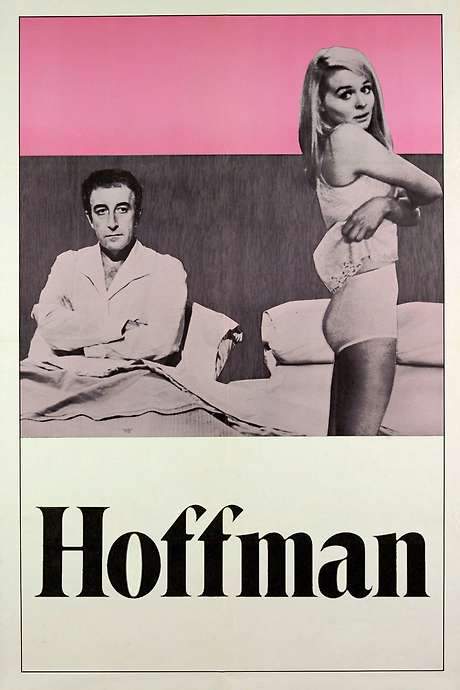
Hoffman (1970) movie poster

Characters & Themes

Hoffman (1970) Characters, Setting & Themes Explained

Release, runtime and language
1970 · 113 mins · English
Loading streaming availability…
Directed by
Alvin Rakoff
Starring
Peter Sellers, David Lodge, Jeremy Bulloch, Sinéad Cusack, George Hilsdon, John Tatum

A sly tale of blackmail about a beauty and her boss A businessman blackmails his young secretary into spending a weekend with him.

On this page (8)
  1. 1 Where to watch
  2. 2 Characters explained (4)
  3. 3 Where & when it takes place
  4. 4 Themes & meaning (3)
  5. 5 Character & meaning questions
  6. 6 Movie threads
  7. 7 Movies like Hoffman
  8. 8 Every angle
Loading streaming availability…

4 main characters · contains spoilers

Hoffman Characters Explained: Who Is Who

The main characters of Hoffman (1970), heroes and villains: what drives them, how they change over the course of the story and what each of them reveals about the film's bigger ideas.

  • Mr. Hoffman (Peter Sellers)

    A recently divorced executive who bullies Janet psychologically, using information as leverage. He is bitter about women and uses coercion to compel her to stay, and he hides a threat that could send Tom to jail. His calculated restraint and unsettling calm make him dangerous and untrustworthy.

    • 🧠 Manipulator
    • 🎭 Antagonist
    • 🔒 Control
  • Tom Mitchell

    played by Jeremy Bulloch

    Janet's fiancé who is primarily concerned with his own safety and reputation. He and his mother pressure Janet to return to Hoffman to keep Tom out of jail, revealing self-centered attitudes. Tom can be passive, trapped between loyalty to Janet and a desire to protect himself.

    • 🎭 Drama
    • 🗝️ Family pressure
    • ⚖️ Reputation
  • Miss Smith (Sinéad Cusack)

    Janet, young and inexperienced, is coerced into staying with Hoffman. She initially resists and provokes him, but gradually negotiates a way to become his permanent companion. Her resilience grows as she navigates threats and manipulation.

    • 🔎 Agency
    • 🧭 Resilience
    • 💬 Communication
  • Mrs. Mitchell

    played by Ruth Dunning

    Tom's mother, more concerned about the couple's situation than Janet's well-being. She pressures Janet to endure Hoffman’s control to protect Tom, highlighting social and familial self-interest. Her stance emphasizes the pressures that families place on relationships.

    • 👵 Authority
    • 🧭 Social pressure
    • 🗣️ Family dynamics

Last updated: February 19, 2026 at 09:19

Was this helpful?

Setting

Where and When Does Hoffman Take Place?

The setting of Hoffman (1970): the year and time period, the places and locations, and how they shape the characters, the mood and the tension of the story.

Time period

Location

Hoffman's flat, London

Most of the action unfolds inside Hoffman's flat, a stark urban apartment that becomes a stage for psychological warfare. The claustrophobic space concentrates power plays and fear, turning intimate conversations into confrontations. The contrast with the corporate world outside underscores how professional life can feed into private coercion.

  • 🏙️ Urban
  • 🏠 Domestic setting
  • 🧭 Corporate life

Last updated: February 19, 2026 at 09:19

Was this helpful?

3 major themes

Hoffman Meaning: Themes & Message Explained

What is Hoffman (1970) really about? The emotional, social and philosophical themes the film keeps returning to, its symbolism and the message beneath the surface.

  • Power dynamics

    Hoffman uses information and intimidation to control Janet, while Tom and his mother respond with self-preservation. The film examines how authority can be exercised through psychological pressure rather than force. The confrontation in a small apartment amplifies the sense that power can reside in knowledge and tone.

  • Manipulation

    Blackmail and coercion drive the plot as Hoffman leverages a threat to keep Janet under his influence. Janet resists, gradually turning the tables through defiance and negotiation. The theme explores how language can shape actions, fear, and decisions more than physical threats.

  • Relationship dynamics

    The dynamic between Janet, Hoffman, Tom, and Mrs. Mitchell reveals how loyalty and self-interest shape decisions. Janet's agency grows as she asserts boundaries and negotiates a path forward. The family pressures and workplace ties add complexity to personal relationships.

Last updated: February 19, 2026 at 09:19

Was this helpful?

Character & theme questions

Hoffman Characters & Meaning: Your Questions Answered

The questions people ask about Hoffman (1970): who the characters really are, their relationships, what the symbols mean, where it takes place and what the movie is really about. Each answer contains spoilers.

Q1

Where does the story take place?

The film unfolds primarily inside Hoffman's flat in London. The stark urban apartment becomes an intimate stage for psychological confrontation, with the claustrophobic space amplifying tensions between the characters. The contrast between this domestic setting and the corporate world outside highlights how professional power dynamics can translate into private coercion.

  • setting
  • london
  • apartment
  • location
  • urban
Q2

When is the movie set?

While an exact year is not specified, the film's early 1970s release and the setting's description as a stark urban environment suggest a contemporary setting. The corporate world referenced and the dynamics between boss and secretary reflect workplace attitudes typical of that era.

  • era
  • time period
  • 1970s
  • setting
Q3

What are the main themes in the movie?

The film explores three interconnected themes: power dynamics, manipulation, and relationship dynamics. Power is exercised through psychological pressure rather than physical force, with information serving as the primary tool of control. Manipulation manifests through blackmail and coercion, showing how language can shape fear and decisions. Relationship dynamics reveal how loyalty and self-interest conflict when characters face difficult circumstances.

  • themes
  • power
  • manipulation
  • control
  • coercion
Q4

How does the movie portray power dynamics?

Hoffman uses information and intimidation to control Janet, demonstrating how authority can be exercised through psychological pressure rather than overt force. The confined apartment setting concentrates these power plays, turning intimate conversations into confrontations where knowledge and tone become weapons. The film suggests power resides not in physical dominance but in what someone knows about another person.

  • power
  • control
  • psychology
  • authority
  • dominance
Q5

Who is Mr. Hoffman in the story?

Mr. Hoffman is a recently divorced executive who becomes the film's central antagonist. He psychologically bullies his young secretary Janet, using information as leverage to compel her to stay with him. He harbors a secret threat that could send Janet's fiancé Tom to jail, which he uses to maintain control. His calculated restraint and unsettling calm make him a dangerous and untrustworthy figure.

  • hoffman
  • antagonist
  • boss
  • executive
  • peter sellers
Q6

Who is Janet in the film?

Janet is a young, inexperienced secretary who becomes the target of Hoffman's coercion. Initially she resists and provokes him, but gradually learns to negotiate her way through his manipulation. Her resilience grows as she navigates threats, and she ultimately asserts boundaries to become his permanent companion on her own terms. The character represents the growth of agency under impossible circumstances.

  • janet
  • protagonist
  • secretary
  • victim
  • resilience
Q7

What motivates Mr. Hoffman?

Hoffman is motivated by bitterness toward women following his divorce and a desire for control. He uses blackmail not just for companionship but as a tool to exercise power over someone weaker. His threat against Tom suggests he values having leverage over others, making his motivation about psychological dominance rather than genuine connection.

  • motivation
  • bitterness
  • control
  • revenge
  • power
Q8

Who is Tom Mitchell in the story?

Tom Mitchell is Janet's fiancé, primarily concerned with his own safety and reputation. When Hoffman threatens to expose something that could send Tom to jail, he and his mother pressure Janet to return to Hoffman to protect him. This reveals Tom's self-centered attitude and the way familial pressure can distort loyalty, leaving Janet to bear the burden of protecting both herself and her fiancé.

  • tom
  • fiancé
  • self-interest
  • pressure
  • family
Q9

What role does manipulation play in the movie?

Blackmail and coercion drive the entire plot as Hoffman leverages threats to keep Janet under his influence. The film examines how language itself can shape actions, fear, and decisions more effectively than physical threats. Janet's journey involves resisting this manipulation and gradually turning the tables through defiance and negotiation, showing how the oppressed can reclaim power through strategic communication.

  • manipulation
  • blackmail
  • coercion
  • language
  • negotiation
Q10

How do the characters' relationships develop?

The dynamic between Janet, Hoffman, Tom, and Mrs. Mitchell reveals how loyalty and self-interest constantly shape decisions. Janet's relationship with Tom becomes strained as his self-preservation takes priority over her well-being. Mrs. Mitchell pressures Janet to endure Hoffman's control to protect Tom, highlighting how families can place unfair burdens on individuals. Janet's agency grows as she learns to negotiate rather than simply resist.

  • relationships
  • loyalty
  • family
  • development
  • tension
Q11

What is the tone and atmosphere of the film?

The film maintains a tense atmosphere with medium intensity, built around sustained psychological pressure and emotional manipulation. The confined apartment setting creates an always uneasy feeling as power shifts between characters. Despite the serious subject matter involving coercion and betrayal, the complexity remains straightforward, focusing on the escalating dynamic between two main characters without elaborate subplots.

  • tone
  • atmosphere
  • tension
  • mood
  • style
Q12

What kind of world does the movie depict?

The film depicts an urban professional world where workplace authority can easily become personal coercion. The stark domestic apartment serves as both prison and battleground, while the corporate world outside provides the power structure that enables Hoffman's behavior. The world feels isolating and cold, with characters trapped by both circumstance and the people around them.

  • world
  • setting
  • environment
  • urban
  • corporate

Movie threads

More Movies Like Hoffman, by Mood & Story

Curated lists built around what makes Hoffman tick: the same mood, the same kind of story or the same emotional payoff. Each list explains why these movies belong together.

Movies about claustrophobic power dynamics like Hoffman

Stories where psychological manipulation creates unbearable tension in confined spaces. A collection of films that explore intense psychological power struggles, similar to Hoffman. If you enjoyed the tense negotiation of control between two characters, you'll find more movies here focusing on manipulation and emotional tension.

  • psychologically tense
  • claustrophobic
  • manipulative
  • uneasy
  • power struggle
  • emotional blackmail
  • Tone: tense, uneasy
  • Pacing: steady, deliberate
Why these movies?

The story pattern: These narratives typically revolve around two characters locked in a psychological duel. The conflict is driven by coercion, blackmail, or dependency, escalating steadily within a confined environment until a fragile and often morally ambiguous resolution is reached.

Why they belong together: They are grouped together because they share a focus on intimate, high-stakes interpersonal conflicts. The shared mood is one of sustained unease and psychological tension, with a steady pacing that allows the power dynamics to simmer and erupt.

Movies with bittersweet relationship endings like Hoffman

Character-driven stories where fraught relationships end in complicated, imperfect resolutions. Find more films like Hoffman that explore difficult relationships ending in complex, bittersweet resolutions. These dramas focus on characters who gain a hollow victory, perfect for viewers who appreciate morally grey conclusions.

  • bittersweet
  • psychological manipulation
  • betrayal
  • relationship negotiation
  • moral ambiguity
  • uneasy
  • Tone: tense, bittersweet
  • Pacing: steady, character-driven
Why these movies?

The story pattern: The journey follows a character, often in a vulnerable position, who is coerced into a situation. Through the conflict, they fight to reclaim some agency, but the resolution comes at a significant personal cost, resulting in an ending that is neither fully tragic nor happy.

Why they belong together: These films are connected by their shared emotional arc: starting with coercion or entrapment and moving towards a pyrrhic victory. They blend a tense tone with a medium emotional weight, culminating in a bittersweet feeling that resonates long after the credits roll.

If you liked this

Movies Like Hoffman

Similar movies to Hoffman: the same genre, themes or kind of story. Each one comes with its own plot summary, timeline and ending explained.

Browse all movie summaries

Every angle

Hoffman (1970) Explained: Plot, Timeline & Characters

Everything about Hoffman in one place: what happens in the plot summary, the timeline in chronological order, the characters and meaning and a spoiler-free summary. What's After the Movie adds the cast, box office and post-credit scenes.

Coming soon on iOS and Android

The Plot Explained Movie Summary App

Plot summaries, endings explained and timelines on your phone. Catch up on any movie in minutes, save your favorites and never miss a twist again.

Be the first to know when we launch. Your email stays private, always.

Learn more about the app