







Plot Explained Spoilers guaranteed!
Plot Explained

Browse by genre

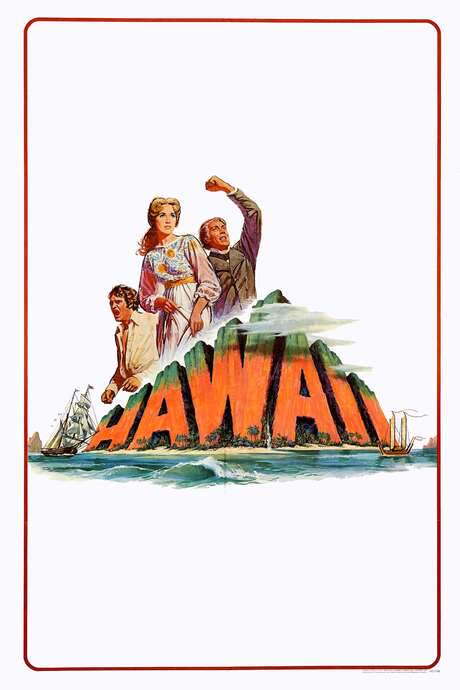
Hawaii (1966) movie poster

Characters & Themes

Hawaii (1966) Characters, Setting & Themes Explained

Release, runtime and language
1966 · 189 mins · English
JustWatch #10,674 2
Directed by
George Roy Hill
Starring
Julie Andrews, Bette Midler, Gene Hackman, Michael Constantine, Lou Antonio, Richard Harris

Adapted from James Michener’s novel, the film follows Abner Hale, a stern, humorless New England missionary, who marries the beautiful Jerusha Bromley and brings her to the exotic island kingdom of Hawaii to convert its native people. Their rigid worldview clashes with Hawaiian culture, preventing understanding and ending in tragedy.

On this page (9)
  1. 1 Where to watch
  2. 2 Characters explained (12)
  3. 3 Where & when it takes place
  4. 4 Themes & meaning (3)
  5. 5 Character & meaning questions
  6. 6 The book behind the movie
  7. 7 Movie threads
  8. 8 Movies like Hawaii
  9. 9 Every angle

Where to watch

Where to Watch Hawaii (1966)

Where can you watch Hawaii? Stream, rent or buy it in the US, including on ScreenPix Amazon Channel , Hoopla and Tubi TV: current JustWatch availability with up-to-date prices.

Streaming availability powered by JustWatch

12 main characters · contains spoilers

Hawaii Characters Explained: Who Is Who

The main characters of Hawaii (1966), heroes and villains: what drives them, how they change over the course of the story and what each of them reveals about the film's bigger ideas.

  • Jerusha Bromley Hale

    played by Julie Andrews

    Newly married to Abner Hale, Jerusha travels to Maui to aid the mission. She is compassionate, proactive, and resilient, helping locals, rescuing an infant, and bearing and raising Micah while navigating the island’s upheavals.

    • 💫 Protagonist
    • 🧭 Missionary
    • 🌺 Compassion
  • Abner Hale

    played by Max von Sydow

    A newly ordained Reverend who marries Jerusha and leads the Maui mission. His idealism is tested as he confronts limits of authority and, years later, learns he will never be ordained because he is not white, shifting his role toward deacon and mentor to native communities.

    • 🕯️ Faith
    • 🧭 Leadership
    • 🌊 Change
  • Rafer Hoxworth

    played by Richard Harris

    A jealous whaler who Belongs to Jerusha’s past and travels with the crew, returning to the island and threatening Abner after discovering Jerusha’s marriage. His actions catalyze conflict between settlers and Hawaiians.

    • ⚓ Adventure
    • 💔 Jealousy
  • Keoki

    played by Manu Tupou

    Hawaiian royal and ally of the mission who grows into a pivotal figure for native leadership. He resists early conversion but remains central to the island’s evolving power dynamic.

    • 👑 Royalty
    • 🕊️ Faith
  • Kelolo

    played by Ted Nobriga

    Keoki’s father and Malama Kanakoa’s husband, representing royal tradition and the complex family loyalties that frame the political landscape.

    • 👨‍👩‍👦 Family
    • 👑 Royalty
  • Malama Kanakoa

    played by Jocelyne LaGarde

    The ruling matriarch who engages with Christianity while safeguarding her people’s customs. She wavers between conversion and autonomy, ultimately dying after a life of political and spiritual tension.

    • 👸 Queen
    • 🕊️ Faith
  • Noelani

    played by Elizabeth Logue

    The new Ali'i Nui who marries Keoki, symbolizing the island’s transition as traditional leadership meets new religious and social orders.

    • 👑 Leadership
    • 🌺 Culture
  • Micah Hale (4 Years)

    played by Robert Oakley

    The infant Jerusha saves from drowning, who grows up as part of the Hale household and becomes a symbol of the long-term impact of the mission on Hawaiian families.

    • 👶 Child
    • 🕊️ Faith
  • Micah Hale (12 Years)

    played by Clas S. von Sydow

    A preteen in the continuing story of mission life, witnessing the changes and tensions on the island as generations pass.

    • 🧒 Youth
    • 🌎 Legacy
  • Micah Hale (18 Years)

    played by Bertil Werjefelt

    The grown Micah, the disfigured infant Jerusha saved long ago, who returns as a young man to become a possible assistant to Abner, completing a circle of fate.

    • 🧓 Elder
    • 🌟 Return
  • Iliki

    played by Lokelani S. Chicarell

    A young Hawaiian girl baptized by Abner Hale, representing the mission’s reach into native communities and the personal cost of conversion for the island.

    • 🧒 Child
    • 🕊️ Faith
  • Gideon Hale

    played by Malcolm Atterbury

    Abner’s ally within the mission’s social network, reflecting the broader community of Hawaiians and missionaries who share in the island’s struggles.

    • 👨‍👦 Family
    • 🕯️ Faith

Last updated: October 04, 2025 at 19:23

Was this helpful?

Setting

Where and When Does Hawaii Take Place?

The setting of Hawaii (1966): the year and time period, the places and locations, and how they shape the characters, the mood and the tension of the story.

Time period

1819

The events unfold in 1819, a period of first sustained contact between Hawaiians and Western missionaries. Indigenous customs, royal succession, and new religious ideas collide as Abner and Jerusha establish a mission in a changing society. The era features, whaling voyages, and escalating clashes between native sovereignty and colonial influence.

Location

Lahaina, Maui

Lahaina on the island of Maui serves as the initial settlement for the missionaries. The coastal town with grassy huts and a growing church becomes the stage for cultural clash as Western religious ideas meet native Hawaiian traditions. The harbor and local politics introduce tension between sailors, royalty, and the arriving missionaries.

  • 🏝️ Island life
  • 🗺️ Geography
  • 🕰️ Colonial era

Last updated: October 04, 2025 at 19:23

Was this helpful?

3 major themes

Hawaii Meaning: Themes & Message Explained

What is Hawaii (1966) really about? The emotional, social and philosophical themes the film keeps returning to, its symbolism and the message beneath the surface.

  • Culture Clash

    Christian missionaries confront native Hawaiian customs and royal traditions. Jerusha and Abner push for Western norms, while Malama Kanakoa and others resist or reinterpret them. The story centers on power, lineage, and the meaning of baptism within a deeply rooted culture. Tensions surface in marriage arrangements and social expectations as outsiders arrive.

  • Religion and Power

    Faith is used to justify control and shape communities. Abner's evolving stance—revealing limits of white authority—highlights the imperfect reach of Western dominance. The church grows amid political and economic pressures from settlers and planters. The interplay between evangelism and sovereignty drives much of the conflict.

  • Conflict and Loss

    The island experiences violence, riot, and personal tragedy as missionaries encounter resistance and betrayal. The church is assaulted, a shipboard tension simmers, and a devastating measles outbreak follows. Deaths and disillusionment intensify as native and settler interests clash, leaving a lasting mark on the community.

Last updated: October 04, 2025 at 19:23

Was this helpful?

Character & theme questions

Hawaii Characters & Meaning: Your Questions Answered

The questions people ask about Hawaii (1966): who the characters really are, their relationships, what the symbols mean, where it takes place and what the movie is really about. Each answer contains spoilers.

Q1

What is Lahaina like in the movie?

Lahaina on the island of Maui serves as the initial settlement for the missionaries. It's depicted as a coastal town with grassy huts and a growing church, becoming the stage for cultural clash as Western religious ideas meet native Hawaiian traditions. The harbor introduces tension between sailors, royalty, and arriving missionaries.

  • lahaina
  • maui
  • missionary settlement
  • coastal town
Q2

What time period is Hawaii set in?

The movie is set in 1819, a period of first sustained contact between Hawaiians and Western missionaries. This era features whaling voyages and escalating clashes between native sovereignty and colonial influence, as indigenous customs, royal succession, and new religious ideas collide.

  • 1819
  • hawaii
  • time period
  • colonial era
  • whaling
Q3

What is the culture clash about in Hawaii?

The culture clash centers on Christian missionaries confronting native Hawaiian customs and royal traditions. Jerusha and Abner push for Western norms while Malama Kanakoa and others resist or reinterpret them. Tensions surface in marriage arrangements, social expectations, and the meaning of baptism within a deeply rooted culture.

  • culture clash
  • hawaiian customs
  • missionaries
  • traditions
  • baptism
Q4

How is religion used as a tool of power in the film?

Faith is used to justify control and shape communities. Abner's evolving stance reveals the imperfect reach of Western dominance as he learns he will never be ordained because he is not white. The church grows amid political and economic pressures from settlers and planters, with the interplay between evangelism and sovereignty driving much of the conflict.

  • religion
  • power
  • missionaries
  • church
  • authority
  • ordination
Q5

Who is Abner Hale and what motivates him?

Abner Hale is a stern, humorless New England missionary who marries Jerusha Bromley and leads the Maui mission. His idealism is tested as he confronts the limits of authority, ultimately learning he will never be ordained because he is not white. He shifts his role toward deacon and mentor to native communities, representing the imperfect reach of Western dominance.

  • abner hale
  • missionary
  • character motivation
  • authority
Q6

Who is Jerusha Bromley Hale and what defines her?

Jerusha Bromley Hale is the newly married wife of Abner Hale who travels to Maui to aid the mission. She is compassionate, proactive, and resilient, helping locals, rescuing an infant from drowning, and bearing and raising Micah while navigating the island's upheavals. She represents the human cost of cultural collision.

  • jerusha bromley
  • hale
  • compassion
  • micah
  • rescue
Q7

Who is Keoki and what is his significance?

Keoki is Hawaiian royal and ally of the mission who grows into a pivotal figure for native leadership. He resists early conversion but remains central to the island's evolving power dynamic, representing the complex relationship between traditional Hawaiian leadership and the arriving missionaries.

  • keoki
  • hawaiian royal
  • native leadership
  • conversion
Q8

Who is Malama Kanakoa and what is her role?

Malama Kanakoa is the ruling matriarch who engages with Christianity while safeguarding her people's customs. She wavers between conversion and autonomy, ultimately dying after a life of political and spiritual tension. She represents the complex family loyalties that frame the political landscape of the island.

  • malama kanakoa
  • matriarch
  • queen
  • customs
  • conversion
Q9

What conflicts and losses define the movie?

The island experiences violence, riot, and personal tragedy as missionaries encounter resistance and betrayal. The church is assaulted, shipboard tension simmers, and a devastating measles outbreak follows. Deaths and disillusionment intensify as native and settler interests clash, leaving a lasting mark on the community.

  • conflict
  • loss
  • violence
  • riot
  • measles outbreak
  • death
Q10

What is the significance of Micah Hale?

Micah Hale is the infant Jerusha saves from drowning, who grows up as part of the Hale household. He becomes a symbol of the long-term impact of the mission on Hawaiian families, returning as a young man to potentially assist Abner, completing a circle of fate that represents both loss and hope.

  • micah hale
  • infant
  • saved
  • symbol
  • long-term impact
Q11

Why does the ending feel bittersweet?

The ending is bittersweet because Abner, after immense loss, including the death of Jerusha, finds a glimmer of hope and purpose in the survival of the infant he saved long ago. The movie mingles sorrow with quiet redemption, as the next generation represents both the tragedy of cultural destruction and the possibility of reconciliation.

  • bittersweet ending
  • redemption
  • hope
  • loss
  • survival

Movie threads

More Movies Like Hawaii, by Mood & Story

Curated lists built around what makes Hawaii tick: the same mood, the same kind of story or the same emotional payoff. Each list explains why these movies belong together.

Historical Dramas of Cultural Clash and Tragedy like Hawaii

Epic stories where cultures collide, leading to profound tragedy and loss. Explore movies like Hawaii that portray the tragic collision of different worlds. These historical epics feature intense cultural conflicts, heavy emotional weight, and bittersweet or bleak endings, perfect for viewers interested in stories about the real-world costs of colonialism and faith-based missions.

  • tragic
  • solemn
  • devastating
  • epic
  • grieving
  • oppressive
  • Tone: melancholic, solemn, tragic
  • Pacing: steady, epic
Why these movies?

The story pattern: These stories chart the often-tragic encounters between distinct civilizations, typically from the perspective of an outsider, such as a missionary, colonist, or trader. The narrative structure is often epic and steady-paced, spanning years or decades to show the gradual or sudden devastation wrought by disease, conflict, and rigid belief systems, culminating in a somber reflection on loss.

Why they belong together: Movies are grouped here based on their shared focus on historical cultural collisions, their high emotional intensity, heavy thematic weight surrounding grief and loss, and a melancholic or bittersweet tone that lingers long after the credits roll.
Movies with Ill-Fated Romance and Bittersweet Endings like Hawaii

Romantic connections that are tested and ultimately broken by external, overwhelming forces. If you liked the tragic romance in Hawaii, these films feature love stories tested to their limits. These dramas focus on couples whose relationships are shattered by external tragedies, disease, or cultural divides, delivering a heavy, melancholic vibe similar to Jerusha and Abner's story.

  • tragic romance
  • bittersweet
  • devastating
  • grieving
  • solemn
  • heartbreaking
  • Tone: melancholic, bittersweet, tragic
  • Pacing: steady, character-driven
Why these movies?

The story pattern: The narrative follows a couple who form a deep bond, often against the odds. Their romance becomes a central pillar of the story, but it is persistently challenged by an unrelenting series of tragedies—war, disease, death, or irreconcilable differences. The pacing is steady, building emotional investment before a final, heartbreaking separation or loss that leaves a sense of quiet sorrow mixed with the memory of love.

Why they belong together: These films are united by a specific emotional mix: a significant romance score intertwined with an even higher sadness score. The viewing experience is defined by the tension between the beauty of the relationship and the inevitability of its destruction, leading to a heavy, bittersweet conclusion.

If you liked this

Movies Like Hawaii

Similar movies to Hawaii: the same genre, themes or kind of story. Each one comes with its own plot summary, timeline and ending explained.

Browse all movie summaries

Every angle

Hawaii (1966) Explained: Plot, Timeline & Characters

Everything about Hawaii in one place: what happens in the plot summary, the timeline in chronological order, the characters and meaning and a spoiler-free summary. What's After the Movie adds the cast, box office and post-credit scenes.

Coming soon on iOS and Android

The Plot Explained Movie Summary App

Plot summaries, endings explained and timelines on your phone. Catch up on any movie in minutes, save your favorites and never miss a twist again.

Be the first to know when we launch. Your email stays private, always.

Learn more about the app