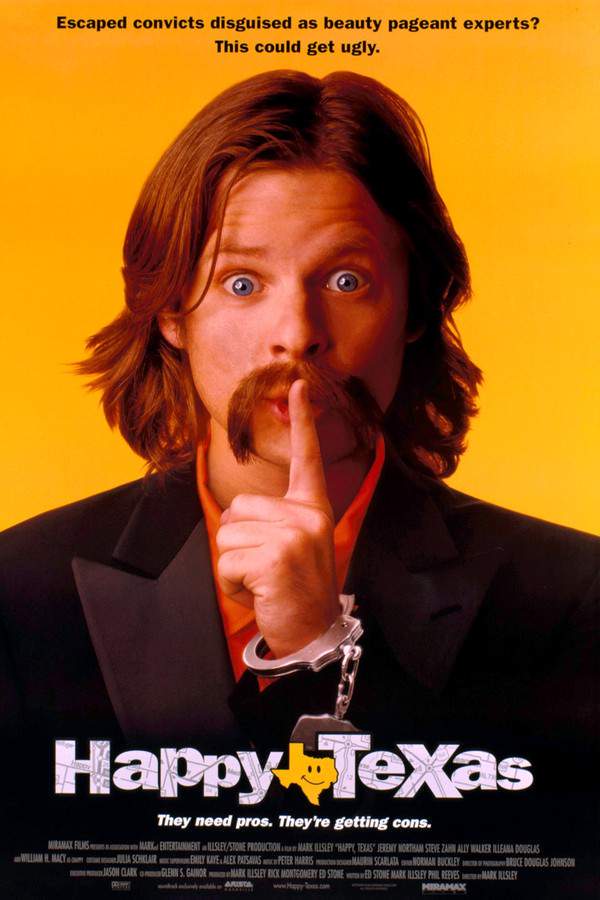
Three prisoners escape from a chain gang, and two of them, Wayne Steve Zahn and Harry Jeremy Northam, steal an RV. They soon discover the RV belongs to two gay men who travel around Texas as consultants for beauty pageants. They are apprehended by Chappy Dent William H. Macy, the sheriff of Happy, Texas, who mistakes the escapees for the pageant organizers. Posing as the organizers, Wayne and Harry pitch in to help with the pageant while dodging the law and waiting for an opportunity to rob the local bank.
The duo’s scheme becomes tangled as Chappy himself proves to be gay and feels an attraction to Harry. Meanwhile, Harry—who is straight—finds himself drawn to Josephine, the bank president, complicating loyalties and expectations. At the same time, a quietly provocative thread unfolds around David, who is also considered gay by others, though he is straight, and his involvement with Doreen, the pageant coordinator, adds another layer of comic and romantic confusion. Doreen, Ally Walker becomes a key figure in keeping the show’s backstage machinations from unraveling, while Wayne and Harry juggle the responsibilities of fake organizers, would-be bank robbers, and unwilling participants in a community pageant that takes on a life of its own.
As the pageant day arrives, the plot thickens when the third escaped convict surfaces, forcing Wayne and Harry to scramble plans and improvise a break-in during the show. Tensions rise as Harry, trying to maintain control, calls in more police, which only heightens the chaos and scrutiny around the contestants and organizers alike. The backstage energy of the pageant blends with the street-level tension of a robbery in motion, turning the event into a strange, small-town spectacle where misdirection and charm compete with law enforcement demands.
In the climactic sequence, the show must go on under pressure, and Wayne’s influence on the pageant world becomes unexpectedly central. The trio of escapees is finally cornered, yet the story circles back to a note of warmth and mischief. In a closing gesture that mixes gratitude with a wink at the audience, the pageant group that Wayne helped train arrives at the prison to perform the closing number in costumes he designed, offering a final underscore of creativity, rebooted identities, and the odd camaraderie that formed in the margins of their unlikely caper. The film ends on a note that feels both hopeful and humorous, a reminder that small-town life and offbeat dreams can sometimes intersect in the most unexpected ways.