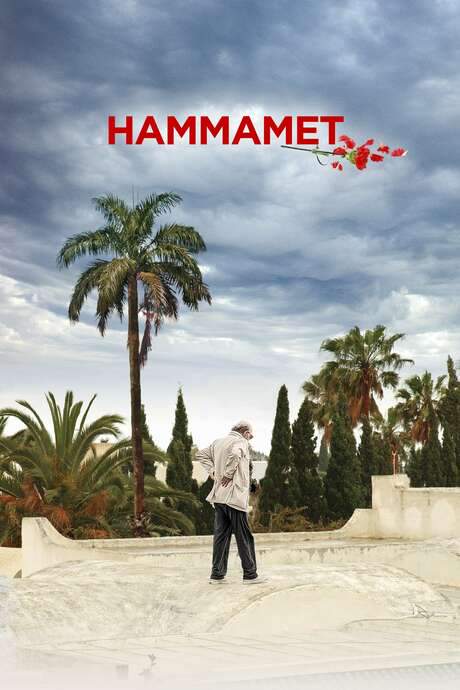
Year: 2020
Runtime: 127 mins
Language: Italian
Director: Gianni Amelio
The last years of Bettino Craxi, one of the most important and controversial italian leader of the 1980’s.
Find where to stream, rent, or buy Hammamet (2020) in the US with current JustWatch availability, up-to-date pricing, and platform listings for subscription, rental, and digital purchase options.
Warning: spoilers below!
Haven’t seen Hammamet yet? This summary contains major spoilers. Bookmark the page, watch the movie, and come back for the full breakdown. If you're ready, scroll on and relive the story!
Trace every key event in Hammamet (2020) with our detailed, chronological timeline. Perfect for unpacking nonlinear stories, spotting hidden connections, and understanding how each scene builds toward the film’s climax. Whether you're revisiting or decoding for the first time, this timeline gives you the full picture.
Last updated: June 09, 2026 at 07:36
Find frequently asked questions about the Hammamet (2020) timeline, including chronological order, nonlinear jumps, cause-and-effect links, and scene sequence clarifications. This timeline FAQ helps explain when key events happen, how moments connect, and why the story unfolds in that specific order.
Vincenzo Sartori wanted to resign because he believed Bettino Craxi had betrayed the core ideals of socialism by engaging in illicit activities. He was deeply troubled by how the party was being dragged into an ongoing investigation (Tangentopoli) and could no longer reconcile his conscience with his political affiliation. Sartori intended to step away from politics entirely rather than be complicit in what he saw as moral corruption.
At the 1989 Congress, Sartori explicitly states that Craxi has betrayed socialism, setting the stage for his eventual departure.
Craxi dismissed Sartori's concerns and blocked his resignation to protect the party's image and avoid internal conflict during a politically sensitive time. By downplaying the accusations and deflecting responsibility, Craxi prevented a public fracture that could have accelerated the party's decline. Keeping Sartori bound to the party also ensured his silence about the party's financial misconduct.
This moment establishes Craxi's pattern of prioritizing political survival over loyalty to his allies.
Sartori's suicide was triggered by the collapse of the PSI following the Tangentopoli corruption scandal. Unable to reconcile his integrity with the party's compromised state, and likely feeling guilty for not acting on his conscience earlier, Sartori took his own life by leaping from his office balcony. The weight of his unresolved moral conflict, combined with the public humiliation of the scandal, proved unbearable.
Sartori's earlier attempt to resign foreshadows his inability to survive in a corrupted political environment.
Fausto came to Hammamet ostensibly to deliver a letter from his late father Vincenzo, which accused Craxi of a lifetime of illicit deeds. However, his true intention was to kill Craxi as revenge for what he believed was Craxi's responsibility for his father's death. He secretly carried a loaded gun and was dressed in guerrilla gear, indicating a prepared assassination attempt.
The letter serves as a pretext, but Fausto's preparation with a weapon reveals his pre-meditated plan.
Craxi discovered that Fausto had a ready-to-fire gun and, rather than alerting security, chose to bargain. He offered to share certain past secrets in exchange for Fausto sparing his life. This deal reflects Craxi's survival instinct, he understood that Fausto's desire for truth or revenge could be exploited, and he used that to buy time while attempting to control the narrative of his legacy.
Craxi's awareness of the weapon and his decision to negotiate shows his lifelong talent for political deals.
Craxi refused because returning to Italy for surgery would risk immediate arrest. The Italian authorities were still pursuing charges related to Tangentopoli, and setting foot in an Italian hospital would expose him to legal detention. Despite knowing his health was failing, he chose to remain in Tunisia where he could avoid prosecution, even if it meant receiving inferior medical care.
This decision reflects Craxi's lifelong prioritization of political freedom over personal wellbeing.
As Craxi suffered cardiac arrest, he experienced two visions: a childhood memory from boarding school representing his innocent past, and a surreal encounter where his father led him from the Milan Cathedral's rooftop to a theater mocking his corpse. These visions symbolize his journey from youthful ideals to the public humiliation of his legacy, contrasting his original aspirations with the contemptuous end he ultimately received.
The rooftop-to-theater imagery mirrors his political ascent and subsequent fall from grace.
The shocking truth revealed at the end is that Vincenzo Sartori did not commit suicide, his son Fausto killed him. In a moment of furious indignation over his father's continued support for Craxi, Fausto murdered Vincenzo and staged it as suicide. This revelation reframes the entire tragedy, showing how Fausto's obsession with Craxi destroyed his own family before he even arrived in Hammamet.
Fausto's violent intentions toward Craxi hint at a capacity for extreme action against his own father.
Anita agreed to protect the tape containing Craxi's most guarded confessions because Fausto, now mentally unstable, entrusted it to her with his life. Though she claimed never to have seen him before when asked by the director, she took custody of the tape, choosing to preserve her father's secrets rather than expose them. This decision reflects both her loyalty to family and the burden of carrying unresolved truth.
The tape represents the final leverage over Craxi's legacy, and Anita's choice to protect it echoes her father's lifelong habit of controlling narratives.
Craxi's former mistress (amante) came to Hammamet seeking a final meeting with him as his life was drawing to a close. She wanted closure and one last moment together before his death. Anita initially resisted but eventually permitted a private meeting in a hotel, recognizing that her father still held deep feelings for the woman. This reflects the complex personal relationships of public figures who strive to preserve dignity even as their public reputations collapse.
The encounter highlights Craxi's human side amidst his political downfall.
Discover curated groups of movies connected by mood, themes, and story style. Browse collections built around emotion, atmosphere, and narrative focus to easily find films that match what you feel like watching right now.
Intimate portraits of powerful figures brought low by scandal and isolation.Explore movies like Hammamet that delve into the lives of fallen political leaders. These similar history and drama films focus on scandal, exile, and the heavy personal cost of power.
These stories follow once-powerful individuals grappling with their diminished status, often through a reflective and slow-paced lens. The narrative centers on confronting past mistakes, dealing with isolation, and the struggle to find meaning or redemption in their final days.
They are grouped by their shared focus on the melancholic aftermath of political scandal, heavy emotional weight, and a somber tone that examines the human cost of power and corruption.
Quiet, heavy dramas where characters confront their past regrets and tragic fates.If you liked the pacing and emotional depth of Hammamet, discover more slow burn tragic character studies. These movies feature heavy drama and a melancholic tone leading to sad endings.
The narrative is a gradual unraveling of a character's life and mind, often through introspection and confrontation with their own failures. The plot is secondary to the emotional journey, which builds steadily towards a climax of personal tragedy or revelation.
They share a specific mix of slow pacing, heavy emotional weight, a melancholic tone, and a ultimately sad ending, creating a cohesive experience of profound character-focused tragedy.
Don't stop at just watching - explore Hammamet in full detail. From the complete plot summary and scene-by-scene timeline to character breakdowns, thematic analysis, and a deep dive into the ending - every page helps you truly understand what Hammamet is all about. Plus, discover what's next after the movie.
Read a complete plot summary of Hammamet, including all key story points, character arcs, and turning points. This in-depth recap is ideal for understanding the narrative structure or reviewing what happened in the movie.
Discover the characters, locations, and core themes that shape Hammamet. Get insights into symbolic elements, setting significance, and deeper narrative meaning - ideal for thematic analysis and movie breakdowns.
Discover movies like Hammamet that share similar genres, themes, and storytelling elements. Whether you’re drawn to the atmosphere, character arcs, or plot structure, these curated recommendations will help you explore more films you’ll love.
Hammamet (2020) Plot Summary & Movie Recap
Hammamet (2020) Scene-by-Scene Movie Timeline
Hammamet (2020) Spoiler-Free Summary & Key Flow
Movies Like Hammamet – Similar Titles You’ll Enjoy
Mediterranea (2015) Ending Explained & Film Insights
A Ciambra (2018) Full Movie Breakdown
Mustafa Z (2017) Ending Explained & Film Insights
South Terminal (2019) Movie Recap & Themes
The Terrace (1980) Full Summary & Key Details
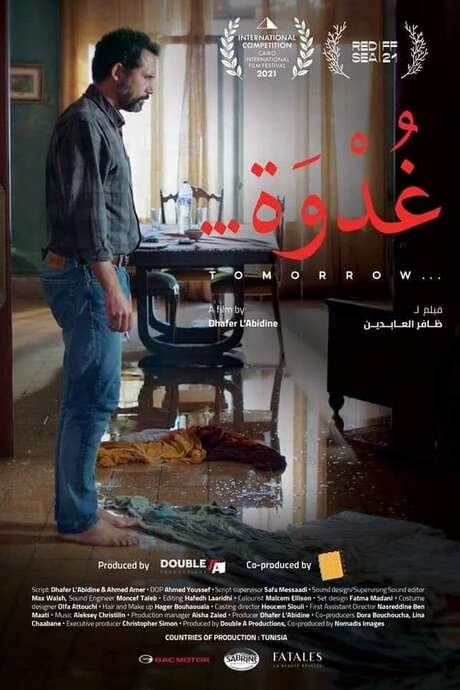
Tomorrow (2021) Detailed Story Recap
Harka (2022) Complete Plot Breakdown
Ashkal: The Tunisian Investigation (2022) Spoiler-Packed Plot Recap
Un eroe borghese (1995) Ending Explained & Film Insights
Sud (1993) Full Summary & Key Details
In the Name of the Italian People (1971) Detailed Story Recap
Sunstroke (1978) Story Summary & Characters
Italiani (1996) Detailed Story Recap
La mia generazione (1996) Story Summary & Characters
Borj Roumi (2024) Full Movie Breakdown