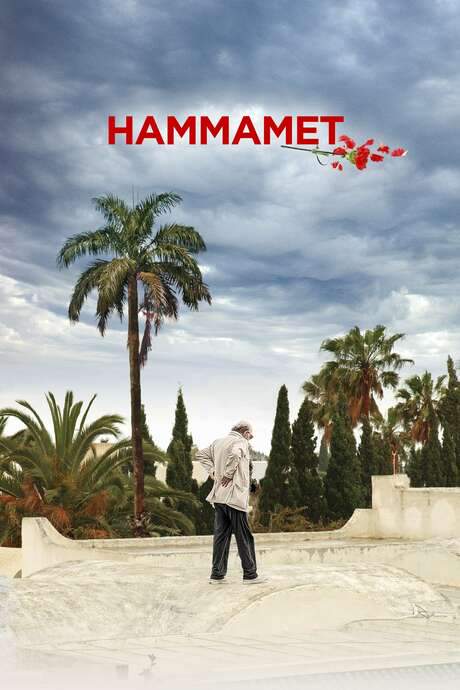
In the sun-drenched isolation of a villa in Hammamet, Tunisia, a once-powerful figure lives in the shadow of his own history. Bettino Craxi, the former Italian Prime Minister known for his magnetic presence and controversial legacy, finds himself far from the halls of power he once commanded. Now, gravely ill and living in self-imposed exile to evade Italian justice, his world has shrunk to the walls of a compound watched over by military guards. The "President" spends his days navigating the physical decline of his body and the relentless noise of a past that refuses to stay buried.
The quiet monotony of his retreat is disrupted when a mysterious young man in guerrilla gear breaches the villa's perimeter. Identified as Fausto, the son of a former political ally, the intruder brings with him the heavy, unresolved tensions of a bygone era. While Craxi’s devoted daughter, Anita, views the newcomer with deep suspicion—sensing a threat to her father's already fragile state—Craxi himself makes a puzzling choice. Rather than expelling the man, he brings him into the fold, initiating a relationship that is as enigmatic as it is tense.
As the two men interact, the villa transforms into a pressure cooker of political ghosts and personal demons. Craxi allows Fausto to film his daily life and memoirs, using the camera as a medium to look back on the highs and lows of his career. Yet, beneath the surface of these recollections lies a palpable sense of unease. The film weaves a psychological narrative that questions the nature of power and memory, observing a leader who remains defiant even as he faces the ultimate marginalization.
Through this intimate lens, the story explores the complex dynamics between a fallen titan and a generation shaped by the consequences of his actions. It is a character study defined by the stark contrast between the sunny, Mediterranean setting and the dark, turbulent currents of Italian political history. As the protagonists circle one another, the film invites the audience to witness a final chapter defined not by public speeches or votes, but by the quiet, intense scrutiny of a legacy hanging in the balance.