Plot Explained Spoilers guaranteed!
Plot Explained

Browse by genre

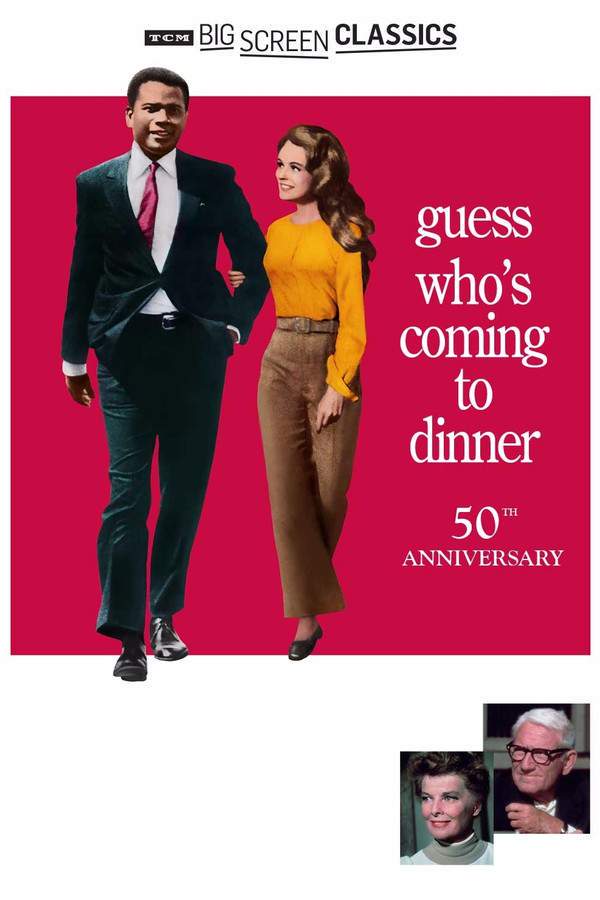
Guess Who's Coming to Dinner (1967) movie poster

Characters & Themes

Guess Who's Coming to Dinner (1967) Characters, Setting & Themes Explained

Release, runtime and language
1967 · 108 min
Loading streaming availability…
Directed by
Stanley Kramer
Starring
Katharine Hepburn, Sidney Poitier, Spencer Tracy
Budget
$4M

A young couple with progressive ideals find their beliefs challenged when their daughter introduces them to her boyfriend, a successful and charming Black man. The ensuing visit sparks thoughtful conversations and humorous moments as the family grapples with racial prejudice and societal expectations, ultimately exploring themes of love, acceptance, and the evolving landscape of American identity.

On this page (8)
  1. 1 Where to watch
  2. 2 Characters explained (4)
  3. 3 Where & when it takes place
  4. 4 Themes & meaning (3)
  5. 5 Character & meaning questions
  6. 6 Movie threads
  7. 7 Movies like Guess Who's Coming to Dinner
  8. 8 Every angle
Loading streaming availability…

4 main characters · contains spoilers

Guess Who's Coming to Dinner Characters Explained: Who Is Who

The main characters of Guess Who's Coming to Dinner (1967), heroes and villains: what drives them, how they change over the course of the story and what each of them reveals about the film's bigger ideas.

  • Joanna Drayton

    Joanna is a spirited 23-year-old who boldly pursues her love for John, despite the cultural and familial challenges. Her character embodies the struggle between tradition and progressive values, as she seeks her parents' acceptance while navigating her own desires. Joanna's determination and passion make her a catalyst for change within her family.

    • 🌟 Protagonist
    • 💖 Love
  • Dr. John Prentice

    played by Sidney Poitier

    John is a charismatic 37-year-old black widower who finds himself in a complex emotional landscape as he navigates his love for Joanna and the expectations from both families. He represents the intersection of ambition and vulnerability, facing pressure to conform to societal norms. John's character is pivotal in challenging the status quo regarding interracial relationships.

    • 💼 Professional
    • ❤️ Love
  • Christina Drayton

    played by Katharine Hepburn

    Christina is a progressive art gallery owner who demonstrates a growing acceptance of her daughter's relationship with John. Her character showcases the ability to adapt and understand the complexities of love across cultural lines. Christina becomes a supportive figure throughout the film, advocating for Joanna's happiness while balancing her own values.

    • 🎨 Artistic
    • 💪 Strong
  • Matt Drayton

    played by Spencer Tracy

    Matt is a traditional newspaper editor who initially struggles with the implications of his daughter's interracial engagement. His character arc is one of confrontation and growth, as he grapples with his biases and ultimately learns to embrace love over prejudice. Matt's journey reflects a broader societal shift towards acceptance.

    • 📰 Traditional
    • 🔄 Evolving

Last updated: October 22, 2024 at 22:50

Was this helpful?

Setting

Where and When Does Guess Who's Coming to Dinner Take Place?

The setting of Guess Who's Coming to Dinner (1967): the year and time period, the places and locations, and how they shape the characters, the mood and the tension of the story.

Time period

1967

The movie is set in 1967, a period marked by significant social change, including the Civil Rights Movement in the United States. This era saw increasing awareness and discussion surrounding race and equality, which are central themes in the film's narrative. The cultural backdrop heightens the characters' conflicts and resolutions throughout the story.

Location

San Francisco, Geneva

San Francisco serves as the primary backdrop for the film, known for its iconic Golden Gate Bridge and diverse culture. The city represents a progressive environment, which contrasts with the traditional values of some characters. Geneva, Switzerland, is also mentioned as a significant location due to John's professional responsibilities, symbolizing international connections and the couple's future possibilities.

  • 🌁 City
  • 🌍 Global

Last updated: October 22, 2024 at 22:50

Was this helpful?

3 major themes

Guess Who's Coming to Dinner Meaning: Themes & Message Explained

What is Guess Who's Coming to Dinner (1967) really about? The emotional, social and philosophical themes the film keeps returning to, its symbolism and the message beneath the surface.

  • Love

    The film explores the theme of love across racial boundaries, emphasizing that genuine love can transcend societal prejudices. Joanna and John's relationship serves as a focal point for discussions on acceptance, understanding, and familial duty. Their commitment to one another challenges their families to confront their biases and ultimately evolve.

  • Prejudice

    Prejudice is a prominent theme in the film, as characters navigate their ingrained biases regarding race and relationships. The story reflects the struggles faced by those in interracial couples during the 1960s, showcasing both overt and subtle forms of discrimination. The evolution of characters like Matt highlights the potential for change when confronted by love.

  • Family

    Family dynamics play a crucial role in the film, with each character's relationship to their family influencing their perspectives on Joanna and John's engagement. The dinner scene becomes a pivotal moment for reconciliation, where both families must confront their differences to find common ground. Ultimately, the film suggests that familial love can triumph over societal divisions.

Last updated: October 22, 2024 at 22:50

Was this helpful?

Character & theme questions

Guess Who's Coming to Dinner Characters & Meaning: Your Questions Answered

The questions people ask about Guess Who's Coming to Dinner (1967): who the characters really are, their relationships, what the symbols mean, where it takes place and what the movie is really about. Each answer contains spoilers.

Q1

Where is the movie set?

The film takes place primarily in San Francisco, a city known for its iconic Golden Gate Bridge and diverse culture. This setting was chosen deliberately to contrast the city's progressive environment with the more traditional values held by some characters. Geneva, Switzerland is also mentioned as John Prentice's professional base, symbolizing the couple's international future possibilities.

  • san francisco setting
  • golden gate bridge
  • california location
Q2

When does the story take place?

The movie is set in 1967, during the height of the Civil Rights Movement in the United States. This historical context is essential, as the era was marked by increasing public awareness and debate about race relations and equality. The time period intensifies the family's struggle with the interracial relationship and gives the story its cultural weight.

  • 1967
  • civil rights era
  • 1960s america
Q3

What are the main themes of the film?

The film explores three core themes: love across racial boundaries, prejudice, and family dynamics. Love serves as the driving force that challenges societal biases. Prejudice is examined through the characters' internalized and externalized discrimination against interracial relationships. Family dynamics highlight how familial bonds are tested and ultimately strengthened when confronting difficult truths about acceptance and change.

  • love across race
  • prejudice
  • family acceptance
  • interracial relationship
Q4

How does the movie address prejudice?

The film portrays prejudice as both overt and subtle, reflecting the realities faced by interracial couples in the 1960s. Characters must confront their ingrained biases when confronted with their daughter Joanna's relationship with John Prentice. The story demonstrates that prejudice can evolve when individuals are forced to choose between societal expectations and genuine love, with characters like Matt Drayton representing the potential for personal growth.

  • racial prejudice
  • discrimination
  • bias
  • 1960s racism
Q5

Who is John Prentice in the story?

Dr. John Prentice is a charismatic 37-year-old Black widower and successful professional who becomes romantically involved with the younger Joanna Drayton. He represents the intersection of ambition and vulnerability, navigating the pressures of societal norms while pursuing genuine love. John's character serves as a catalyst for challenging the status quo regarding interracial relationships during the 1960s.

  • john prentice
  • dr john prentice
  • sidney poitier character
Q6

What is Christina Drayton's role in the film?

Christina Drayton is an art gallery owner who embodies progressive values and serves as a supportive figure for her daughter Joanna's relationship with John. She demonstrates the ability to adapt her perspectives and understand the complexities of love across cultural boundaries. Christina acts as a bridge between her husband's traditional views and her daughter's desire for acceptance, advocating for happiness while navigating her own evolving values.

  • christina drayton
  • katharine hepburn character
  • mother role
Q7

How does Matt Drayton change throughout the movie?

Matt Drayton begins as a traditional newspaper editor who struggles with his daughter's interracial engagement, representing ingrained societal biases. His character arc involves a profound confrontation with his own prejudices, ultimately leading to personal growth and acceptance. Matt's transformation reflects the broader societal shift toward acceptance, as he learns to embrace love over prejudice during the pivotal dinner scene.

  • matt drayton
  • spencer tracy character
  • character growth
  • prejudice evolution
Q8

What is the significance of the dinner scene?

The dinner scene serves as the film's dramatic climax where both families must confront their differences face-to-face. It becomes a pivotal moment for reconciliation, forcing characters on all sides to examine their biases and values. The scene symbolizes the broader societal challenge of bringing together different perspectives on race and relationships, ultimately suggesting that familial love can triumph over societal divisions.

  • dinner scene
  • family confrontation
  • resolution
  • acceptance scene
Q9

Why was San Francisco chosen as the setting?

San Francisco was selected as the primary setting because of its reputation as a progressive city with a diverse culture, contrasting with the more traditional values held by some characters in the story. This contrast creates tension between modern thinking and old-world assumptions, making it an ideal backdrop for exploring themes of acceptance and social change. The city's liberal reputation adds depth to the characters' struggles with prejudice.

  • san francisco progressive
  • california culture
  • liberal city
Q10

What does the film say about American identity?

The film explores the evolving landscape of American identity by examining how love across racial lines challenges traditional notions of family and society. Through the characters' journeys, the movie suggests that American identity must expand to embrace diversity and inclusivity. The hopeful resolution indicates that the nation was moving toward a more inclusive understanding of relationships and identity during the Civil Rights era.

  • american identity
  • civil rights
  • social change
  • inclusivity

Movie threads

More Movies Like Guess Who's Coming to Dinner, by Mood & Story

Curated lists built around what makes Guess Who's Coming to Dinner tick: the same mood, the same kind of story or the same emotional payoff. Each list explains why these movies belong together.

Single-Day Family Dramas like Guess Who's Coming to Dinner

Stories where a single visit forces a family to face its deepest beliefs. If you enjoyed the compressed, high-stakes family dynamics of Guess Who's Coming to Dinner, you'll appreciate these movies. This collection features films where a single event or visit over a short timeframe forces characters to confront social issues, personal biases, and generational conflicts, leading to a hopeful resolution.

  • tense
  • heartwarming
  • intimate
  • dramatic
  • thought-provoking
  • hopeful
  • Tone: hopeful, tense, heartwarming
  • Pacing: steady, conversational
Why these movies?

The story pattern: The narrative pattern centers on a contained timeline, usually 24 hours or less, where a family unit is disrupted by a new person or a secret. The story progresses through a series of conversations and confrontations, peeling back layers of polite facades to reveal core conflicts. The tension builds steadily towards a climax where characters must choose between tradition and change, often resulting in a cathartic, unifying resolution.

Why they belong together: These films are grouped together because they share a specific structural and tonal approach: a steady pace driven by character interaction, a medium intensity derived from ideological conflict, and a hopeful tone that suggests progress is possible. They provide a thoughtful, intimate viewing experience centered on societal and familial evolution.


Hopeful Social Dramedies like Guess Who's Coming to Dinner

Character-driven stories that tackle prejudice with humor and heart. For viewers who liked the blend of social commentary and warmth in Guess Who's Coming to Dinner, this thread gathers movies that confront serious issues like prejudice with a hopeful, heartwarming approach. These similar dramas use relatable characters and believable conflict to explore difficult topics while ultimately leaving the audience feeling optimistic.

  • hopeful
  • thought-provoking
  • heartwarming
  • dramatic
  • social commentary
  • romantic
  • Tone: hopeful, thought-provoking, heartwarming
  • Pacing: steady, character-focused
Why these movies?

The story pattern: The emotional journey typically begins with a challenge to the status quo, often through an interracial or intercultural relationship. The central conflict is ideological, pitting progressive ideals against ingrained prejudice. The narrative uses witty dialogue and relatable family dynamics to explore the issue, building towards a climax where characters choose acceptance over fear, resulting in a happy or uplifting ending that affirms the possibility of change.

Why they belong together: This thread connects movies that share a specific tonal balance: they have the emotional weight of a drama but are leavened with enough humor and warmth to feel hopeful. The pacing is steady and character-driven, and the endings provide a sense of moral victory. They are united by their belief in positive social change through personal connection.

If you liked this

Movies Like Guess Who's Coming to Dinner

Similar movies to Guess Who's Coming to Dinner: the same genre, themes or kind of story. Each one comes with its own plot summary, timeline and ending explained.

Browse all movie summaries

Every angle

Guess Who's Coming to Dinner (1967) Explained: Plot, Timeline & Characters

Everything about Guess Who's Coming to Dinner in one place: what happens in the plot summary, the timeline in chronological order, the characters and meaning and a spoiler-free summary. What's After the Movie adds the cast, box office and post-credit scenes.

Coming soon on iOS and Android

The Plot Explained Movie Summary App

Plot summaries, endings explained and timelines on your phone. Catch up on any movie in minutes, save your favorites and never miss a twist again.

Be the first to know when we launch. Your email stays private, always.

Learn more about the app