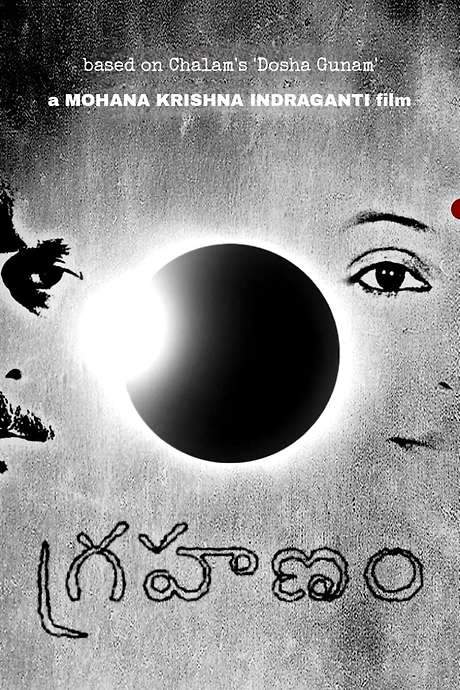
Dr. Raghavram [Surya Bhagawan Das] is a dedicated physician practicing in a small village, where his clinic is a quiet anchor for the community and where the rhythm of daily life is gently threaded with care, conversation, and small, stubborn mysteries. On a routine round one day, he witnesses a tense exchange between a young patient and his mother. The son declares a deep estrangement, insisting he has no relationship with his mother, while the mother is left in tears. Dr. Raghavram tries to intervene, to reassure the mother that her son is now stable, but when he asks her for her name and where she came from, she slips away without a reply. This unanswered question lingers with him, turning a routine medical case into something more personal and puzzling. The doctor learns the patient’s name is Vasudeva, and the incident becomes a doorway into a broader, longer memory.
That night, as the clinic quiets and the village settles into its familiar dusk, the doctor shares the morning’s events with friends and begins to tell a story from his youth. He transports himself back to a time when he was a boy growing up in a similar village, where a prosperous and influential family—Narayana Swamy [Tanikella Bharani], his wife Sardamba [Jayalalita], and their beloved young ward Vasudeva—shaped much of village life with generosity and a kind of quiet, radiant authority. Sardamba is depicted as devout, generous, and strikingly beautiful, a woman whose energy fills the home and whose compassion extends to the schoolchildren she sponsors, particularly through mid-day meals that keep many youngsters fed and hopeful. Among those students is Kanakayya [Thallavajhula Mohnish], a bright pupil who also feels a deep, almost familial devotion to Sardamba; he runs errands around the house, helps with chores, and even massaging her feet becomes a small ritual that binds him to her.
The tale quickly deepens into a medical mystery that threatens to fracture the household’s harmony. Kanakayya falls under a high fever that refuses to break, and the village doctor Sri Hari [Rachakonda Vidya Sagar] is called in. He names the illness a stubborn viral fever and prescribes standard treatment, yet the fever clings to the boy. In the midst of delirium, Kanakayya repeatedly mutters the name “Saradamba,” a sign that something personal and intimate might be at stake beyond the fever’s grip. In desperation, Kanakayya’s family seeks help from Gopayya [Thallavajhula Sundaram], a practitioner who uses an unorthodox theory called “Doshagunam”—an STD allegedly contracted by young men through relationships with older women. Gopayya’s remedy is shocking and controversial: blood drawn from the thigh of the older woman is applied into the eyes of the young man, a ritualistic and frightening procedure that scandalizes the village’s sense of propriety and medicine alike.
The whispers spread, and Narayana Swamy learns of the alarm surrounding his wife. He confronts Sardamba, and what follows is a fierce, pride-filled quarrel that exposes fault lines within the household and the village. Kanakayya’s condition worsens, and with the clock running out, Narayana Swamy makes a desperate decision: he extracts a sample of Sardamba’s blood, hoping it will help his ailing ward. Gopayya administers the blood, and Kanakayya begins to recover. Yet the recovery comes at a price: Narayana Swamy’s fear and suspicion turn into jealousy, and he accuses Sardamba of infidelity, forcing her to abandon the village. Kanakayya, now well enough to observe, discovers that the charges against Sardamba were ungrounded, yet no one is willing to listen to him, and the villagers’ gossip dulls the truth.
Back in the present, the doctor listening to this old tale adds his own layer of uncertainty. He and his friends debate what actually happened: was there really an illicit relationship, or was Kanakayya’s fever merely responding to the odd treatment? The doctor’s reply is measured and unresolved—there is no definitive way to know what occurred, and the only certainty lies in the fact that Kanakayya did recover. The truth, he notes, is known only to two people: Kanakayya and Saradamaba.
Then comes the remarkable revelation that reframes the entire story the doctor has shared. The storyteller is not simply recounting history; he is revealing his own hidden past. He discloses that he is, in fact, Kanakayya grown up and renamed. He moved to Madras to pursue a medical career and ultimately became the doctor who works in the present-day village as Dr. Raghavram. This revelation reframes the entire narrative as a meditation on identity, memory, and the long arc of a life shaped by love, loss, and the impossible search for peace.
The day after this disclosure, the present-day doctor rushes back to the hospital to attend to a patient in critical condition. In true melodrama, the life in need of rescue is saved through skill, timing, and perhaps the same stubborn stubbornness that defined Kanakayya’s youth. The doctor then returns to the very place where he first encountered the old woman who sparked the memory, hoping she will return and perhaps confirm the truth that has been hiding in plain sight all along.
Through it all, the film invites a quiet meditation on the phrase that frames the narrative’s inner life: the belief that there may be another explanation, another truth beyond what is readily visible. It asks if peace can exist when people cling to the certainty of “this is all we know, this is what there is,” or whether a more expansive understanding might finally illuminate the hidden connections between a mother’s love, a boy’s fever, a village’s gossip, and a man who finally discovers who he truly is. The questions are not simply medical; they are moral, spiritual, and intimate, asking the audience to consider how memory shapes reality and how a single life can circle back to redefine a past that seemed settled long ago.
> Unless you believe in some principles to be true, there can be no peace. The intellect of all those who say "this is all we know, this is what there is" is weak and fatigued. Perhaps there is another explanation, another truth, perhaps we don't know it yet!
- Chalam