Plot Explained Spoilers guaranteed!
Plot Explained

Browse by genre

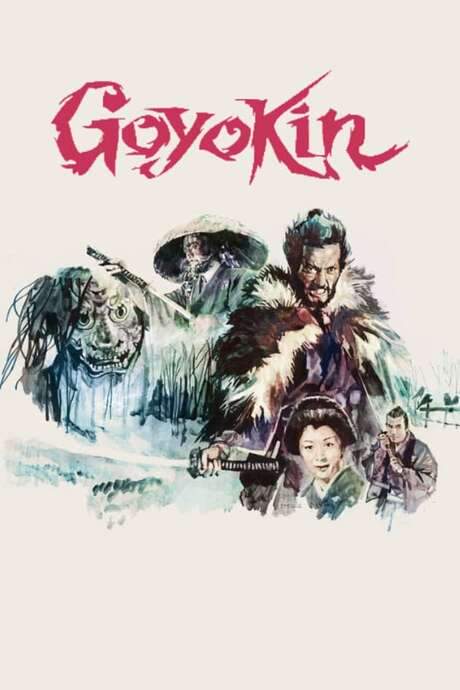
Goyokin (1969) movie poster

Plot Summary

Goyokin (1969) Plot Summary Explained

Release, runtime and language
1969 · 124 mins · Japanese
Loading streaming availability…
Directed by
Hideo Gosha
Starring
Tatsuya Nakadai, Yôko Tsukasa, Eijirô Tôno, Hisashi Igawa, Eitarô Ozawa, Susumu Kurobe

A guilt-haunted samurai warrior attempts to stop a massacre taking place.

On this page (6)
  1. 1 Where to watch
  2. 2 What happens: full plot
  3. 3 Plot questions answered
  4. 4 Movie threads
  5. 5 Movies like Goyokin
  6. 6 Every angle
Loading streaming availability…

Full plot summary · contains spoilers

What Happens in Goyokin: Full Plot Summary

The whole story of Goyokin (1969) explained, from the opening scene to the final frame: every key event, every twist and what it all adds up to. Read it as a quick recap before the sequel, to check a scene you missed, or to finally understand what really happened.

On the island of Sado, a hidden gold bounty powers the Tokugawa regime. Magobei Wakizaka is a steadfast samurai serving the Sabai clan, living by a code of honor that guides his decisions even when empire and greed pull in different directions. The story unfolds amid the island’s mines and the treacherous seas where treasure-rich ships set out for distant shores.

When a gold ship sinks, local fishermen salvage some of the treasure and plan to return it to the Tokugawa authorities. Yet Rokugo Tatewaki, the clan master’s ruthless enforcer, seizes the gold and orders the fishermen slaughtered to keep the theft secret. Magobei is appalled by the betrayal and, in a tense exchange, promises not to report Rokugo to the shogunate in exchange for Rokugo’s pledge to refrain from such acts in the future.

Three years later, assassins sent by Rokugo’s retainer Kunai arrive in Edo to silence Magobei, signaling that Rokugo intends to steal more gold and slaughter more innocents. Magobei decides to return to Sabai to confront his former master, aware that danger and deceit shadow every step he takes.

Rokugo hires another ronin, Samon Fujimaki, to kill Magobei, but the plan backfires when Samon reveals himself as a Shogun spy who nonetheless chooses to ally with Magobei in the fight to stop Rokugo’s greed. The unlikely partnership strengthens Magobei’s resolve as the threat grows more personal.

Along the road, Magobei meets a young survivor of the earlier massacre, Oriha, and her brother Rokuzo, who join him on the journey back toward Sabai. Their presence softens the path ahead and broadens the circle of those willing to stand against Rokugo’s plans.

At Sabai, the group uncovers Rokugo’s scheme to move a bonfire that would warn ships away from dangerous rocks, directing a gold-laden vessel toward disaster. The scheme would allow Rokugo to harvest the treasure while slaughtering those who aided him. Through careful coordination, the team lights the genuine beacon, extinguishes the fake bonfire, and saves the peasants who would otherwise fall to Rokugo’s revenge.

In the snow-swept final confrontation, Magobei defeats Rokugo but is wounded by a throwing knife in the clash. With the threat neutralized and the community spared, Magobei places his sword on Rokugo’s grave and walks away into the falling snow, a quiet end that speaks to mercy, duty, and a hard-won peace.

Last updated: October 09, 2025 at 11:21

Was this helpful?

Plot questions answered

Goyokin Plot Explained: Your Questions Answered

The questions people ask most about Goyokin (1969): what happens in the confusing scenes, why the characters do what they do, the twists, hidden details and what the ending means. Each answer contains spoilers.

Q1

Why does Magobei Wakizaka spare Rokugo after the fishermen massacre?

Magobei makes a grim bargain with Rokugo: he promises not to report the massacre to the shogunate in exchange for Rokugo's pledge to refrain from such acts in the future. Magobei believes this compromise will prevent further bloodshed, though he later realizes Rokugo has no intention of honoring that promise.

  • magobei
  • rokugo
  • bargain
  • fishermen
  • massacre
  • honor
Q2

What prompts Magobei to return to Sabai after three years in Edo?

Three years after the initial bargain, assassins sent by Rokugo's retainer Kunai arrive in Edo to kill Magobei. This signals that Rokugo intends to steal more gold and slaughter more innocents. Faced with this threat and the knowledge of Rokugo's continued greed, Magobei decides to return to Sabai to confront his former master.

  • magobei
  • edo
  • assassins
  • kunai
  • return
  • sabai
Q3

Who is Samon Fujimaki and why does he help Magobei?

Rokugo hires the ronin Samon Fujimaki to kill Magobei, but the plan backfires when Samon reveals himself as a Shogun spy. Rather than eliminate Magobei, Samon chooses to ally with him to stop Rokugo's greed. This unlikely partnership gives Magobei a trusted warrior ally for the confrontation ahead.

  • samon fujimaki
  • shogun spy
  • ronin
  • alliance
  • magobei
Q4

Why do Oriha and her brother join Magobei's journey to Sabai?

Oriha is a young survivor of the earlier massacre ordered by Rokugo, and her brother is Rokuzo. After encountering Magobei along the road, they join him seeking safety and a chance to stop Rokugo's violence. Their presence adds personal stakes to the mission and strengthens the group opposing Rokugo.

  • oriha
  • rokuzo
  • survivor
  • massacre
  • journey
  • sabai
Q5

What is the bonfire scheme Rokugo plans at Sabai?

Rokugo plans to move the bonfire that normally warns ships away from dangerous rocks. By shifting the warning fire, he would direct a gold-laden vessel toward the rocks, causing it to crash. This would allow him to harvest the treasure while slaughtering the peasants who aided him, eliminating witnesses to his crimes.

  • rokugo
  • bonfire
  • deception
  • ship
  • rocks
  • sabai
  • gold
Q6

How does Magobei and his group stop Rokugo's ship attack?

Magobei, Samon, Oriha, and Rokuzo counter Rokugo's plan by lighting the genuine bonfire that warns ships away from the rocks while extinguishing the fake bonfire that Rokugo had placed. This coordinated action saves the gold-bearing ship and the peasants who would have been killed in Rokugo's revenge.

  • bonfire
  • ship rescue
  • counter plan
  • sabo
  • teamwork
Q7

Why does Magobei place his sword on Rokugo's grave at the end?

After defeating Rokugo in the final duel, though wounded by a throwing knife, Magobei places his sword on his enemy's grave and walks away alone. This act symbolizes mercy, the end of his duty, and his choice to leave the world of violence behind. It reflects the bittersweet resolution: victory achieved but at personal cost.

  • magobei
  • sword
  • grave
  • snow
  • mercy
  • ending
  • bittersweet
Q8

Why does Rokugo Tatewaki kill the fishermen who salvaged the gold?

Rokugo seizes the gold that fishermen salvaged from the sunken ship and orders them slaughtered to keep the theft secret. If the fishermen reported the recovery to the Tokugawa authorities, it would expose Rokugo's crime and theft of gold meant for the shogunate.

  • rokugo
  • fishermen
  • gold
  • murder
  • secrecy
  • cover-up
Q9

What is the Goyokin gold and why does it matter to the story?

The Goyokin refers to the hidden gold bounty on Sado Island that powers the Tokugawa regime. Gold-laden ships sail from the island's mines to distant shores. This treasure is the source of Rokugo's greed, he will commit multiple murders to seize it, while Magobei fights to protect both the gold and innocent lives from Rokugo's schemes.

  • goyokin
  • gold
  • treasure
  • sado island
  • shogunate
  • wealth
Q10

Is Magobei injured in the final confrontation with Rokugo?

Yes, Magobei defeats Rokugo in the snow-swept final duel but is wounded by a throwing knife during the clash. Despite this injury, he manages to slay his opponent. The wound adds to the bittersweet nature of his victory, he succeeds in saving the community but pays a physical price and walks away alone.

  • magobei
  • wounded
  • final duel
  • throwing knife
  • rokugo
  • snow

Movie threads

More Movies Like Goyokin, by Mood & Story

Curated lists built around what makes Goyokin tick: the same mood, the same kind of story or the same emotional payoff. Each list explains why these movies belong together.

Samurai Redemption Stories like Goyokin

Honorable warriors confront their past sins in a quest for personal salvation. For viewers seeking movies like Goyokin, this collection focuses on samurai dramas and historical action films where a guilt-ridden protagonist seeks atonement. These stories share a heavy emotional weight, tense atmosphere, and a focus on honor, betrayal, and the bittersweet cost of redemption.

  • guilt-ridden
  • honorable
  • melancholic
  • atmospheric
  • grim
  • redemptive
  • Tone: tense, melancholic, honorable
  • Pacing: steady, deliberate
Why these movies?

The story pattern: The narrative follows a protagonist who is morally compromised by a past transgression. Driven by a deep sense of guilt and a personal code, they embark on a path that pits them against former allies or a corrupt system, culminating in a climactic confrontation that serves as both punishment and absolution.

Why they belong together: These movies are grouped by their central character archetype—the flawed warrior seeking redemption—and the shared emotional journey of confronting past sins. They consistently deliver a somber, honorable, and tense mood, with a pacing that builds steadily towards a morally complex and emotionally resonant climax.

Atmospheric and Grim Action Dramas like Goyokin

Suspenseful stories where the environment is a character, amplifying tension and isolation. If you liked the tense, snowy atmosphere of Goyokin, this list features movies with a similar vibe where the setting enhances the suspense. These films are characterized by a grim and melancholic mood, a steady pace that builds tension, and stories of survival and moral conflict set against harsh backdrops.

  • atmospheric
  • tense
  • suspenseful
  • grim
  • melancholic
  • snowy
  • Tone: tense, grim, atmospheric
  • Pacing: steady, suspenseful
Why these movies?

The story pattern: Stories in this thread use their setting to create a pervasive mood of isolation and impending doom. The plot unfolds with a steady, often deliberate pace, allowing the atmosphere to build suspense. Characters are frequently isolated or outnumbered, fighting for survival or a moral cause against a backdrop that is as much an antagonist as the human foes.

Why they belong together: These films are united by their masterful use of atmosphere and setting to define the viewing experience. They share a palpable sense of place that contributes directly to the tone—be it tension, melancholy, or grim determination—creating a cohesive and immersive vibe that is central to their appeal.

If you liked this

Movies Like Goyokin

Similar movies to Goyokin: the same genre, themes or kind of story. Each one comes with its own plot summary, timeline and ending explained.

Browse all movie summaries

Every angle

Goyokin (1969) Explained: Plot, Timeline & Characters

Everything about Goyokin in one place: what happens in the plot summary, the timeline in chronological order, the characters and meaning and a spoiler-free summary. What's After the Movie adds the cast, box office and post-credit scenes.

Coming soon on iOS and Android

The Plot Explained Movie Summary App

Plot summaries, endings explained and timelines on your phone. Catch up on any movie in minutes, save your favorites and never miss a twist again.

Be the first to know when we launch. Your email stays private, always.

Learn more about the app