Plot Explained Spoilers guaranteed!
Plot Explained

Browse by genre

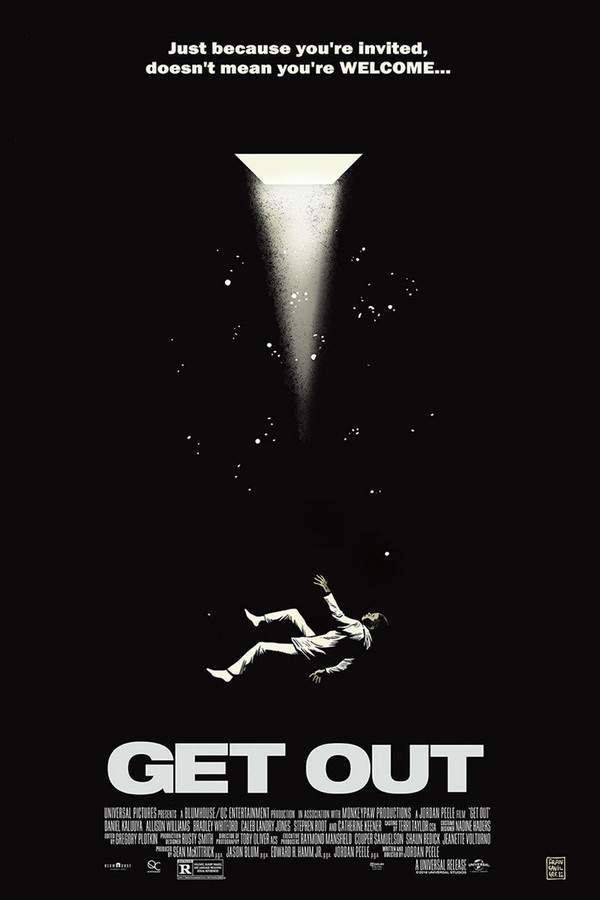
Get Out (2017) movie poster

Plot Summary

Get Out (2017) Plot Summary & Ending Explained

Release, runtime and language
2017 · 104 min · English
Loading streaming availability…
Starring
Daniel Kaluuya, Catherine Keener, Bradley Whitford, Allison Williams
Budget
$4.5M

When Chris accompanies his girlfriend Rose to her family's estate, he anticipates a weekend getaway. However, the seemingly welcoming atmosphere quickly turns unsettling as he encounters bizarre behavior from Rose's parents and their friends. What begins as awkwardness soon spirals into a surreal and terrifying ordeal, forcing Chris to confront a dark secret hidden beneath the family’s polished facade.

On this page (7)
  1. 1 Where to watch
  2. 2 What happens: full plot
  3. 3 Plot questions answered
  4. 4 How it ends
  5. 5 Movie threads
  6. 6 Movies like Get Out
  7. 7 Every angle
Loading streaming availability…

Full plot summary · contains spoilers

What Happens in Get Out: Full Plot Summary

The whole story of Get Out (2017) explained, from the opening scene to the final frame: every key event, every twist and what it all adds up to. Read it as a quick recap before the sequel, to check a scene you missed, or to finally understand what really happened.

Photographer Chris Washington, portrayed by Daniel Kaluuya, finds himself reluctantly visiting the family of his white girlfriend, Rose Armitage (Allison Williams), with concerns about how he will be received. As they travel to her family's remote estate, the couple hits a deer, leading to an unsettling encounter with a white police officer who demands Chris’s identification despite him not being the driver. Thankfully, Rose interjects before the situation escalates.

Upon arrival, Chris is introduced to Rose's family—her affluent white parents, Dean (Bradley Whitford), a neurosurgeon, and Missy (Catherine Keener), a psychiatrist and hypnotherapist, as well as her brother Jeremy. The family delivers uncomfortable remarks about black individuals, making Chris uneasy. He quickly realizes that the black staff at the estate exhibit unsettlingly obedient behavior. One night, wrestling with insomnia, Chris steps outside to smoke, where he sees Walter, the groundskeeper, fleeing into the woods. Shortly after, Missy persuades him to participate in a hypnotherapy session for his smoking addiction.

In a trance, Chris unearths painful memories of his mother’s death in a hit-and-run accident, feelings of guilt washing over him as he falls into a dark void Missy refers to as the "sunken place." Awakening, he believes he had a vivid nightmare, but now finds himself repulsed by cigarettes. Meanwhile, the housekeeper Georgina exhibits odd behavior, even unplugging his phone, leading to a drained battery.

As dozens of wealthy white guests congregate for the Armitage family's annual gathering, many show an unsettling interest in Chris, discussing the merits of black icons like Tiger Woods. Chris's suspicion grows when he meets Logan King, portrayed by Lakeith Stanfield, a black man acting peculiarly and married to an older white woman.

Concerned about the hypnosis and the bizarre behaviors he witnesses, Chris reaches out to his friend, Rod Williams, a black TSA officer. Attempting to photograph Logan reveals a startling reaction; the flash sends Logan into a panic where he urges Chris to "get out." Dean dismisses this by claiming Logan suffered a seizure. Outside the house, Chris tries to convince Rose to leave with him, but Dean hosts an unusual auction featuring Chris’s photograph.

In a moment of alarm, Chris sends Logan's picture to Rod, who identifies Logan as Andre, a missing person. As Chris prepares to leave the estate, he finds troubling photographs of Rose with previous black partners, including Walter and Georgina. When he tries to escape, Rose and her family trap him, and Missy once again hypnotizes him.

Chris wakes up restrained in a chair, where a chilling video reveals the family's horrific secret: they transplant the brains of white individuals into black bodies, leaving the original consciousness trapped in the "sunken place." Jim Hudson, a blind art dealer played by Stephen Root, reveals he desires Chris's artistic talents and sight.

Thinking quickly, Chris blocks Missy’s hypnotic commands by stuffing his ears with material from the chair. When Jeremy arrives to take him for the “surgery,” Chris makes his move: he strikes Jeremy, kills Dean with a mounted deer antler, and stabs Missy in a fight for his life. Chris manages to escape the property in a vehicle but accidentally hits Georgina, who then attacks him while possessed.

Haunted by memories of his mother's demise, Chris has a moral choice to make as he attempts to save Georgina, leading to a tragic crash. Then, Rose and Walter—now possessed—confront him. With quick thinking, Chris uses his phone’s flash to awaken the real Walter, who takes action by shooting Rose and ultimately turning the gun on himself. In a moment of conflict, Chris struggles to strangle Rose but ultimately cannot go through with it. In the nick of time, Rod arrives in a TSA car, allowing Chris to make his escape.
Last updated: November 08, 2024 at 16:32

Was this helpful?

Plot questions answered

Get Out Plot Explained: Your Questions Answered

The questions people ask most about Get Out (2017): what happens in the confusing scenes, why the characters do what they do, the twists, hidden details and what the ending means. Each answer contains spoilers.

Q1

Why does the Armitage family trap and kill Black men?

The Armitage family runs a covert operation where they transplant white brains into Black bodies. They target Black men through Rose's relationships, luring them to the estate where they're hypnotized and eventually subjected to the procedure. The white consciousness takes control of the Black body, effectively erasing the original person's identity while giving the white recipient a new physical vessel.

Foreshadowing: The strange obedience of Walter and Georgina, the family's Black staff, hints at this horrific practice long before the truth is revealed.

  • armitage family
  • brain transplant
  • rose
  • conspiracy
  • body horror
Q2

What is the "sunken place" in Get Out?

The sunken place is a dark void Chris falls into during Missy's hypnotherapy sessions. It's described as an infinite darkness where the trapped consciousness floats helplessly, overwhelmed by feelings of guilt and helplessness. This is where the original consciousness of transplant victims ends up, conscious but completely powerless, trapped inside their own mind while a white consciousness controls their body.

Foreshadowing: Chris experiences this during his first hypnosis session, where Missy uses his mother's death against him, pulling him into the void.

  • sunken place
  • missy
  • hypnosis
  • mind control
  • trapped
Q3

Who is Logan King really?

Logan King is actually Andre King, a missing person who was Rose's previous Black boyfriend. His brain was transplanted into his current body, and he's now controlled by the consciousness of an elderly white man. When Chris flashes the camera at him, Andre briefly breaks through and warns Chris to "get out" before Dean dismisses it as a seizure.

Foreshadowing: Logan's odd behavior and discomfort around Chris foreshadow his true identity as someone who was once in Chris's exact position.

  • logan king
  • andre
  • missing person
  • rose
  • deception
Q4

Why does Walter behave so strangely throughout the movie?

Walter is a Black man whose body has been taken over by the consciousness of Dean Armitage's father. This explains his overly formal manner, his strange jogging routine that mimics the original owner's habits, and his intense loyalty to the family. His previous role as Rose's boyfriend was part of the family's recruitment process, bringing Black men to the estate for the transplant procedure.

Foreshadowing: Walter's unusual behavior and his mysterious late-night runs into the woods hint at his dual identity long before the reveal.

  • walter
  • groundskeeper
  • armitage family
  • possession
  • deception
Q5

How does Chris manage to escape the Armitage house?

Chris escapes by using his wits after discovering the truth. When Missy attempts to hypnotize him again, he stuffs his ears with chair cushioning to block her voice, breaking her control. He then fights Jeremy, kills Dean with a deer antler, stabs Missy, and flees in a car. Though Georgina (also possessed) attacks him after he accidentally hits her with the car, he survives the encounter and eventually gets rescued by Rod.

Foreshadowing: Chris's earlier observation of the deer antlers in the study foreshadows his use of one as a weapon.

  • escape
  • chris
  • fighting
  • armitage house
  • survival
Q6

Why does Walter help Chris at the end?

When Chris uses his phone's flash, it momentarily disrupts the white consciousness controlling Walter's body, allowing Andre's original consciousness to briefly resurface. This gives Walter enough clarity to recognize what's happening. He shoots Rose, freeing himself from her control, and then turns the gun on himself to end his own suffering. His act saves Chris and represents a final moment of self-determination.

Foreshadowing: The flash of a camera earlier caused Logan (Andre) to panic and warn Chris, establishing that bright light can break through the possession.

  • walter
  • flash
  • andre
  • rose
  • sacrifice
Q7

What happens to Rose at the end of Get Out?

Rose is shot by Walter (while temporarily freed from her control) after she chases Chris down with a gun. Chris initially struggles with whether to kill her but can't go through with it. She remains alive but presumably faces consequences for her crimes once police arrive. The movie ends with Chris escaping with Rod, leaving Rose's ultimate fate ambiguous but severely compromised.

Foreshadowing: Rose's consistent manipulation and her role in luring multiple Black men to their deaths establish her as complicit in the family's crimes.

  • rose
  • ending
  • chris
  • escape
  • justice
Q8

Why does Missy hypnotize Chris?

Missy uses hypnotherapy as the mechanism to prepare victims for the brain transplant procedure. By putting Chris into a deep trance and accessing his subconscious, she can plant commands that will control him later. The "sunken place" is where she traps his consciousness during hypnosis, making him vulnerable to suggestions. This allows the family to restrain and prepare him for surgery without resistance.

Foreshadowing: Chris's guilt over his mother's death is the emotional lever Missy uses, pulling him into the sunken place during their first session.

  • missy
  • hypnosis
  • control
  • sunken place
  • surgery
Q9

Why is the police officer encounter significant at the beginning?

The scene where a white police officer demands Chris's ID despite Rose driving establishes the film's central theme of racial power dynamics. It also foreshadows the ending, Chris is once again at the mercy of white authority figures. The encounter also explains why Chris doesn't immediately call police when he discovers the truth, as he knows the system won't protect him.

Foreshadowing: This opening scene sets up Chris's wariness around white authority and explains his reluctance to seek help from official channels.

  • police
  • racial tension
  • id
  • chris
  • beginning
Q10

What is the auction at the party about?

Dean hosts an auction where wealthy white guests bid on Chris's photograph, treating him like an object to be purchased. This disturbing event reveals the guests' true interest in Chris, they see him not as a person but as a desirable physical specimen. The auction exposes the Armitages' guests as complicit in the family's operation, all aware of and participating in the body-hunting scheme.

Foreshadowing: The guests' earlier patronizing comments about Black athletes and celebrities prepare for this moment of overt objectification.

  • auction
  • photograph
  • party
  • guests
  • objectification
Q11

Why does Georgina unplug Chris's phone?

Georgina is one of the Armitage family's victims, a Black woman whose body has been taken over by a white consciousness (likely Missy's relative). She acts strangely because she's being controlled, and she unplugged Chris's phone to prevent him from contacting the outside world. This ensures he remains isolated and unable to alert anyone to the danger.

Foreshadowing: Georgina's strange emotional displays, like crying while smiling, hint at her trapped consciousness fighting against her body's new owner.

  • georgina
  • phone
  • isolation
  • control
  • staff
Q12

Why doesn't Chris kill Rose at the end?

Chris struggles with whether to kill Rose because he still has feelings for her, the person he thought she was. Despite everything, he's unable to commit murder in cold blood, representing his fundamental humanity. His choice also distinguishes him from his captors, refusing to become what they are. Additionally, Rod's arrival provides an alternative to violence, allowing Chris to escape rather than kill.

Foreshadowing: Chris's earlier moral quandary about Georgina, where he chose not to run her over, establishes his reluctance to kill even those who threaten him.

  • rose
  • killing
  • moral
  • choice
  • escape

Ending explained

What Happens at the End of Get Out?

How Get Out (2017) ends, in short: the final scene, the last twist and what it means for the characters. The full ending explained, with every spoiler, lives on its own page.

Read the full ending explained

Get Out‘s ending is both intense and symbolic. After a harrowing fight, Chris manages to break free from the Armitage family’s horrifying "Sunken Place" trap and fight back against Jeremy and Missy, ultimately setting fire to the house and freeing himself from their control. In the chaos, he stabs Missy and overpowers Jeremy, killing him. Chris then makes a desperate escape in Rose’s car, but his journey is marred by tragedy when he hits Georgina, who was secretly possessed by Rose’s grandmother — an effort to save her, driven by guilt over his mother's death when he was a child. The crash results in Georgina’s death, and Chris’s attempt to help leads to further chaos, including being shot at by Walter, the groundskeeper, who is also possessed by the family’s sinister influence. In the climax, Walter, still trapped in his traumatic past, takes his own life after shooting Rose, revealing that his suffering was too much to bear.

The ending leaves Chris battered but alive, driving away with Rod, but what happens next is left ambiguous. It’s implied that Chris might still be haunted by the trauma or possibly manipulated by the Armitages’ dark plans, hinted at by the chilling possibility that he could be recaptured or controlled again. Rose’s sinister smile as she lies dying suggests she was aware of her cruelty and perhaps enjoyed the idea of Chris suffering, fitting with the film’s commentary on racism hiding beneath a veneer of politeness. The closing scenes and alternate endings reflect on the pervasive nature of racism—sometimes insidious, sometimes overt—and how it can leave survivors scarred and uncertain of what is truly safe. Ultimately, Get Out’s ending is a potent mix of horror and social critique, showing that even in victory, the trauma of this sinister system can linger, leaving a haunting tension about the future.

Get Out ending explained in full

Movie threads

More Movies Like Get Out, by Mood & Story

Curated lists built around what makes Get Out tick: the same mood, the same kind of story or the same emotional payoff. Each list explains why these movies belong together.

Movies with suburban horror settings like Get Out

Stories where idyllic settings conceal sinister secrets and systemic terror. If you liked the terrifying revelation beneath the polished surface in Get Out, you'll find more movies like it here. These films explore the horror hidden within seemingly normal communities and families, delivering suspenseful and unsettling stories about sinister secrets in plain sight.

  • unsettling
  • claustrophobic
  • paranoid
  • suspenseful
  • terrifying
  • sinister secrets
  • Tone: dark, unsettling, paranoid
  • Pacing: steady, building tension
Why these movies?

The story pattern: Narratives in this thread often begin with a character entering a new, outwardly welcoming environment. Through a series of subtle red flags and bizarre occurrences, the protagonist uncovers a horrifying truth that the community is built upon, leading to a desperate fight for survival against a deeply entrenched, systemic threat.

Why they belong together: Movies are grouped here because they share a core premise: the most terrifying evil is not in a dark forest, but in a well-manicured lawn. They create a specific kind of dread by twisting familiar, safe spaces into landscapes of psychological and physical peril, focusing on themes of conformity, secrets, and the betrayal of trust.

Psychological thrillers about bodily autonomy like Get Out

Chilling stories about the fight for control over one's own mind and body. For viewers who appreciated the psychological terror and themes of control in Get Out, this list features similar movies that explore the horror of losing autonomy. These films combine suspense with profound themes of identity, manipulation, and the fight for survival against forces that seek to possess you.

  • terrifying
  • psychological
  • disturbing themes
  • claustrophobic
  • suspenseful
  • body horror
  • Tone: dark, terrifying, psychologically heavy
  • Pacing: steady, escalating dread
Why these movies?

The story pattern: The narrative pattern involves a protagonist being trapped in a situation where their body or mind is the target of a sinister agenda. The story is a descent into a nightmare where the fundamental sense of self is under attack, culminating in a desperate struggle to reclaim agency and escape a fate worse than death.

Why they belong together: These films are grouped together because they prioritize psychological terror over simple jump scares. They share a heavy emotional weight and explore profoundly disturbing themes of coercion, identity theft, and the horror of being a prisoner in your own skin, resulting in a uniquely unsettling and thought-provoking experience.

If you liked this

Movies Like Get Out

Similar movies to Get Out: the same genre, themes or kind of story. Each one comes with its own plot summary, timeline and ending explained.

Browse all movie summaries

Every angle

Get Out (2017) Explained: Plot, Ending, Timeline & Characters

Everything about Get Out in one place: what happens in the plot summary, the timeline in chronological order, the characters and meaning, the ending explained and a spoiler-free summary. What's After the Movie adds the cast, box office and post-credit scenes.

Coming soon on iOS and Android

The Plot Explained Movie Summary App

Plot summaries, endings explained and timelines on your phone. Catch up on any movie in minutes, save your favorites and never miss a twist again.

Be the first to know when we launch. Your email stays private, always.

Learn more about the app