Plot Explained Spoilers guaranteed!
Plot Explained

Browse by genre

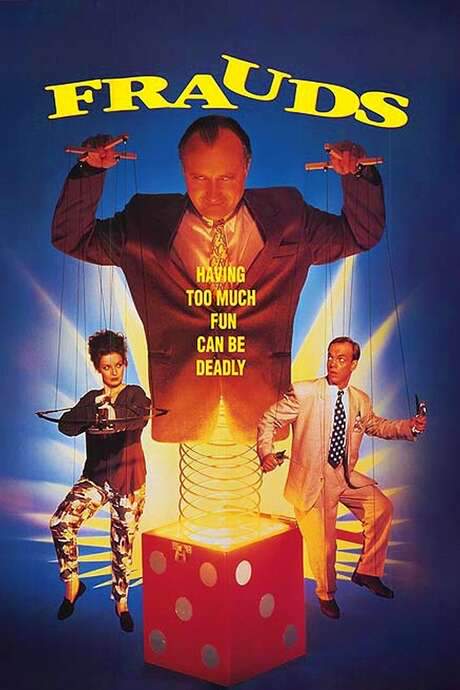
Frauds (1993) movie poster

Timeline

Frauds (1993) Timeline Explained – Every Event in Order

Release, runtime and language
1993 · 90 mins · English
Directed by
Stephan Elliott
Starring
Hugo Weaving, Vincent Ball, Nicholas Hammond, Kee Chan, Phil Collins, Helen O'Connor

Insurance investigator Roland Copping is far from ordinary. He meddles in people's lives, using elaborate games and gimmicks to manipulate outcomes. His reckless tactics draw him into a bitter feud with a couple whose bizarre insurance claim triggers an escalating vendetta.

On this page (5)
  1. 1 Events in order (12)
  2. 2 Timeline questions answered
  3. 3 Movie threads
  4. 4 Movies like Frauds
  5. 5 Every angle

12 events in order · contains spoilers

Frauds Timeline: Events in Chronological Order

Every key event of Frauds (1993) in order, scene by scene, with when and where it takes place. Use it to untangle flashbacks, time jumps and parallel storylines, to refresh your memory before the sequel or to find the exact scene you are thinking of.

  1. Roland's 8th Birthday and the Fateful Dice

    On his eighth birthday, Roland receives a pair of dice from his war-hero father. He and his brother Matthew build a raft and send it down the river, but danger arrives when the raft approaches a waterfall. Roland's mother tries to intervene as Matthew climbs an overhead crane and slips, vanishing into the raging water.

    When
    Roland's 8th birthday
    Where
    Riverside, family home
  2. Years Later: Roland in Andreas

    Years after the childhood tragedy, Roland has become an insurance investigator and a practical joker in the fictional town of Andreas. He uses his wit and the dice superstition to manipulate situations as he moves between cases and pranks.

    When
    Years after childhood
    Where
    Andreas
  3. La Bohème Tickets and a Party

    Jonathan and Beth host a party at their home, and Michael gifts them two tickets to La Bohème. The gift foreshadows a night of refined culture that will soon give way to a dangerous game of deceit.

    When
    Evening before the opera night
    Where
    Wheats' residence
  4. The Burglary and the Crossbow Death

    That night, Beth returns home to a trashed house and a burglar in the act. In defense, she fires a crossbow, impaling him through the heart. When the burglar lowers his mask, he is revealed to be Michael in disguise.

    When
    Night of the burglary
    Where
    Beth's home
  5. Trial and Acquittal

    Beth is put on trial for Michael's death, but the judge rules it an accident and acquits her for self-defense. The verdict lingers as Beth tries to resume a semblance of normal life while the strange case continues to loom.

    When
    Soon after the burglary
    Where
    Courtroom
  6. Six Months Later: Fake Claim Begins

    Six months later, Beth and Jonathan file a phony compensation claim for their stolen cutlery. Roland visits to interview Jonathan about Michael's death and reveals that Michael had an accomplice waiting in a getaway car, hinting at a longer scheme behind the scenes.

    When
    Six months later
    Where
    Wheats' residence
  7. First Interview and the Dice's Hint

    During Roland's visit, he interviews Beth and interrupts a Twister game, constantly rolling his dice to emphasize his claimed magic. He explains the dice belonged to his father and uses them to decide whether to continue the conversation. After the exchange, he leaves a taunting clue about 'new evidence' and a piece of the stolen forks.

    When
    One month later
    Where
    Wheats' residence
  8. Morning After: The Accomplice Is Exposed

    The next morning, Roland returns to approve the compensation claim and reveals that Jonathan is the accomplice. He exposes a forgery of the forks and shows that the real cutlery is hidden elsewhere. The chase intensifies as they discover a hidden safe behind a Battle of Austerlitz model.

    When
    The next morning
    Where
    Wheats' residence
  9. Jonathan's Confession and Roland's Demands

    Jonathan confesses that he stole the cutlery to cover Beth's mounting debts. They call Roland to meet, and he demands money in exchange for his silence. The couple pays him, choosing to avoid police rather than expose the fraud.

    When
    Shortly after the morning confrontation
    Where
    Wheats' residence
  10. Roland's Pranks Instead of Justice

    Rather than involving the police, Roland begins a spree of petty terror: stealing back the cutlery, sending an inspector to their car, mailing the crossbow, and decking the house with stolen silver to taunt them. The family is horrified as the pranks escalate, blurring lines between game and danger.

    When
    After payment
    Where
    Wheats' residence
  11. The Secret Hideout and Glendale Clinic

    Jonathan locates Roland's house and falls through a secret passage into a game-room-style hideout, triggering traps including a goose release. He escapes and trails Roland to Glendale Clinic, where Matthew—Roland's supposed victim—surfaces as alive, but is revealed to be vegetative and quadraplegic.

    When
    Soon after
    Where
    Roland's house; Glendale Clinic
  12. Final Showdown: Birthday Trap and the Matthew Head

    At Roland's birthday party, Beth pretends to concede but secretly steals his dice. Roland abducts Beth and triggers a deadly slide-to-saw trap, which the blade retracts as she slides. Jonathan calls with a stark reveal: Matthew is alive but not the powerless figure he claimed, and the plan pivots toward a final gambit involving a drowned outcome and a shocking head in the pool. The moment culminates with the appearance of Matthew's floating head and police sirens approaching as the trio reacts with relieved, uneasy laughter.

    When
    Night of the birthday party
    Where
    Roland's house

Last updated: October 05, 2025 at 12:37

Was this helpful?

Timeline questions answered

Frauds Timeline Explained: Your Questions Answered

When does it happen, and why in that order? The questions people ask about the chronology of Frauds (1993): time jumps, flashbacks, cause and effect between scenes and the correct order of events, each answered with spoilers.

Q1

Why does Roland keep rolling the dice throughout the movie?

The dice belonged to Roland's war-hero father and were given to him on his 8th birthday, the same day his brother Matthew died in the river accident. Roland treats them as magical tokens that control fate and decision-making, rolling them to decide whether to continue conversations or take actions. This superstition stems from the traumatic childhood event where he rolled the dice just before pushing the raft into the river, making him believe the dice control luck and consequences.

Foreshadowing: Early in the film, Roland receives the dice from his mother as a birthday gift from his absent father, establishing their symbolic importance.

  • dice
  • roland
  • father
  • birthday
  • superstition
  • luck
Q2

What happened to Matthew on Roland's 8th birthday?

On Roland's 8th birthday, he and his brother Matthew built a makeshift raft and pushed it into the river. Roland rolled the dice first, then urged Matthew to climb aboard. As the raft approached a waterfall, Matthew jumped onto an overhead crane to escape, but their mother reached too late and Matthew slipped from her grasp, vanishing down the waterfall. This tragedy haunted Roland and shaped his disturbed adult behavior.

Foreshadowing: The opening scene shows young Roland receiving the dice from his mother with the expectation they'll bring good luck, immediately before the tragedy occurs.

  • matthew
  • river
  • waterfall
  • death
  • childhood
  • brother
Q3

Who was the burglar that Beth killed?

The burglar Beth killed was Michael Allen, a friend of the Wheats who had given them tickets to La Bohème earlier that evening. Michael was attempting a prank gone wrong, he broke into the house wearing a mask to scare Beth, but she returned home unexpectedly, found the ransacked house, and fired a crossbow in self-defense, killing him before realizing who he was.

Foreshadowing: The tickets to La Bohème that Michael gifted foreshadow his fate at the opera house that same night.

  • michael
  • burglar
  • crossbow
  • killed
  • beth
  • prank
Q4

Why did Jonathan steal his own cutlery?

Jonathan Wheats stole the Georgian cutlery from his own home to file a fraudulent insurance claim. He did this because Beth had accumulated massive debts over the years, and the couple was struggling financially. By stealing their own belongings and claiming compensation, they hoped to get money to pay off her bills.

Foreshadowing: The party scene establishes Beth as a kindergarten teacher while Jonathan handles finances, hinting at their economic struggles.

  • jonathan
  • cutlery
  • stolen
  • insurance
  • claim
  • debt
Q5

How did Roland know Jonathan was Michael's accomplice?

During his investigation, Roland discovered that Michael had an accomplice waiting in a getaway car the night of the burglary. When Michael died, the accomplice fled. Roland used this information to deduce that Jonathan was involved, particularly after examining the details of the break-in and the subsequent insurance claim.

Foreshadowing: During Roland's first interview, he reveals that Michael had an accomplice waiting in a getaway car, planting the seed for Jonathan's exposure.

  • roland
  • jonathan
  • accomplice
  • investigation
  • exposed
Q6

Why does Roland torment the Wheats instead of going to the police?

Rather than reporting the fraud, Roland chooses to psychologically torment Jonathan and Beth as part of his twisted game. His motivation stems from his deeply disturbed psyche, he uses his trauma and the dice to justify manipulating people, treating the Wheats' suffering as entertainment. He sends them childish but humiliating pranks: an insurance inspector, the crossbow in the mail, and their stolen cutlery decorating their Christmas tree.

Foreshadowing: Roland's history as a relentless practical joker and his use of the dice to make decisions establish his pattern of manipulating situations for his own amusement.

  • roland
  • pranks
  • torture
  • psychological
  • game
  • wheats
Q7

Is Matthew actually alive at Glendale Clinic?

Yes, Matthew survived the childhood accident but is left vegetative and quadriplegic, living at Glendale Clinic. However, the final twist reveals that Matthew is not as helpless as Roland claimed, he can actually speak and has revealed the truth about their father's rejection and the injuries Roland caused him in childhood attempting to entertain his brother.

Foreshadowing: Jonathan discovers Roland's secret hideout and then follows him to Glendale Clinic, where he finds Matthew alive but in a vegetative state.

  • matthew
  • glendale
  • clinic
  • vegetative
  • alive
  • quadriplegic
Q8

What did Matthew reveal about Roland's father?

Matthew revealed that their father rejected them both and that Roland was responsible for the injuries Matthew sustained during the childhood accident. This contradicts Roland's narrative that he was simply an innocent victim of fate controlled by the dice. The truth shatters Roland's self-justification and becomes the key to Jonathan's final gambit.

Foreshadowing: The opening tragedy shows Roland urging Matthew onto the raft after rolling the dice, suggesting Roland's active role in the events.

  • matthew
  • father
  • rejection
  • truth
  • injuries
  • roland
Q9

What happens when Beth steals Roland's dice?

At Roland's birthday party, Beth pretends to surrender everything but secretly steals the dice. This theft becomes crucial in the final confrontation, as Roland's belief in the dice's magical control over fate is disrupted. When he loses control of the dice, his entire psychological framework crumbles.

Foreshadowing: Beth's theft of the dice occurs during her apparent surrender, making it a hidden act of rebellion against Roland's psychological warfare.

  • dice
  • stolen
  • beth
  • roland
  • birthday
  • power
Q10

What is the floating head at the end of the movie?

When Roland lowers what appears to be Matthew's body into the pool during the final confrontation, the head floats away separately, revealing it to be a convincing replica or dummy. This shocking discovery, combined with the arrival of police sirens, triggers bizarre, hysterical laughter from all three characters, a disturbing release of tension.

Foreshadowing: Jonathan's threat to drop Matthew into the pool sets up the reveal of the dummy head as the climax approaches.

  • head
  • pool
  • floating
  • dummy
  • replica
  • ending
Q11

Why do Roland, Beth, and Jonathan laugh at the end?

The three characters laugh hysterically at the end because of the absurd, terrifying situation they've just survived, Roland's deadly game has collapsed, Matthew was revealed to be a dummy, and the police are arriving. It's described as a bizarre, unsettling release of tension that combines relief, shock, and the psychological trauma of the night. The laughter is ambiguous and disturbing, reflecting how the film blends dark comedy with thriller elements.

Foreshadowing: The film oscillates between dark psychological drama and moments of dark humor throughout, establishing this tonal ambiguity.

  • laugh
  • ending
  • police
  • sirens
  • relief
  • hysterical

Movie threads

More Movies Like Frauds, by Mood & Story

Curated lists built around what makes Frauds tick: the same mood, the same kind of story or the same emotional payoff. Each list explains why these movies belong together.

Psychological Warfare Movies like Frauds

Stories where vendettas escalate through cruel psychological manipulation and tricks. Explore more films like Frauds where characters engage in obsessive psychological warfare. If you enjoyed the escalating mind games and cruel manipulation in Frauds, these movies feature similar stories of vendettas fought with psychological tactics, creating a tense and unsettling viewing experience.

  • obsessive
  • unsettling
  • tense
  • psychological
  • chaotic
  • cruel
  • Tone: dark, tense
  • Pacing: fast, relentless
Why these movies?

The story pattern: These narratives typically begin with a seemingly minor conflict that spirals out of control due to one character's obsessive nature. The antagonist uses increasingly elaborate and cruel psychological tactics to torment their target, leading to an inevitable, high-stakes confrontation. The journey is defined by a sense of inescapable, escalating chaos.

Why they belong together: Movies in this thread share a core focus on psychological manipulation as the primary driver of conflict. They create a similar unsettling, high-intensity mood through fast-paced narratives of obsession and revenge, making them perfect for viewers seeking stories about calculated cruelty and mental games.

Bizarre and Chaotic Thrillers like Frauds

Unconventional thrillers with a darkly comic, chaotic, and psychologically unsettling edge. Find more bizarre and chaotic thrillers similar to Frauds. If you liked the unsettling mix of psychological tension, dark humor, and unpredictable chaos in Frauds, this collection highlights movies that share that unique combination of high-stakes thrills and a distinctly offbeat, twisted tone.

  • bizarre
  • unsettling
  • tense
  • psychological
  • chaotic
  • dark humor
  • Tone: dark, bizarre
  • Pacing: fast, chaotic
Why these movies?

The story pattern: These films often subvert traditional thriller conventions by introducing absurd or eccentric elements into a serious framework. The narrative structure may feel chaotic, mirroring the unstable mindset of the characters. While the core conflict is intense, the presence of bizarre events or darkly comic moments creates a unique, layered tone that is both gripping and unsettling.

Why they belong together: These movies are grouped by their shared, unconventional vibe—a potent mix of high tension, psychological depth, and a pervasive sense of the bizarre. They are united by a fast, chaotic pace and a dark tone that is punctuated by strange humor, appealing to viewers who enjoy thrillers with a twisted, unique identity.

If you liked this

Movies Like Frauds

Similar movies to Frauds: the same genre, themes or kind of story. Each one comes with its own plot summary, timeline and ending explained.

Browse all movie summaries

Every angle

Frauds (1993) Explained: Plot, Timeline & Characters

Everything about Frauds in one place: what happens in the plot summary, the timeline in chronological order, the characters and meaning and a spoiler-free summary. What's After the Movie adds the cast, box office and post-credit scenes.

Coming soon on iOS and Android

The Plot Explained Movie Summary App

Plot summaries, endings explained and timelines on your phone. Catch up on any movie in minutes, save your favorites and never miss a twist again.

Be the first to know when we launch. Your email stays private, always.

Learn more about the app