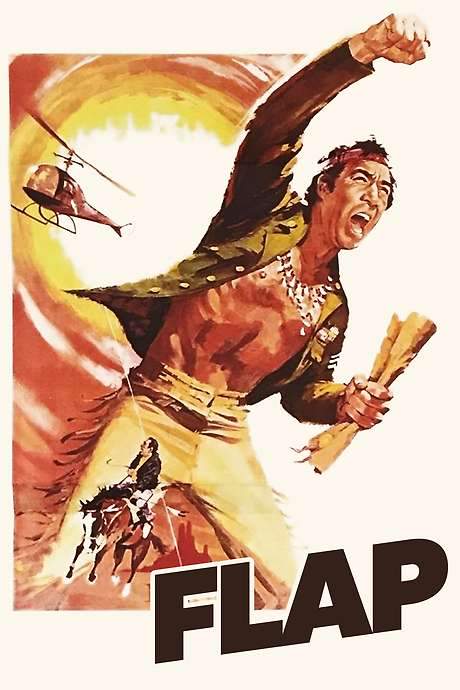
Flapping Eagle, Anthony Quinn, makes his home on a sunlit Indian reservation in the southwestern United States, where life blends hard living with fragile tenderness. He drifts through days marked by heavy drinking and friction with his sweetheart, Dorothy Bluebell, Shelley Winters, whose patience is stretched thin by his mood swings and restless energy. The couple’s ongoing tensions quietly echo the broader strain between personal desire and collective land rights that simmer at the edge of the reservation.
Across town, a blunt, sometimes brutal police presence frames much of the external conflict. Sgt. Rafferty, a city officer who exerts a harsh authority and appears biased, becomes a persistent thorn in Flap’s side—an antagonism that Flap openly questions, even as he concedes the officer’s authority in the eyes of the law. The tension between Flap and Rafferty intensifies as the story unfolds, revealing a clash not just of personalities but of worldviews.
Into this volatile mix steps Wounded Bear Mr. Smith, a tribal lawyer whose office is stacked high with what look like parchment scrolls rather than traditional law books. Victor Jory brings a wry, almost ceremonial weight to the role, translating treaty promises into counsel that shapes the tribe’s responses to every new setback. From his side, the legal wall of Indian treaties becomes a guide and a weapon, turning paper into a living argument about sovereignty and survival.
Flap’s path moves from protest to active confrontation as he becomes an unlikely activist. He disrupts a construction crew blasting a highway through Indian land, a controversial project—Interstate 25—that slices through pueblos during the era. He also inadvertently sabotages the crew’s front loader, signaling his willingness to challenge development and the encroachment it represents. Following Wounded Bear’s hints about legal “abandonment” turning property into Indian claim, Flap’s actions escalate in both scale and symbolism, drawing attention to a people’s right to assert ownership of their ancestral space.
The plot thickens as Flap’s acts of defiance transition him from troublemaker to widely watched advocate. A helpfully provocative move—stealing a train, prompted by the belief that the locomotive would legally belong to the tribe once it’s removed from ordinary control—pushes him further into the limelight and deepens the city’s confrontation with tribal claims. The clash becomes a public battle, with Flap’s notoriety matching Rafferty’s resolve, and both sides feeling the weight of law and history pressing in from all directions.
Tensions erupt in a violent, tragic sequence when Rafferty, the target of Flap’s ire, is beaten after a string of provocations and the death of a dog belonging to a lonely elder. Now a fugitive and symbol of indigenous activism, Flap leads a march into the city to advance the tribe’s claims. The culmination comes from a distance of a hospital window, where Rafferty finally ends Flap’s life with a sudden shooter’s aim, leaving the community to reckon with the consequences of protest, authority, and the enduring fight for treaty promises.
What lingers after the action subsides is a portrait of resilience under pressure, where tradition, law, and personal conviction collide in a struggle that questions who gets to tell the story of land, rights, and belonging. The characters’ movements—Flapping Eagle’s impassioned leadership, Dorothy Bluebell’s quiet endurance, Rafferty’s brutal scrutiny, and Wounded Bear’s ceremonial legal map—together outline a world where treaties, memory, and the power of collective voice keep echoing long after the final confrontation.