Plot Explained Spoilers guaranteed!
Plot Explained

Browse by genre

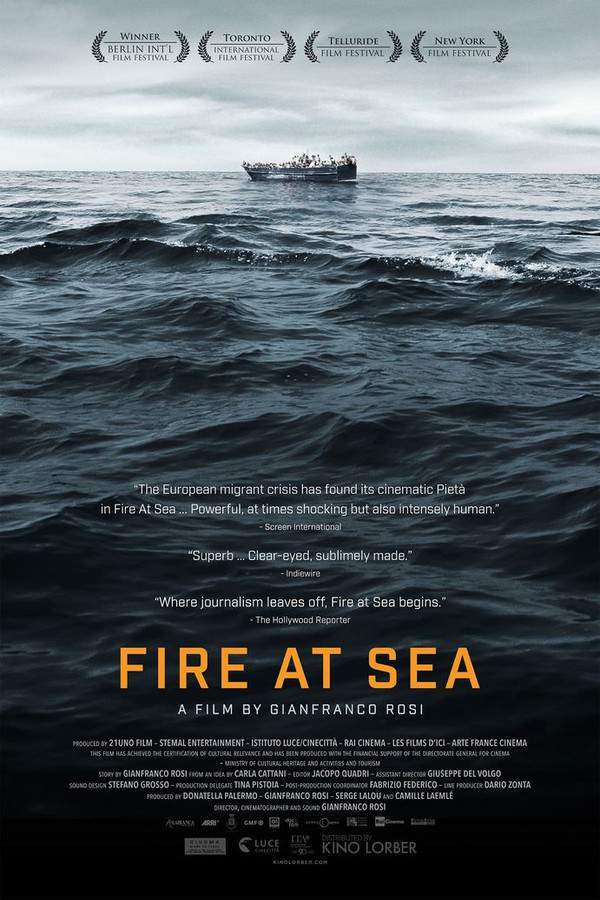
Fire at Sea (2016) movie poster

Plot Summary

Fire at Sea (2016) Plot Summary Explained

Release, runtime and language
2016 · 114 min · Italian
Loading streaming availability…
Directed by
Gianfranco Rosi

On the Italian island of Lampedusa, a young boy named Samuele experiences the everyday joys of childhood while a dramatic refugee crisis unfolds nearby. Desperate people arrive on the island, fleeing conflict and instability in Africa and attempting to reach Europe in dangerous, makeshift boats. The film interweaves Samuele's life with the efforts of rescuers and aid workers, highlighting the island's role as a focal point for both hope and immense suffering as people seek safety and a new beginning.

On this page (6)
  1. 1 Where to watch
  2. 2 What happens: full plot
  3. 3 Plot questions answered
  4. 4 Movie threads
  5. 5 Movies like Fire at Sea
  6. 6 Every angle
Loading streaming availability…

Full plot summary · contains spoilers

What Happens in Fire at Sea: Full Plot Summary

The whole story of Fire at Sea (2016) explained, from the opening scene to the final frame: every key event, every twist and what it all adds up to. Read it as a quick recap before the sequel, to check a scene you missed, or to finally understand what really happened.

On the island of Lampedusa, a young boy named Samuele Pucillo spends his days playing with his friend Mattias Cucina, imagining battles with a homemade slingshot. While the children play, the Italian Navy and Coast Guard are engaged in a constant, urgent struggle, responding to radio distress calls to launch search-and-rescue missions for migrants at sea.

Local life continues in parallel to this crisis. A housewife, Maria Signorello, prepares meals while listening to the local radio hosted by Pippo Fragapane, who mixes music requests with updates on sightings and rescues. As overcrowded boats from North Africa arrive, the migrants are transferred to shore, where they are met by Dr. Pietro Bartolo. For years, Dr. Bartolo has served as the first point of medical contact for every person disembarking on the island before they are processed at the reception center.

The narrative weaves through various island perspectives: Francesco Mannino, a fisherman, shares stories of his long months at sea with Samuele, while Francesco Paterna braves rough waters to dive for sea urchins. In a poignant moment of reflection, Samuele's grandmother, Maria Costa, recalls the horrors of World War II, describing how military rockets once made the ocean look as if there were "fire at sea."

The contrast between daily life and tragedy is stark. While Maria Signorello dedicates a cheerful swing song to her son via the radio, refugees in the reception center sing heartfelt songs about their hardships. Dr. Bartolo reveals the grim reality of the crisis, describing the dehydration and fuel burns suffered by those on board, and the emotional toll of inspecting the bodies of women and children recovered from the water. As Samuele grows and dreams of becoming a sailor, the cycle of tragedy and rescue continues relentlessly on the horizon.

Last updated: October 26, 2026 at 13:30

Was this helpful?

Plot questions answered

Fire at Sea Plot Explained: Your Questions Answered

The questions people ask most about Fire at Sea (2016): what happens in the confusing scenes, why the characters do what they do, the twists, hidden details and what the ending means. Each answer contains spoilers.

Q1

Why are the migrant crossings so deadly?

The danger comes from the sheer numbers packed into the vessels: people can remain below deck for days, hungry, dehydrated, soaked, and burned by fuel. Some boats never reach safety, and rescuers recover bodies, including those of women and children, from the sea.

  • deadly migrant crossings
  • overcrowded boats
  • dehydration
  • fuel burns
  • deaths at sea
Q2

Why is Dr. Pietro Bartolo at the port for every migrant arrival?

As the director of Lampedusa's outpatient clinic, Pietro Bartolo has served as the first medical contact for every migrant who comes ashore for years. Immediate attention matters because arrivals can be severely dehydrated or burned by fuel, while the recurring deaths at sea have left him with the grim responsibility of examining recovered bodies.

  • dr pietro bartolo
  • lampedusa clinic
  • first medical check
  • migrant arrivals
  • rescued bodies
Q3

How do the Navy and Coast Guard respond to a migrant distress call?

A radio request reaches the Italian Navy's district office, which immediately activates a search-and-rescue operation. Naval units and Coast Guard helicopters locate the migrant boat, and rescue crews begin transferring its survivors toward shore.

  • migrant distress call
  • italian navy
  • coast guard
  • search and rescue
  • lampedusa waters
Q4

What happens to migrants after they reach Lampedusa?

Survivors are first taken aboard Coast Guard ships, then moved through smaller vessels and patrol boats to reach shore. Dr. Bartolo examines them at the port, after which they travel by bus to the Lampedusa reception center to be searched and photographed.

  • arrival procedure
  • migrant reception center
  • medical screening
  • identity photographs
  • lampedusa port
Q5

Why does Dr. Bartolo show the photograph of the 860-person boat?

The photograph conveys the staggering scale of one crossing, in which 860 people were carried on a dangerously packed vessel. Bartolo uses it to show how many lives can be lost when migrants remain below deck for days without food or water and suffer burns from fuel in the hold.

Foreshadowing: The repeated focus on dangerously overcrowded migrant boats foreshadows the staggering number shown in Bartolo's photograph.

  • 860 people
  • overcrowded vessel
  • dr bartolo photograph
  • boat death toll
  • migrant tragedy
Q6

How does Samuele's war game relate to the refugee crisis?

Samuele and Mattias turn prickly pears into enemy soldiers and use a slingshot for pretend battles, keeping the violence inside a controlled childhood game. By placing that invented war beside real distress calls and rescue operations, the documentary contrasts children's manageable fears with adults' exposure to actual violence and death.

  • samuele and mattias
  • prickly pear battle
  • slingshot
  • childhood war game
  • parallel editing
Q7

Why does Maria Costa tell Samuele about military rockets during World War II?

Maria Costa is recalling World War II, when military ships passed at night and launched light rockets until the sea looked red, as if it were burning. Her story links a local memory of wartime danger to the present-day deaths of migrants, and her words echo the title Fire at Sea.

Foreshadowing: Her account of the sea turning red appears before the radio dedication of “Fuocoammare,” linking the wartime memory to the song and title.

  • maria costa
  • world war ii
  • military light rockets
  • sea turned red
  • wartime memory
Q8

Why does the ending feel bittersweet rather than fully hopeful?

Fire at Sea ends with Samuele still growing and trying to learn how to become a sailor, which leaves room for personal hope. The surrounding rescue operations continue with no visible end to the migrant crisis, so the final mood combines a child's future with an unresolved collective tragedy.

Foreshadowing: The film's repeated radio dispatches and sea rescues prepare viewers for the final image of an emergency that continues.

  • bittersweet ending
  • samuele's future
  • sailor dream
  • ongoing rescues
  • unresolved migrant crisis
Q9

Why does Samuele want to become a sailor?

Samuele grows up beside the sea, listens to fisherman Francesco Mannino describe months aboard merchant ships, and lives alongside the Navy and Coast Guard's constant rescue activity. The sea therefore represents both possibility and danger, which makes his ambition understandable even as the film exposes the human cost of maritime emergencies.

Foreshadowing: Before he states his ambition, Samuele listens to Francesco Mannino describe life aboard merchant ships.

  • samuele's sailor dream
  • francesco mannino
  • merchant ships
  • navy rescues
  • island life
Q10

How does Lampedusa's radio station connect island life to the migrant emergency?

Pippo Fragapane's local radio mixes music requests with reports about migrant sightings and rescues, making the emergency part of everyday island life. Because the same broadcasts that carry ordinary songs also carry rescue updates, the rescue cycle becomes shared community knowledge rather than an event seen only by official crews.

  • pippo fragapane
  • lampedusa radio
  • song requests
  • rescue updates
  • migrant sightings
Q11

Why do the refugees sing at the reception center?

Their song recounts the hardships and vicissitudes of the journey, giving survivors a collective way to express what they experienced. By preserving the song and the stories behind it, the documentary makes the reception center's residents active narrators rather than anonymous recipients of aid.

  • reception center song
  • refugee journey
  • hardships
  • solidarity
  • shared testimony
Q12

Why does Maria Signorello dedicate a song to her fisherman son?

She dedicates the swing song “Fuocoammare” to her fisherman son and uses the broadcast to wish that the bad weather will clear so he can go out to work. The request carries an ordinary family concern, but because it airs over the same station that reports rescues, it also places everyday island life beside the migrant emergency.

Foreshadowing: Maria Costa's earlier account of military rockets making the sea look red gives the song's title an older historical echo.

  • maria signorello
  • song dedication
  • fisherman son
  • local radio
  • bad weather
Q13

What does Francesco Paterna's sea urchin dive show about island life?

Paterna's dive shows that Lampedusa's residents continue their working routines even when the sea is dangerous. The sequence sustains the film's parallel structure, placing ordinary labor and local life alongside the much larger emergency unfolding in the surrounding waters.

  • francesco paterna
  • sea urchin diving
  • rough seas
  • island work
  • daily routine

Movie threads

More Movies Like Fire at Sea, by Mood & Story

Curated lists built around what makes Fire at Sea tick: the same mood, the same kind of story or the same emotional payoff. Each list explains why these movies belong together.

Bittersweet hope amid tragedy: movies like Fire at Sea

Warmth and solidarity offer hope, yet loss keeps every hopeful moment painfully unresolved. If you liked Fire at Sea, discover movies like Fire at Sea that pair hope and human solidarity with devastating loss. These emotionally heavy films use tender community moments to complicate urgent crises, leaving hope present but never fully reassuring for viewers drawn to humane, painful stories.

  • bittersweet
  • somber
  • hopeful
  • tender
  • urgent
  • harrowing
  • Tone: bittersweet, somber, hopeful
  • Pacing: variable, reflective passages with urgent surges
Why these movies?

The story pattern: Stories in this thread unfold through alternating registers: calm scenes of affection, routine, and resilience give way to urgent moments of danger, injury, or loss. Even when a community acts heroically, the larger problem persists, so triumph rarely becomes lasting resolution. The emotional journey moves from warmth to shock and back to fragile hope, leaving solidarity intact but optimism incomplete.

Why they belong together: The grouping is held together by a shared emotional architecture rather than a single subject. Warmth, play, and community care repeatedly sit beside grief and danger, while none of the films offers a simple cure. Their moderate intensity and variable pacing let viewers breathe between human moments without letting the emotional stakes disappear.


Childhood amid humanitarian crisis: movies like Fire at Sea

A child's ordinary discoveries unfold beside emergencies that expose the world's adult cruelty. If you liked Fire at Sea, explore movies like Fire at Sea that weave a child's perspective through a humanitarian crisis. These moving stories contrast playful discovery, family routines, and future dreams with urgent rescues, displacement, and communal grief, creating a deeply bittersweet perspective.

  • childhood
  • innocence
  • family
  • humanitarian crisis
  • displacement
  • bittersweet
  • Tone: tender, urgent, bittersweet
  • Pacing: variable, alternating calm and urgent
Why these movies?

The story pattern: A young viewpoint anchors the narrative while parallel scenes widen the scale of the surrounding emergency. The child moves through play, family, and imagined futures as adults face rescues, displacement, and grief. The structure repeatedly returns to small moments of belonging, forcing viewers to hold ordinary happiness against collective suffering. Growth brings awareness rather than a clean escape.

Why they belong together: These films share a deliberate structural contrast: intimate childhood scenes are set against urgent adult crises. Parallel editing, shifting scales, and repeated returns to home or play intensify the emotional impact. The result is intimate, empathetic storytelling that carries grief while preserving the child's hope, curiosity, and sense of a possible future.

If you liked this

Movies Like Fire at Sea

Similar movies to Fire at Sea: the same genre, themes or kind of story. Each one comes with its own plot summary, timeline and ending explained.

Browse all movie summaries

Every angle

Fire at Sea (2016) Explained: Plot, Timeline & Characters

Everything about Fire at Sea in one place: what happens in the plot summary, the timeline in chronological order, the characters and meaning and a spoiler-free summary. What's After the Movie adds the cast, box office and post-credit scenes.

Coming soon on iOS and Android

The Plot Explained Movie Summary App

Plot summaries, endings explained and timelines on your phone. Catch up on any movie in minutes, save your favorites and never miss a twist again.

Be the first to know when we launch. Your email stays private, always.

Learn more about the app