Plot Explained Spoilers guaranteed!
Plot Explained

Browse by genre

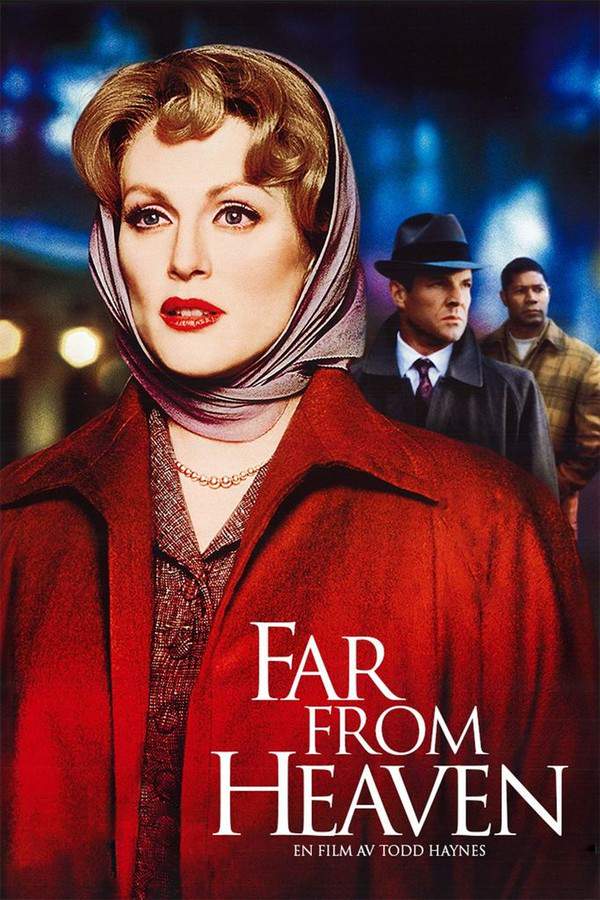
Far From Heaven (2002) movie poster

Plot Summary

Far From Heaven (2002) Plot Summary Explained

Release, runtime and language
2002 · 107 min · English
Directed by
Todd Haynes
Starring
Julianne Moore, Dennis Quaid, Dennis Haysbert
Budget
$13.5M

A picture-perfect 1950s life unravels when a devoted housewife discovers her husband is gay. As she navigates his choices and her own feelings, she confronts the rigid social expectations of her community and begins a surprising friendship with a troubled African-American woman. The experience forces her to question her assumptions about love, marriage, and happiness, leading to a journey of self-discovery and unexpected connections.

On this page (6)
  1. 1 Where to watch
  2. 2 What happens: full plot
  3. 3 Plot questions answered
  4. 4 Movie threads
  5. 5 Movies like Far From Heaven
  6. 6 Every angle

Where to watch

Where to Watch Far From Heaven (2002)

Where can you watch Far From Heaven? Stream, rent or buy it in the US, including on YouTube Free, Amazon Video and Apple TV Store: current JustWatch availability with up-to-date prices.

Streaming availability powered by JustWatch

Full plot summary · contains spoilers

What Happens in Far From Heaven: Full Plot Summary

The whole story of Far From Heaven (2002) explained, from the opening scene to the final frame: every key event, every twist and what it all adds up to. Read it as a quick recap before the sequel, to check a scene you missed, or to finally understand what really happened.

In the picturesque suburb of 1957 Connecticut, we meet Cathy Whitaker, portrayed by Julianne Moore, who seems to epitomize the ideal spouse, mother, and homemaker. Married to Frank, played by Dennis Quaid, a thriving executive at Magnatech—a firm specializing in television advertising—the couple raises two children, David and Janice.

One fateful evening, Cathy receives an alarming phone call from the local police, revealing that her husband has been apprehended. Though Frank insists it's a harmless misunderstanding, it becomes evident that he has been exploring the seedy underbelly of gay bars in Hartford. As Cathy prepares for her upcoming annual Magnatech party alongside her close friend Eleanor Fine (Patricia Clarkson), she finds herself amid social gatherings where discussions of marital intimacy flow freely among other society women, including Nancy and Doreen.

Her life is further complicated when Cathy is featured in the Weekly Gazette, thanks to Mrs. Leacock (Bette Henritze), who praises her domestic prowess and paints her as the quintessential wife. However, the facade begins to crack when Cathy encounters Raymond Deagan, played by Dennis Haysbert, the son of her late gardener. Seeking to honor his father's legacy, Raymond arrives to maintain the garden. Despite facing his own hardships—raising his daughter Sarah alone after his wife's passing—Raymond proves to be a source of solace for Cathy.

As Frank's work demands intensify, he succumbs to temptation and begins frequenting underground bars. Cathy's perception of their marriage shatters when she unexpectedly discovers Frank in a heated kiss with another man. Following this confrontation, he confesses to having "problems" from his youth and agrees to undergo controversial conversion therapy, which only offers a bleak 5-30% chance of success. Despite Frank's determination to change, his relationship with Cathy is irreparably damaged, leading him to drown his emotions in alcohol.

While navigating the turmoil of her marriage, Cathy cultivates her friendship with Raymond, leading to public encounters that raise eyebrows in their conservative community. One pivotal evening, she finds herself delving into a discussion about modern art with Raymond at a local exhibit, even as whispers of their closeness swirl around them. After a party where Frank's attempts at intimacy fail, Cathy, feeling abandoned, turns to Raymond for emotional support, discovering a world unfamiliar to her that reveals the social divides of their time.

However, their budding friendship ignites scandalous gossip when they are seen together. Faced with ostracism during her daughter's ballet performance, Cathy grapples with the suffocating rumors, leading her to distance herself from Raymond. When Christmas brings a family trip to Miami, Frank's struggle with his identity resurfaces, culminating in a desperate demand for a divorce after yet another encounter with a young man.

As tensions escalate, Raymond's daughter, Sarah, becomes a victim of racial bullying, which draws Cathy into the chaos of their harsh realities. Eventually learning about the attack on Sarah, Cathy is compelled to visit the Deagan family, only to find them packing up to leave town due to the fallout from the scandal. With Raymond's steadfast commitment to his daughter's well-being prevailing, he gently rebuffs Cathy's offer to stay connected.

The story's poignant conclusion unfolds at the train station, where Cathy bids farewell to Raymond as he departs for Baltimore. Their silent wave speaks volumes, encapsulating a narrative woven with themes of love, loss, and societal constraints.

Last updated: November 07, 2024 at 22:52

Was this helpful?

Plot questions answered

Far From Heaven Plot Explained: Your Questions Answered

The questions people ask most about Far From Heaven (2002): what happens in the confusing scenes, why the characters do what they do, the twists, hidden details and what the ending means. Each answer contains spoilers.

Q1

Why does Cathy start spending time with Raymond Deagan?

Cathy begins spending time with Raymond because she finds emotional support during her marriage crisis. After discovering her husband Frank is gay and undergoing failed conversion therapy, Cathy feels isolated and abandoned. Raymond, who comes to maintain her garden, offers her companionship and understanding at a time when her marriage is crumbling. Their connection provides Cathy with the genuine connection she's missing at home.

Foreshadowing: Earlier in the film, Cathy is shown attending social gatherings where women discuss marital intimacy, highlighting her loneliness even before the discovery of Frank's secret.

  • cathy whitaker
  • raymond deagan
  • emotional affair
  • friendship
  • marriage crisis
Q2

Why does the community gossip about Cathy and Raymond?

The conservative 1950s Connecticut community gossips because Cathy, a white woman, is publicly befriending Raymond, an African-American man, which was socially unacceptable at the time. Their public outings to art exhibits and other events raise eyebrows, and the whispers intensify when they're seen together frequently. This racial prejudice combines with the social scrutiny Cathy already faces as a woman whose husband was arrested, creating scandalous rumors that ultimately ostracize Cathy.

Foreshadowing: The film establishes the rigid social expectations of the community through scenes at the Magnatech party where women discuss marital intimacy and Mrs. Leacock's praise of Cathy as the quintessential wife.

  • racial prejudice
  • social scandal
  • gossip
  • 1950s society
  • community judgment
Q3

Why does Frank get arrested at the beginning of the movie?

Frank is arrested because he was caught at a gay bar in Hartford. The police call Cathy to inform her, though Frank claims it's a misunderstanding. This arrest is the first indication that Frank has been secretly exploring his homosexuality, visiting underground gay bars while maintaining his facade as a successful executive and family man in suburban Connecticut.

Foreshadowing: The film hints at Frank's hidden life through his increasing work demands and the mysterious trips to Hartford that he uses as cover for visiting gay bars.

  • frank whitaker
  • arrest
  • gay bar
  • hartford
  • homosexuality discovery
Q4

Why does Cathy pull away from Raymond after her daughter's ballet performance?

Cathy distances herself from Raymond after being ostracized at her daughter Janice's ballet performance. The community's whispers and cold shoulders during the event make Cathy realize that continuing her friendship with Raymond will damage her social standing and her children's lives. Fearing further isolation and wanting to protect her family from scandal, Cathy chooses to withdraw from Raymond despite her emotional attachment to him.

Foreshadowing: Earlier scenes show Cathy's public outings with Raymond generating whispers, building toward this moment of social consequences.

  • janice ballet performance
  • ostracism
  • social isolation
  • raymond distance
Q5

Why does Frank demand a divorce?

Frank demands a divorce because he can no longer suppress his true identity. During the family's Christmas trip to Miami, Frank's struggle with his sexual identity reaches a breaking point after another encounter with a young man. He realizes he cannot change who he is and cannot continue living the double life of a suburban husband and father while being true to himself. The divorce represents Frank's final rejection of the closeted life he's been living.

Foreshadowing: The film shows Frank's failed attempts at conversion therapy and his increasing reliance on alcohol, both indicating his desperation to conform but ultimate inability to do so.

  • frank divorce
  • miami christmas
  • sexual identity
  • conversion therapy failure
Q6

Why does Raymond decide to leave town?

Raymond decides to leave town to protect his daughter Sarah from the fallout of the scandal surrounding his friendship with Cathy. After Sarah is violently bullied due to the racial tensions stirred by their relationship, Raymond realizes that staying in Connecticut will only bring more harm to his daughter. He chooses to move to Baltimore to give Sarah a safer environment, even though this means leaving behind his connection with Cathy.

Foreshadowing: The racial bullying incident, where Sarah is attacked by other children, directly triggers Raymond's decision to leave.

  • raymond leaves
  • baltimore
  • sarah
  • racial bullying
  • protection
Q7

Why is Sarah, Raymond's daughter, bullied?

Sarah is bullied because she becomes a target of racial violence sparked by the community's reaction to her father's friendship with Cathy. The scandal surrounding their interracial relationship exposes Sarah to hatred from whites who disapprove of the friendship. When Cathy learns about the attack on Sarah, she visits the Deagan home only to discover them packing to leave town, demonstrating how the social scandal has directly harmed an innocent child.

Foreshadowing: The film's earlier scenes show the community's negative reaction to Cathy and Raymond's friendship, building tension toward this violent consequence.

  • sarah deagan
  • bullying
  • racial violence
  • attack
  • community reaction
Q8

What happens to Frank after his conversion therapy?

Frank undergoes conversion therapy but it fails to change his sexual orientation. The therapy only offers a bleak 5-30% chance of success, and Frank falls into that unsuccessful majority. After the failed treatment, he descends into alcoholism and ultimately cannot sustain his marriage or his facade. The failed conversion therapy marks the point of no return for his relationship with Cathy, as she realizes his issues cannot be fixed and his struggles are permanent.

Foreshadowing: Before the therapy, Frank admits to having "problems" from his youth, showing this is a long-standing issue not easily resolved.

  • conversion therapy
  • frank failure
  • alcoholism
  • marriage end
Q9

What does the train station ending signify?

The train station farewell signifies the final loss in Cathy's life. After losing her husband to divorce and her only genuine connection to Raymond due to social constraints, she stands alone watching him leave for Baltimore. Their silent wave represents the bittersweet nature of their connection, both had genuine feelings for each other, but societal expectations and circumstances prevented them from being together. The ending shows Cathy's growth into self-awareness while acknowledging the profound loneliness that comes with living authentically in a restrictive society.

Foreshadowing: Throughout the film, Cathy and Raymond's moments together are marked by social obstacles, from whispered gossip to public ostracism, building toward this inevitable separation.

  • train station farewell
  • baltimore
  • cathy loss
  • bittersweet ending
Q10

How does Cathy's character change throughout the movie?

Cathy transforms from a passive, picture-perfect housewife into a woman who questions societal expectations. She starts as someone who embodies the ideal 1950s wife, but after discovering Frank's homosexuality and forming a meaningful connection with Raymond, she begins to challenge the rigid social norms of her community. Her journey involves confronting both her husband's secret and her own prejudices, ultimately leading her to understand what genuine human connection means, even if she cannot maintain it.

Foreshadowing: Cathy's feature in the Weekly Gazette as the quintessential wife establishes her initial identity as a product of social expectations, setting up her eventual questioning of those same expectations.

  • cathy growth
  • self-discovery
  • 1950s expectations
  • women roles

Movie threads

More Movies Like Far From Heaven, by Mood & Story

Curated lists built around what makes Far From Heaven tick: the same mood, the same kind of story or the same emotional payoff. Each list explains why these movies belong together.

Movies about perfect lives unraveling like Far From Heaven

Stories where idyllic surfaces crack to reveal hidden pain and social hypocrisy. If you were captivated by the slow, painful dismantling of Cathy's suburban dream in Far From Heaven, explore more movies like it. These films delve into similar themes of hidden secrets, societal pressures, and the emotional fallout when a picture-perfect facade begins to crack under the weight of truth.

  • somber
  • reflective
  • stifling
  • quietly devastating
  • oppressive
  • melancholic
  • Tone: melancholic, somber, reflective
  • Pacing: slow, deliberate, character-focused
Why these movies?

The story pattern: Films in this thread typically follow a linear, character-driven path where a central discovery or event shatters a protagonist's carefully constructed world. The plot focuses on the aftermath: the emotional fallout, the confrontation with harsh social norms, and the protagonist's journey toward a more painful but authentic self-awareness, often at great personal cost.

Why they belong together: These movies are grouped together because they share a core narrative engine: the destruction of an ideal. They possess a melancholic, reflective tone, a deliberate pacing that allows for emotional absorption, and a heavy emotional weight stemming from themes of betrayal, loss, and the clash between personal desire and public expectation.

Movies about forbidden friendships like in Far From Heaven

Films about unlikely bonds that challenge rigid social boundaries and offer fleeting solace. If the poignant, impossible connection between Cathy and Raymond in Far From Heaven resonated with you, discover similar stories. This collection features movies like Far From Heaven that focus on interracial relationships, forbidden friendships, or taboo bonds that defy social conventions, often with bittersweet or tragic outcomes.

  • poignant
  • lonely
  • bittersweet
  • oppressive
  • heartbreaking
  • hopeful connection
  • Tone: bittersweet, poignant, melancholic
  • Pacing: slow, deliberate, emotional
Why these movies?

The story pattern: The narrative pattern involves two isolated individuals from different social spheres finding unexpected understanding in one another. Their bond serves as a catalyst for challenging their own prejudices and the world's injustices. However, the external pressure from a bigoted society typically forces a painful separation, resulting in a bittersweet ending where personal growth is achieved but lasting companionship is sacrificed.

Why they belong together: These films are united by their focus on a specific type of human connection—one that is beautiful precisely because it is forbidden. They share a heavy emotional weight, a melancholic or bittersweet tone, and explore themes of race, class, or sexuality. The pacing is often slow to allow the relationship to develop with nuance and gravity.

If you liked this

Movies Like Far From Heaven

Similar movies to Far From Heaven: the same genre, themes or kind of story. Each one comes with its own plot summary, timeline and ending explained.

Browse all movie summaries

Every angle

Far From Heaven (2002) Explained: Plot, Timeline & Characters

Everything about Far From Heaven in one place: what happens in the plot summary, the timeline in chronological order, the characters and meaning and a spoiler-free summary. What's After the Movie adds the cast, box office and post-credit scenes.

Coming soon on iOS and Android

The Plot Explained Movie Summary App

Plot summaries, endings explained and timelines on your phone. Catch up on any movie in minutes, save your favorites and never miss a twist again.

Be the first to know when we launch. Your email stays private, always.

Learn more about the app