Plot Explained Spoilers guaranteed!
Plot Explained

Browse by genre

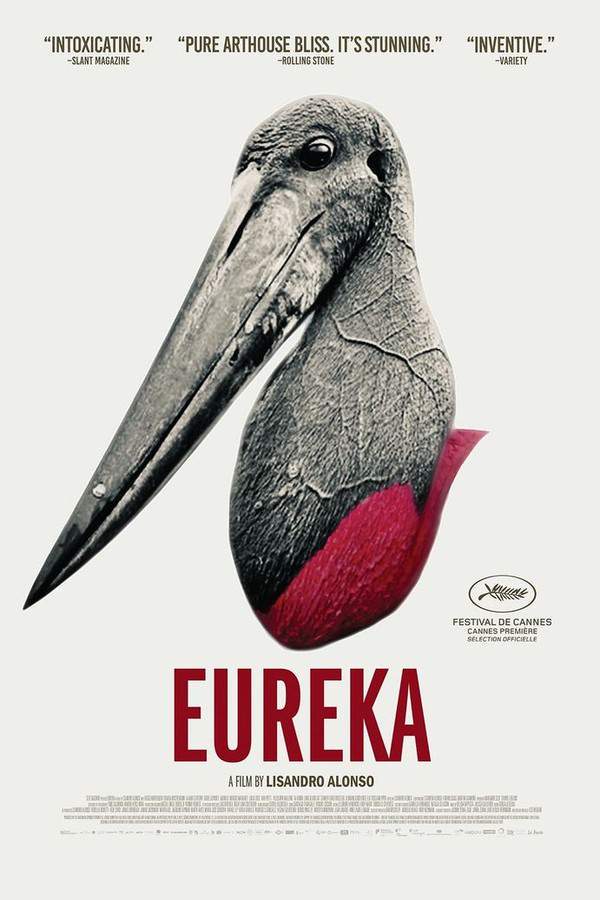
Eureka (2001) movie poster

Characters & Themes

Eureka (2001) Characters, Setting & Themes Explained

Release, runtime and language
2001 · 217 min · Spanish
Directed by
Shinji Aoyama
Starring
Aoi Miyazaki, Kôji Yakusho

In the harsh Yukon wilderness of 1925, prospector Jack McCann encounters Frieda, a clairvoyant madam, at a remote brothel. Sharing a profound connection, Frieda gives him a mysterious stone that promises gold. However, the gift also suggests a dark and unavoidable fate awaits him in the unforgiving landscape. He must confront both the allure of riches and the ominous prophecy that binds him.

On this page (7)
  1. 1 Characters explained (2)
  2. 2 Where & when it takes place
  3. 3 Themes & meaning (3)
  4. 4 Character & meaning questions
  5. 5 Movie threads
  6. 6 Movies like Eureka
  7. 7 Every angle

2 main characters · contains spoilers

Eureka Characters Explained: Who Is Who

The main characters of Eureka (2001), heroes and villains: what drives them, how they change over the course of the story and what each of them reveals about the film's bigger ideas.

  • Kozue Tamura (Aoi Miyazaki)

    Kozue is the younger sister who, following the hijacking, withdraws from speech and interaction, embodying a fragile, cautious resilience. Her gradual re-engagement with others signals both the persistence of trauma and the possibility of recovery. She becomes more communicative as the journey unfolds, representing hope amid despair.

    • 🎭 Trauma
    • 🗣️ Silence
    • 🌱 Recovery
  • Makoto Sawai (Kôji Yakusho)

    Makoto is the bus driver whose life splinters after the hijacking. He struggles to resume normal life, oscillating between protective authority and emotional distance. His decision to join the siblings on the road and his later confrontation anchor the group’s fragile sense of stability and purpose.

    • 🎭 Trauma
    • 🧭 Responsibility
    • 🏃‍♂️ Adaptability

Last updated: October 04, 2025 at 08:04

Was this helpful?

Setting

Where and When Does Eureka Take Place?

The setting of Eureka (2001): the year and time period, the places and locations, and how they shape the characters, the mood and the tension of the story.

Time period

late 1990s

The story unfolds in a contemporary late-1990s Japan, a period of social change yet ordinary domestic life in rural areas. Life here moves at a slower pace, allowing the characters’ trauma to unfold gradually. Visual and narrative pacing echo the era’s restrained mood, with color returning only as healing progresses.

Location

Rural Kyushu, Japan

Set in rural Kyushu, Japan, the film unfolds across quiet countryside locations. The setting emphasizes isolation as the characters cope with trauma. The sepia visuals reinforce memory and distance from ordinary life.

  • 🌾 Rural Kyushu
  • 🏞️ Countryside landscapes
  • 📽️ Sepia-toned visuals

Last updated: October 04, 2025 at 08:04

Was this helpful?

3 major themes

Eureka Meaning: Themes & Message Explained

What is Eureka (2001) really about? The emotional, social and philosophical themes the film keeps returning to, its symbolism and the message beneath the surface.

  • Trauma

    The film centers on the lasting impact of violence on three survivors, showing how fear, guilt, and disruption reshape everyday life. Naoki, Kozue, and Makoto each cope differently, revealing the complex psychology of trauma in a close-knit community. The narrative avoids graphic violence, focusing instead on memory, avoidance, and the gradual path toward relief.

  • Family

    A broken family slowly navigates the limits of care and responsibility after the hijacking. Makoto becomes a surrogate parent, knitting the siblings into a fragile unit while their mother’s abandonment adds to the sense of fragility. The “found family” on the road highlights how love and obligation can sustain people through crisis.

  • Journey

    The ensemble’s odyssey on an old bus turns into a literal and symbolic voyage toward healing. The road trip exposes tensions, reversals of trust, and moments of unexpected connection. As they travel across Kyushu, the characters confront what it means to return to ordinary life and to face one’s past.

Last updated: October 04, 2025 at 08:04

Was this helpful?

Character & theme questions

Eureka Characters & Meaning: Your Questions Answered

The questions people ask about Eureka (2001): who the characters really are, their relationships, what the symbols mean, where it takes place and what the movie is really about. Each answer contains spoilers.

Q1

Where is the movie set?

Eureka is set in rural Kyushu, Japan, across quiet countryside locations. The setting emphasizes isolation as the characters cope with trauma, with sepia-toned visuals reinforcing a sense of memory and distance from ordinary life.

  • rural kyushu
  • japan
  • setting
  • countryside
Q2

What time period does the story take place in?

The story unfolds in contemporary late-1990s Japan, a period of social change yet ordinary domestic life in rural areas. Life moves at a slower pace here, allowing the characters' trauma to unfold gradually.

  • 1990s
  • japan
  • time period
  • era
Q3

What are the main themes?

The film centers on three major themes: trauma and its lasting impact on survivors, family and the limits of care after crisis, and the journey toward healing. The narrative shows how fear, guilt, and disruption reshape everyday life for three survivors of a hijacking.

  • trauma
  • family
  • journey
  • healing
  • themes
Q4

Who is Kozue Tamura?

Kozue Tamura is the younger sister who, following the hijacking, withdraws from speech and interaction, embodying fragile, cautious resilience. Her gradual re-engagement with others signals both the persistence of trauma and the possibility of recovery. She becomes more communicative as the journey unfolds, representing hope amid despair.

  • kozue tamura
  • character
  • younger sister
  • trauma
Q5

Who is Makoto Sawai?

Makoto Sawai is the bus driver whose life splinters after the hijacking. He struggles to resume normal life, oscillating between protective authority and emotional distance. His decision to join the siblings on the road and his later confrontation anchor the group's fragile sense of stability and purpose.

  • makoto sawei
  • bus driver
  • character
  • trauma
Q6

How does the movie portray trauma?

The film shows the lasting impact of violence on three survivors, revealing how fear, guilt, and disruption reshape everyday life. Each character copes differently, exposing the complex psychology of trauma in a close-knit community. The narrative avoids graphic violence, focusing instead on memory, avoidance, and the gradual path toward relief.

  • trauma
  • psychology
  • survivors
  • memory
Q7

What does the family theme explore?

A broken family slowly navigates the limits of care and responsibility after the hijacking. Makoto becomes a surrogate parent, knitting the siblings into a fragile unit while their mother's abandonment adds to the sense of fragility. The found family on the road highlights how love and obligation can sustain people through crisis.

  • family
  • found family
  • care
  • relationships
Q8

What role does the journey play in the story?

The ensemble's odyssey on an old bus turns into a literal and symbolic voyage toward healing. The road trip exposes tensions, reversals of trust, and moments of unexpected connection. As they travel across Kyushu, the characters confront what it means to return to ordinary life and face one's past.

  • road trip
  • kyushu
  • healing
  • journey
  • bus
Q9

Why does the movie use sepia-toned visuals?

The sepia visuals reinforce memory and distance from ordinary life, creating a sense of emotional detachment that mirrors the characters' psychological states. The gradual return of color as the story progresses signifies healing and a hopeful transition toward normalcy.

  • visuals
  • sepia
  • color
  • symbolism
  • cinematography
Q10

What is the emotional tone of the movie?

The film has a restrained, observational approach with a pervasive sense of melancholy rather than high tension. The pacing is overwhelmingly slow, with long lingering scenes that emphasize atmosphere and the slow burn of psychological recovery. The emotional weight is heavy due to its sustained focus on trauma, familial collapse, and the murder mystery subplot.

  • tone
  • mood
  • melancholy
  • pacing
  • atmosphere

Movie threads

More Movies Like Eureka, by Mood & Story

Curated lists built around what makes Eureka tick: the same mood, the same kind of story or the same emotional payoff. Each list explains why these movies belong together.

Quiet dramas about trauma and recovery like Eureka

Slow, meditative films about characters rebuilding their lives after profound loss. For viewers seeking movies like Eureka that explore the heavy, melancholic journey of overcoming trauma. These films share a slow, observational pace, a focus on emotional scars and survivor's guilt, and a narrative centered on the quiet process of rebuilding a life.

  • melancholic
  • somber
  • meditative
  • quiet
  • hushed
  • emotional
  • Tone: melancholic, somber, bittersweet
  • Pacing: slow, meditative, deliberate
Why these movies?

The story pattern: Stories in this thread typically follow a linear path centered on a character or small group navigating the emotional aftermath of a shared tragedy. The plot is often less about external events and more about the internal, psychological journey, marked by long silences, moments of introspection, and a gradual, often incomplete, move towards acceptance.

Why they belong together: These films are grouped by their shared commitment to portraying the weight of emotional trauma with restraint and authenticity. They prioritize mood and character depth over plot, resulting in a similarly heavy, somber, and meditative viewing experience.
Atmospheric slow-burn dramas with a mood like Eureka

Films where the quiet mood and immersive atmosphere are as important as the plot. If you liked the hushed, dreamlike, and observational mood of Eureka, explore these similar slow-burn dramas. These films share a focus on creating a powerful, often melancholic atmosphere, a restrained pace, and a sense of place that deeply influences the characters' journeys.

  • atmospheric
  • slow burn
  • dreamlike
  • hushed
  • observational
  • restrained
  • Tone: melancholic, dreamlike, observational
  • Pacing: slow, lingering, atmospheric
Why these movies?

The story pattern: Narratives in this thread are character-driven but are deeply intertwined with their environment. The plot unfolds gradually, allowing the audience to absorb the mood and setting. The story structure often feels more like a tone poem than a traditional plot, with emphasis on visual storytelling and emotional resonance over rapid events.

Why they belong together: These films are connected by their prioritization of mood and atmosphere. They create a cohesive, often somber or melancholic, feeling through a slow pace, restrained performances, and a focus on the sensory experience of the world they depict.

If you liked this

Movies Like Eureka

Similar movies to Eureka: the same genre, themes or kind of story. Each one comes with its own plot summary, timeline and ending explained.

Browse all movie summaries

Every angle

Eureka (2001) Explained: Plot, Timeline & Characters

Everything about Eureka in one place: what happens in the plot summary, the timeline in chronological order, the characters and meaning and a spoiler-free summary. What's After the Movie adds the cast, box office and post-credit scenes.

Coming soon on iOS and Android

The Plot Explained Movie Summary App

Plot summaries, endings explained and timelines on your phone. Catch up on any movie in minutes, save your favorites and never miss a twist again.

Be the first to know when we launch. Your email stays private, always.

Learn more about the app