Plot Explained Spoilers guaranteed!
Plot Explained

Browse by genre

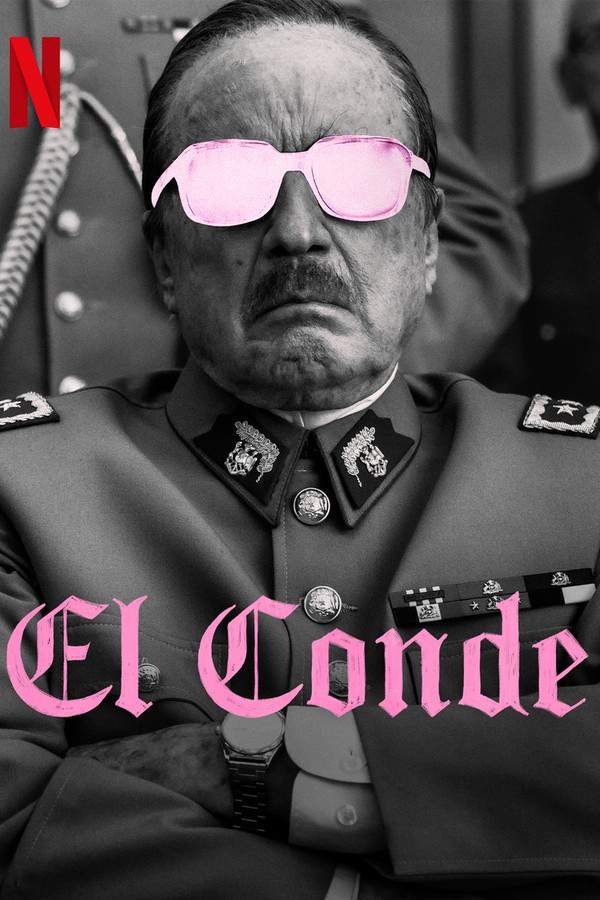
El Conde (2023) movie poster

Ending Explained

El Conde (2023) Ending Explained – Final Scene & Meaning

Release, runtime and language
2023 · 110 min · Spanish
Echo score 66
JustWatch #32,350 2
Directed by
Pablo Larraín
Starring
Amparo Noguera, Antonia Zegers, Alfredo Castro, Marcial Tagle, Paula Luchsinger, Jaime Vadell
Budget
$10M

A darkly comedic horror film reimagines Chile's former dictator Augusto Pinochet as a 250-year-old vampire. Haunted by his fascist past, he attempts to abandon his need for blood and seeks a new purpose. An unexpected alliance brings a spark of rebellious passion, leading him on a counterrevolutionary crusade against oppression and forcing him to confront the consequences of his actions.

On this page (7)
  1. 1 Where to watch
  2. 2 What happens at the end
  3. 3 Final events in order
  4. 4 Ending questions answered
  5. 5 Movie threads
  6. 6 Movies like El Conde
  7. 7 Every angle

Where to watch

Where to Watch El Conde (2023)

Where can you watch El Conde? Stream, rent or buy it in the US, including on Netflix and Netflix Standard: current JustWatch availability with up-to-date prices.

Streaming availability powered by JustWatch

Ending explained · contains spoilers

What Happens at the End of El Conde?

How El Conde (2023) ends, what the final scene means, which earlier moments set it up and how to read the ending if the film leaves it open. The full ending explained, with every spoiler.

In the ending of El Conde, the satire layers don a bizarre yet thought-provoking picture of Augusto Pinochet’s supernatural afterlife. As the story approaches its climax, Carmencita, the exorcist, attempts to rid Augusto of his vampiric curse, believing that doing so will allow him to finally die peacefully. Throughout the film, Augusto’s relationships reveal his lingering influence—particularly his obsession with Carmencita, who he desires romantically, while his children and followers are depicted as greedy and morally corrupt, living off his legacy. When Carmencita starts the exorcism, Augusto’s true nature as a vampire comes to the surface, and he quickly turns her into a vampire herself, symbolizing how even those fighting against evil can be seduced by it.

The story then twists into a surreal reimagining, where Margaret Thatcher is revealed as Augusto’s vampire mother—a satirical jab on political allegiances and historical figures. As Augusto’s children plot to kill Carmencita, Fyodor, the vampire butler, finally bites Lucia—their shared former servant—and she becomes a vampire as well, aligning herself with Augusto’s dark world. Meanwhile, Augusto and Margaret drink vampire blood to regain youthful strength, turning back into younger versions of themselves and immersing in their insidious legacy. Augusto’s transformation into a teenage boy and his return to violence—once again targeting leftists in a school—suggests a cyclical return of fascism and violence, warning that these forces can resurface if they are not confronted.

In the final moments, Augusto kills Lucia and Fyodor, eliminating those who might threaten his power or betray him. Carmencita, having failed to exorcise the vampire, is killed by the family, symbolizing how the corrupting influence of fascism and greed ultimately crush those who oppose it. The film concludes with Augusto and Margaret turning into younger vampires and attempting to re-enter the political arena, subtly hinting that the cycle of tyranny and repression is never truly over. Overall, El Conde uses supernatural satire and absurd humor to critique the legacy of dictatorship, the cyclical nature of fascism, and how history’s darkest figures can persist in new forms if we do not actively resist them. It’s a surreal, darkly humorous reflection on power, corruption, and the enduring shadow of authoritarianism.
Last updated: June 25, 2025 at 09:01

Was this helpful?

The last 4 events

How El Conde Ends: The Final Events in Order

The last events of El Conde (2023) in chronological order, the run-up to the ending explained above. The complete timeline has all 15 events, scene by scene.

Open the full timeline
  1. Carmen's Downfall

    As Carmen attempts to escape from Augusto's grasp after revealing her duplicity, she falls victim to Fyodor. He guillotines her and destroys her dossier, erasing evidence of their corrupt dealings.

    When
    1990s
    Where
    Pinochet Farm
  2. The Betrayal

    In a violent confrontation spurred by betrayal, Augusto kills his wife Lucia and beheads Fyodor using a saw. The shocking bloodshed underscores the dark and treacherous path of immortal power struggles.

    When
    1990s
    Where
    Pinochet Farm
  3. A New Life Begins

    With their enemies eliminated, Augusto and Margaret rejuvenate themselves with vampire hearts, marking the beginning of a new chapter. They leave the remnants of their dark past behind as they embark on a new journey.

    When
    1990s
  4. Final Arrival of the Nuns

    As the Pinochet children attempt to salvage the farm, Carmen's fellow nuns arrive, signifying the ongoing repercussions of the previous events. Their presence hints at unresolved issues within the family's dark legacy.

    When
    1990s
    Where
    Pinochet Farm

Ending questions answered

El Conde Ending: Your Questions Answered

The questions people ask most about the ending of El Conde (2023): what the final scene means, how the twist works, what happens to each character and how to read the ending. Each answer contains spoilers.

Q1

Why does Carmencita become a vampire at the end

During the exorcism attempt, Augusto's true vampiric nature emerges and he attacks Carmencita, turning her into a vampire. This symbolizes how even those who fight against evil can be corrupted and seduced by it, the exorcist becomes the very thing she sought to destroy.

  • carmencita
  • vampire
  • exorcism
  • corruption
Q2

What happens to Lucia at the end of El Conde

Lucia is turned into a vampire by Fyodor but is later killed by Augusto in the final moments. Augusto eliminates her along with Fyodor to remove anyone who might threaten his power or betray him, showing his ruthless preservation of his dark legacy.

  • lucia
  • death
  • fyodor
  • vampire
Q3

Why does Augusto become a teenager again

Augusto and Margaret drink vampire blood to regain their youthful strength, transforming back into younger versions of themselves. Augusto specifically becomes a teenage boy, which the film uses to suggest that fascism can reinvent itself and return to violence in new, even more dangerous forms.

  • augusto
  • teenager
  • transformation
  • youth
Q4

Is Margaret Thatcher actually Augusto's vampire mother

Yes, the film reveals Margaret Thatcher as Augusto's vampire mother, a surreal satirical twist that comments on the historical political alliance between Pinochet's Chile and Thatcher's Britain. This absurd revelation reinforces the film's theme about the dark connections between Western powers and authoritarian regimes.

  • margaret thatcher
  • mother
  • vampire
  • political satire
Q5

What does the ending mean - does fascism win

The ending presents a bleak message: Augusto and Margaret escape to re-enter the political arena as younger vampires, implying that the cycle of tyranny and repression is never truly over. The film argues that fascism persists in new forms if not actively confronted, though Carmencita's death shows that resistance is crushed by corrupting power.

  • fascism
  • cycle
  • tyranny
  • message
  • meaning
Q6

Why is Carmencita killed at the end

Carmencita fails to exorcise Augusto and is killed by his family. Her death symbolizes how the corrupting influence of fascism and greed ultimately crushes those who genuinely oppose it. Her failure also represents how superficial resistance cannot defeat deeply entrenched authoritarian evil.

  • carmencita
  • death
  • killed
  • family
Q7

What happens to Fyodor in the ending

Fyodor finally acts on his long-standing desire for Lucia by turning her into a vampire. However, both he and Lucia are killed by Augusto in the final moments, eliminated because they represent potential threats to Augusto's continued power and control.

  • fyodor
  • death
  • lucia
  • vampire
Q8

Why do Augusto and Margaret turn young again at the end

Their transformation represents the eternal persistence of evil through reinvention. By becoming young again, they can return to positions of power and continue their oppressive ideologies, suggesting that authoritarian figures don't disappear, they adapt and resurface in new forms throughout history.

  • young
  • transformation
  • power
  • return
Q9

What is the significance of the school scene at the end

Augusto's transformation into a teenage boy and return to violence at a school suggests a cyclical return of fascism and political violence. It warns that these forces can resurface in new generations if left unchallenged, representing how oppressive ideologies are passed down and regenerated.

  • school
  • violence
  • cycle
  • teenager augusto
Q10

Who survives at the end of El Conde

Only Augusto and Margaret survive and escape. They turn into younger vampires and leave the isolated farm to re-enter the political world. All other characters, Carmencita, Lucia, and Fyodor, are dead, representing the complete victory of corrupt power over those who opposed it.

  • survivors
  • augusto
  • margaret
  • escape
Q11

Why does Lucia become a vampire in El Conde

Fyodor, the vampire butler who has long desired Lucia, finally bites her and turns her into a vampire. This aligns her with Augusto's dark world, representing how even the oppressed servants can be pulled into the cycle of corruption and evil.

  • lucia
  • fyodor
  • vampire
  • transformation
Q12

What does the ending imply about history repeating itself

The ending explicitly suggests that the cycle of tyranny never ends, Augusto and Margaret escape to continue their influence in the world. The film uses its supernatural premise to argue that fascism, corruption, and authoritarianism persist through reinvention rather than disappearing, requiring active resistance to stop.

  • history
  • cycle
  • repetition
  • authoritarianism
Q13

What happens to Augusto's children at the end

Augusto's children plot to kill Carmencita but are ultimately left in ruin when Augusto and Margaret escape. They represent the greedy, morally corrupt inheritors of a brutal legacy who are themselves discarded by the very system they hoped to profit from.

  • children
  • family
  • greed
  • ruin

Movie threads

More Movies Like El Conde, by Mood & Story

Curated lists built around what makes El Conde tick: the same mood, the same kind of story or the same emotional payoff. Each list explains why these movies belong together.

Existential antihero stories like El Conde

Stories where ancient evils or villains face a profound existential boredom. If you enjoyed the existential ennui of the ancient vampire in El Conde, explore more movies like it. These films feature powerful monsters or villains grappling with boredom and a search for meaning, creating a unique blend of dark satire, horror, and heavy emotional weight.

  • existential
  • cynical
  • satirical
  • gothic
  • philosophical
  • biting
  • Tone: dark, cynical, existential
  • Pacing: steady, reflective
Why these movies?

The story pattern: The narrative typically follows an ancient or powerful antihero who has grown tired of their own legacy of power or violence. They embark on a quest for a new purpose, often triggered by an unexpected alliance or event, forcing them to confront the emptiness of their long existence.

Why they belong together: These movies are grouped together because they share a unique tonal mix: the high intensity of facing a monstrous protagonist, a dark and cynical tone, and a steady pacing that allows for philosophical reflection. They delve into themes of immortality, legacy, and the banality of evil.

Political allegory horror movies like El Conde

Allegorical horror and fantasy used to critique real-world politics and power. For viewers who liked the sharp political satire of El Conde, this list features similar movies that use horror and fantasy as allegory. Discover films where vampires, monsters, and the supernatural serve as metaphors for authoritarianism, historical trauma, and the corruption of power.

  • satirical
  • biting
  • political
  • allegorical
  • oppressive
  • grotesque
  • Tone: dark, satirical, cynical
  • Pacing: steady, revelatory
Why these movies?

The story pattern: The plot uses a supernatural premise to re-examine and critique real historical events or political structures. The narrative unfolds by mapping the rules and behaviors of the fantasy element onto the dynamics of power, corruption, and betrayal, creating a layered and critical allegory.

Why they belong together: These films are united by their core method: using genre tropes for incisive political commentary. They share a dark, satirical tone, high intensity due to their weighty subject matter, and complex narratives that intertwine historical allegory with supernatural horror or fantasy.

If you liked this

Movies Like El Conde

Similar movies to El Conde: the same genre, themes or kind of story. Each one comes with its own plot summary, timeline and ending explained.

Browse all movie summaries

Every angle

El Conde (2023) Explained: Plot, Ending, Timeline & Characters

Everything about El Conde in one place: what happens in the plot summary, the timeline in chronological order, the characters and meaning, the ending explained and a spoiler-free summary. What's After the Movie adds the cast, box office and post-credit scenes.

Coming soon on iOS and Android

The Plot Explained Movie Summary App

Plot summaries, endings explained and timelines on your phone. Catch up on any movie in minutes, save your favorites and never miss a twist again.

Be the first to know when we launch. Your email stays private, always.

Learn more about the app