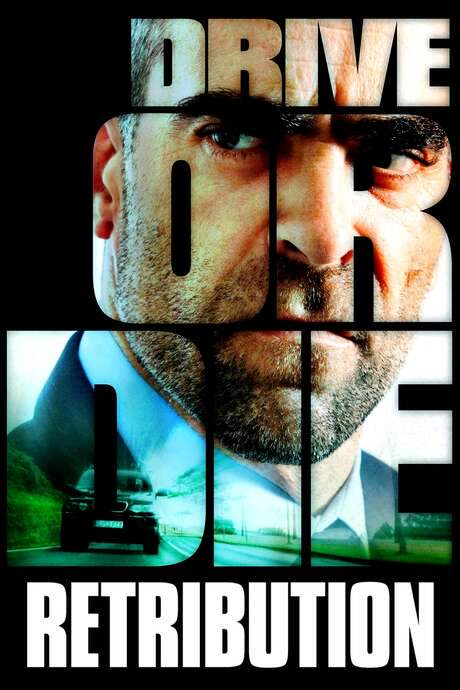
- What's After the Movie presents a tense and gripping story centered around Karl Brendt (Wotan Wilke Möhring), a successful Berlin project developer who finds his life turned upside down in an instant. The film kicks off with Karl driving his children, Josefine ([Emily Kusche]) and Marius ([Carlo Thoma]), to school when he receives a shocking phone call. A mysterious stranger warns him that there are bombs attached to the car seats that will explode if they are moved or remotely triggered. The caller demands an extortionate ransom from both his personal and business accounts, threatening to detonate the bombs if his demands are not met.
As the situation escalates, it becomes clear that both Karl and his children are in imminent danger. The blackmailer signals that any attempt to escape—even just stepping out of the car—will trigger an explosion, which is confirmed when a second car involved in the incident explodes after a passenger exits. The threat is real and terrifying, creating a high-stakes crisis for everyone involved.
The ransom is held in the account of Karl’s wife, Simone Brendt (Christiane Paul), who initially refuses to pay, overwhelmed by fear and disbelief. Her resolve begins to waver when their young daughter, Josefine, pleads with her over the phone, insisting that the money be handed over to save their lives. Driven by desperation, Simone’s lawyer and lover take her to the bank, but police suspicions are raised as they assume Karl is involved in a dangerous kidnapping. The authorities, including Fahri Yardım as Omar Cicek, are dispatched with a large team, including an explosives expert, to manage the situation.
The police cordon off Karl's car at a busy urban location, Gendarmenmarkt, where Pia Zach (Hannah Herzsprung), the explosives expert, rigorously assesses the threat. She finds that there are indeed detonators attached to the car, confirming the danger. Despite her doubts about Karl’s innocence—she begins to question whether he might be linked to criminal activity—Inspector Drache ([Niels-Bruno Schmidt]) is convinced that Karl is dangerous and possibly involved in blackmail or worse.
The tension intensifies as Josefine refuses to get out of the car, suspecting her father might be shot if she leaves. Instead, she jumps into the passenger seat in a brave act of defiance. Meanwhile, a man claiming to be Karl's brother arrives, but in reality, he is the blackmailer seeking revenge for his wife's death. The blackmailer's motivations stem from a suicide her having committed after losing her home due to a rent eviction—an incident Karl was associated with, leading him to be seen as responsible. This revelation solidifies the suspicion that Karl might be involved in darker deeds.
The blackmailer reveals that he has activated a timer, and Karl only has five minutes to deliver the ransom. In a frantic attempt to escape the escalating threat, Karl flees in his car, with police and explosives experts in pursuit. Pia Zach learns from Karl’s wife that the blackmailer’s true brother is in Thailand, adding another layer of complexity to the case. Simone, taking charge, decides to stop the police from shooting Karl, who is desperately trying to save his family.
As Josefine voluntarily exits the car at the bank’s riverside location, the blackmailer eagerly takes her place in Karl’s car. The blackmailer makes it clear that he wants to take responsibility for his actions, and in a moment of great desperation, Karl admits he has been irresponsible in his building projects. When the blackmailer refuses to surrender, Karl makes a heartbreaking decision—he drives the car into the Spree river to prevent an explosion. He manages to escape the car before it blows up, but tragically, the blackmailer is killed in the explosion.
The story concludes some time later, after Karl has served time in prison. The family, scarred but resilient, reconciles with each other, symbolizing hope and redemption amid chaos. What's After the Movie reminds viewers of the unpredictable and often perilous nature of life, where heroism and vulnerability intersect in moments of extreme crisis, making it a compelling exploration of duty, family, and the consequences of past actions.