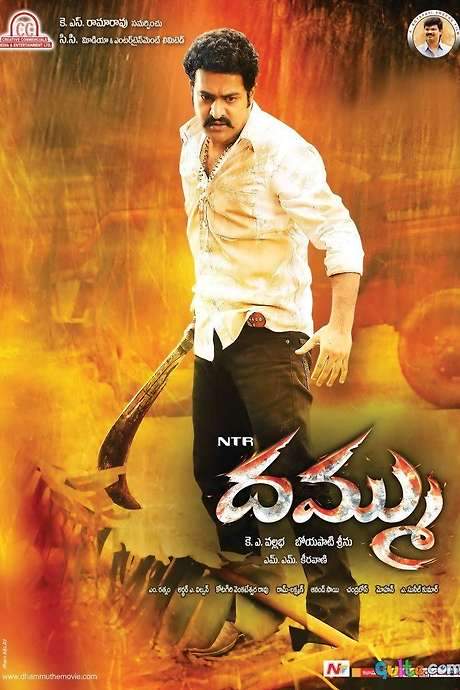
Year: 2012
Runtime: 156 mins
Language: Telugu
Director: Boyapati Srinu
Rama Chandra, an orphan, finds himself caught in a conflict between rival royal families as he pursues Sathya, the woman he loves. He discovers that the well-being of his village hinges on the decisions he makes, forcing him to navigate a dangerous situation and confront powerful adversaries while trying to win her affection.
Warning: spoilers below!
Haven’t seen Dhammu yet? This summary contains major spoilers. Bookmark the page, watch the movie, and come back for the full breakdown. If you're ready, scroll on and relive the story!
Trace every key event in Dhammu (2012) with our detailed, chronological timeline. Perfect for unpacking nonlinear stories, spotting hidden connections, and understanding how each scene builds toward the film’s climax. Whether you're revisiting or decoding for the first time, this timeline gives you the full picture.
Last updated: January 06, 2026 at 10:49
Find frequently asked questions about the Dhammu (2012) timeline, including chronological order, nonlinear jumps, cause-and-effect links, and scene sequence clarifications. This timeline FAQ helps explain when key events happen, how moments connect, and why the story unfolds in that specific order.
Sathya, coming from a wealthy background, wanted to ensure that Rama Chandra's lineage had real significance before committing to a relationship. This wasn't just a superficial demand, it reflected the social importance of family heritage in their world, and it inadvertently pushed Rama Chandra to uncover the truth about his royal birthright.
Earlier scenes establish that Rama Chandra lives as a simple orphan, making his lack of family history a genuine barrier to winning Sathya's hand.
While visiting the Suryavamsi estate to become an adopted heir, Rama Chandra learned about the family's violent past and the feud with the Chandravamsi clan. He was then told the truth: his birth name was Raja Vasireddy Vijayadwaja Srisimha, and he had been hidden since birth under the name Rama Chandra to protect him from Chandravamsi forces.
The Suryavamsi family's search for an heir creates the opportunity for this revelation.
Vijaya attempted peaceful resolution first, but the Chandravamsi faction refused any compromise. When his ally was murdered by the king's middle son, and later his brother-in-law was killed by the youngest prince, Vijaya was forced into retaliation. Each act of violence by the Chandravamsi family pushed him further into the cycle of blood revenge, leaving peaceful options exhausted.
Early in the story, Vijaya explicitly tries diplomacy, but the rival gang's refusal to cooperate sets the tragic trajectory.
The middle son killed his elder brother to eliminate competition for the throne and intensify the feud with the Suryavamsi family. This act was meant to consolidate power within the Chandravamsi clan while also striking at Vijaya's position, as the eldest son had already been defeated by Vijaya earlier.
The timeline shows the eldest son was already weakened after his confrontation with Vijaya, making the middle son's move a strategic grab for power.
After Vijaya thwarted the youngest prince's plans, the prince responded by killing Vijaya's brother-in-law. This act of revenge for Vijaya's earlier interference became the final provocation that led Vijaya to kill the youngest prince and his men in retaliation.
The pattern of escalating violence is established when the Chandravamsi family continues to strike at Vijaya's loved ones.
Vijaya was beaten during a confrontation with a police officer, though the exact reason isn't detailed in the summary. This brutal encounter was only stopped when the Raja of Veera Durgam intervened, revealing Vijaya's true identity to halt the assault.
The police confrontation occurs after the escalating violence between the families has drawn official attention.
The Raja of Veera Durgam possessed knowledge of Vijaya's secret identity as the true heir of the Suryavamsi lineage. He intervened to stop the police beating and then revealed Vijaya's birthright, functioning as a key ally who held the information needed to establish Vijaya's legitimate claim to the throne.
The Raja's intervention comes at a critical moment when Vijaya's identity could shift the balance of power.
After Vijaya's final assault, when he attacked the king's middle son and placed a sword at the king's eyes, the Chandravamsi King was forced to confront the consequences of his family's actions. Facing Vijaya's justified rage and the overwhelming evidence of his clan's wrongdoing, the king finally acknowledged his mistakes and sincerely apologized, bringing the long conflict to an end.
Throughout the story, the Chandravamsi King refuses to accept responsibility, but this final confrontation leaves no room for denial.
The two royal families governed the region, and thousands of ordinary people relied on their leadership for survival and stability. The ongoing feud threatened this stability, which is why the resolution of the conflict was so important, not just for the families, but for the entire population dependent on their governance.
The summary explicitly states that thousands depend on the Suryavamsi lineage for their survival.
Vijaya was renamed Rama Chandra to hide his true identity and protect him from the Chandravamsi forces who sought to eliminate the Suryavamsi heir. This secret naming was a deliberate measure to keep him safe while he grew up as an ordinary orphan, far from the political violence threatening the royal line.
The protective motive is established when the reason for hiding his birth is revealed.
Discover curated groups of movies connected by mood, themes, and story style. Browse collections built around emotion, atmosphere, and narrative focus to easily find films that match what you feel like watching right now.
Bloody family conflicts where peace comes at a heavy personal cost.Explore more movies like Dhammu, featuring intense action, rival families, and high-stakes village justice. These similar drama and action stories deliver a tense, fast-paced experience where love and survival are intertwined amidst epic conflict.
Stories typically center on an outsider or an orphan who becomes the key figure in a violent feud. Their personal desires, like love, are secondary to the larger conflict. The narrative is driven by a cascade of retaliatory violence, leading to a climax where the feud is resolved, but the victory is tainted by the personal sacrifices and deaths endured along the way.
They are grouped by their high-intensity, fast-paced narratives, heavy emotional weight stemming from vengeance and loss, and a consistently tense tone. They share the core theme of a community's fate resting on one person's actions within a cycle of violence, resulting in a bittersweet conclusion.
Ordinary individuals forced to bear the weight of a community's survival.If you liked Dhammu's story of an orphan carrying his village's fate, discover more movies about reluctant heroes. These similar dramas feature characters weighed down by duty, facing powerful adversaries in fast-paced, high-intensity stories with serious emotional consequences.
The narrative pattern follows a protagonist, often an orphan or an outsider, whose personal goals are interrupted by a larger crisis. They are repeatedly pushed into a role they did not choose, where their actions directly determine the fate of others. The arc involves a gradual acceptance of this burden, culminating in a victory that is personally costly, leaving them forever changed.
These films share a strong character archetype: the reluctant hero. They are connected by themes of duty versus desire, the high emotional weight of responsibility, and a consistently serious, dramatic tone. The pacing is fast, driven by the urgency of the protagonist's impossible situation.
Don't stop at just watching - explore Dhammu in full detail. From the complete plot summary and scene-by-scene timeline to character breakdowns, thematic analysis, and a deep dive into the ending - every page helps you truly understand what Dhammu is all about. Plus, discover what's next after the movie.
Read a complete plot summary of Dhammu, including all key story points, character arcs, and turning points. This in-depth recap is ideal for understanding the narrative structure or reviewing what happened in the movie.
Discover the characters, locations, and core themes that shape Dhammu. Get insights into symbolic elements, setting significance, and deeper narrative meaning - ideal for thematic analysis and movie breakdowns.