Plot Explained Spoilers guaranteed!
Plot Explained

Browse by genre

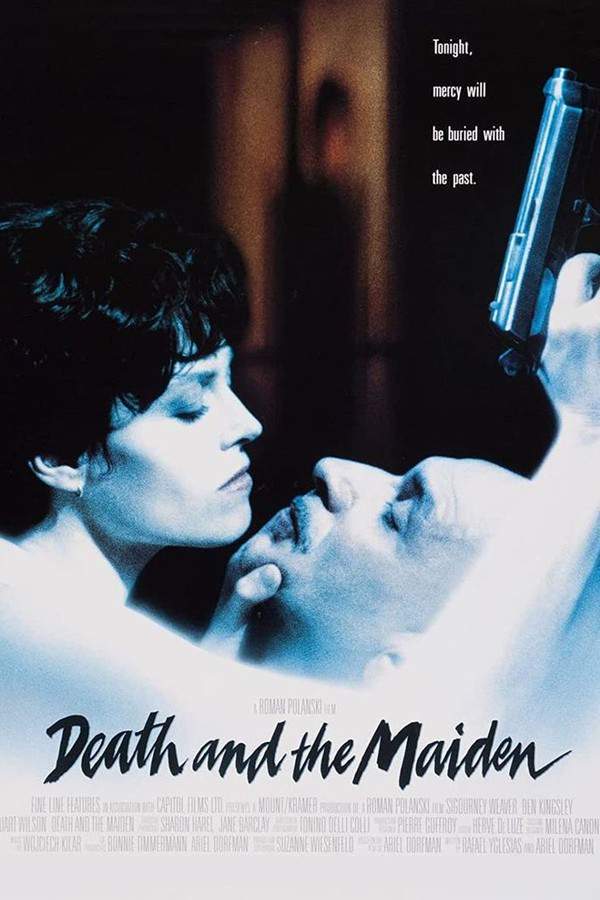
Death and the Maiden (1994) movie poster

Timeline

Death and the Maiden (1994) Timeline Explained – Every Event in Order

Release, runtime and language
1994 · 103 min · English
Directed by
Roman Polanski
Starring
Sigourney Weaver, Ben Kingsley
Budget
$12M

A traumatic event in Paulina Escobar's past resurfaces with the arrival of a stranger who triggers buried memories and a thirst for retribution. She and her husband, Gerhard, take him captive, forcing Gerhard to participate in a harrowing reenactment of past abuses. As they confront the horrifying truth, the boundaries between justice and vengeance become increasingly blurred, leading to a tense and disturbing exploration of trauma, memory, and the search for closure.

On this page (6)
  1. 1 Events in order (15)
  2. 2 Timeline questions answered
  3. 3 The book behind the movie
  4. 4 Movie threads
  5. 5 Movies like Death and the Maiden
  6. 6 Every angle

15 events in order · contains spoilers

Death and the Maiden Timeline: Events in Chronological Order

Every key event of Death and the Maiden (1994) in order, scene by scene, with when and where it takes place. Use it to untangle flashbacks, time jumps and parallel storylines, to refresh your memory before the sequel or to find the exact scene you are thinking of.

  1. Introduction of Paulina Escobar

    Paulina is introduced as a devoted housewife living in an unnamed South American country, implicitly identified as Chile. She lives a seemingly peaceful life with her husband, Gerardo, a respected lawyer, but hidden traumas linger from her past.

  2. Gerardo's Encounter with Dr. Miranda

    A sudden storm forces Gerardo to share a ride with the enigmatic Dr. Miranda on their way home. This unexpected encounter takes place just before a power outage strikes their residence, adding tension to the scenario.

  3. Paulina's Realization

    As they await the power to return, Paulina becomes convinced that Dr. Miranda is connected to the old regime that brutally abused her. Memories flood back, revealing her belief that he was involved in her past torture and sexual assault.

  4. Paulina Takes Dr. Miranda Hostage

    Driven by her belief in Miranda's guilt, Paulina takes him hostage, determined to expose his past. This act of defiance sets the stage for the intense conflict that follows between the three characters.

  5. The Makeshift Trial

    Despite Gerardo's insistence on Miranda's innocence, Paulina conducts a makeshift trial, forcing Gerardo to act as Miranda's attorney. The atmosphere is charged with tension as all three grapple with their roles amid rising emotions.

  6. False Confession Scheme

    In a twisted attempt to quell Paulina's accusations, Miranda and Gerardo conspire to fabricate a confession. However, when Paulina confronts the fake admission, she is enraged, believing it falls short and shows Miranda's lack of remorse.

  7. Miranda's Survival Attempt

    During a critical moment, Miranda seizes Paulina's gun, attempting to turn the situation to his advantage. This dramatic struggle highlights the volatility of their confrontation as he threatens her life.

  8. Power Restoration and Control Shift

    Just when it seems Miranda may escape, the power returns, allowing Paulina to regain control of the situation. This twist fortifies her position and undermines Miranda's previously attempted escape.

  9. Miranda's Alibi Attempt

    In a desperate bid to prove his innocence, Miranda instructs Gerardo to contact a Spanish medical school for a possible alibi. This moment introduces a crucial shift in the narrative as hope for clarity emerges.

  10. Gerardo's Shocking Revelation

    When Gerardo receives a call that seems to confirm Miranda's alibi, he rushes back to Paulina, now certain of Miranda’s innocence. The twist leaves Paulina adamant in her belief, highlighting the deep conflict between them.

  11. Paulina's Stand

    Despite the contradictory evidence, Paulina refuses to accept Miranda's innocence, insisting on the complicity of medical personnel from the old regime. Her unwavering stance demonstrates the emotional toll of her trauma.

  12. A Disturbing Confession

    In a climactic turn, Miranda confesses not only to being the doctor but revels in the pain he inflicted on Paulina. This shocking admission crystallizes the dark legacy of the past that continues to haunt all of them.

  13. Gerardo's Moral Dilemma

    Faced with Miranda's horrific admission, Gerardo wrestles with the idea of taking Miranda's life. This conflict reflects the moral complexities surrounding justice and revenge in the wake of trauma.

  14. Leaving Miranda Behind

    Paulina accepts Miranda's confession, leading her and Gerardo to abandon him at the precipice of a cliff. This act symbolizes their attempt to move forward while leaving unresolved pain behind.

  15. Haunting Reunion at the Concert

    The film concludes as Paulina and Gerardo attend a concert, mirroring a previous scene. Their uncomfortable reunion with Miranda, who is with his family, underscores the lingering scars of their shared past.

Last updated: November 15, 2024 at 16:25

Was this helpful?

Timeline questions answered

Death and the Maiden Timeline Explained: Your Questions Answered

When does it happen, and why in that order? The questions people ask about the chronology of Death and the Maiden (1994): time jumps, flashbacks, cause and effect between scenes and the correct order of events, each answered with spoilers.

Q1

Why does Paulina believe Dr. Miranda is the same doctor who tortured her?

Paulina recognizes Miranda primarily through his voice, which triggers traumatic memories from her captivity under the old regime. She was blindfolded during her torture, leaving sound as her primary identifier. Additionally, Miranda's physical presence and mannerisms activate her suppressed memories, making her certain of his identity despite his denials.

Foreshadowing: Earlier, the film establishes that Paulina was repeatedly blindfolded during her abuse, making voice recognition her only sensory anchor to her torturer.

  • paulina
  • dr miranda
  • torture
  • voice
  • blindfold
  • memory
  • trauma
Q2

Why does Paulina reject the evidence that proves Miranda's innocence?

Paulina's refusal stems from deep psychological trauma that has fused her certainty with her need for closure. She tells Gerardo that doctors during the old regime manufactured alibis to protect each other, revealing her belief that the system was designed to shield perpetrators. Accepting Miranda's innocence would mean her suffering has no identifiable culprit, making her trauma unspeakable and unresolved.

Foreshadowing: This moment connects to Paulina's earlier statement that she knows his voice, suggesting her identity is emotionally tied to having a face for her pain.

  • paulina
  • alibi
  • innocence
  • trauma
  • denial
  • justice
Q3

What happens when Miranda confesses at the cliff?

In a shocking reversal, Miranda admits he was indeed the doctor who tortured Paulina and expresses enjoyment in inflicting her pain, even lamenting the fall of the old regime. This confession transforms the situation from a possible mistaken identity into confirmed horror. Gerardo nearly throws him off the cliff in rage, but ultimately cannot bring himself to commit murder. Paulina and Gerardo then leave Miranda blindfolded and precariously positioned at the cliff's edge, leaving his fate uncertain.

Foreshadowing: The film foreshadows this when Miranda earlier conspired with Gerardo to create a false confession, suggesting he is capable of manipulation.

  • miranda
  • confession
  • cliff
  • torture
  • gerardo
  • death
Q4

Why does the film end with Paulina and Gerardo at a concert seeing Miranda?

The concert scene mirrors the film's opening, creating a循环 that emphasizes how trauma traps its victims in an endless loop. Seeing Miranda alive and with his family confirms they did not kill him, yet the unresolved confrontation leaves no catharsis. Their uncomfortable eye contact symbolizes that the wounds of the past cannot be simply closed, justice was not served, but neither was vengeance fully carried out, leaving all three bound by their shared history.

Foreshadowing: This mirrors the opening concert scene where Paulina and Gerardo first welcomed the storm, establishing the cyclical nature of their trauma.

  • concert
  • ending
  • miranda
  • family
  • resolution
  • cycle
Q5

What was the purpose of Paulina's makeshift trial?

Paulina orchestrates the trial to achieve a form of justice that the legal system failed to provide. By forcing Miranda to confess publicly, she seeks acknowledgment of what was done to her, something the new regime's courts never offered. She also forces Gerardo to participate as Miranda's attorney, testing whether her husband will defend a man Paulina believes victimized her, thus revealing whose side he truly takes.

Foreshadowing: This connects to Gerardo's role as a human rights lawyer attempting to establish a new legal system, which Paulina sees as ineffective for her specific case.

  • trial
  • confession
  • justice
  • gerardo
  • paulina
  • attorney
Q6

Why does Gerardo go along with Paulina's plan to capture Miranda?

Gerardo participates partly from genuine uncertainty, he cannot be completely sure Miranda is innocent given the ambiguity, and partly from guilt over surviving the regime while Paulina suffered. His professional obligation to defend a presumed innocent man conflicts with his personal loyalty to his wife. By agreeing, he hopes to find proof that will either exonerate Miranda or obtain a confession that provides Paulina with closure.

Foreshadowing: The timeline reveals Gerardo's conflicted nature as he attempts to contact the medical school for verification, showing his simultaneous desire to believe Paulina and find truth.

  • gerardo
  • kidnapping
  • loyalty
  • paulina
  • conscience
  • doubt
Q7

What is the significance of the power outage in the film?

The blackout creates a literal darkness that mirrors the film's moral ambiguity and the characters' uncertainty about truth. It arrives precisely when Miranda is attempting to escape, allowing Paulina to regain control. The outage also isolates the household from the outside world, creating a lawless space where Paulina's improvised justice can unfold without external interference. When power returns, it represents the restoration of normalcy, but also the continuation of an impossible situation.

Foreshadowing: The storm and outage begin immediately after Gerardo brings Miranda home, setting the stage for the confinement that follows.

  • power
  • blackout
  • storm
  • isolation
  • justice
  • escape
Q8

Why does Paulina blindfold Miranda before taking him to the cliff?

By blindfolding Miranda, Paulina recreates the exact sensory condition from her own torture, reversing the power dynamic. She becomes the one controlling what he sees, paralleling her victimization. This act symbolizes her attempt to reclaim the agency she lost during her captivity. The blindfold also suggests she wants him to face death, or whatever comes next, without the comfort of seeing his executioners, echoing her own helplessness.

Foreshadowing: Paulina's earlier trauma specifically involved being blindfolded, making this act a direct inversion of her original violation.

  • blindfold
  • cliff
  • power
  • reversal
  • paulina
  • miranda
  • control
Q9

What does the film say about justice versus vengeance?

The film deliberately blurs the line between justice and vengeance, refusing to provide moral clarity. Paulina's quest begins as a desire for acknowledgment but becomes increasingly violent. Gerardo, a lawyer who helped establish post-regime laws, finds those same laws inadequate for addressing personal trauma. The ending offers no resolution, Miranda is neither punished nor exonerated, leaving the audience to question whether Paul's actions represent justice, personal vengeance, or an unwinnable search for closure.

Foreshadowing: Gerardo's professional dedication to the new legal system is contrasted with Paulina's belief that the courts failed her, setting up the central moral conflict.

  • justice
  • vengeance
  • law
  • morality
  • trauma
  • closure
  • regime
Q10

Why does Miranda finally admit to being Paulina's torturer?

Miranda's confession appears motivated by several factors: exhaustion from maintaining his cover, a possible desire to finally acknowledge his true self, and perhaps a twisted pride in his past actions. His statement that he enjoyed inflicting pain and misses the old regime suggests he views his confession as an assertion of power rather than remorse. By confessing, he robs Paulina of the certainty she sought, he confirms her suspicions but in the most brutal way possible, denying her the dignity of a remorseful acknowledgment.

Foreshadowing: Earlier, Miranda's willingness to fabricate a false confession shows he's comfortable with deception, suggesting his later truthful admission serves a different psychological purpose.

  • miranda
  • confession
  • torture
  • motivation
  • enjoyment
  • regime
Q11

What happens to Miranda at the end of the film?

Paulina and Gerardo leave Miranda blindfolded at the edge of a cliff, positioned precariously but still alive. The film does not show whether he falls, dies from exposure, or manages to escape. This ambiguity is intentional, the film refuses to provide closure on whether justice was served, whether the characters became murderers, or whether Miranda survives to continue his life. The ambiguity reflects the film's central theme: some wounds cannot be cleanly healed.

Foreshadowing: This moment directly parallels Paulina's vulnerable position during her torture, reversing the power dynamic but leaving moral resolution deliberately absent.

  • miranda
  • fate
  • cliff
  • death
  • ending
  • ambiguity
  • resolution

Movie threads

More Movies Like Death and the Maiden, by Mood & Story

Curated lists built around what makes Death and the Maiden tick: the same mood, the same kind of story or the same emotional payoff. Each list explains why these movies belong together.

Claustrophobic Reckoning movies like Death and the Maiden

Intense psychological dramas where a confined setting forces a tense confrontation with buried trauma. If you liked the intense, single-location confrontation in Death and the Maiden, explore these movies that use confined settings to force a psychological reckoning with the past. These similar drama and thriller stories feature tense hostage situations, moral confrontations, and harrowing journeys into buried trauma, all amplified by a claustrophobic atmosphere.

  • claustrophobic
  • tense
  • disturbing
  • confrontational
  • unsettling
  • psychological
  • Tone: dark, tense, unsettling
  • Pacing: steady, dialogue-driven
Why these movies?

The story pattern: Stories in this thread typically revolve around a small group of characters, often a victim, a perpetrator, and a witness, forced into a confined space where a long-buried traumatic event must be re-examined. The narrative is driven by intense dialogue, psychological manipulation, and the struggle to determine the truth, often leaving the audience and characters in a state of unresolved tension.

Why they belong together: These movies are grouped together because they share a high-intensity, dark tone rooted in psychological torment, a steady pacing driven by tense dialogue in a single location, and a heavy emotional weight centered on themes of trauma, memory, and the blurred line between justice and revenge.


Unreliable Memory Thrillers like Death and the Maiden

Psychological stories where traumatic memories are questioned, forcing a search for elusive truth. Fans of Death and the Maiden's exploration of traumatic memory and uncertain truth will appreciate these movies. These similar mystery and psychological thrillers feature characters grappling with unreliable memories, confronting alleged perpetrators, and navigating stories where the past is a shadowy and ambiguous territory.

  • unsettling
  • paranoid
  • psychological
  • mind-bending
  • tense
  • disturbing
  • Tone: dark, paranoid, psychologically complex
  • Pacing: steady, suspenseful
Why these movies?

The story pattern: The narrative pattern involves a protagonist who is haunted by a fragmented memory of a violent or traumatic event. The arrival of a figure from the past triggers an obsessive investigation or confrontation, but the facts remain slippery. The journey is less about uncovering clear evidence and more about navigating the psychological fallout of doubt, leading to morally complex and often ambiguous conclusions.

Why they belong together: These films are connected by their moderate narrative complexity, which stems from playing with the audience's perception of truth. They share a dark, tense tone, a steady pacing that builds psychological suspense, and a heavy emotional weight derived from the torment of not being able to trust one's own mind or the accounts of others.

If you liked this

Movies Like Death and the Maiden

Similar movies to Death and the Maiden: the same genre, themes or kind of story. Each one comes with its own plot summary, timeline and ending explained.

Browse all movie summaries

Every angle

Death and the Maiden (1994) Explained: Plot, Timeline & Characters

Everything about Death and the Maiden in one place: what happens in the plot summary, the timeline in chronological order, the characters and meaning and a spoiler-free summary. What's After the Movie adds the cast, box office and post-credit scenes.

Coming soon on iOS and Android

The Plot Explained Movie Summary App

Plot summaries, endings explained and timelines on your phone. Catch up on any movie in minutes, save your favorites and never miss a twist again.

Be the first to know when we launch. Your email stays private, always.

Learn more about the app