








Plot Explained Spoilers guaranteed!
Plot Explained

Browse by genre

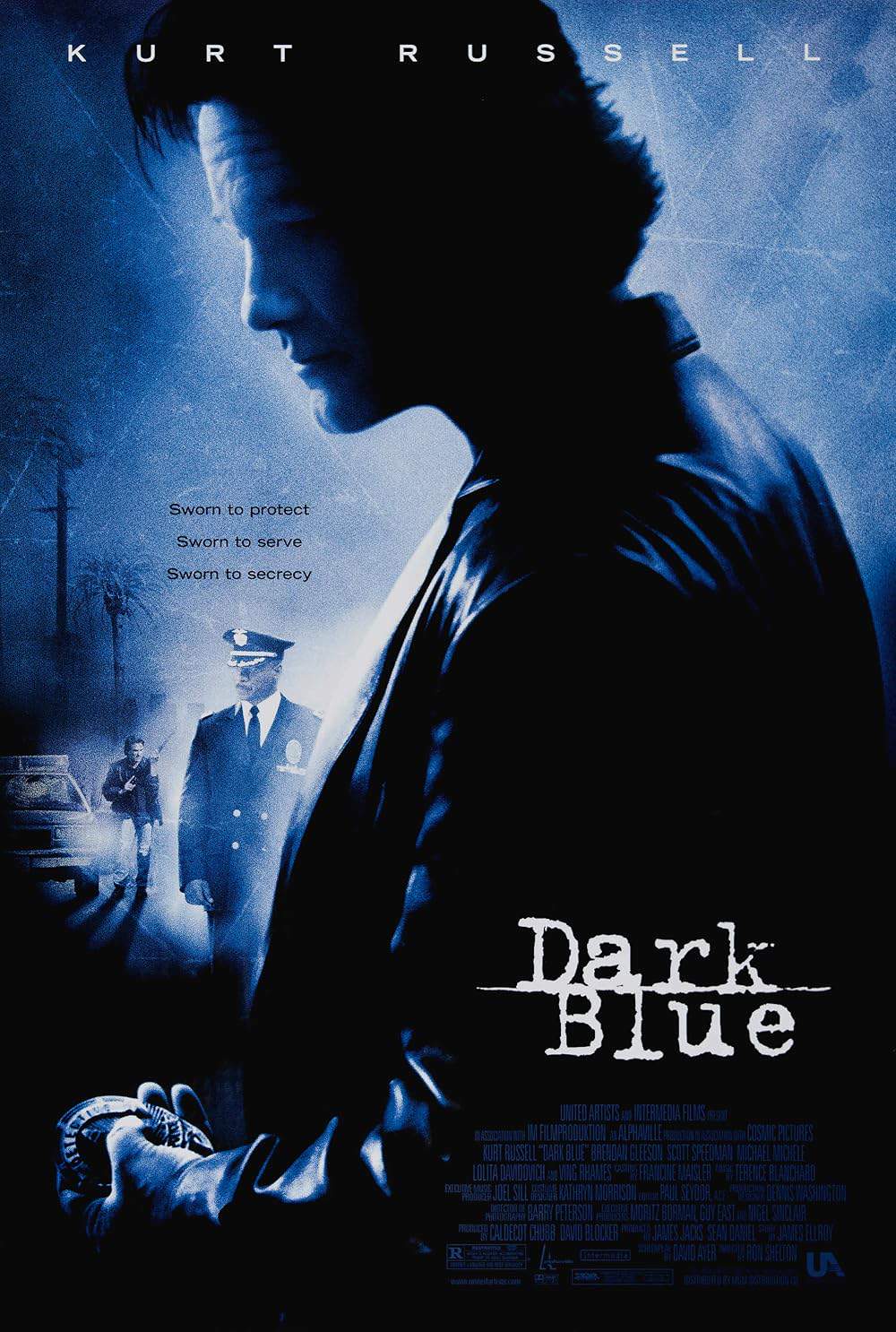
Dark Blue (2003) movie poster

Timeline

Dark Blue (2003) Timeline Explained – Every Event in Order

Release, runtime and language
2003 · 118 min · German
Directed by
Ron Shelton
Starring
Kurt Russell, Ving Rhames, Scott Speedman
Budget
$15M

Amidst escalating racial tensions in Los Angeles, a shocking murder ignites a wave of violence and vengeance in South Central. Two highly-trained LAPD officers from the Special Investigations Squad find themselves embroiled in the escalating conflict. As they work to bring the perpetrators to justice, they are forced to confront their own personal struggles and question their roles within a system grappling with deep unrest and the potential for widespread chaos.

On this page (6)
  1. 1 Where to watch
  2. 2 Events in order (13)
  3. 3 Timeline questions answered
  4. 4 Movie threads
  5. 5 Movies like Dark Blue
  6. 6 Every angle

Where to watch

Where to Watch Dark Blue (2003)

Where can you watch Dark Blue? Stream, rent or buy it in the US, including on Tubi TV, YouTube Free and Amazon Video: current JustWatch availability with up-to-date prices.

Streaming availability powered by JustWatch

13 events in order · contains spoilers

Dark Blue Timeline: Events in Chronological Order

Every key event of Dark Blue (2003) in order, scene by scene, with when and where it takes place. Use it to untangle flashbacks, time jumps and parallel storylines, to refresh your memory before the sequel or to find the exact scene you are thinking of.

  1. Opening scene: Perry in motel with guns

    The film opens in Los Angeles in 1992 with LAPD Sergeant Eldon Perry pacing a motel room, clutching a shotgun and pistol. The tense setup hints at Perry's readiness for conflict and the volatility that will dominate the story.

    When
    Opening sequence, 1992
    Where
    Los Angeles motel room
  2. Five days earlier: Robbery and deaths

    Five days earlier, Darryl Orchard and Gary Sidwell rob a convenience store to reach an office safe. Four are killed and one wounded, triggering a chain of investigations and a looming web of corruption. The incident sets the stage for the subsequent betrayal and cover-up.

    When
    Five days earlier
    Where
    Convenience store, Los Angeles
  3. Internal hearing and Keough exoneration

    Perry defends his partner Keough during an internal hearing about a previous use of deadly force and Keough is ultimately exonerated. The outcome elevates their status but foreshadows a darker pressure from within the department. The victory hardens the bond between Perry, Keough, and their corrupt superior.

    When
    Shortly after the robbery
    Where
    Police HQ – internal hearing chamber
  4. Promotion celebration with Van Meter

    Perry and Keough celebrate Perry's impending promotion with their superior, Jack Van Meter. Van Meter is a corrupt cop who encourages fabricating evidence and uses subordinates to his own ends. The scene establishes the power dynamics that corrupt the investigation from the outset.

    When
    Immediately after hearing
    Where
    Police precinct office
  5. Van Meter seizes money from Orchard and Sidwell

    Van Meter visits Orchard and Sidwell at their home and takes the money stolen from the safe, admonishing them for their reckless behavior. This act demonstrates his control over both criminals and officers. It also deepens the criminal lattice supporting the corruption.

    When
    That night
    Where
    Orchard and Sidwell's house
  6. The assignment with false alibis

    Van Meter assigns Perry and Keough to investigate the robbery, providing a false alibi for Orchard and Sidwell and instructing them to pin the crime on someone else. The order taints the investigation from the start and sets in motion a deadly chain of events.

    When
    Shortly after the house visit
    Where
    Police headquarters
  7. Holland's doubt and Williamson's discovery

    Assistant Chief Arthur Holland questions Perry's testimony, while Beth Williamson uncovers a casual-sex past with Keough. The double concern threatens to expose the conspiracy and increases the pressure to keep it hidden. Loyalties within the department start to fracture.

    When
    Around the same period
    Where
    Police HQ
  8. The raid and the killing of the innocent man

    Using a dubious search warrant, a SWAT raid targets the ex-cons chosen as fall guys. One man escapes into a back alley but is captured, and Keough reluctantly kills him under Perry's orders. The scene marks the collapse of moral boundaries and intensifies Keough's internal crisis.

    When
    During the raid
    Where
    Ex-cons' house and back alley
  9. Perry's home life unsettled

    Perry returns home to discover his wife leaving him, a personal consequence of the corrupt environment surrounding him. The separation deepens his isolation and fuels his willingness to pursue the scheme despite growing costs.

    When
    That night
    Where
    Perry's home
  10. Williamson and Keough's confession

    Keough visits Williamson and admits to killing the innocent man, offering to testify against Perry to expose the corruption. Williamson sees both Perry and the robbers as loose ends and becomes entangled in the plot, blurring loyalties further.

    When
    Shortly after the raid
    Where
    Williamson's workplace
  11. Riots erupt and the setup accelerates

    As the Los Angeles riots erupt, Van Meter manipulates events to force Perry and Keough into a deadly confrontation. The social upheaval provides cover for their escalating feud and makes accountability seem distant. The stage is set for a final confrontation.

    When
    As riots begin
    Where
    Los Angeles during riots
  12. Alley confrontation and aftermath

    Keough and Williamson drive to the robbers' address; Keough is killed by Orchard and Sidwell, while Williamson tearfully blames Perry for the carnage. Perry pursues Orchard and Sidwell through the chaotic streets, leading to Orchard's capture amid the mayhem.

    When
    During riots
    Where
    Alleyways of LA
  13. Final confession at the promotion ceremony

    Perry goes to his promotion ceremony, confesses the corruption, implicates Van Meter, and volunteers himself to be arrested. The film ends with a grim sense of accountability, despite the personal costs and the fallout for everyone involved.

    When
    End of film
    Where
    Promotion ceremony venue

Last updated: November 22, 2025 at 15:58

Was this helpful?

Timeline questions answered

Dark Blue Timeline Explained: Your Questions Answered

When does it happen, and why in that order? The questions people ask about the chronology of Dark Blue (2003): time jumps, flashbacks, cause and effect between scenes and the correct order of events, each answered with spoilers.

Q1

Why does Van Meter assign Perry to investigate the robbery he helped cover up?

Van Meter assigns Perry and Keough to investigate the convenience store robbery because he has already provided Orchard and Sidwell with a false alibi and needs them to pin the crime on someone else. By using his own trusted officers, Van Meter ensures the investigation stays controlled and the real criminals remain protected while he continues to skim money from the robbery proceeds.

Foreshadowing: Earlier, Van Meter visits Orchard and Sidwell to take the stolen money and admonish them for being careless, showing his direct involvement in the crime.

  • van meter
  • perry
  • corruption
  • investigation
  • orchard
  • sidwell
  • false alibi
Q2

Why does Perry order Keough to kill the innocent man during the raid?

Perry orders Keough to kill the innocent man because they need the fall guys to be eliminated before the investigation reveals the truth. The SWAT raid targets ex-cons whom Perry and Keough have framed as the perpetrators, and the suspect who escapes into the alley must be silenced to prevent him from exposing the fabricated evidence and the officers' complicity.

Foreshadowing: Van Meter's instructions to pin the crime on someone else establish that Perry must ensure the planted evidence cannot be contradicted.

  • perry
  • keough
  • murder
  • raid
  • frame
  • innocent man
  • fall guys
Q3

Why does Keough agree to shoot the innocent man despite his moral objections?

Keough agrees to shoot the innocent man because he is under intense pressure from Perry and the corrupt system they serve. As Perry's partner and fellow participant in the cover-up, Keough feels trapped, the murder of an innocent person represents the point of no return in their criminal collaboration, and refusing would expose both their crimes.

Foreshadowing: Perry defended Keough during the internal hearing about his previous use of deadly force, establishing a code of loyalty that Keough feels compelled to honor even when it involves murder.

  • keough
  • perry
  • guilt
  • moral compromise
  • loyalty
  • murder
  • police corruption
Q4

Why does Keough decide to testify against Perry after the raid?

Keough decides to testify against Perry because the weight of killing an innocent man becomes unbearable. After the raid, he visits Williamson and confesses to the murder, offering to expose the entire corruption scheme. The act shatters his loyalty to Perry and forces him to seek redemption by revealing the truth.

Foreshadowing: Williamson had discovered her casual-sex relationship with Keough, creating a personal connection that gives her leverage and motivates Keough to finally break his silence.

  • keough
  • testimony
  • corruption
  • williamson
  • confession
  • expose
Q5

Why does Perry confess to the corruption at his promotion ceremony?

Perry confesses at his promotion ceremony because he finally chooses accountability over concealment after everything unravels. With Keough dead, Williamson blaming him for the bloodshed, and Van Meter's scheme collapsing, Perry decides to implicate Van Meter and volunteer for arrest rather than continue protecting a corrupt system that has destroyed his life.

Foreshadowing: Perry's wife left him that same night, and his entire personal and professional life has crumbled, making the cost of continued silence unbearable.

  • perry
  • confession
  • promotion
  • arrest
  • van meter
  • accountability
  • corruption
Q6

What is Van Meter's ultimate plan for Perry and Keough?

Van Meter's ultimate plan is to eliminate both Perry and Keough along with the robbers by using the LA riots as cover. He engineers a confrontation at Orchard and Sidwell's address, hoping all parties will kill each other and leave no witnesses to his corruption. The chaos of the riots provides the perfect opportunity to dispose of everyone who knows about his scheme.

Foreshadowing: Van Meter takes the stolen money from Orchard and Sidwell, demonstrating his control over both criminals and officers and his willingness to eliminate anyone who threatens his operation.

  • van meter
  • plan
  • perry
  • keough
  • riots
  • eliminate
  • conspiracy
Q7

Why does Perry's wife leave him?

Perry's wife leaves him because the corruption and moral decay affecting his career have fundamentally changed who he is as a person. The film shows Perry returning home to discover his wife packing, symbolizing how the corrupt environment surrounding him has destroyed his personal life just as his professional life unravels.

Foreshadowing: The film establishes early on that Perry is willing to compromise his integrity for career advancement, a trajectory that inevitably strains his personal relationships.

  • perry
  • wife
  • marriage
  • leaving
  • divorce
  • personal cost
Q8

How do the LA riots influence the story's progression?

The LA riots create the chaotic backdrop that allows Van Meter's final plan to unfold. As civil unrest erupts across the city, Van Meter manipulates events to force a confrontation between Perry, Keough, and the robbers. The riots provide cover for violence and make accountability seem impossible, setting the stage for the deadly showdown.

Foreshadowing: The film opens with Perry in a motel room holding weapons, foreshadowing the violent climax that will occur amid the citywide chaos.

  • la riots
  • los angeles
  • chaos
  • riot
  • civil unrest
  • backdrop
  • van meter plan
Q9

Why does Perry chase Orchard and Sidwell through the riot-filled streets?

Perry chases Orchard and Sidwell through the riots because he needs to stop them from escaping and to reclaim some form of justice after Keough's death. With his partner killed by the robbers and Williamson blaming him for the carnage, Perry pursues the criminals as a way to take action and salvage meaning from the disaster.

Foreshadowing: Williamson explicitly blames Perry for setting the stage for Keough's death, motivating his decision to personally pursue the killers.

  • perry
  • orchard
  • sidwell
  • chase
  • riots
  • capture
  • keough death
Q10

What is Beth Williamson's role in exposing the corruption?

Beth Williamson serves as Assistant Chief Holland's assistant who uncovers the trail of corruption linking Perry to Van Meter's scheme. She also has a personal connection to Keough, having had a secret relationship with him. Her discovery of the files and her personal stake in the investigation drive her to eventually offer to testify against Perry.

Foreshadowing: Williamson digs into the files and discovers the long trail of corruption, while also confessing to her own private stake in the matter through her relationship with Keough.

  • beth williamson
  • holland
  • investigation
  • corruption
  • keough
  • testify
  • discovery

Movie threads

More Movies Like Dark Blue, by Mood & Story

Curated lists built around what makes Dark Blue tick: the same mood, the same kind of story or the same emotional payoff. Each list explains why these movies belong together.

Movies about corrupt systems and moral compromise like Dark Blue

Stories where institutions are rotten and characters must navigate their own moral decay. If you liked the portrayal of a rotten system in Dark Blue, explore these movies about institutional decay and moral compromise. These films feature characters grappling with their place within a corrupt world, leading to tense, morally gray stories in settings like law enforcement, government, or corporate power.

  • corrosive
  • morally gray
  • tense
  • unsettled
  • gritty
  • oppressive
  • Tone: dark, cynical, morally gray
  • Pacing: fast, tense
Why these movies?

The story pattern: Stories in this thread typically follow a protagonist who is deeply embedded within a flawed or corrupt institution. The narrative unfolds as external events or internal conscience force them to question their allegiance, leading to a crisis of loyalty and a search for personal redemption, often at a great personal cost.

Why they belong together: These movies are grouped together because they share a core focus on systemic corruption as the primary antagonist. They create a similar mood of claustrophobic tension and moral unease, where the line between right and wrong is blurred, and the emotional journey revolves around a character's struggle with their own integrity.
Gritty urban crime thrillers under pressure like Dark Blue

Gritty crime stories where a city on the edge becomes a character itself. Fans of Dark Blue's tense depiction of Los Angeles during the riots will enjoy these urban pressure cooker thrillers. These movies use the city as a catalyst for crime stories, where societal unrest creates a fast-paced, anxious, and gritty atmosphere for tales of cops, criminals, and moral dilemmas.

  • gritty
  • tense
  • anxious
  • unsettled
  • urban decay
  • chaotic
  • Tone: gritty, tense, anxious
  • Pacing: fast, chaotic
Why these movies?

The story pattern: The narrative pattern involves a crime or investigation that unfolds as a city teeters on the brink of large-scale unrest. The external social pressure acts as a ticking clock, forcing characters to make rushed decisions and confront the consequences of their actions within a larger societal explosion.

Why they belong together: These films are connected by their use of a tense urban setting as a central narrative device. They share a specific vibe of high-stakes anxiety, gritty realism, and a pace that accelerates towards a climactic release of social tension, making the city itself a source of relentless pressure.

If you liked this

Movies Like Dark Blue

Similar movies to Dark Blue: the same genre, themes or kind of story. Each one comes with its own plot summary, timeline and ending explained.

Browse all movie summaries

Every angle

Dark Blue (2003) Explained: Plot, Timeline & Characters

Everything about Dark Blue in one place: what happens in the plot summary, the timeline in chronological order, the characters and meaning and a spoiler-free summary. What's After the Movie adds the cast, box office and post-credit scenes.

Coming soon on iOS and Android

The Plot Explained Movie Summary App

Plot summaries, endings explained and timelines on your phone. Catch up on any movie in minutes, save your favorites and never miss a twist again.

Be the first to know when we launch. Your email stays private, always.

Learn more about the app