Plot Explained Spoilers guaranteed!
Plot Explained

Browse by genre

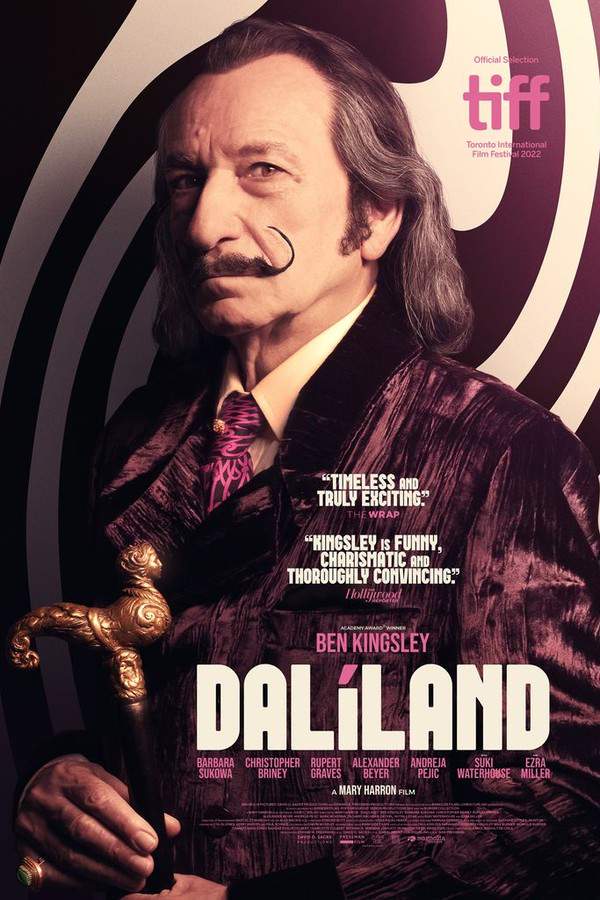
Dalíland (2023) movie poster

Timeline

Dalíland (2023) Timeline Explained – Every Event in Order

Release, runtime and language
2023 · 97 min · English
Echo score 57
Loading streaming availability…
Directed by
Mary Harron
Starring
Ezra Miller, Ben Kingsley, Rupert Graves, Alexander Beyer, Barbara Sukowa, Mark McKenna

In 1974, a young assistant named James becomes immersed in the world of Salvador Dalí, portrayed by Ben Kingsley, as the famed artist prepares for a significant gallery exhibition in both New York and Spain. The film explores the complexities of Dalí's relationship with his wife, Gala, played by Barbara Sukowa, and delves into the challenges of maintaining his artistic legacy. Through James's perspective, we observe Dalí’s unique personality, creative intensity, and the growing awareness of his own mortality.

On this page (7)
  1. 1 Where to watch
  2. 2 Events in order (13)
  3. 3 Timeline questions answered
  4. 4 Movie threads
  5. 5 Movies like Dalíland
  6. 6 Categories
  7. 7 Every angle
Loading streaming availability…

13 events in order · contains spoilers

Dalíland Timeline: Events in Chronological Order

Every key event of Dalíland (2023) in order, scene by scene, with when and where it takes place. Use it to untangle flashbacks, time jumps and parallel storylines, to refresh your memory before the sequel or to find the exact scene you are thinking of.

  1. James's Assignment

    In 1974 New York, James, a young assistant, is tasked by his boss with a critical role. He is to assist the legendary surrealist painter Salvador Dalí as he prepares for a major exhibition.

    When
    1974
    Where
    New York
  2. Entering Dalí's World

    James enters the chaotic universe of Salvador Dalí at the St. Regis Hotel. He is greeted by an extravagant entourage and an atmosphere filled with parties and constant distractions, revealing the artist's eccentric lifestyle.

    When
    1974
    Where
    St. Regis Hotel, New York
  3. Dalí's Financial Chaos

    As James delves deeper into Dalí's life, he uncovers a significant financial mess. This situation is largely orchestrated by Gala, Dalí's wife, and their manager, Captain Moore, who manipulate the artist's funds for their own interests.

  4. Gala's Deceit

    Gala, Dalí's domineering wife, is found to be spending his wealth on her younger lover, Jeff Fenholt, a Broadway singer. This revelation adds complexity to the already tumultuous relationship between Dalí and Gala.

  5. Mass Signing of Canvases

    To sustain their lavish lifestyle while Gala enjoys her affair, Dalí is pressured to mass-sign blank canvases. This act sets the stage for a notorious art fraud scandal as these canvases are later sold as forgeries.

  6. Flashbacks to Dalí and Gala's Past

    Through a series of flashbacks, the film explores the origins of Dalí and Gala's deeply co-dependent and toxic relationship. These glimpses into their past provide insight into their complex bond and the artist's motivations.

  7. Completion of the Exhibition

    Despite the chaos surrounding him, James plays an instrumental role in helping Dalí complete the artworks for the exhibition. This achievement underscores the artist's genius and James's dedication amid turmoil.

    When
    1974
    Where
    New York
  8. Emotional Toll

    The process of finishing the exhibition takes a heavy emotional toll on James and Dalí alike. As they work together, the weight of their personal struggles becomes more evident, adding depth to their interactions.

  9. Shift to Spain

    After the exhibition concludes, the narrative shifts to Spain, marking a significant change in the story's location and emotional tone. This transition highlights the aftermath of the events in New York and their impact on Dalí.

    Where
    Spain
  10. Gala's Passing

    The story takes a poignant turn with the passing of Gala, leaving Dalí utterly heartbroken. Her death signifies the end of an era and plunges the artist into a deep isolation and despair.

  11. Dalí's Isolation

    In the wake of Gala's death, Dalí's condition deteriorates as he becomes increasingly isolated. The once vibrant artist is now physically and emotionally broken, illustrating the profound impact of loss.

  12. Reflections of James

    As the story concludes, James reflects on his brief time with the genius artist. He is left with a complex mix of awe at Dalí's talent and sadness over the tragic consequences of his personal life.

  13. Dalí's Final Years

    The film concludes with a glimpse into Dalí's final years, showcasing his decline and the legacy he leaves behind. His struggles in the shadow of his earlier brilliance serve as a poignant reminder of the artist's humanity.

Last updated: September 18, 2026 at 08:59

Was this helpful?

Timeline questions answered

Dalíland Timeline Explained: Your Questions Answered

When does it happen, and why in that order? The questions people ask about the chronology of Dalíland (2023): time jumps, flashbacks, cause and effect between scenes and the correct order of events, each answered with spoilers.

Q1

Why does James agree to work as Salvador Dalí's assistant in Dalíland?

James is sent by his boss to serve as a personal assistant to the aging surrealist painter in 1974 New York, with the specific task of ensuring Dalí finishes his artworks in time for a major gallery exhibition. Once inside Dalí's chaotic world at the St. Regis Hotel, James accepts the role despite the wild entourage and nonstop parties because the assignment is framed as a critical professional responsibility tied directly to the upcoming show.

Foreshadowing: James's initial awe at the eccentric atmosphere hints at how easily the assignment will pull him into the emotional core of Dalí's life.

  • james
  • assistant
  • dali
  • 1974
  • new york
  • exhibition
Q2

Why does Dalí sign blank canvases in the film?

Dalí is pressured into signing blank canvases because Gala, his wife, and Captain Moore, his manager, are draining his fortune to fund their lavish lifestyle and Gala's affair with Jeff Fenholt. To keep the money flowing, the people around him convince the artist to mass-produce his signature on empty canvases, which are later filled in and sold as authentic Dalí works.

Foreshadowing: Early scenes showing Gala spending freely while Dalí appears detached foreshadow his willingness to compromise his artistic integrity.

  • blank canvases
  • signing
  • gala
  • captain moore
  • art fraud
Q3

How does Gala exploit Dalí's finances?

Gala controls Dalí's wealth through her role as his wife and uses her influence over his manager, Captain Moore, to redirect funds toward herself. She channels large sums of money into her relationship with Jeff Fenholt, a younger Broadway singer, leaving Dalí financially exposed and dependent on the blank canvas scheme to maintain appearances.

Foreshadowing: James's discovery of Dalí's financial mess is hinted at when he first sees how casually money flows through the St. Regis entourage.

  • gala
  • finances
  • exploitation
  • dali
  • jeff fenholt
Q4

What is the art fraud scandal that threatens Dalí's legacy?

The blank canvases Dalí signed under pressure are later completed and sold on the art market as genuine Dalí paintings. Once exposed, the mass-produced forgeries become a major art scandal that undermines confidence in his work and casts a long shadow over the legacy he spent decades building as a surrealist master.

Foreshadowing: James's unease about how casually signatures are being produced foreshadows how the scheme will eventually spiral into public scandal.

  • art fraud
  • scandal
  • legacy
  • blank canvases
  • forgeries
Q5

Why does the story shift to Spain after the New York exhibition?

The move to Spain signals the end of Dalí's public, high-profile era in 1970s New York and the beginning of his private decline. After the exhibition wraps, the narrative follows Dalí back to his home country, where the atmosphere shifts from decadent parties to isolation, setting up the emotional collapse that follows Gala's death.

Foreshadowing: The exhaustion James and Dalí show during the final New York scenes foreshadows that the manic energy of the city cannot be sustained.

  • spain
  • new york
  • shift
  • exhibition
  • aftermath
Q6

What causes Dalí's decline after Gala's death?

Dalí's collapse after Gala's death is driven by their deep co-dependency, which the flashbacks reveal has defined his identity for decades. Without Gala as his emotional anchor, manipulator, and daily companion, Dalí loses his sense of structure and withdraws into isolation, leading to a steep physical and emotional deterioration until his own death.

Foreshadowing: Flashbacks showing how reliant young Dalí was on Gala foreshadow his inability to function without her.

  • gala's death
  • decline
  • isolation
  • dependency
  • loss
Q7

What do the flashbacks reveal about Dalí and Gala's past?

The flashbacks featuring a younger Dalí, played by Ezra Miller, trace the origins of his relationship with Gala and show how their bond formed as a deeply intertwined, toxic partnership. They reveal a dynamic built on emotional dependency, manipulation, and mutual obsession, explaining why Dalí is unable to break free from Gala's control even as she exploits him.

Foreshadowing: Early hints of Gala's domineering presence in the present-day scenes echo the controlling dynamic shown later in the flashbacks.

  • flashbacks
  • younger dali
  • gala
  • toxic relationship
  • ezra miller
Q8

How does Captain Moore contribute to Dalí's financial troubles?

Captain Moore serves as Dalí's manager and works alongside Gala to manipulate the artist's wealth. By enabling Gala's spending and facilitating the blank canvas scheme, Moore helps drain Dalí's finances while keeping the illusion of a thriving career intact, making him a key enabler of the exploitation at the center of Dalíland.

Foreshadowing: Moore's smooth, businesslike demeanor when James first arrives hints at his complicity in the financial arrangements.

  • captain moore
  • manager
  • finances
  • gala
  • manipulation
Q9

Who is Jeff Fenholt and why does he matter in Dalíland?

Jeff Fenholt is a young Broadway singer who becomes Gala's lover during the New York period of the story. He matters because Gala lavishes Dalí's money on him, which directly accelerates the financial drain that pushes the entourage into the blank canvas fraud scheme, setting the entire scandal in motion.

Foreshadowing: Gala's secretive phone calls and unexplained absences early in the film foreshadow her hidden relationship with Fenholt.

  • jeff fenholt
  • gala
  • broadway
  • affair
  • lover
Q10

How does James manage to help Dalí finish the exhibition?

James shields Dalí from the chaos of the entourage, manages the daily distractions, and keeps the artist focused on completing his canvases for the show. His persistence allows Dalí to push through Gala's manipulation, the financial pressure, and his own physical frailty just long enough to deliver the work required for the New York exhibition.

Foreshadowing: James's patience in dealing with the wild St. Regis environment foreshadows his ability to impose order when the deadline arrives.

  • james
  • exhibition
  • focus
  • st regis
  • paintings
Q11

Why is Dalí and Gala's relationship described as toxic and co-dependent?

Their relationship is portrayed as toxic because Gala dominates Dalí emotionally and financially while Dalí relies on her completely for structure, validation, and identity. The film shows how Gala's exploitation and Dalí's inability to function without her create a cycle of abuse and dependency that ultimately destroys both of them.

Foreshadowing: The way Dalí defers to Gala in small decisions early in the film foreshadows the larger pattern of control revealed in the flashbacks.

  • toxic relationship
  • co-dependency
  • gala
  • dali
  • control
Q12

Why does Dalíland end with James reflecting on his time with Dalí?

James's closing reflection frames the entire film as a character study seen through the eyes of someone who briefly witnessed genius up close. By ending on his mixture of admiration and sorrow, the film emphasizes that Dalí's tragedy was both personal and artistic, leaving James and the viewer to weigh the beauty of the work against the pain of the life that produced it.

Foreshadowing: James's emotional reactions during the exhibition prep foreshadow how deeply the experience will stay with him.

  • james
  • reflection
  • ending
  • legacy
  • genius

Movie threads

More Movies Like Dalíland, by Mood & Story

Curated lists built around what makes Dalíland tick: the same mood, the same kind of story or the same emotional payoff. Each list explains why these movies belong together.

Inside a self-destructive genius's orbit like in Dalíland

A young protégé enters a brilliant, chaotic world and watches it slowly collapse from within. Movies like Dalíland that drop you into the chaotic inner circle of an aging creative icon. These character studies follow young assistants and witnesses as they navigate toxic mentorship, decadent artistic worlds, and the slow unraveling of genius, exploring co-dependency, manipulation, and the dark side of creative brilliance in films with steady pacing and heavy emotional weight.

  • chaotic
  • decadent
  • introspective
  • wistful
  • uncomfortable
  • observational
  • Tone: bittersweet, melancholic
  • Pacing: steady, character driven
Why these movies?

The story pattern: A wide-eyed outsider, often young and impressionable, is recruited into the intimate world of an established creative figure. Early scenes brim with fascination, access, and reflected glamour. As the story unfolds, the cracks appear: the genius is past his prime, financially or emotionally exploited by those around him, or actively participating in their own mythmaking at great cost. The protégé must decide whether to stay, escape, or become complicit. Stories often end with the figure's decline or death, leaving the witness to reckon with what they gained and what they lost by being there.

Why they belong together: These films share a specific vantage point: the observer inside the artist's world rather than the artist themselves. They balance creative awe with moral discomfort, decadent atmosphere with quiet sadness, and they tend to unfold at a steady, observational pace that lets you feel the slow creep of exploitation and decline. The tone is bittersweet, the emotional weight is heavy, and the experience stays with you long after.

Bittersweet portraits of decline and legacy like in Dalíland

Quiet, melancholic stories that watch a legend's light slowly dim. If you liked Dalíland, you'll love these bittersweet biographical dramas that follow famous figures through their final, fading chapters. Movies like Dalíland trade triumph for melancholy, exploring aging, mortality, financial exploitation, infidelity, and what creative legacy really means. Expect steady pacing, heavy emotional weight, and endings that lean toward the sad and reflective rather than triumphant.

  • reflective
  • melancholic
  • wistful
  • mortality
  • aging
  • legacy
  • Tone: melancholic, bittersweet
  • Pacing: steady, contemplative
Why these movies?

The story pattern: Rather than chronicling rise-to-fame arcs, these films drop you into the later, lonelier chapters of a life already lived. Flashes of past brilliance haunt scenes of present diminishment. Mortality, illness, and the loss of loved ones press in. Interpersonal relationships reveal themselves as complicated, often exploitative, and the question of what the subject truly leaves behind quietly dominates. The emotional register stays restrained rather than melodramatic, but the sadness accumulates, and endings tend to be marked by death, decline, or painful acceptance.

Why they belong together: They cluster around a shared emotional posture: reverence mixed with grief. You are invited to admire and mourn simultaneously. The pacing is steady enough to absorb detail, the tone is bittersweet to melancholic, and the emotional weight is heavy because loss is inevitable rather than incidental. These are not disaster stories or thrillers, but quiet, observant portraits that leave you reflective and a little emptied out.

If you liked this

Movies Like Dalíland

Similar movies to Dalíland: the same genre, themes or kind of story. Each one comes with its own plot summary, timeline and ending explained.

Browse all movie summaries

Categories

Movie Lists Featuring Dalíland

Dalíland appears in these hand-built movie categories. Each one groups movies by a specific mood, theme or story type, with their plot summaries and endings explained.

View all movie categories

Every angle

Dalíland (2023) Explained: Plot, Ending, Timeline & Characters

Everything about Dalíland in one place: what happens in the plot summary, the timeline in chronological order, the characters and meaning, the ending explained and a spoiler-free summary. What's After the Movie adds the cast, box office and post-credit scenes.

Coming soon on iOS and Android

The Plot Explained Movie Summary App

Plot summaries, endings explained and timelines on your phone. Catch up on any movie in minutes, save your favorites and never miss a twist again.

Be the first to know when we launch. Your email stays private, always.

Learn more about the app