Plot Explained Spoilers guaranteed!
Plot Explained

Browse by genre

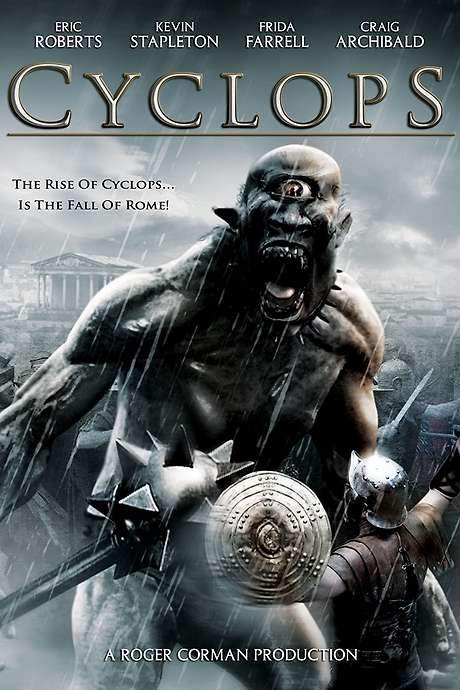
Cyclops (2008) movie poster

Plot Summary

Cyclops (2008) Plot Summary Explained

Release, runtime and language
2008 · 94 mins · English
Loading streaming availability…
Directed by
Declan O’Brien
Starring
Eric Roberts, Velizar Binev, DeMorge Brown, Dan Golden, Trayan Milenov-Troy, Dimiter Doichinov

The rise of the Cyclops signals the fall of Rome. Emperor Tiberius, a corrupt ruler, commands his most trusted general, Marcus, to track down and defeat the monstrous Cyclops that has been laying waste to the countryside. As Marcus pursues the beast, he must confront both the creature’s fury and the emperor’s ruthless ambitions, with the fate of the empire hanging in the balance.

On this page (6)
  1. 1 Where to watch
  2. 2 What happens: full plot
  3. 3 Plot questions answered
  4. 4 Movie threads
  5. 5 Movies like Cyclops
  6. 6 Every angle
Loading streaming availability…

Full plot summary · contains spoilers

What Happens in Cyclops: Full Plot Summary

The whole story of Cyclops (2008) explained, from the opening scene to the final frame: every key event, every twist and what it all adds up to. Read it as a quick recap before the sequel, to check a scene you missed, or to finally understand what really happened.

In ancient Rome, during the reign of Emperor Tiberius Caesar, a countryside trek turns deadly when a ferocious cyclops—the last of its kind—slaughters a group of travelers after they slaughter a few sheep for food. One survivor makes it back to Rome to warn the authorities, and the news reaches the emperor who wastes no time in acting on it. He dispatches his best commander, Marcus Romulus, to pursue the man-eater and bring it back alive. The mission is costly, stripping some of Marcus’s men, but he succeeds in capturing the colossal beast and delivering it to the heart of the empire. Seeing the crowd-pulling power of the cyclops, the emperor decides to use this legendary creature as the centerpiece of his arena, opting for spectacle over traditional lions.

A second thread runs through the story as a group of defiant slaves discovers they are earmarked as fodder for the cyclops. They break for freedom, but their escape is thwarted and they are quickly recaptured. Marcus, who leads the rescue mission with the slaves, grows increasingly uncomfortable with the imperial system that tolerates bondage. His moral stance brings him into direct conflict with Falco, the emperor’s chief adviser. The clash of ideals climaxes as the emperor punishes Marcus by casting him into gladiatorial combat, a harsh baptism by steel and public opinion.

Within the brutal rhythm of the arena, Marcus proves to be more than a fighter; he becomes a tactician who leverages his influence over the captive cyclops. While the colossal creature paces in its cell, Marcus discovers a surprising rapport—he can teach the cyclops words and simple concepts, shaping how the beast responds to commands and taunts. This unlikely mentorship hints at a fragile bridge between two beings who represent opposite ends of the empire’s spectacle: a ruthless ruler’s weapon and a potential ally who questions the costs of power.

As the plot tightens, the emperor’s desperate bid to maintain control grows reckless. He offers the cyclops its freedom in exchange for killing Marcus, a choice that pits loyalty against survival. In a dramatic escalation, the cyclops turns on the emperor and kills him, a moment that reverberates through the political landscape of Rome. Yet the ruling circle quickly retaliates—the ever-cunning Falco strikes, killing the cyclops in turn. In the ashes of this double tragedy, Marcus stands firm, avenging the creature and stepping into the role of liberator for Rome. The film closes on a note of hard-won emancipation, with Marcus emerging as a new figure of hope who challenges the system that used fear and spectacle to control a city.
Last updated: February 17, 2026 at 19:56

Was this helpful?

Plot questions answered

Cyclops Plot Explained: Your Questions Answered

The questions people ask most about Cyclops (2008): what happens in the confusing scenes, why the characters do what they do, the twists, hidden details and what the ending means. Each answer contains spoilers.

Q1

Why does Emperor Tiberius send Marcus to capture the cyclops?

Emperor Tiberius dispatches his best commander Marcus Romulus to capture the cyclops after a survivor reports sighting the creature in the countryside. The cyclops is the last of its kind and represents both a threat and a potential spectacle. Tiberius sees the creature as an opportunity to display imperial power and entertain the Roman people.

Foreshadowing: The survivor's report directly triggers the emperor's decision to deploy his most skilled military leader for the capture mission.

  • emperor tiberius
  • marcus romulus
  • cyclops capture
  • roman emperor
Q2

Why does Marcus agree to capture the cyclops despite losing men?

Marcus accepts the dangerous mission because it is a direct order from the emperor. As Rome's best commander, he is duty-bound to serve Tiberius. Though the mission costs some of his men, his loyalty to the empire and his position as a military leader leave him no choice but to undertake the pursuit.

Foreshadowing: This early obedience to imperial orders sets up the tension between Marcus's military duty and his growing moral objections to the empire's cruelty.

  • marcus romulus
  • military duty
  • emperor orders
  • capture mission
Q3

Why does Emperor Tiberius use the cyclops in the arena instead of lions?

Tiberius opts for the cyclops as his circus centerpiece because the creature generates unprecedented crowd reaction and curiosity. Lions are traditional and costly, while a living cyclops represents a novel spectacle that would draw larger audiences and reinforce imperial power through fear and wonder.

Foreshadowing: The emperor's decision to prioritize entertainment over practical cost reveals his preference for spectacle over tradition.

  • tiberius
  • arena spectacle
  • cyclops
  • lions
  • roman circus
Q4

Why are the slaves marked as fodder for the cyclops?

The imperial system uses condemned slaves as expendable entertainment in the arena. Since the cyclops is a man-eater, the emperor's advisors designate a group of defiant slaves as victims for the creature, viewing them as convenient fodder who will die spectacularly while entertaining the crowd.

Foreshadowing: This decision directly motivates the slaves' escape attempt and puts Marcus in conflict with his own conscience.

  • slaves
  • fodder
  • arena
  • roman slavery
  • entertainment
Q5

Why does Marcus lead the pursuit of escaped slaves if he opposes slavery?

Despite his personal opposition to slavery, Marcus follows imperial orders and leads the pursuit because as a military commander, he is bound by duty to enforce the emperor's will. His conflict between personal morality and military obedience creates the central tension of his character arc.

Foreshadowing: This moment establishes Marcus's internal struggle that eventually leads to his open confrontation with imperial authority.

  • marcus romulus
  • escaped slaves
  • moral conflict
  • military duty
Q6

Why is Marcus punished and forced to become a gladiator?

Marcus is punished as a gladiator because his growing anti-slavery sentiments and moral objections bring him into direct conflict with Falco, the emperor's chief adviser. This insubordination angers Tiberius, who responds by casting Marcus into the arena, a harsh punishment that tests his survival skills and transforms him from commander to combatant.

Foreshadowing: The punishment that was meant to break Marcus instead becomes the catalyst for his transformation and alliance with the cyclops.

  • marcus gladiator
  • punishment
  • falco
  • emperor tiberius
  • insubordination
Q7

How does Marcus communicate with the cyclops in its cell?

While imprisoned in his cell, Marcus discovers the cyclops possesses hidden intelligence and begins teaching it words and simple concepts. Through patient interaction, he builds an unexpected rapport with the creature, establishing a bridge between human language and the beast's mind.

Foreshadowing: This unusual pedagogy plants the seeds of loyalty that later save Marcus's life when the cyclops faces the choice to kill him.

  • marcus
  • cyclops communication
  • teaching words
  • intelligence
  • bond
Q8

Why does the cyclops kill Emperor Tiberius instead of Marcus?

When Emperor Tiberius promises the cyclops freedom in exchange for killing Marcus, the creature makes a fateful choice. Rather than eliminate the one human who showed it kindness and taught it language, the cyclops turns on the tyrant who kept it imprisoned and used it for spectacle. This act represents the cyclops rejecting slavery and choosing loyalty over freedom.

Foreshadowing: Marcus's earlier teaching of concepts like freedom and loyalty directly influences the cyclops's decision to spare its friend.

  • cyclops kills emperor
  • emperor death
  • loyalty
  • freedom
  • tyranny
Q9

Why does Falco kill the cyclops after it kills the emperor?

Falco, the emperor's chief adviser and the power behind the throne, retaliates by killing the cyclops to restore imperial order and eliminate the creature that assassinated the ruler. As the cunning political operator, Falco acts quickly to remove the threat and consolidate power, treating the cyclops's act of rebellion as a danger that must be immediately answered.

Foreshadowing: Falco's swift retaliation demonstrates that while the cyclops freed Rome from Tiberius, the existing power structure would not tolerate such defiance.

  • falco
  • cyclops death
  • retaliation
  • imperial order
  • power consolidation
Q10

How does Marcus become the liberator of Rome?

After the cyclops is killed by Falco, Marcus stands as the sole figure who challenges the corrupt system. Having already witnessed the brutality of imperial spectacle and having formed a bond with the creature, Marcus avenges the cyclops and steps forward as a leader who will end the tyranny. His transformation from obedient commander to liberator represents the culmination of his moral awakening.

Foreshadowing: Marcus's earlier decision to teach the cyclops words and concepts of justice and freedom comes full circle as he embodies those ideals himself.

  • marcus liberator
  • rome liberation
  • new hope
  • tyranny end
  • freedom

Movie threads

More Movies Like Cyclops, by Mood & Story

Curated lists built around what makes Cyclops tick: the same mood, the same kind of story or the same emotional payoff. Each list explains why these movies belong together.

Brutal Spectacle Amidst Tyranny Movies like Cyclops

Heroes battle monstrous threats while resisting a corrupt political system. Looking for movies like Cyclops? This list features epic action films where heroes face monstrous creatures while rebelling against corrupt empires. If you liked the brutal combat and themes of tyranny in Cyclops, you'll find similar stories of heroic struggle here.

  • brutal
  • oppressive
  • heroic
  • rebellion
  • tyranny
  • monster
  • Tone: dark, grim, heroic
  • Pacing: fast, action-packed
Why these movies?

The story pattern: Stories in this thread follow a clear, action-driven arc: an external monstrous threat emerges, forcing a morally centered protagonist to confront both the beast and the corrupt authority that seeks to exploit the chaos. The climax typically involves a violent uprising or a final confrontation that sacrifices physical might for a bittersweet political victory.

Why they belong together: These movies are grouped together because they share a core vibe of high-intensity spectacle set against oppressive political systems. They blend dark fantasy action with straightforward moral conflicts, delivering a cathartic yet somber experience centered on revolutions against tyranny, both human and monstrous.

Bittersweet Revolt Movies with Endings like Cyclops

Victory over oppression comes at a heavy, personal price. Discover more movies with endings like Cyclops, where the fight against tyranny ends in a costly victory. If you appreciated the bittersweet, heroic yet tragic conclusion of Cyclops, this list features similar stories of rebellion that carry a heavy emotional price.

  • bittersweet
  • rebellion
  • sacrifice
  • tyranny
  • heroic
  • tragic victory
  • Tone: dark, bittersweet, grim
  • Pacing: fast, relentless
Why these movies?

The story pattern: The narrative pattern involves a protagonist challenging an unjust system or ruler. The journey is physically and emotionally taxing, culminating in a successful revolt or downfall of the antagonist. However, the resolution is bittersweet; while the immediate threat is vanquished, the victory is achieved through significant personal loss, destruction, or moral compromise, leaving a lasting sense of tragedy amidst the hope.

Why they belong together: These films are connected by their shared exploration of the costs of heroism. They deliver a mix of grim action and defiant hope, consistently ending on a note that is both triumphant and sorrowful. The emotional core is the idea that liberating a society from oppression is never a clean or simple victory.

If you liked this

Movies Like Cyclops

Similar movies to Cyclops: the same genre, themes or kind of story. Each one comes with its own plot summary, timeline and ending explained.

Browse all movie summaries

Every angle

Cyclops (2008) Explained: Plot, Timeline & Characters

Everything about Cyclops in one place: what happens in the plot summary, the timeline in chronological order, the characters and meaning and a spoiler-free summary. What's After the Movie adds the cast, box office and post-credit scenes.

Coming soon on iOS and Android

The Plot Explained Movie Summary App

Plot summaries, endings explained and timelines on your phone. Catch up on any movie in minutes, save your favorites and never miss a twist again.

Be the first to know when we launch. Your email stays private, always.

Learn more about the app