Plot Explained Spoilers guaranteed!
Plot Explained

Browse by genre

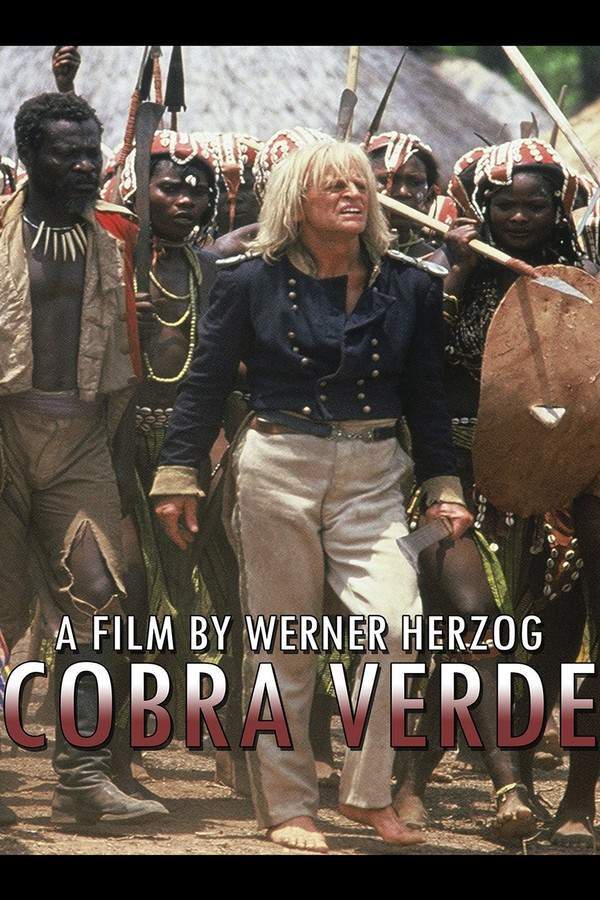
Cobra Verde (2007) movie poster

Plot Summary

Cobra Verde (2007) Plot Summary Explained

Release, runtime and language
2007 · 111 min · German
JustWatch #29,856 3
Directed by
Werner Herzog

A compelling adventure film, Klaus Kinski portrays Francisco Manoel da Silva, a resourceful Brazilian seeking fortune in West Africa. He employs both shrewdness and charisma while navigating the region’s intricate power dynamics. Initially involved in the slave trade, Francisco’s ambitions lead him to a surprising contest for royal authority, exchanging plantation chains for the trappings of a king.

On this page (5)
  1. 1 Where to watch
  2. 2 What happens: full plot
  3. 3 Plot questions answered
  4. 4 Movie threads
  5. 5 Every angle

Where to watch

Where to Watch Cobra Verde (2007)

Where can you watch Cobra Verde? Stream, rent or buy it in the US, including on Philo, Fawesome and Kanopy: current JustWatch availability with up-to-date prices.

Streaming availability powered by JustWatch

Full plot summary · contains spoilers

What Happens in Cobra Verde: Full Plot Summary

The whole story of Cobra Verde (2007) explained, from the opening scene to the final frame: every key event, every twist and what it all adds up to. Read it as a quick recap before the sequel, to check a scene you missed, or to finally understand what really happened.

In the late 19th century, we meet Francisco Manoel da Silva, portrayed by Klaus Kinski, a hedonistic Brazilian rancher forced into labor at a gold mining company after drought devastates his ranch. His troubling realization of being financially exploited leads him to a shocking act—he murders his boss and becomes an outlaw known as Cobra Verde (or Green Snake), gaining notoriety as the most brutal bandit in the sertão.

While visiting a local town, da Silva encounters and subdues an escaping slave through sheer force of will, capturing the attention of the affluent sugar baron, Dom Octávio Coutinho, played by José Lewgoy. Unbeknownst to Dom Coutinho, da Silva is the infamous bandit he just hired to manage the slaves on his plantation. Tension escalates when da Silva's reckless liaisons result in the pregnancies of all three of the baron’s daughters. Outraged, Dom Coutinho decides that instead of execution, he would punish da Silva by sending him on a perilous mission—to re-establish the slave trade with Western Africa.

Understanding the dire consequences that await him in Africa, da Silva nonetheless accepts the grave undertaking. His perilous journey takes him to Dahomey, which is present-day Benin, where he has to deal with the formidable King Bossa Ahadee, brought to life by the Honorary Omanhene Nana Agyefi Kwame II of Nsein, near Axim, Ghana. To everyone’s surprise, da Silva persuades the King to trade slaves for new rifles.

He seizes control of Elmina Castle and aligns himself with King Ampaw, the last survivor of his previous mission. Together, they embark on the harrowing venture of transporting enslaved individuals across the Atlantic to Brazil. Yet fortune swiftly turns, as the capricious king has them apprehended on dubious charges, including the absurd accusation of poisoning his greyhound, and orders their execution.

Just before his imminent demise, da Silva and King Ampaw are saved by the King's nephew, who seeks to forge a blood alliance with da Silva to destabilize the ruling King. In an unexpected turn of events, the ambitious bandit trains a formidable army of native women, who are initially intent on exterminating all men, and leads a successful assault against King Bossa.

Miraculously, under the new monarchy, the slave trade persists, aided by da Silva's cunning. However, the bandit soon finds himself at odds with the new king. He learns that his homeland of Brazil has abolished slavery and confiscated his holdings, with the British now placing a bounty on his head. Despite facing numerous challenges, da Silva expresses a sense of relief knowing that a vital change has unfolded, acknowledging the horrific crime that slavery truly is.

In a poignant closing scene, the weary outlaw stumbles onto the beach at Elmina, attempting to drag a ship's boat toward the surf. As he collapses in despair, the tide begins to rise, and a crippled African man approaches him, crawling along the shore. The film concludes with a vibrant image of young African women joyfully chanting, a symbol of hope and resilience as the credits roll.
Last updated: November 08, 2024 at 02:28

Was this helpful?

Plot questions answered

Cobra Verde Plot Explained: Your Questions Answered

The questions people ask most about Cobra Verde (2007): what happens in the confusing scenes, why the characters do what they do, the twists, hidden details and what the ending means. Each answer contains spoilers.

Q1

Why does Francisco Manor da Silva become an outlaw?

Francisco becomes an outlaw after drought destroys his ranch in the Brazilian sertão. Forced into labor at a gold mining company, he realizes he is being financially exploited. In a fit of anger and desperation, he murders his boss, transforming into the infamous bandit known as Cobra Verde.

Foreshadowing: The film's opening establishes Francisco's hedonistic lifestyle and vulnerability to economic exploitation, setting the stage for his violent rebellion.

  • cobra verde
  • francisco bandit
  • outlaw origin
  • sertão drought
Q2

Why does Dom Coutinho send da Silva to Africa instead of executing him?

After discovering that da Silva impregnated all three of his daughters through reckless affairs, Dom Coutinho decides punishment by exile rather than execution. He sends da Silva to re-establish the slave trade in Western Africa, viewing this dangerous mission as a fitting punishment for his transgression.

Foreshadowing: The baron initially hires da Silva to manage slaves without knowing his true identity as the notorious bandit, creating dramatic irony that builds toward this moment.

  • dom coutinho
  • africa punishment
  • exile
  • slave trade mission
Q3

How does da Silva convince King Bossa to trade slaves for rifles?

Da Silva uses his cunning and charisma to persuade King Bossa Ahadee to enter into a slave trade agreement. He manages to impress the formidable king during negotiations in Dahomey, convincing him that trading enslaved people for rifles would benefit the kingdom's military capabilities.

Foreshadowing: Earlier scenes establish da Silva's reputation as a persuasive and manipulative figure capable of bending situations to his will.

  • king bossa ahadee
  • dahomey
  • slave trade rifles
  • negotiation
Q4

Why does King Bossa betray and order execution of da Silva and King Ampaw?

King Bossa turns against da Silva and King Ampaw on dubious charges, most absurdly accusing them of poisoning his greyhound. The capricious king orders their execution, revealing the instability and unpredictability of political power in this setting. The betrayal highlights how quickly fortunes can change in the brutal world of colonial trade.

Foreshadowing: The alliance was always precarious, built on mutual benefit rather than trust, foreshadowing its collapse.

  • king bossa betrayal
  • execution
  • poisoning greyhound
  • king ampaw
Q5

How does da Silva come to lead an army of women?

When da Silva and King Ampaw face imminent execution, they are saved by the King's nephew who seeks a blood alliance to overthrow King Bossa. Da Silva then trains a formidable army of native women who were initially intent on exterminating all men. Under his leadership, they successfully assault and overthrow King Bossa.

Foreshadowing: The nephew's intervention creates an opportunity for da Silva to pivot from trader to military leader.

  • women army
  • king nephew
  • overthrow king bossa
  • blood alliance
Q6

Why does da Silva feel relief when he learns Brazil abolished slavery?

When da Silva discovers that Brazil has abolished slavery and confiscated his lands, with the British placing a bounty on his head, he expresses relief rather than despair. He recognizes that the abolition represents a vital moral change, acknowledging slavery as the horrific crime it truly is despite his own involvement in the trade.

Foreshadowing: The film gradually builds toward da Silva's moral awakening, with his interactions in Africa deepening his understanding of human suffering.

  • brazil abolition
  • slavery abolished
  • british bounty
  • relief moral change
Q7

What is the significance of da Silva collapsing on the beach at Elmina?

In the closing scene, the weary outlaw stumbles onto Elmina beach attempting to drag a ship's boat toward the surf before collapsing in despair. This moment symbolizes the futility of his entire quest, the weight of his actions has finally caught up with him. The tide rising around him represents the unstoppable forces of history that have rendered him obsolete.

Foreshadowing: His earlier attempts to control the slave trade and African kingdoms foreshadow this moment of complete physical and moral collapse.

  • elmina beach
  • collapsing figure
  • tide
  • futility
Q8

What does the crippled African man crawling toward da Silva represent?

As da Silva sinks into despair on the beach, a crippled African man crawls toward him, visually underscoring the devastating physical and human impact of slavery and colonial violence. This image reinforces the brutal toll that da Silva's actions and the entire slave trade have had on the African people.

Foreshadowing: The film consistently shows the human cost of slavery through various characters and moments throughout the narrative.

  • crippled man
  • slavery impact
  • colonial violence
  • human cost
Q9

What is the meaning of the African women chanting at the end of the film?

The film concludes with a vibrant image of young African women joyfully chanting, symbolizing hope and resilience in the face of colonial oppression. While da Silva's story ends in failure and despair, this final image suggests that African survival and culture persist despite the violence of the slave trade and colonial exploitation.

Foreshadowing: The women army that helped overthrow King Bossa established female strength as a theme running through the film's conclusion.

  • african women
  • hope
  • resilience
  • ending symbolism
Q10

Why does the slave trade continue even after da Silva overthrows King Bossa?

Despite leading the revolution that overthrows King Bossa and installing a new ruler, da Silva maintains the slave trade through his cunning. This bitter irony demonstrates how the system of slavery was larger than any individual player, even those who rose to power through rebellion became complicit in the same exploitative structures they once opposed.

Foreshadowing: Da Silva's pragmatic approach to the slave trade from the beginning foreshadows his inability to break free from the system.

  • slave trade continues
  • new monarchy
  • systemic exploitation
Q11

Why is Elmina Castle significant in the story?

Elmina Castle becomes the headquarters for da Silva's slave trading operation after he seizes control of it. The castle historically represents the brutal center of the transatlantic slave trade, and da Silva's occupation of it symbolizes his descent into the very system of exploitation he once rebelled against in Brazil.

Foreshadowing: The transition from victim of exploitation in Brazil to perpetrator in Africa marks da Silva's moral arc.

  • elmina castle
  • slave trading headquarters
  • transatlantic slave trade
Q12

What happens to King Ampaw after the revolution?

King Ampaw, the last survivor of da Silva's previous mission, partners with him to transport enslaved individuals across the Atlantic. After their betrayal and imprisonment by King Bossa, Ampaw is also saved and participates in the revolution. The film does not specify his ultimate fate, but he works alongside da Silva throughout the political upheaval.

Foreshadowing: His survival from the earlier mission establishes him as a resilient figure who shares da Silva's precarious position.

  • king ampaw
  • revolution
  • fate
  • partnership

Movie threads

More Movies Like Cobra Verde, by Mood & Story

Curated lists built around what makes Cobra Verde tick: the same mood, the same kind of story or the same emotional payoff. Each list explains why these movies belong together.

Epic colonial dramas with moral decay like Cobra Verde

Stories of ambition corroded by the brutal realities of colonialism. Explore movies like Cobra Verde that delve into the dark heart of colonialism. These stories feature complex anti-heroes, brutal power struggles, and a heavy emotional weight, perfect for viewers seeking intense historical dramas about ambition and corruption.

  • epic
  • oppressive
  • grim
  • brutal
  • historical
  • morally complex
  • Tone: dark, grim, oppressive
  • Pacing: variable, epic scale
Why these movies?

The story pattern: Narratives in this thread typically chart a linear descent, where a protagonist's initial goals—be it fortune, power, or mere survival—become tangled in the oppressive machinery of colonialism. The conflict is often external (political struggles, survival) but manifests as an internal crisis of morality, leading to an ambiguous or bleak conclusion.

Why they belong together: Movies are grouped here for their shared focus on the dark, emotionally heavy experience of colonialism, their high-intensity depictions of power and violence, and their central theme of a character's moral unraveling within a vast, unforgiving historical context.

Grim outlaw survival stories like Cobra Verde

A solitary anti-hero's perilous journey through a hostile world. If you liked the story of a notorious outlaw's harsh journey in Cobra Verde, discover similar movies. These films feature tough, charismatic protagonists facing brutal challenges, complex power dynamics, and stories of survival that carry a strong emotional impact.

  • brutal
  • adventurous
  • isolating
  • melancholic
  • outlaw
  • survival
  • Tone: dark, adventurous, melancholic
  • Pacing: variable, perilous journey
Why these movies?

The story pattern: The narrative pattern follows a singular, often charismatic, anti-hero as they are thrust into a series of escalating challenges. The journey is physical and psychological, marked by variable pacing—fast-paced action, steady tension, and slow, reflective moments of despair. The ending often leaves the character isolated, broken, or contemplative.

Why they belong together: These movies share a specific vibe: a dark, adventurous tone centered on a lone wolf character. They blend high intensity with a heavy emotional weight, exploring themes of survival, power, and corruption, resulting in a gripping yet grim viewing experience.

Every angle

Cobra Verde (2007) Explained: Plot, Timeline & Characters

Everything about Cobra Verde in one place: what happens in the plot summary, the timeline in chronological order, the characters and meaning and a spoiler-free summary. What's After the Movie adds the cast, box office and post-credit scenes.

Coming soon on iOS and Android

The Plot Explained Movie Summary App

Plot summaries, endings explained and timelines on your phone. Catch up on any movie in minutes, save your favorites and never miss a twist again.

Be the first to know when we launch. Your email stays private, always.

Learn more about the app