Clara

Clara

Year: 2019

Runtime: 105 min

Language: English

Director: Akash Sherman

Echo Score: 79
Sci-Fi

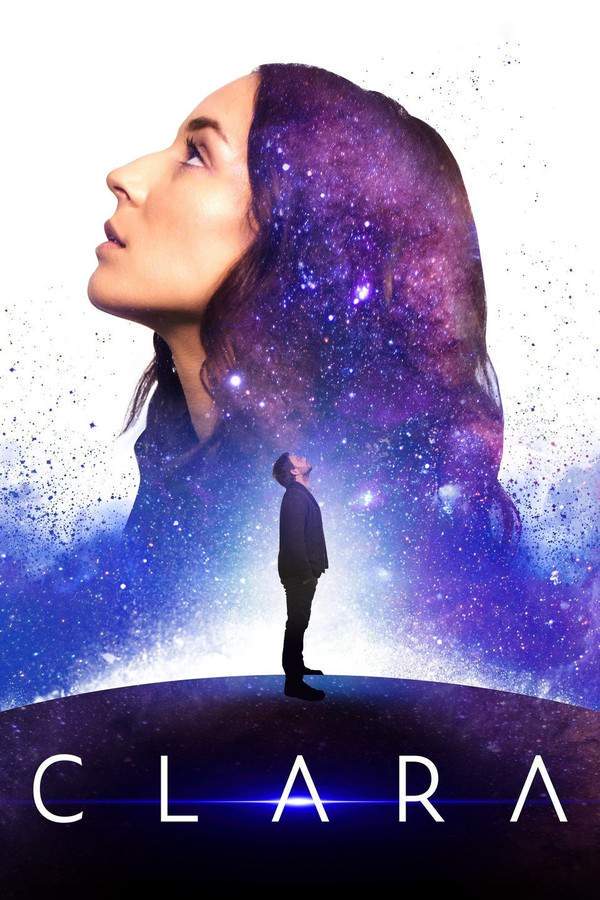
Astronomer Isaac Bruno is driven by a relentless search for extraterrestrial life, but his work is complicated by a personal tragedy. When he meets the mysterious artist Clara, they form an unexpected partnership, combining his scientific expertise with her unique perspective. Together, they delve into newly released stellar data, hoping to make revolutionary discoveries while Isaac confronts his past and rekindles his passion for the universe.

Where to Watch Clara?

Find where to stream, rent, or buy Clara (2019) in the US with current JustWatch availability, up-to-date pricing, and platform listings for subscription, rental, and digital purchase options.

Streaming availability powered by JustWatch

Warning: spoilers below!

Haven’t seen Clara yet? This summary contains major spoilers. Bookmark the page, watch the movie, and come back for the full breakdown. If you're ready, scroll on and relive the story!

Clara (2019) – Full Plot Summary & Ending Explained

Read the complete plot breakdown of Clara (2019), including all key story events, major twists, and the ending explained in detail. Discover what really happened, and what it all means.

Dr. Isaac Bruno, Patrick J. Adams, holds a postdoctoral fellowship in astrophysics at a fictional Ontario university in Toronto, where his quest to detect signs of intelligent life has become an all-consuming mission grounded in a private trauma from two years past. This fixation has left him increasingly hostile toward students and colleagues, and it culminates in him misappropriating time on ground-based telescopes in Chile that were meant for a peer’s research. The department head, Jennifer Dale, ultimately suspends him, cutting him off from the school’s facilities and forcing him to confront the consequences of his unyielding approach.

Meanwhile, the TESS orbiting telescope is launched, churning out vast streams of data that invite a global, collaborative effort to hunt for life on distant worlds. In this wave of open science, Isaac posts flyers seeking an unpaid research assistant, offering nothing but room and board in return. The lone applicant is Clara, Troian Bellisario, an uneducated artist who has lived a Bohemian life and carries her own hidden burdens, including medicine for an illness that isn’t fully explained.

Isaac fixates on M dwarf stars, convinced that this narrow niche will slip past the attention of others. When Clara discovers a promising exoplanet, Isaac covertly returns to the university at night and lies to the telescope operators in Chile, claiming permission from his old friend Charlie to obtain more data on the planet. Charlie, Ennis Esmer, is furious yet intrigued by what the data could mean; he urges Isaac to reach out to Rebecca, Isaac’s ex-wife, who holds an endowed chair at Caltech, and Clara pushes Isaac to make the connection.

Rebecca Jenkins, Kristen Hager, tells Isaac that discovering life won’t repair the losses of their dead baby son. Yet she agrees to give him time on the Keck telescope, and the breakthrough follows: a habitable-planet candidate is within reach. Clara grows close to Isaac, and she offers him a fragile glimpse of love, even as he remains cautious, convinced that anything meaningful must be proven by data and not by feeling. They share a kiss, but Isaac pulls away, wary of hope and the possibility of heartbreak.

After a hospital delivery for Charlie’s wife, Isaac bluntly muses that the universe is a “cosmic accident”—a string of luck that could just as easily strand any given being. Clara counters with a deeper view of possibility: the atoms that constitute his dead son still exist, merely transformed, and their connection endures in a broader sense. Her perspective nudges Isaac toward openness, and the two become a couple, choosing to nurture their bond even as the search for life intensifies.

When they learn that another group has already located the planet they were pursuing, Isaac’s mood dips before he renews his focus on detecting signs of an evolved civilization that could be altering its planet’s environment. He wants not merely a home world, but evidence of intelligent life shaping its surroundings. Clara’s health begins to slip as the strain of his obsession grows, and Charlie challenges Isaac to reassess his priorities. In a gesture of trust, Clara asks Isaac to map the universe using the newly released TESS data and to select a star by intuition rather than by the data’s blind scope. He chooses a spot on the map that lies outside the current dataset, but their moment of anger—Isaac accusing Clara of planning to leave him—hurts her deeply, and she collapses when she tries to leave.

In the hospital, doctors reveal that Clara suffers from an autoimmune disease that has been slowly degrading her organs and muscles; yet she remains physically capable enough to speak and walk, a testament to a stubborn resilience. Isaac stays by her bedside as her condition worsens, and just before she dies she whispers a final, intimate line to him: “I wish I could see your face when you see it.”

A new batch of TESS data later arrives, and Isaac discovers that the star he once avoided is now swarmed by data revealing anomalies in its companion’s orbit—an artificial object clearly maintained by an intelligent hand. He presents his findings to Charlie, who introduces him to Dr. Rickman, the head of the TESS project. Two years pass, and at a high-profile JPL press conference, Rickman, Rebecca, and Charlie declare that the evidence now proves the existence of intelligent life elsewhere in the galaxy. Isaac, however, is not in his assigned seat; he sits apart, lost in memory of Clara.

Months later, Rebecca invites Isaac to the SETI laboratory, where a message from the aliens arrives in Morse code addressed to “Isaac Bruno.” He witnesses the next transmission—a sound file of a Bob Dylan song he and Clara used to listen to together. The film closes on Isaac’s face, torn between tears and a quiet, hopeful smile, as he murmurs the final, grateful acknowledgment: “Thank you.”
Last updated: March 05, 2026 at 18:40

Was this helpful?

Clara (2019) Plot Questions Answered – Summary FAQ

Explore frequently asked questions about Clara (2019) with spoiler-rich answers covering the full plot summary, major story beats, character motivations, hidden details, and ending meaning. This movie summary FAQ helps explain confusing scenes, plot twists, and narrative decisions in clear, searchable detail.

Q1

Why is Isaac so obsessed with finding extraterrestrial life?

A.

Isaac's obsession stems from the death of his infant son two years earlier. The trauma drove him to pour all his energy into the search for intelligent life, using the hunt for alien contact as a way to cope with his grief and find meaning in a universe that felt fundamentally unjust. His work becomes an all-consuming mission that alienates him from colleagues and leads him to bend ethical boundaries.

isaac brunogrieflosssonobsessionalien lifetrauma
Q2

What is Clara's illness in the movie?

A.

Clara suffers from an autoimmune disease that gradually degrades her organs and muscles. The film reveals this diagnosis in the hospital scene, explaining why she was taking medication throughout the story. Despite her declining health, she maintains enough physical capability to walk and speak, demonstrating a stubborn resilience until her death.

Earlier scenes show Clara taking medication and experiencing moments of weakness, hinting at her underlying condition.

claraillnessautoimmune diseasehealthdeath
Q3

Why does Isaac push Clara away after their kiss?

A.

Isaac pulls away from Clara because he is deeply afraid of vulnerability and emotional attachment. He explicitly states that meaningful things must be proven by data, not by feeling. After losing his son, Isaac associates love with potential loss and heartbreak, so he initially resists allowing himself to love Clara despite their growing connection.

Isaac's scientific worldview and his statement that 'anything meaningful must be proven by data' foreshadows his emotional resistance.

isaacclarakisslovevulnerabilityemotional walls
Q4

Why does Isaac lie to get telescope time from Chile?

A.

After Clara discovers a promising exoplanet, Isaac becomes desperate for more data to study it. When his access to university facilities is cut off following his suspension, he sneaks back into the university at night and lies to the Chilean telescope operators, claiming his friend Charlie had given permission. This act of deception marks a turning point where his obsession overrides his ethical judgment.

Isaac's prior misappropriation of telescope time and his hostile behavior toward colleagues establish his willingness to bend rules.

isaactelescopechiledatadeceptionexoplanet
Q5

What does Clara mean when she talks about the atoms of Isaac's dead son?

A.

After Isaac muses that the universe is a 'cosmic accident,' Clara offers a philosophical counterpoint: the atoms that made up his dead son still exist in the universe, merely transformed into other matter. She suggests their connection endures in a broader, cosmic sense. This perspective helps Isaac become more open emotionally and marks a pivotal moment in their relationship.

atomssondeathuniversephilosophycosmicconnection
Q6

Why is Isaac absent from the JPL press conference?

A.

At the JPL press conference announcing proof of intelligent alien life, Isaac is not in his assigned seat. Instead, he sits apart, lost in memory of Clara. Having lost Clara before seeing the discovery through, Isaac prioritizes remembering her over basking in scientific glory. The moment represents his emotional growth, choosing love and memory over career validation.

Clara's death before the discovery was confirmed sets up Isaac's preference for personal memory over public recognition.

isaacjplpress conferenceclaramissingmemory
Q7

What does the alien message mean at the end of the movie?

A.

The aliens send two messages to Isaac: first, his name in Morse code addressed directly to 'Isaac Bruno,' and second, an audio file of a Bob Dylan song that Isaac and Clara used to listen to together. The message confirms not only the existence of intelligent life but also that they have been observing Isaac and Clara specifically, bridging the cosmic and personal themes of the film.

alien messagemorse codebob dylanisaacclaraendingseti
Q8

Why does Isaac choose a star outside the TESS dataset?

A.

Clara asks Isaac to map the universe using TESS data and select a star by intuition rather than following the data blindly. Isaac deliberately chooses a spot outside the current dataset, a seemingly irrational choice that Clara trusts despite lacking empirical backing. Later, this very location reveals anomalies from an artificial object, proving that intuition can sometimes succeed where pure data analysis fails.

starintuitiontess dataisaacclaraartificial object
Q9

What is Isaac's relationship with Rebecca and what happened to their baby?

A.

Rebecca Jenkins is Isaac's ex-wife, and they lost their baby son two years before the film takes place. This shared tragedy is the source of Isaac's obsessive search for meaning through science. Rebecca tells Isaac bluntly that discovering alien life won't bring back their dead child, yet she still agrees to help him secure telescope time at Keck, showing both her lingering care for him and her attempt to help him find closure.

The trauma of losing their son drives Isaac's fixation throughout the entire film.

rebeccaex-wifebabysonlossdeathisaac
Mobile App Preview

Coming soon on iOS and Android

The Plot Explained Mobile App

From blockbusters to hidden gems - dive into movie stories anytime, anywhere. Save your favorites, discover plots faster, and never miss a twist again.

Sign up to be the first to know when we launch. Your email stays private, always.

Explore Movie Threads

Discover curated groups of movies connected by mood, themes, and story style. Browse collections built around emotion, atmosphere, and narrative focus to easily find films that match what you feel like watching right now.

Sci-Fi Dramas About Grief and Discovery Like Clara

Profound personal loss collides with the search for meaning in the vastness of space.If you were moved by the blend of personal tragedy and cosmic wonder in Clara, explore more movies like it. These films feature characters using scientific exploration as a way to process profound loss, offering bittersweet, emotionally heavy stories about healing and connection.

melancholichopefulscientificintrospectivegrievingtranscendentemotional

Narrative Summary

Stories in this thread follow a linear but layered path. A protagonist, immobilized by grief, is drawn into a scientific or philosophical puzzle. Through this external quest—often involving data, observation, or collaboration with an unexpected partner—they slowly confront their inner pain. The climax typically delivers a dual resolution: a transcendent discovery that validates their search, and a poignant, personal acceptance of their loss.

Why These Movies?

These movies are grouped because they share a core DNA: they use the framework of science fiction not for escapist adventure, but as a profound metaphor for processing human emotion. The mood is consistently melancholic yet hopeful, the pacing steady to allow for introspection, and the emotional weight is heavy. They balance intimate character drama with the wonder of discovery, resulting in a uniquely bittersweet tone.

Movies About Transformative Connections Like Clara

Two broken people find unexpected redemption and purpose through a deep, transformative connection.Loved the deep, healing bond between Isaac and Clara? Discover similar movies about transformative partnerships. These films focus on characters who are emotionally or physically wounded finding unexpected purpose and healing through a profound connection with another person, often while working on a shared goal.

romantichealingbittersweetintrospectivehopefulmelancholicemotionaltransformative

Narrative Summary

The narrative pattern involves two protagonists, each isolated by their pain. Their meeting is often serendipitous. As they work together on a tangible goal (an artistic project, a scientific inquiry, solving a mystery), walls come down. The partnership forces them to confront what they've been avoiding. The arc is defined by emotional vulnerability, shared purpose, and a climax that involves a sacrifice or a parting, but leaves both characters fundamentally changed and healed.

Why These Movies?

These films are connected by their core focus on character-driven healing through partnership. They prioritize emotional depth and vulnerability over plot mechanics. The tone is consistently bittersweet, acknowledging the pain of loss or illness while celebrating the redemptive power of human connection. The pacing is steady, allowing the relationship to develop naturally, and the emotional payoff is significant, making the viewer feel the weight and the grace of the characters' journeys.

Unlock the Full Story of Clara

Don't stop at just watching - explore Clara in full detail. From the complete plot summary and scene-by-scene timeline to character breakdowns, thematic analysis, and a deep dive into the ending - every page helps you truly understand what Clara is all about. Plus, discover what's next after the movie.

Clara Timeline

Track the full timeline of Clara with every major event arranged chronologically. Perfect for decoding non-linear storytelling, flashbacks, or parallel narratives with a clear scene-by-scene breakdown.

Clara Timeline

Characters, Settings & Themes in Clara

Discover the characters, locations, and core themes that shape Clara. Get insights into symbolic elements, setting significance, and deeper narrative meaning - ideal for thematic analysis and movie breakdowns.

Characters, Settings & Themes in Clara

Clara Spoiler-Free Summary

Get a quick, spoiler-free overview of Clara that covers the main plot points and key details without revealing any major twists or spoilers. Perfect for those who want to know what to expect before diving in.

Clara Spoiler-Free Summary

More About Clara

Visit What's After the Movie to explore more about Clara: box office results, cast and crew info, production details, post-credit scenes, and external links - all in one place for movie fans and researchers.

More About Clara

Similar Movies to Clara

Discover movies like Clara that share similar genres, themes, and storytelling elements. Whether you’re drawn to the atmosphere, character arcs, or plot structure, these curated recommendations will help you explore more films you’ll love.