












Plot Explained Spoilers guaranteed!
Plot Explained

Browse by genre

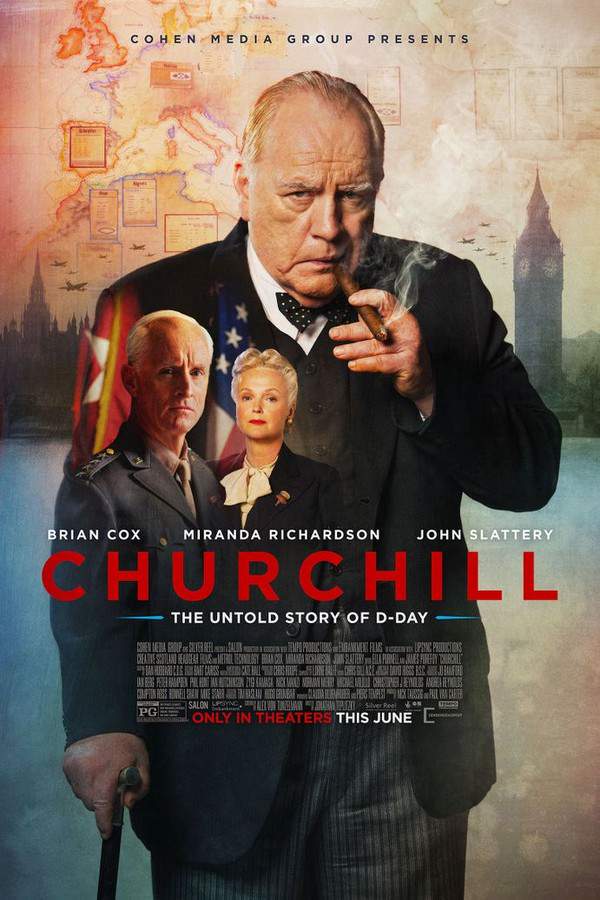
Churchill (2017) movie poster

Timeline

Churchill (2017) Timeline Explained – Every Event in Order

Release, runtime and language
2017 · 105 min · English
Echo score 62
JustWatch #4,435 5
Directed by
Jonathan Teplitzky
Starring
Brian Cox, Miranda Richardson, John Slattery, Ella Purnell, Danny Webb, George Anton
Budget
$6.4M

In June 1944, as Allied forces planned the invasion of Europe, a weary Winston Churchill faced a critical moment. Haunted by the disastrous Gallipoli campaign and battling depression and exhaustion, he grappled with doubts that threatened to derail the mission and define his legacy. Supported by his wife Clementine, Churchill wrestled with a momentous decision that would determine the fate of countless lives and shape his place in history.

On this page (6)
  1. 1 Where to watch
  2. 2 Events in order (14)
  3. 3 Timeline questions answered
  4. 4 Movie threads
  5. 5 Movies like Churchill
  6. 6 Every angle

Where to watch

Where to Watch Churchill (2017)

Where can you watch Churchill? Stream, rent or buy it in the US, including on Amazon Prime Video, Fawesome and Kanopy: current JustWatch availability with up-to-date prices.

Streaming availability powered by JustWatch

14 events in order · contains spoilers

Churchill Timeline: Events in Chronological Order

Every key event of Churchill (2017) in order, scene by scene, with when and where it takes place. Use it to untangle flashbacks, time jumps and parallel storylines, to refresh your memory before the sequel or to find the exact scene you are thinking of.

  1. The Gathering Storm

    In June 1944, the Allied Forces are preparing for a monumental operation to reclaim Nazi-occupied Europe. Countless troops, ships, and aircraft are being mobilized along the southern shores of Britain as they edge towards a decisive moment in the war.

    When
    June 1944
    Where
    Britain
  2. Winston Churchill's Inner Turmoil

    Despite his powerful speeches, Churchill struggles with the burdens of his past failures, particularly the Gallipoli campaign of 1915. His character is marred by impulsivity and a fear of history repeating itself, which clouds his judgment during this critical time.

  3. Support from Helen Garrett

    Churchill's secretary, Helen Garrett, plays a crucial role during this tense period, encouraging him to navigate the pressures of leadership. As he grapples with the weight of his ambitions and the consequences of potential failure, Helen's presence is a stabilizing force.

  4. Mounting Opposition

    As the situation escalates, top military leaders like General Eisenhower and Field Marshal Montgomery express their frustrations with Churchill's interventionist strategies. Tensions rise as they grapple with the need to balance momentum against the realities of modern warfare.

  5. Clash with Eisenhower

    A pivotal discussion unfolds between Churchill and Eisenhower, where differing strategies lead to a heated argument. Eisenhower's blunt critique reveals Churchill's diminishing authority, setting the stage for heightened conflict between political ambition and military practicality.

  6. Personal Strain

    Disheartened by the growing political and military opposition, Churchill's frustration begins to affect his personal relationships. The strain becomes evident as he takes his anger out on his wife Clementine, prompting concern for his mental state.

  7. Intervention by King George VI

    In a moment of reckoning, King George VI steps in to remind Churchill of the importance of his wife's unwavering support. This intervention serves as a crucial reminder of the personal ties that can sway a leader during such turbulent times.

  8. Countdown to D-Day

    With only 96 hours remaining before the invasion of Normandy, Churchill faces overwhelming doubts about Operation Overlord. His attempts to assert his influence are met with indifference, reflecting his waning power in the military command structure.

    When
    96 hours before D-Day
  9. A Proposal for Involvement

    In a dramatic move, Churchill proposes that he and King George VI should accompany the troops on HMS Belfast during the invasion. This unexpected suggestion creates tension with Eisenhower, showcasing Churchill's desire to be part of the historic event.

    Where
    HMS Belfast
  10. Weather-Related Delays

    As D-Day approaches, uncertainty looms over the operation due to unpredictable weather patterns. The Navy advocates for the launch while the Air Force hesitates, leading to a significant decision by Eisenhower for a 24-hour delay.

    When
    48 hours before D-Day
  11. Helen's Heartfelt Plea

    In an emotional moment, Helen Garrett expresses her fears about her fiancé's participation in the D-Day invasion. This poignant conversation strikes a chord with Churchill, highlighting the personal stakes involved in the military operation.

  12. Dawn of D-Day

    As the dawn of D-Day breaks with favorable weather, Churchill rises to confront his responsibilities. Delivering an uplifting speech, he honors the heroic efforts of the Allied forces, reaffirming his commitment to lead during this historic moment.

    When
    D-Day
  13. Reconciliation with Clementine

    In a touching resolution, Churchill reconciles with his wife Clementine, reaffirming the bond that has sustained them through the trials of leadership. This moment of personal connection underscores the importance of support and solidarity during times of crisis.

  14. Facing New Threats

    In the aftermath of D-Day, Churchill acknowledges the evolving threats posed by Germany, including the rise of V-8 rockets. His experience inspires resilience and determination as he prepares England for the challenges ahead.

Last updated: November 03, 2024 at 12:53

Was this helpful?

Timeline questions answered

Churchill Timeline Explained: Your Questions Answered

When does it happen, and why in that order? The questions people ask about the chronology of Churchill (2017): time jumps, flashbacks, cause and effect between scenes and the correct order of events, each answered with spoilers.

Q1

Why does Winston Churchill oppose Operation Overlord?

Churchill opposes Operation Overlord because he fears another catastrophic military failure similar to the Gallipoli campaign of 1915. Haunted by the thousands of young lives lost on those beaches, he obsessively worries that if D-Day fails, Germany could invade Britain. His anxiety is compounded by his diminished authority in military decisions, making him desperate to prevent what he sees as a potentially disastrous course of action.

Foreshadowing: The film establishes Churchill's trauma from Gallipoli early, showing how this past failure shapes his resistance to the invasion.

  • churchill
  • operation overlord
  • d-day
  • gallipoli
  • opposition
  • invasion
Q2

Why does Churchill suggest accompanying troops on HMS Belfast?

Churchill proposes that he and King George VI should accompany the troops aboard HMS Belfast during the invasion because he feels compelled to share the risk with the soldiers. After being marginalized from military strategy discussions and facing accusations that his methods are outdated, Churchill sees this as a way to prove his commitment and legacy. He wants to be physically present at this historic moment rather than watching from the sidelines.

Foreshadowing: This dramatic proposal follows Churchill's growing frustration at being ignored by Eisenhower and Brooke.

  • churchill
  • king george
  • hms belfast
  • invasion
  • d-day proposal
Q3

Why does Churchill clash with General Eisenhower?

Churchill clashes with Eisenhower because they have fundamentally different approaches to warfare. Churchill, relying on his World War I experience, advocates for massive beach landings that will secure the Normandy coast. Eisenhower, representing modern military strategy, finds Churchill's methods outdated and blunty tells him so. The conflict also stems from Churchill's desperate need to maintain influence as his authority in military matters steadily declines.

Foreshadowing: Their clash is foreshadowed by the mounting opposition from military leaders mentioned early in the film.

  • churchill
  • eisenhower
  • conflict
  • montgomery
  • military strategy
Q4

Why is Churchill haunted by the Gallipoli campaign?

Churchill is haunted by Gallipoli because he was one of the architects of that disastrous 1915 campaign, where tens of thousands of Allied soldiers died on Turkish shores. This failure has become a defining trauma in his life, and he obsessively fears history repeating itself with D-Day. The weight of those lost lives drives his anxiety and his desperate attempts to influence the invasion strategy, terrified that another failure will define his legacy.

Foreshadowing: The film opens by establishing Churchill's burden from past failures, particularly Gallipoli.

  • churchill
  • gallipoli
  • trauma
  • world war 1
  • failure
  • anxiety
Q5

Why does King George VI intervene with Churchill?

King George VI intervenes because he sees Churchill spiraling into personal and professional unraveling. After Churchill takes his frustration out on Clementine and grows increasingly difficult to work with, the King steps in to remind Churchill that only Clementine's support can sustain him through this crisis. This intervention serves as a crucial moment that helps redirect Churchill toward reconciliation with his wife.

Foreshadowing: The King's intervention follows Churchill's personal strain shown when he takes his anger out on those closest to him.

  • king george
  • churchill
  • clementine
  • intervention
  • support
Q6

Why does Helen Garrett's plea about her fiancé affect Churchill?

Helen Garrett's plea affects Churchill profoundly because it personalizes the stakes of D-Day beyond strategy and politics. When Helen expresses her heartbreak over her fiancé potentially dying in the invasion, it reminds Churchill that behind every soldier is a family fearing loss. This emotional moment breaks through his obsessive focus on military failure and helps shift his perspective toward accepting the invasion as necessary for those who will fight and die.

Foreshadowing: This pivotal moment occurs as the countdown to D-Day reaches its final hours.

  • helen garrett
  • fiance
  • d-day
  • plea
  • emotional moment
  • churchill
Q7

Why does Churchill take his frustration out on Clementine?

Churchill takes his frustration out on Clementine because he is overwhelmed by the pressure of leadership, his fears of failure, and his growing sense of powerlessness in the military command structure. As opposition mounts from Eisenhower, Montgomery, and even his own staff, Churchill channels his anger inward but releases it on those closest to him, particularly his wife. This behavior reflects his deteriorating mental state as the weight of the invasion approaches.

Foreshadowing: This strain on his marriage is hinted at early when Churchill's frustration becomes palpable.

  • churchill
  • clementine
  • frustration
  • marriage tension
  • stress
Q8

What causes the 24-hour delay to D-Day?

The 24-hour delay to D-Day is caused by unpredictable weather conditions as the invasion date approaches. The Navy advocates for proceeding with the launch, while the Air Force hesitates due to stormy forecasts that would impair air support. Ultimately, Eisenhower makes the decision to postpone the invasion by 24 hours, hoping for better weather conditions that could improve the chances of success.

Foreshadowing: The timeline establishes that uncertainty over weather creates tension as the countdown progresses.

  • d-day
  • weather delay
  • invasion
  • eisenhower
  • 24 hours
Q9

How do Churchill and Clementine reconcile?

Churchill and Clementine reconcile after Clementine plays a crucial role in keeping him grounded during his darkest moments, preventing him from completely spiraling into despair. Her steadfast support throughout his crisis, combined with his realization of how much he needs her, leads to a touching reunion. This reconciliation underscores the personal bond that sustained Churchill through one of history's most challenging periods.

Foreshadowing: The reconciliation is set up by the King's intervention reminding Churchill of Clementine's importance.

  • churchill
  • clementine
  • reconciliation
  • marriage
  • support
Q10

What changes Churchill's mindset leading to D-Day?

Several factors shift Churchill's mindset: Helen Garrett's heartfelt plea about her fiancé personalizes the invasion's stakes, Clementine's unwavering support grounds him, and the King's intervention reminds him of his need for those closest to him. As D-Day arrives with favorable weather, Churchill moves from opposition and fear to acceptance and leadership, delivering an inspiring speech that honors the Allied forces and reaffirms his commitment to guide England through the dangers ahead.

Foreshadowing: This transformation builds throughout the film as Churchill cycles through doubt, frustration, and eventually acceptance.

  • churchill
  • d-day
  • speech
  • transformation
  • mindset change
  • leadership
Q11

Why does Churchill's influence over military decisions decline?

Churchill's influence declines because his interventionist tactics and reliance on World War I strategies are seen as outdated by modern military leaders. Eisenhower and Montgomery grow increasingly exasperated with his constant interference and blunt strategies. As the countdown to D-Day progresses, Churchill's attempts to assert his views are ignored, reflecting his diminishing authority in the military command structure despite his position as Prime Minister.

Foreshadowing: The film establishes early that top military leaders are frustrated with Churchill's methods.

  • churchill
  • influence
  • eisenhower
  • montgomery
  • authority
  • declining power

Movie threads

More Movies Like Churchill, by Mood & Story

Curated lists built around what makes Churchill tick: the same mood, the same kind of story or the same emotional payoff. Each list explains why these movies belong together.

Movies about leaders under pressure like Churchill

Films about historical figures grappling with the crushing weight of world-altering decisions. Explore films like Churchill that delve into the intense psychological strain on leaders during critical historical junctures. If you enjoyed the high-stakes tension and heavy emotional weight of watching a great figure wrestle with doubt and responsibility, you'll find similar powerful dramas in this category.

  • tense
  • burdened
  • daunting
  • solemn
  • anxious
  • reflective
  • Tone: tense, heavy, solemn
  • Pacing: steady, deliberate
Why these movies?

The story pattern: Narratives in this thread typically unfold against a ticking clock, focusing on a short, critical period. The protagonist, often a well-known historical leader, battles internal demons—such as past failures or depression—while clashing with advisors over a high-stakes plan. The arc is one of overcoming immense doubt to reaffirm leadership in a moment of crisis.

Why they belong together: These movies are grouped by their shared focus on the immense psychological pressure of leadership. They create a tense, heavy viewing experience through high-intensity conflicts, a steady pacing that builds urgency, and a deep exploration of the emotional toll of making decisions that affect countless lives.
Psychological historical dramas like Churchill

Intimate dramas where a pivotal moment in history unfolds through one person's psychological struggle. Discover movies similar to Churchill that explore a famous historical event through the intense psychological lens of a key figure. If you liked the film's focus on internal conflict, wartime stress, and the personal redemption arc set against a world-changing backdrop, this thread offers more compelling character-driven history.

  • anxious
  • tense
  • reflective
  • burdened
  • solemn
  • daunting
  • Tone: tense, reflective, anxious
  • Pacing: steady, character-driven
Why these movies?

The story pattern: The narrative pattern centers on a protagonist haunted by a past failure, which colors their judgment during a new, parallel crisis. The story intertwines flashbacks or references to the past trauma with the present-day countdown to a major event. The journey is one of confronting personal demons to find redemption and clarity, ultimately contributing to the historical outcome.

Why they belong together: These films are connected by their unique blend of historical drama and intense psychological character study. They share a tense tone, steady pacing that builds anxiety, and a heavy emotional weight derived from exploring the deep-seated fears and burdens of an individual at the center of world events.

If you liked this

Movies Like Churchill

Similar movies to Churchill: the same genre, themes or kind of story. Each one comes with its own plot summary, timeline and ending explained.

Browse all movie summaries

Every angle

Churchill (2017) Explained: Plot, Timeline & Characters

Everything about Churchill in one place: what happens in the plot summary, the timeline in chronological order, the characters and meaning and a spoiler-free summary. What's After the Movie adds the cast, box office and post-credit scenes.

Coming soon on iOS and Android

The Plot Explained Movie Summary App

Plot summaries, endings explained and timelines on your phone. Catch up on any movie in minutes, save your favorites and never miss a twist again.

Be the first to know when we launch. Your email stays private, always.

Learn more about the app