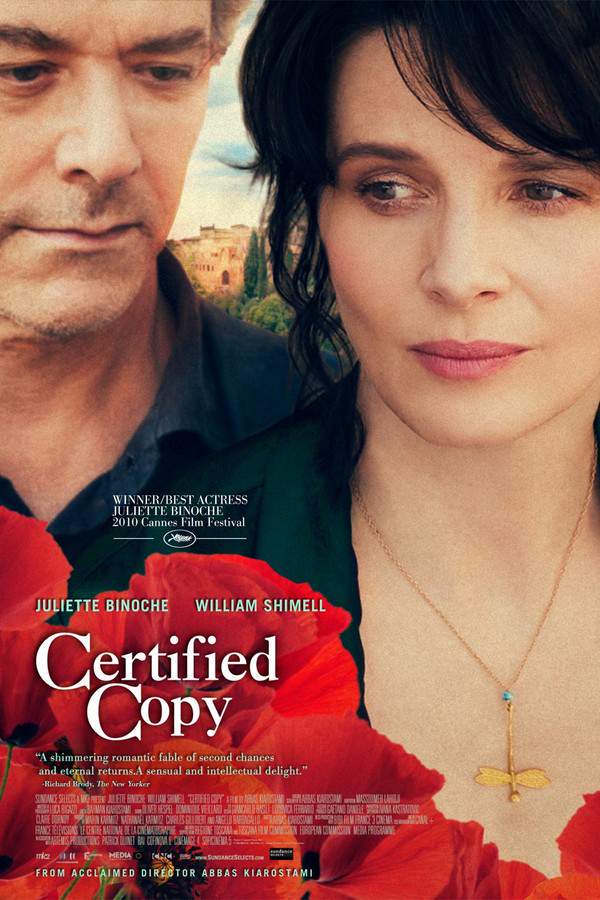
Certified Copy

Certified Copy

JustWatch#24,0294

Year: 2011

Runtime: 106 min

Language: English

Director: Abbas Kiarostami

Drama

While traveling in Tuscany, acclaimed author James meets Elle, a charismatic Frenchwoman running an antiques shop. They playfully imagine themselves as a married couple, touring the beautiful Italian countryside. As their day together progresses, their relationship becomes increasingly complex, and the nature of their connection is questioned. The film explores themes of authenticity, love, and the power of perception, challenging the audience to consider what is real and what is merely a performance.

Where to Watch Certified Copy?

Find where to stream, rent, or buy Certified Copy (2011) in the US with current JustWatch availability, up-to-date pricing, and platform listings for subscription, rental, and digital purchase options.

Warning: spoilers below!

Haven’t seen Certified Copy yet? This summary contains major spoilers. Bookmark the page, watch the movie, and come back for the full breakdown. If you're ready, scroll on and relive the story!

Timeline – Certified Copy (2011)

Trace every key event in Certified Copy (2011) with our detailed, chronological timeline. Perfect for unpacking nonlinear stories, spotting hidden connections, and understanding how each scene builds toward the film’s climax. Whether you're revisiting or decoding for the first time, this timeline gives you the full picture.

1

Arrival in Tuscany

British author James Miller arrives in the scenic landscapes of Tuscany for his scheduled engagement. He is set to give a talk about his new book, *Certified Copy*, which challenges the notions of authenticity in art.

Tuscany
2

Encounter at the Book Signing

During the book signing event, Miller meets a French antiques dealer and her son. Although she hopes to get several copies of his book signed, her son’s restlessness prompts her to leave, but not without leaving her phone number with Miller's interpreter.

Book signing event
3

Strained Maternal Relationship

The interaction between the antiques dealer and her son reveals tension in their relationship. The son playfully suggests that his mother might be interested in Miller, a notion she promptly dismisses.

4

Visit to the Antique Shop

Miller and the woman meet again at her antique shop, where she hopes to show him her unique collection. Though she is eager, Miller suggests they take a drive instead, promising to return for his 9 p.m. train.

Antique shop
5

Debate on Authenticity

As they drive, Miller signs copies of his book for her, leading to a spirited discussion about authenticity in art. Their dialogue becomes heated as he provocatively asserts that even revered artworks like the *Mona Lisa* can be seen as mere copies.

In the car
6

Visit to the Art Museum

The woman introduces Miller to an art museum, showcasing another celebrated 'copy'. However, Miller shows little interest and asserts that his work is complete, revealing a sense of disillusionment.

Art museum
7

Coffee Break

They stop at a café for a quick coffee, where a misunderstanding by the café owner leads her to play along as Miller's wife. This lighthearted moment transforms their conversation, leading to a greater connection.

Café
8

Revealing Personal Struggles

The woman opens up about her disappointment regarding their 15th wedding anniversary, expressing feelings of neglect due to her husband's frequent business trips. This candidness compounds the emotional distance perceived in her relationship.

Town streets
9

Wisdom from an Older Couple

While walking, they encounter an older couple discussing a statue, leading to unsolicited advice on rekindling affection in marriage. This encounter resonates with the couple, deepening their reflections on relationships.

Town square
10

Dinner Confrontation

At dinner, tensions flare as Miller argues with the waiter over their wine, highlighting his growing frustration. He storms out but waits outside for the woman, suggesting an ongoing, unresolved tension between them.

Restaurant
11

Visit to the Church

The woman chooses to enter a church alone, claiming it’s simply to remove her bra, which piques Miller's curiosity. This leads them to follow two elderly churchgoers to a hotel nearby, where memories for Miller lie dormant.

Church and hotel
12

Nostalgic Reflections

Inside the hotel, the woman invites Miller to see the room where he honeymooned with his wife. They exchange memories related to their past, though Miller struggles to remember the finer details of that night.

Hotel room
13

A Moment of Vulnerability

The woman urges Miller to acknowledge their individual flaws, warning that loneliness is the consequence of not embracing acceptance. Despite her heartfelt plea, he remains focused on catching his train.

Hotel room
14

Final Reflections

As their time together comes to a close, Miller enters the bathroom, staring at his reflection. The tolling church bells at 8 p.m. symbolize the fleeting nature of their encounter, marking the end of their journey.

8 p.m. Bathroom

Last updated: November 16, 2024 at 16:54

Was this helpful?

Certified Copy (2011) Timeline Questions Answered – Chronology FAQ

Find frequently asked questions about the Certified Copy (2011) timeline, including chronological order, nonlinear jumps, cause-and-effect links, and scene sequence clarifications. This timeline FAQ helps explain when key events happen, how moments connect, and why the story unfolds in that specific order.

Q1

Are James and the French antique dealer actually married?

A.

The film deliberately keeps this ambiguous. Throughout the day, they role-play as a married couple dealing with a 15-year marriage, yet Miller struggles to remember details of their supposed wedding night at the hotel. Some scenes suggest they are strangers performing a married couple, while others hint their relationship might be real but strained. The woman seems to genuinely carry emotional pain about their marriage, while Miller appears confused about whether any of it is authentic.

Early on, the son playfully suggests his mother has romantic feelings for James, and she quickly denies it, planting doubt about their true relationship.

married couplerelationshipreality vs performanceending
Q2

Why does the woman play along when the café owner mistakes her for James's wife?

A.

When the café owner assumes they are married, she chooses to embrace the fiction rather than correct him. This moment becomes a turning point where she openly discusses their troubled 15th anniversary and his frequent work trips. By playing along, she reveals genuine emotional pain about their marriage and uses the role-play as an opportunity to confront James about their emotional distance.

café scenewiferole playingmarriage confession
Q3

What is the significance of James's book about authenticity in art?

A.

James's book argues that every reproduction can stand as an original, and even the so-called original is merely a copy of another form. His provocative claim that the Mona Lisa is effectively a copy of its muse becomes central to his debate with the woman. This philosophical stance directly mirrors the film's central question about their relationship, are they an original couple or merely performing as one? The theme of authenticity extends from art to human connection.

certified copy bookauthenticitymona lisaphilosophy
Q4

Why does the woman take James to the hotel where he honeymooned with his wife?

A.

The woman leads James to a hotel near their church visit, specifically the place where he and his wife supposedly spent their wedding night. She asks to see the room and shares specific memories from that night, testing whether James truly remembers. His inability to recall the finer details suggests either his memory is poor or the entire marriage narrative is a fiction they're performing together. She uses this moment to urge him to accept their flaws, warning that loneliness awaits those who cannot accept imperfection.

Earlier at dinner, the woman mentions her disappointment about their 15th wedding anniversary, establishing the emotional weight of their marital history.

honeymoon hotelwedding nightmemorymarriage flaws
Q5

Why does James leave to catch his train at the end?

A.

Throughout the day, James repeatedly mentions his 9 p.m. train back to wherever he lives. Even after their emotional conversations and the woman's plea to accept their flaws together, he ultimately chooses to leave. His departure raises the central ambiguity: is he genuinely catching a train to return to his real life, or is he abandoning this woman whether she is his wife or a stranger? The church bells toll 8 p.m. as he stands in the bathroom, suggesting his departure is imminent.

traindepartureending9pm train
Q6

Why does the woman enter the church to remove her bra?

A.

When they pass a church, the woman suddenly claims she needs to go inside to remove her bra, which is causing her discomfort. This unusual explanation piques James's curiosity, and they end up following two elderly churchgoers to a nearby hotel. The church scene serves as a transition point that enables the emotionally charged hotel room scene, where the woman confronts their relationship issues.

churchbrahotel roomtransition
Q7

Why does the woman's son suggest she has feelings for James?

A.

At the book signing, the woman's 11-year-old son teasingly implies his mother might have romantic interest in James. She immediately denies this, but the comment foreshadows the ambiguous romantic tension that develops throughout their day together. The son's remark also hints at the strained relationship between mother and son, as he enjoys teasing her about romantic matters.

sonteasingromantic interestmother son relationship
Q8

Why does James argue with the waiter over the wine?

A.

During dinner, James becomes increasingly agitated and gets into a confrontation with the waiter about their wine order. He storms out of the restaurant in anger, but notably waits for the woman outside rather than leaving entirely. This incident reveals his growing frustration and emotional instability, contrasting with the intellectual calm he displays during their philosophical discussions. It underscores the tension between his philosophical beliefs about accepting imperfections and his actual inability to handle minor frustrations.

restaurantwaiterwineargumentdinner scene
Q9

What is the purpose of the older couple giving advice about marriage?

A.

While walking through town, James and the woman observe an older couple discussing a statue, which leads the elderly man to offer unsolicited but well-meaning advice about rekindling affection in marriage. This encounter serves as a thematic mirror to their own relationship struggles, reinforcing the film's exploration of long-term relationships, the passage of time, and the effort required to maintain connection.

older couplemarriage advicestatuetown square
Q10

Is the ending of the film intentionally ambiguous?

A.

Yes, the ending is deliberately ambiguous by design. The film never confirms whether James and the woman are actually married strangers performing a couple, or a real couple whose relationship has become so routine that they've lost touch with each other. James prepares to catch his 9 p.m. train, the woman remains at the hotel, and the church bells toll 8 p.m. The unresolved nature of their connection is central to the film's themes of authenticity and performance.

ambiguous endingconclusionunresolvedis real
Mobile App Preview

Coming soon on iOS and Android

The Plot Explained Mobile App

From blockbusters to hidden gems - dive into movie stories anytime, anywhere. Save your favorites, discover plots faster, and never miss a twist again.

Sign up to be the first to know when we launch. Your email stays private, always.

Explore Movie Threads

Discover curated groups of movies connected by mood, themes, and story style. Browse collections built around emotion, atmosphere, and narrative focus to easily find films that match what you feel like watching right now.

Movies about performative relationships like Certified Copy

Stories where role-playing and artifice reveal deeper truths about love and identity.If you liked the philosophical exploration of reality and performance in Certified Copy, you'll find similar intrigue in these movies. This thread groups films where characters engage in role-playing, creating ambiguity around their true identities and connections, perfect for viewers who enjoy complex, conversation-driven dramas.

philosophicaltensereflectiveambiguousromanticintellectualdreamlike

Narrative Summary

These narratives typically involve two or more characters who consciously adopt roles, often as a couple or family. This artificial construct serves as a catalyst, gradually eroding the boundaries between performance and genuine emotion. The central conflict is internal and philosophical, revolving around questions of authenticity, memory, and the stories we tell ourselves.

Why These Movies?

They are grouped by their shared focus on the theme of performance in relationships. They create a specific kind of intellectual and emotional tension through dialogue and ambiguous character dynamics, often featuring melancholic tones and ambiguous resolutions that prioritize thought-provoking questions over clear answers.


Slow-paced conversational dramas like Certified Copy

Character-driven journeys built on long, revealing dialogues in atmospheric settings.For viewers who appreciated the long, philosophical talks and melancholic vibe of Certified Copy, this thread collects movies with a similar pace and tone. These character-driven stories unfold through dialogue against evocative backdrops, offering a reflective and emotionally nuanced viewing experience.

contemplativemelancholicdialogue-drivennostalgicreflectiveatmosphericromanticphilosophical

Narrative Summary

The story unfolds almost entirely through conversation, often between just two characters during a single day or encounter. There is little external action; the drama stems from the subtle shifts in power, intimacy, and understanding within the dialogue. The journey is internal, a gradual unveiling of character psychology and unresolved emotions.

Why These Movies?

They share a specific cinematic DNA defined by a slow pacing, a focus on dialogue over plot, and a consistently melancholic or reflective tone. The experience is less about what happens and more about what is said and felt, creating a vibe of intimate, intellectual immersion.

Unlock the Full Story of Certified Copy

Don't stop at just watching - explore Certified Copy in full detail. From the complete plot summary and scene-by-scene timeline to character breakdowns, thematic analysis, and a deep dive into the ending - every page helps you truly understand what Certified Copy is all about. Plus, discover what's next after the movie.

Certified Copy Summary

Read a complete plot summary of Certified Copy, including all key story points, character arcs, and turning points. This in-depth recap is ideal for understanding the narrative structure or reviewing what happened in the movie.

Certified Copy Summary

Characters, Settings & Themes in Certified Copy

Discover the characters, locations, and core themes that shape Certified Copy. Get insights into symbolic elements, setting significance, and deeper narrative meaning - ideal for thematic analysis and movie breakdowns.

Characters, Settings & Themes in Certified Copy

Certified Copy Spoiler-Free Summary

Get a quick, spoiler-free overview of Certified Copy that covers the main plot points and key details without revealing any major twists or spoilers. Perfect for those who want to know what to expect before diving in.

Certified Copy Spoiler-Free Summary

More About Certified Copy

Visit What's After the Movie to explore more about Certified Copy: box office results, cast and crew info, production details, post-credit scenes, and external links - all in one place for movie fans and researchers.

More About Certified Copy

Similar Movies to Certified Copy

Discover movies like Certified Copy that share similar genres, themes, and storytelling elements. Whether you’re drawn to the atmosphere, character arcs, or plot structure, these curated recommendations will help you explore more films you’ll love.