

Plot Explained Spoilers guaranteed!
Plot Explained

Browse by genre

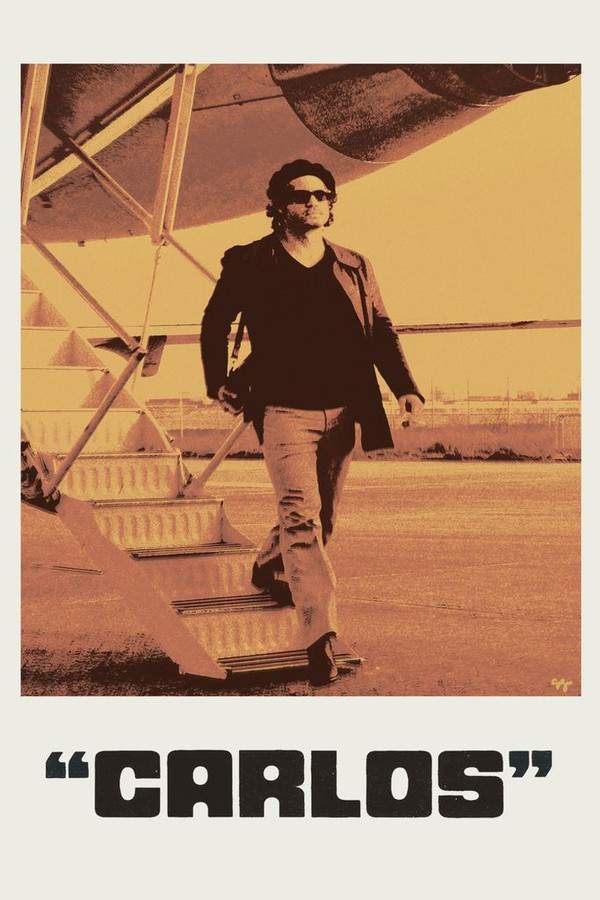
Carlos (2010) movie poster

Timeline

Carlos (2010) Timeline Explained – Every Event in Order

Release, runtime and language
2010 · 325 min · French
JustWatch #9,846 371
Directed by
Olivier Assayas
Budget
$18M

The story follows the transformation of Venezuelan Marxist Ilich Ramirez Sanchez into the infamous "Carlos the Jackal." He becomes a notorious operative, orchestrating daring operations across Europe, including the brazen kidnapping of OPEC oil ministers. As his reputation as a ruthless mercenary grows, he serves as a hired gun for various nations and organizations, leaving a trail of violence and intrigue on the world stage. His actions spark international attention and a global manhunt.

On this page (6)
  1. 1 Where to watch
  2. 2 Events in order (15)
  3. 3 Timeline questions answered
  4. 4 Movie threads
  5. 5 Movies like Carlos
  6. 6 Every angle

Where to watch

Where to Watch Carlos (2010)

Where can you watch Carlos? Stream, rent or buy it in the US: current JustWatch availability with up-to-date prices.

Streaming availability powered by JustWatch

15 events in order · contains spoilers

Carlos Timeline: Events in Chronological Order

Every key event of Carlos (2010) in order, scene by scene, with when and where it takes place. Use it to untangle flashbacks, time jumps and parallel storylines, to refresh your memory before the sequel or to find the exact scene you are thinking of.

  1. Ilich Ramírez Sánchez allies with Palestinians

    In 1973, Ilich Ramírez Sánchez, a Venezuelan exile, connects with Palestinian groups in Jordan. This alliance marks the beginning of his journey into a life of international terrorism.

    When
    1973
    Where
    Jordan
  2. Attacks in London

    Shortly after forming alliances, Ilich orchestrates a series of attacks in London, demonstrating his growing influence and operational capacity. These bold actions catch the attention of international law enforcement.

    Where
    London
  3. Relocation to Paris

    Following the violent acts in London, Ilich relocates to Paris where he ascends to a leadership position within the European branch of the Popular Front for the Liberation of Palestine. This move establishes Paris as a critical base for his operations.

    Where
    Paris
  4. Adoption of the alias 'Carlos'

    In a pivotal meeting with Michel Moukharbal, known as André, Ilich adopts the nom de guerre 'Carlos'. This new identity becomes synonymous with international terrorism during the 1970s and 1980s.

    Where
    Paris
  5. Hostage situation at the French Embassy

    Carlos plans a dramatic hostage-taking incident at the French Embassy in The Hague by collaborating with Japanese Red Army militants. This operation amplifies his notoriety as a master strategist in terrorism.

    Where
    The Hague
  6. André's arrest and subsequent decisions

    After André's arrest, Carlos finds himself increasingly scrutinized by the French domestic intelligence service, DST. In a desperate bid for survival, he shoots André along with three police officers to eliminate the threat.

    Where
    France
  7. Joining Wadie Haddad in Yemen

    Following the violent incident, Carlos flees to southern Yemen to work with Wadie Haddad, the head of PFLP. His focus shifts to orchestrating a daring mission to abduct oil ministers during an upcoming OPEC conference.

    Where
    Yemen
  8. Seizing OPEC headquarters

    On December 21, 1975, Carlos leads a well-coordinated attack on the OPEC headquarters, seizing control with a group of militants. This operation culminates in violent confrontations and establishes his legacy as a terrorist leader.

    When
    December 21, 1975
    Where
    Vienna
  9. Negotiations for ransom

    After taking hostages, Carlos manages negotiations that result in releasing them at Algiers airport in exchange for a significant ransom. Despite his success, he fails to meet Wadie Haddad's expectations, straining their alliance.

    Where
    Algiers
  10. Transition to mercenary activities

    As his relationship with Haddad deteriorates, Carlos transitions into a mercenary role, seeking opportunities in various global conflicts. He begins operations behind the Iron Curtain with the support of the East German Stasi.

    Where
    Budapest, East Berlin
  11. Collaboration and arms trafficking

    In Budapest, Carlos collaborates with individuals connected to revolutionary cells, notably Johannes Weinrich and his wife Magdalena. His activities expand to arms trafficking across Europe, solidifying his role in international terrorism.

    Where
    Budapest
  12. End of support from key patrons

    The fall of the Berlin Wall in November 1989 leads to a significant decline in Carlos's operations. Expelled from Syria and losing financial support, he finds himself increasingly isolated from the terrorist networks he once led.

    When
    November 1989
    Where
    Syria
  13. Deterioration of personal relationships

    Strained by the circumstances of his declining power, Carlos faces personal turmoil as Magdalena expresses her desire to leave him, influenced by offers from his mother to provide her a home in Venezuela. This turbulent period further complicates his life.

    Where
    Syria
  14. Capture in Sudan

    After years of evading capture, Carlos is eventually apprehended by the Sudanese authorities on August 14, 1994. This marks the end of his cat-and-mouse game with intelligence agencies and signals a new chapter in his life.

    When
    August 14, 1994
    Where
    Sudan
  15. Extradition to Paris

    Following his capture, Carlos is extradited back to Paris to face trial for his multitude of past crimes. His actions continue to reverberate in France, revealing the lasting impact of his notorious legacy.

    Where
    Paris

Last updated: November 04, 2024 at 01:11

Was this helpful?

Timeline questions answered

Carlos Timeline Explained: Your Questions Answered

When does it happen, and why in that order? The questions people ask about the chronology of Carlos (2010): time jumps, flashbacks, cause and effect between scenes and the correct order of events, each answered with spoilers.

Q1

Why did Carlos shoot André and three police officers?

Carlos shot André (Michel Moukharbal) to eliminate a potential Informant who could lead French intelligence to him after André was arrested. When the DST grew suspicious of Carlos's movements following André's arrest, Carlos made a desperate decision to silence André and escape, killing three police officers in the process. This brutal act forced him to flee France and join Wadie Haddad in Yemen.

Foreshadowing: André's earlier arrest by French authorities had already put Carlos on edge, as he knew the DST would likely trace connections back to him.

  • André arrest
  • Carlos escape
  • French DST
  • murder of handler
Q2

How did Carlos plan the OPEC headquarters seizure?

Carlos coordinated a sophisticated multi-national operation on December 21, 1975, assembling six militants from the German Revolutionary Cells and Palestinian fighters, including Anis Naccache. The group seized control of the OPEC headquarters in Vienna, taking ministers and delegates hostage during a scheduled conference. The operation required precise timing and coordination across multiple countries to execute successfully.

Foreshadowing: Carlos's earlier hostage operation at the French Embassy in The Hague demonstrated his capability for complex hostage-taking missions.

  • OPEC seizure 1975
  • Vienna
  • Anis Naccache
  • hostage operation
Q3

Why did Carlos become a mercenary after the OPEC operation?

Carlos became a mercenary because he failed to deliver on Wadie Haddad's expectations regarding the OPEC hostages, Haddad expected Carlos to bring the hostages to him, but Carlos released them in Algiers for a ransom instead. This breach of trust ended his relationship with the PFLP. With no official backing from any nation, Carlos began selling his services to the highest bidder, working with various governments and organizations across Europe and the Middle East.

Foreshadowing: The tension between Carlos and Haddad was evident during the negotiations, where Carlos prioritized personal gain over PFLP objectives.

  • Wadie Haddad
  • PFLP
  • mercenary
  • OPEC ransom
Q4

What happened to Carlos after the Berlin Wall fell?

After the Berlin Wall fell in November 1989, Carlos lost his key patrons and operational support systems almost overnight. Syria expelled him, and countries that once secretly employed his services no longer needed or wanted him. The collapse of the Soviet bloc eliminated the Cold War dynamics that had made him valuable to various governments. His network of support crumbled, leaving him isolated and unable to operate effectively.

Foreshadowing: The mini-series establishes early that Carlos relied heavily on backing from Cold War actors like Syria and East Germany.

  • Berlin Wall 1989
  • Syria expulsion
  • Cold War
  • decline operations
Q5

Why did Magdalena leave Carlos?

Magdalena decided to leave Carlos because she was offered a home in Venezuela by his mother, which represented a chance for a normal life away from terrorism. Additionally, Magdalena had become disillusioned by Carlos's persistent infidelities throughout their relationship. Her departure marked another major loss in Carlos's life, following the collapse of his professional empire.

Foreshadowing: Earlier scenes show Magdalena's growing frustration with Carlos's lifestyle and his repeated betrayals.

  • Magdalena Kopp
  • Venenezuela
  • relationship breakdown
Q6

Where and when was Carlos finally captured?

Carlos was captured in Sudan on August 14, 1994, after years of living under various aliases. The Sudanese authorities, responding to international pressure, arrested him and subsequently extradited him back to Paris to face trial for his past crimes. His capture marked the end of over two decades as one of the world's most wanted terrorists.

Foreshadowing: The series shows Carlos's increasingly desperate situation as one country after another refused to accept him.

  • Sudan capture 1994
  • extradition Paris
  • arrest
Q7

Why couldn't Carlos find refuge in any country?

After the OPEC operation, Carlos struggled to find permanent refuge because countries feared international backlash if they harbored a notorious terrorist. Algeria, Tunisia, and Libya initially refused him asylum, and Iraq couldn't accommodate his plane. Even later in his career, when he sought refuge in Syria, he was eventually expelled. Only Sudan initially accepted him, but that too proved temporary.

Foreshadowing: The OPEC kidnapping made Carlos a diplomatic liability that no country wanted to publicly support.

  • asylum refusal
  • Algeria
  • Libya
  • Syria
  • international manhunt
Q8

What was Carlos's relationship with the East German Stasi?

The East German Stasi provided Carlos with support and sanctuary, allowing him to operate from Budapest and East Berlin. This arrangement benefited both parties, the Stasi used Carlos's terrorist network and expertise for their own geopolitical purposes, while Carlos gained a base of operations behind the Iron Curtain. He collaborated with former Revolutionary Cells members like Johannes Weinrich, expanding his arms trafficking network across Europe.

Foreshadowing: Carlos's operations increasingly shifted eastward as Western European countries became less tolerant of his presence.

  • Stasi
  • East Germany
  • Budapest
  • terrorist network
Q9

Why did Carlos release the OPEC hostages at Algiers airport?

Carlos released the hostages at Algiers airport in exchange for a substantial ransom, which he kept for himself rather than delivering to his PFLP commander Wadie Haddad. This decision ultimately cost him his partnership with Haddad, as it violated their agreement. The release occurred because Carlos could not find a country willing to accept him with the hostages, forcing him to negotiate their freedom.

Foreshadowing: Carlos's greed and desire for personal wealth was established early as a defining character trait.

  • Algiers airport
  • hostage release
  • ransom payment
Q10

How did Ilich Ramírez Sánchez get the name Carlos the Jackal?

Ilich Ramírez Sánchez adopted the nom de guerre 'Carlos' during a pivotal meeting with Michel Moukharbal (known as André) in Paris, when he was appointed to lead the European branch of the PFLP. The surname 'the Jackal' was later added by the media, likely referencing his cunning and predatory approach to terrorism. The name became synonymous with international terrorism during the 1970s and 1980s.

Foreshadowing: The series establishes that Carlos carefully chose his terrorist identity to build a legendary reputation.

  • Ilich Ramirez Sanchez
  • nom de guerre
  • media nickname
  • origin

Movie threads

More Movies Like Carlos, by Mood & Story

Curated lists built around what makes Carlos tick: the same mood, the same kind of story or the same emotional payoff. Each list explains why these movies belong together.

Global Espionage and Political Thrillers like Carlos

High-stakes international conspiracies and covert operations that span continents. If you enjoyed the global scale and political intrigue of Carlos, explore more movies like it. This section features similar high-stakes thrillers about covert operations, international conspiracies, and the ruthless individuals who shape world events from the shadows.

  • thrilling
  • methodical
  • paranoid
  • oppressive
  • cynical
  • tense
  • Tone: dark, tense, cynical
  • Pacing: fast, relentless
Why these movies?

The story pattern: Stories in this thread typically follow operatives, terrorists, or spies as they execute complex plans across multiple countries. The narrative is driven by political agendas, shifting alliances, and the constant threat of exposure or capture, creating a tense and intricate web of cause and effect on a global stage.

Why they belong together: These films are grouped by their shared focus on international scale, political motivations, and the mechanics of covert actions. They deliver a similar experience of high tension, complex plotting, and a cynical look at the realities of power and violence in a global context.
Ruthless Rise and Fall Stories like Carlos

Charts the ambitious ascent and inevitable moral decay of a complex, dangerous figure. Fascinated by the complex character arc in Carlos? Discover more movies with similar antihero journeys. These films explore the ambitious rise and bleak downfall of powerful, morally ambiguous figures, offering a deep dive into their psychology and the cost of their actions.

  • cynical
  • desperate
  • isolating
  • methodical
  • oppressive
  • thrilling
  • Tone: dark, bleak, cynical
  • Pacing: variable, epic scope
Why these movies?

The story pattern: The narrative pattern follows a protagonist's transformation, showcasing their initial drive and success, which is often built on ruthlessness or ideological fervor. This is followed by a gradual or sudden decline, marked by betrayal, loss of power, and a bleak reckoning, emphasizing the corrosive nature of their path.

Why they belong together: These films are united by a specific character arc: the compelling but tragic journey of an antihero. They share a dark tone, heavy emotional weight, and a focus on the psychological and narrative inevitability of a fall from grace, creating a cohesive experience of tragic ambition.

If you liked this

Movies Like Carlos

Similar movies to Carlos: the same genre, themes or kind of story. Each one comes with its own plot summary, timeline and ending explained.

Browse all movie summaries

Every angle

Carlos (2010) Explained: Plot, Timeline & Characters

Everything about Carlos in one place: what happens in the plot summary, the timeline in chronological order, the characters and meaning and a spoiler-free summary. What's After the Movie adds the cast, box office and post-credit scenes.

Coming soon on iOS and Android

The Plot Explained Movie Summary App

Plot summaries, endings explained and timelines on your phone. Catch up on any movie in minutes, save your favorites and never miss a twist again.

Be the first to know when we launch. Your email stays private, always.

Learn more about the app