Plot Explained Spoilers guaranteed!
Plot Explained

Browse by genre

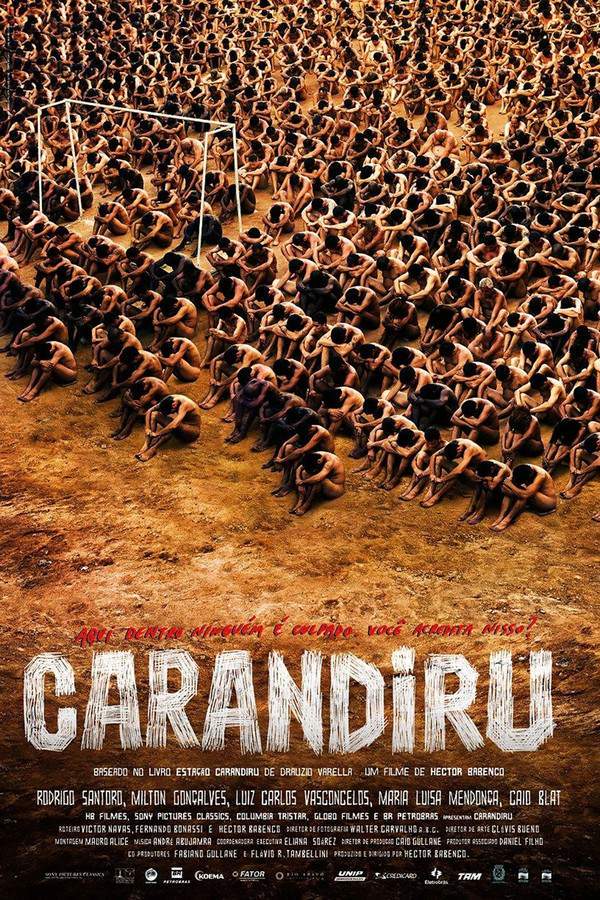
Carandiru (2004) movie poster

Timeline

Carandiru (2004) Timeline Explained – Every Event in Order

Release, runtime and language
2004 · 145 min · Portuguese
Loading streaming availability…
Directed by
Hector Babenco
Starring
Wagner Moura, Caio Blat

Within the walls of Carandiru Penitentiary, Brazil’s largest and most infamous prison, a dedicated doctor witnesses the harsh realities of incarcerated life. He spends his days listening to the inmates, hearing their individual stories of hardship, hope, and the struggle to survive within a system of chaos and despair. The film explores the complex relationships between prisoners and staff, and the psychological toll of life behind bars.

On this page (6)
  1. 1 Where to watch
  2. 2 Events in order (12)
  3. 3 Timeline questions answered
  4. 4 Movie threads
  5. 5 Movies like Carandiru
  6. 6 Every angle
Loading streaming availability…

12 events in order · contains spoilers

Carandiru Timeline: Events in Chronological Order

Every key event of Carandiru (2004) in order, scene by scene, with when and where it takes place. Use it to untangle flashbacks, time jumps and parallel storylines, to refresh your memory before the sequel or to find the exact scene you are thinking of.

  1. Dr. Varella arrives to Carandiru for HIV testing

    Dr. Varella enters Carandiru Penitentiary and begins his HIV testing with inmates, serving as a narrative guide through the prisoners' lives. He listens to their stories while presenting medical aims, shaping the humanized view of those inside. The event sets the tonal frame for the film, separating the doctor as observer from the inmates' own voices.

    Where
    Carandiru Penitentiary, São Paulo
  2. Inhumane cell conditions and lack of control

    The film shows 100-square-foot cells housing up to 16 inmates, illustrating extreme overcrowding. Guards have little control, leaving order to the prisoners themselves. The setting emphasizes the volatility that drives the inmates' stories.

    Where
    Carandiru Penitentiary
  3. Prisoners take control of order

    With institutional control weak, prisoners manage daily life, discipline, and protection networks inside the yard. This dynamic fuels corruption, violence, and drug use as the only available means to survive. The scene foreshadows later escalation to the riot.

    Where
    Carandiru
  4. Lady Di and No Way's relationship

    The film tracks the relationship between Lady Di, a trans woman inmate, and No Way, highlighting personal loyalty, love, and the precariousness of life inside the prison. Their marriage symbolizes fragile humanity amid desperation and danger. Their story serves to humanize inmates beyond crime labels.

    Where
    Carandiru
  5. Deusdete and Zico's family dynamic

    Deusdete and Zico's family tensions unfold with visits and conversations that reveal the impact of incarceration on family bonds. The inmates' attempts to support and reconnect with relatives underscore the personal costs of prison life. Their storyline adds emotional texture to the overall tapestry.

    Where
    Carandiru
  6. Ezequiel and Zico's crack addiction

    Ezequiel and Zico struggle with crack addiction, showing how drugs permeate the prison system and exacerbate violence and instability. Their addiction drives dangerous choices and fuels the atmosphere of danger around them. The scenes emphasize the dehumanizing cycle of addiction and confinement.

    Where
    Carandiru
  7. Majestade's affairs

    Majestade's romantic entanglements expose personal hunger and vulnerability behind bars. The storyline demonstrates how relationships can provide both solace and risk within the prison's brutal environment. It adds another layer to the inmates' shared humanity.

    Where
    Carandiru
  8. HIV testing reveals deeper truths

    As Varella administers HIV tests, the inmates reveal fears, histories, and hopes, turning the medical procedure into a window into their lives. The testing becomes a catalyst for listening to the inmates' voices. This intersection of medicine and storytelling shapes the film's core message.

    Where
    Carandiru
  9. Tensions escalate toward riot

    The overcrowded, uncontrolled environment gradually reaches a tipping point as tensions rise among inmates and with the guards. Small conflicts escalate into widespread violence, setting the stage for a mass confrontation. The film builds toward the climactic outbreak.

    Where
    Carandiru
  10. Carandiru Massacre

    A brutal riot culminates in the Carandiru Massacre, with state forces dispersing inmates through force and resulting in many deaths. The event reveals the real consequences of neglect and mismanagement. The moment stands as the film's stark critique of the prison system.

    Where
    Carandiru Penitentiary, São Paulo
  11. Aftermath and demolition

    Following the massacre, the film shows real footage of Carandiru's demolition, offering catharsis by contrasting destruction with the inmates' stories. The closing montage emphasizes the human cost and the erasure of a brutal institution. The ending invites reflection on memory and justice.

    Where
    Carandiru, São Paulo
  12. Dr. Varella's closing perspective

    The doctor reflects on the inmates as individuals with voices that deserve to be heard, challenging viewers to see beyond crime. The narrative frame reaffirms his role as a filter who lets others speak while he remains an observer. The ending underscores the film's compassionate stance.

    Where
    Carandiru

Last updated: February 17, 2026 at 19:57

Was this helpful?

Timeline questions answered

Carandiru Timeline Explained: Your Questions Answered

When does it happen, and why in that order? The questions people ask about the chronology of Carandiru (2004): time jumps, flashbacks, cause and effect between scenes and the correct order of events, each answered with spoilers.

Q1

Why does Dr. Varella come to Carandiru Penitentiary?

Dr. Drauzio Varella arrives at Carandiru to conduct HIV testing among inmates. His medical work serves as the narrative entry point, allowing him to interact with prisoners and listen to their personal stories. Rather than being a central protagonist, he functions as a window through which the audience hears the inmates' voices, creating a unique documentary-like framing device for the film.

Foreshadowing: His initial HIV testing work is introduced early, foreshadowing the medical and disease-related themes that run throughout the prison's tragic narrative.

  • dr varella
  • carandiru
  • hiv testing
  • doctor
  • prison
  • medical
Q2

How do prisoners maintain order when guards have little control?

With minimal guard oversight, inmates essentially govern themselves through informal hierarchies and power structures within each cellblock. Prisoners establish their own rules, discipline, and protection networks. This self-governance creates a volatile environment where violence, drug trade, and corruption become the primary means of maintaining power and survival.

Foreshadowing: Early scenes showing the breakdown of institutional control directly foreshadow the escalating tensions that eventually lead to the riot.

  • prisoners
  • guards
  • order
  • control
  • self-governance
  • power
  • hierarchy
Q3

What triggers the riot at Carandiru?

The riot erupts from the cumulative effect of extreme overcrowding, rising tensions between inmate factions, and the pervasive atmosphere of neglect and desperation. As conflicts between prisoners escalate and small confrontations spiral out of control, the powder keg of frustration and violence finally ignites into a full-scale uprising.

Foreshadowing: The gradual buildup of tensions throughout the film, shown through escalating conflicts and the breakdown of informal prisoner hierarchies, foreshadows the eventual outbreak.

  • riot
  • carandiru massacre
  • prison uprising
  • tension
  • escalation
  • violence
Q4

What happens during the Carandiru Massacre?

The Carandiru Massacre is the film's devastating climax where state forces violently disperse the rioting inmates, resulting in numerous deaths. The event represents the catastrophic failure of the prison system and the brutal response of authorities to restore order. It stands as the film's stark critique of systemic neglect and the human cost of overcrowded, understaffed prisons.

Foreshadowing: The mounting tensions and deteriorating conditions throughout the film build inexorably toward this tragic confrontation.

  • carandiru massacre
  • deaths
  • police
  • prisons
  • slaughter
  • violence
Q5

Why is Lady Di important to the story?

Lady Di is a trans woman inmate whose relationship with fellow prisoner No Way provides one of the film's most intimate human stories. Their marriage symbolizes fragile love and loyalty amidst desperation. Through their relationship, the film humanizes inmates beyond their crimes, showing their capacity for genuine connection and emotional depth despite the brutal prison environment.

Foreshadowing: Their relationship is introduced early and serves as an emotional anchor that contrasts with the surrounding violence and dehumanization.

  • lady di
  • no way
  • transgender
  • prison relationship
  • love
  • marriage
Q6

Why do Ezequiel and Zico struggle with crack addiction?

Ezequiel and Zico's crack addiction illustrates how drug use permeates the prison system, driving dangerous behavior and exacerbating the already volatile environment. Their addiction creates a dehumanizing cycle where prisoners become trapped in destructive patterns, leading to violent choices and further instability. The film uses their struggles to show how substance abuse compounds the challenges of incarceration.

Foreshadowing: Their addiction storylines appear early and recur throughout, contributing to the sense of mounting desperation and unsafe conditions.

  • ezequiel
  • zico
  • crack addiction
  • drugs
  • prison
  • substance abuse
Q7

Why does the film show real footage of Carandiru's demolition?

The closing sequence shows actual footage of Carandiru Penitentiary being demolished after the massacre, providing a haunting sense of closure. This documentary coda contrasts the dramatized inmate stories with real-world consequences, inviting reflection on memory, accountability, and the lasting impact of the prison system. It transforms the personal narratives into a broader commentary on systemic failure and justice.

Foreshadowing: The film's steady build toward the massacre and its aftermath prepares viewers for this powerful, real-world conclusion.

  • demolition
  • carandiru
  • ending
  • real footage
  • closure
  • memorial
Q8

How does overcrowding affect life inside Carandiru?

Each 100-square-foot cell in Carandiru houses up to sixteen prisoners, creating inhumane conditions where disease spreads rapidly and personal space is nonexistent. The extreme overcrowding strains already weak institutional control, forcing prisoners into self-governance that fuels violence and corruption. This environment makes survival itself a daily challenge and directly contributes to the tensions that ultimately explode into violence.

Foreshadowing: The conditions are established early and repeatedly referenced, showing how systemic neglect creates the powder keg that leads to tragedy.

  • overcrowding
  • cells
  • prison conditions
  • disease
  • spread
  • hygiene
Q9

What is Dr. Varella's role in the narrative?

Dr. Varella serves as a narrative filter rather than a traditional protagonist. He observes and documents while remaining somewhat detached from the events he witnesses. This storytelling choice allows the inmates to speak for themselves, giving voice to their experiences in their own terms. His perspective challenges viewers to see prisoners as individuals with stories, regrets, and humanity rather than simply criminals.

Foreshadowing: His presence is established from the first scene and frames the entire film as a collection of inmate testimonies filtered through his medical work.

  • dr varella
  • narrator
  • observer
  • perspective
  • filter
  • doctor
Q10

Why are the inmate relationships significant to the film's message?

The interwoven stories of relationships like Lady Di and No Way, or Deusdete and Zico's family dynamics, humanize prisoners by showing their capacity for love, loyalty, and regret. These personal connections underscore that inmates are people with complex emotional lives, not merely statistics of the criminal justice system. The film uses these relationships to challenge viewers' perceptions and emphasize the human cost of mass incarceration.

Foreshadowing: Relationship stories are woven throughout the film, building emotional investment that makes the eventual tragedy more impactful.

  • relationships
  • love
  • family
  • inmates
  • humanity
  • connections
Q11

What message does the film make about the prison system?

Carandiru presents a stark critique of a system where overcrowding, neglect, and the transfer of control from guards to prisoners create uncontrollable violence. The film shows how institutional failure leads to tragedy, with the massacre representing the ultimate consequence of systemic neglect. The humanized portrayal of inmates suggests that accountability and reform are necessary to prevent similar tragedies.

Foreshadowing: The gradual deterioration of order and the mounting failures of the prison system foreshadow the catastrophic outcome.

  • prison system
  • critique
  • overcrowding
  • neglect
  • failure
  • accountability

Movie threads

More Movies Like Carandiru, by Mood & Story

Curated lists built around what makes Carandiru tick: the same mood, the same kind of story or the same emotional payoff. Each list explains why these movies belong together.

Movies about institutional despair like Carandiru

Stories exposing the crushing weight and human toll of broken systems. If you were gripped by the bleak portrayal of Carandiru Penitentiary, explore other movies like it that delve into systemic failure and the human cost of oppressive institutions. These similar dramas and crime stories share a heavy emotional weight and tragic tone.

  • bleak
  • despairing
  • sobering
  • gritty
  • tragic
  • claustrophobic
  • Tone: bleak, despairing
  • Pacing: steady, episodic
Why these movies?

The story pattern: Narratives in this thread often use an observational or ensemble approach, depicting the daily brutalit and small acts of survival within a flawed or cruel system. The storylines typically build a sense of claustrophobic inevitability, leading to a climax that underscores the system's destructive power, often with a profoundly sad or bleak conclusion.

Why they belong together: These films are grouped together because they share a core focus on the dehumanizing nature of large-scale systems. They create a similar viewing experience through their high intensity, heavy emotional weight, bleak tone, and sobering examination of themes like injustice and survival against overwhelming odds.

Sobering ensemble dramas with tragic endings like Carandiru

Episodic stories weaving together multiple lives headed toward a grim fate. Viewers who appreciated the episodic storytelling and tragic culmination of Carandiru will find more movies like it here. These films use an ensemble cast to explore difficult themes, leading to a sobering and emotionally heavy conclusion.

  • tragic
  • sobering
  • melancholic
  • gritty
  • despairing
  • ensemble
  • Tone: tragic, melancholic, sobering
  • Pacing: steady, character-driven
Why these movies?

The story pattern: The narrative pattern involves introducing a diverse set of characters within a specific, often confined, setting. Their individual backstories and daily struggles are interwoven, creating a rich tapestry of human experience. The audience is aware of or gradually learns of the impending disaster, making the character-building moments feel poignant and fateful, culminating in the tragic event.

Why they belong together: These movies share a specific storytelling approach: a steady, character-driven pace, a mix of personal vignettes that build towards a collective tragedy, and a resulting feeling of melancholic inevitability. The connection is based on narrative structure, tonal bleakness, and the heavy emotional impact of the conclusion.

If you liked this

Movies Like Carandiru

Similar movies to Carandiru: the same genre, themes or kind of story. Each one comes with its own plot summary, timeline and ending explained.

Browse all movie summaries

Every angle

Carandiru (2004) Explained: Plot, Timeline & Characters

Everything about Carandiru in one place: what happens in the plot summary, the timeline in chronological order, the characters and meaning and a spoiler-free summary. What's After the Movie adds the cast, box office and post-credit scenes.

Coming soon on iOS and Android

The Plot Explained Movie Summary App

Plot summaries, endings explained and timelines on your phone. Catch up on any movie in minutes, save your favorites and never miss a twist again.

Be the first to know when we launch. Your email stays private, always.

Learn more about the app