Plot Explained Spoilers guaranteed!
Plot Explained

Browse by genre

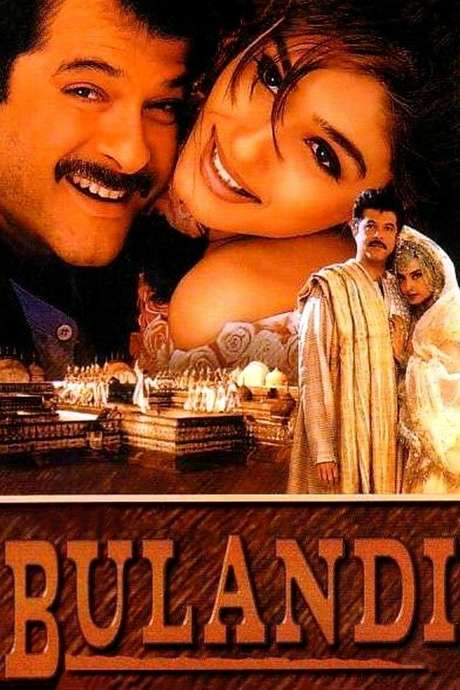
Bulandi (2000) movie poster

Timeline

Bulandi (2000) Timeline Explained – Every Event in Order

Release, runtime and language
2000 · 175 mins · Hindi
Loading streaming availability…
Directed by
Rama Rao Tatineni
Starring
Anil Kapoor, Paresh Rawal, Kulbhushan Kharbanda, Aruna Irani, Shakti Kapoor, Rekha

A noble family presides over a small town in India.

On this page (5)
  1. 1 Where to watch
  2. 2 Events in order (14)
  3. 3 Timeline questions answered
  4. 4 Movie threads
  5. 5 Every angle
Loading streaming availability…

14 events in order · contains spoilers

Bulandi Timeline: Events in Chronological Order

Every key event of Bulandi (2000) in order, scene by scene, with when and where it takes place. Use it to untangle flashbacks, time jumps and parallel storylines, to refresh your memory before the sequel or to find the exact scene you are thinking of.

  1. Dada Thakur assumes village leadership

    After the death of Gajraj Thakur, Dharamraj 'Dada' Thakur becomes the head of the village and his word is treated as law. He leads alongside his wife Lakshmi and his brothers Arjun and Nakul, weaving duty into daily life. The family relies on his authority to maintain order and tradition.

    When
    Present
    Where
    Village / Thakur household
  2. Arjun marries Meena

    Arjun marries a city girl, Meena, which introduces tension as she adjusts to village customs. At first she resents Dharamraj's subservience to his elder brother, feeling it limits her husband's independence. The uneasy alliance foreshadows the conflict to come.

    When
    Present
    Where
    Village
  3. Meena's changed perception of Dada

    Meena initially resents Dharamraj's control, but she learns that his actions protected her father’s interests. Her attitude shifts from resentment to cautious respect as she understands the reason behind his authority. This change deepens the household's tensions around duty and loyalty.

    When
    Present
    Where
    Village
  4. Arjun is wrongly accused of raping a schoolteacher

    A serious accusation is laid against Arjun, and the village waits for Dada's verdict. The pending decision tests the limits of power, honor, and justice within the family. The outcome sets the stage for years of conflict and upheaval.

    When
    Present
    Where
    Village / school area
  5. Gajraj Thakur's flashback and the fateful verdict

    In a pivotal flashback, Gajraj Thakur orders Jagannath to marry the village woman he had raped. Ranjit Singh shoots him in disappointment, and Gajraj declares that the family will be abandoned for 18 years, forbidding water or aid to visiting relatives. He dies at the moment he utters that final verdict, foreshadowing a curse that will shape future events.

    When
    Flashback
    Where
    Village / Thakur household (flashback)
  6. Jagannath's envy and plan to recruit a teacher

    Jagannath becomes envious of his uncle's family and hatches a revenge plot. He engineers the arrival of a local schoolteacher, instructing her to win Arjun's heart, hoping to drive a wedge between him and Meena. This scheming plants seeds of tragedy as trust begins to fracture.

    When
    Flashback
    Where
    Village school
  7. Arjun resists manipulation; the teacher is killed

    Arjun resists the teacher's manipulations and refuses to betray Meena. In retaliation, Jagannath has the teacher killed and convinces the villagers she died by Arjun's actions. The false suicide narrative cements the rift and escalates the family crisis.

    When
    Flashback
    Where
    Village / school
  8. Dharamraj condemns exile for his brother's family

    Following the tragedy, Dharamraj orders exile for his brother's family for 10 years, a decision that widens the rift within the Thakur clan. The exile deprives them of contact and intensifies Jagannath's scheming from afar. This punishment will later haunt Dharamraj when truth comes to light.

    When
    Present
    Where
    Village hall
  9. Jagannath targets Nakul; Arjun intervenes

    Jagannath learns of Nakul's love for his sister-in-law and mobilizes goons to eliminate him. Arjun steps in to rescue Nakul, defending his brother and challenging Jagannath's grip on the village. The confrontation marks a turning point as danger closes in.

    When
    Present
    Where
    Village outskirts
  10. Meena gives birth at the festival

    At the village's annual festival, Meena's water breaks and she gives birth to a child. Arjun fights to protect his family amid the chaos and competing loyalties. The birth lends a note of renewal amid a saga of treachery.

    When
    During festival
    Where
    Village festival
  11. Dharamraj duels Jagannath

    Dharamraj confronts Jagannath in a duel that embodies the clash between justice and revenge. The fight tests his resolve and forces him to confront the consequences of his earlier verdict. It culminates in a moment that redefines the family’s fate.

    When
    After birth
    Where
    Duel site in village
  12. Aunt Manorama kills Jagannath and reveals truth

    Aunt Manorama rushes to Dharamraj and kills Jagannath, ending the immediate threat. She then reveals that Jagannath alone committed the crimes wrongly laid on Arjun, and shares the truth about the past. The revelation shakes Dharamraj to his core and anchors the tragedy in truth.

    When
    After duel
    Where
    Dharamraj's home / village square
  13. Dharamraj realizes his wrong verdict; dies

    Shocked by the truth, Dharamraj recalls his father's warning: whenever we give a wrong verdict, we die. He dies at that moment, paying for an earlier misjudgment. The patriarch's death signals the end of an era and the weight of guilt settles on Arjun.

    When
    Immediately after truth reveal
    Where
    Thakur home
  14. Arjun takes the ancestral throne

    With the patriarch gone and the truth uncovered, Arjun ascends the ancestral throne. He inherits the responsibility to govern justly and preserve the family’s traditions. The cycle of authority continues into the next generation.

    When
    After Dharamraj's death
    Where
    Ancestral home

Last updated: October 09, 2025 at 15:31

Was this helpful?

Timeline questions answered

Bulandi Timeline Explained: Your Questions Answered

When does it happen, and why in that order? The questions people ask about the chronology of Bulandi (2000): time jumps, flashbacks, cause and effect between scenes and the correct order of events, each answered with spoilers.

Q1

Why does Dada exile Arjun and his family?

Dada exiles Arjun's family for ten years after being deceived by Jagannath's scheme. Jagannath had arranged for a teacher to seduce Arjun, and when Arjun refused to betray Meena, Jagannath killed the teacher and made it appear as though Arjun was responsible for her suicide. Believing the false narrative, Dada imposed the harsh exile punishment on his innocent brother, believing justice had been served.

Foreshadowing: Earlier, Dada's father Ghajraj had warned that giving a wrong verdict would lead to his death, foreshadowing the tragic consequence of Dada's misjudgment.

  • exile
  • dada
  • arjun
  • false accusation
  • punishment
  • jagannath scheme
Q2

What is Jagannath's history with the Thakur family?

Jagannath is the nephew of Ghajraj Thakur (Dada's father). Years earlier, Ghajraj had ordered Jagannath to marry a village woman he had raped, a harsh verdict that outraged Jagannath's father Ranjit Singh. In retaliation, Ranjit shot Ghajraj, who died delivering a final warning: that wrong verdicts would lead to the judge's death. Seething with envy and resentment, Jagannath waited years for an opportunity to destroy his uncle's family from within.

Foreshadowing: The flashback sequence showing Ghajraj's verdict and death establishes the curse that will later claim his son Dada.

  • jagannath
  • revenge
  • ghajraj
  • thakur family
  • past feud
  • nephew
Q3

How did Jagannath frame Arjun for the teacher's death?

Jagannath orchestrated the teacher's arrival at the village school with instructions to captivate Arjun and destroy his marriage. When Arjun refused to betray Meena, Jagannath killed the teacher and staged the scene to make it appear she died by her own hand due to Arjun's rejection. This false narrative convinced the village and Dada that Arjun was responsible, setting up the wrongful exile.

Foreshadowing: Jagannath's earlier recruitment of the teacher plants the seeds for his frame job.

  • jagannath
  • frame
  • arjun
  • teacher
  • manipulation
  • exile
Q4

Why does Dada die after learning the truth?

Dada dies because he realizes his fatal error in judging Arjun. When Aunt Manorama reveals that Jagannath alone committed all the crimes attributed to Arjun, Dada recalls his father's dying warning: that whenever a wrong verdict is given, the moment of that error is the moment of the judge's own death. The shock and guilt of condemning his innocent brother proves too much for his heart, and he dies on the spot.

Foreshadowing: Ghajraj's warning about wrong verdicts being fatal echoes through both generations.

  • dada
  • death
  • truth
  • wrong verdict
  • realization
  • guilt
  • ghajraj warning
Q5

Why does Meena's opinion of Dada change?

Meena initially resents Dada's control over Arjun, viewing it as keeping her husband tied to family duty rather than allowing independence. However, she later learns that Dada had once helped her father in business, protecting and supporting him when needed. This revelation shows Meena that Dada's authority stems from loyalty and protection rather than mere domination, shifting her resentment into respect.

Foreshadowing: Meena's changing perception reflects the broader theme of understanding true motivations behind family authority.

  • meena
  • dada
  • respect
  • changed opinion
  • loyalty
  • protection
  • father business
Q6

What does Ghajraj's dying warning mean?

Before dying, Ghajraj Thakur declares that whenever a wrong verdict is delivered, the judge will die at that exact moment. This warning stems from his own experience: he gave what he believed was a just verdict ordering Jagannath to marry the woman he raped, only to be shot by Jagannath's father in response. The curse manifests twice, first killing Ghajraj when he delivers the verdict, then killing Dada when he realizes his own wrong verdict against Arjun.

Foreshadowing: The curse directly causes both Ghajraj's and Dada's deaths, linking generations through tragic justice.

  • ghajraj
  • curse
  • wrong verdict
  • death
  • warning
  • judge
Q7

What role does Aunt Manorama play in the climax?

Aunt Manorama intervenes during Dada and Jagannath's duel, killing Jagannath and ending his reign of terror. She then reveals the hidden truth: Jagannath alone committed the crimes falsely attributed to Arjun, including orchestrating the teacher's seduction and murdering her when the plan failed. Her revelation exposes the years of deception and forces Dada to confront the consequences of his wrongful judgment.

Foreshadowing: Manorama's knowledge of the truth has been hidden until this decisive moment.

  • manorama
  • aunt
  • kills jagannath
  • reveals truth
  • climax
  • intervention
Q8

What happens to Arjun after Dada's death?

After Dada dies from the shock of his realized mistake, Arjun ascends to the ancestral throne and assumes leadership of the Thakur family. He becomes the new protector and custodian of the family's traditions, stepping into the role Dada once held. This marks the completion of his journey from exiled brother to rightful heir, though the victory is bittersweet given the cost.

Foreshadowing: Arjun's exile and eventual return mirror the family's cyclical pattern of loss and renewal.

  • arjun
  • leadership
  • throne
  • ancestral
  • becomes head
  • family tradition
Q9

When does Meena give birth and how does it affect the story?

Meena goes into labor during the village's annual festival while Arjun is fighting to protect Nakul from Jagannath's goons. Her childbirth during the chaos represents new life entering the world amid violence and conflict. The birth adds a note of renewal and hope to the story, symbolically contrasting the family's cycle of vengeance with the continuation of the family line.

Foreshadowing: The birth occurs at the peak of confrontation, symbolizing hope emerging from turmoil.

  • meena
  • birth
  • festival
  • labor
  • child
  • family continuation
Q10

Why does Jagannath target Nakul?

Jagannath learns that his niece (the woman Nakul loves) has affection for Nakul, and he uses this as another weapon in his vendetta. He mobilizes goons to eliminate Nakul, viewing him as a weak link in the Thakur family. This act forces Arjun to rush to his younger brother's defense, escalating the conflict and bringing the long-simmering feud to its breaking point.

Foreshadowing: Jagannath's pattern of targeting family members reveals his systematic approach to destruction.

  • nakul
  • jagannath
  • attack
  • target
  • goons
  • danger
Q11

Why does a new teacher arrive in the village?

The teacher is brought to the village by Jagannath as part of his revenge scheme against the Thakur family. Jagannath instructs her to win Arjun's heart and drive a wedge between him and Meena, hoping to destroy Arjun's marriage and reputation. The entire recruitment is a calculated move to orchestrate the Thakur family's downfall from within.

Foreshadowing: The teacher's arrival marks the beginning of Jagannath's elaborate plot.

  • teacher
  • jagannath
  • manipulation
  • arjun
  • meena
  • seduction plot
Q12

What happens in the duel between Dada and Jagannath?

Dada confronts Jagannath in a fierce duel that represents the clash between justice and revenge. The fight tests Dada's resolve and forces him to physically battle the man who has tormented his family. The duel remains unresolved until Aunt Manorama arrives and delivers the fatal blow to Jagannath, ending the confrontation and revealing the truth.

Foreshadowing: The duel represents the culmination of generations of family conflict.

  • duel
  • fight
  • dada
  • jagannath
  • confrontation
  • battle
Q13

How does leadership pass between Thakur generations?

Leadership of the Thakur family and village passes from Ghajraj to Dada after Ghajraj's death, then to Arjun after Dada's death. Each transition is marked by tragedy, Ghajraj is killed over his verdict, Dada dies from the guilt of his wrong judgment. The film suggests this cycle of authority is intertwined with the burden of justice and the cost of misjudgment.

Foreshadowing: The patriarchal succession is cursed by the theme of wrongful verdicts.

  • leadership
  • succession
  • patriarch
  • thakur
  • family head
  • tradition

Movie threads

More Movies Like Bulandi, by Mood & Story

Curated lists built around what makes Bulandi tick: the same mood, the same kind of story or the same emotional payoff. Each list explains why these movies belong together.

Dramas about family honor and tragic legacies like Bulandi

Stories where a family's honor and moral authority lead to tragic downfall. If you liked the heavy drama and moral burden in Bulandi, explore more movies like it. These films feature powerful, honor-bound families where patriarchal authority leads to tragic mistakes, bitter betrayals, and a somber exploration of legacy and duty.

  • dramatic
  • somber
  • tragic
  • tense
  • honor-bound
  • oppressive
  • Tone: dark, dramatic, tragic
  • Pacing: steady, methodical
Why these movies?

The story pattern: These narratives typically follow a family, often led by a powerful figure, whose strict moral or cultural codes create intense internal and external conflict. A single misstep, false accusation, or stubborn judgment sets off an irreversible tragedy, forcing characters to confront the flaws in their own system of authority, often with bittersweet or bleak results.

Why they belong together: Movies are grouped here for their shared focus on patriarchal authority, the heavy burden of family honor, and the tragic outcomes born from moral certainty. They deliver a similar experience of dramatic tension, somber mood, and profound emotional weight centered on family dynamics.

Movies with heavy moral dilemmas and tense consequences like Bulandi

Slow-burn tension from a fatal moral error and its irreversible consequences. Viewers seeking the tense, anxiety-inducing experience of Bulandi will find similar movies here. These films focus on protagonists making a catastrophic moral choice, leading to a steady build of dramatic tension and a bittersweet resolution steeped in irreversible loss.

  • tense
  • oppressive
  • dramatic
  • tragic
  • anxious
  • moral burden
  • Tone: dark, tense, bittersweet
  • Pacing: steady, methodical build
Why these movies?

The story pattern: The narrative pattern involves a central, well-intentioned but flawed character making a definitive and wrong moral judgment. The pacing is steady, building a sense of dread as the consequences of this error unfold. The climax brings a revelation of truth, but the ending is fundamentally bittersweet, emphasizing the cost of the initial mistake rather than a clean victory.

Why they belong together: These films are united by their exploration of moral burdens, the anxiety of irreversible mistakes, and the specific emotional arc from error to a truth that comes too late. They share a dark tone, high dramatic intensity, and a pacing that makes the tragic outcome feel inevitable.

Every angle

Bulandi (2000) Explained: Plot, Timeline & Characters

Everything about Bulandi in one place: what happens in the plot summary, the timeline in chronological order, the characters and meaning and a spoiler-free summary. What's After the Movie adds the cast, box office and post-credit scenes.

Coming soon on iOS and Android

The Plot Explained Movie Summary App

Plot summaries, endings explained and timelines on your phone. Catch up on any movie in minutes, save your favorites and never miss a twist again.

Be the first to know when we launch. Your email stays private, always.

Learn more about the app