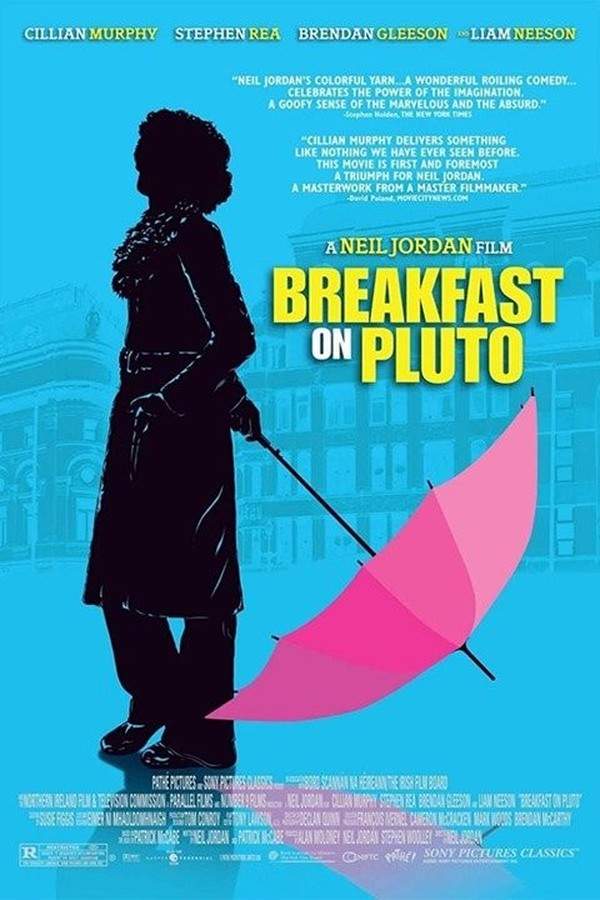
Breakfast on Pluto
Year: 2005
Runtime: 128 min
Language: English
Director: Neil Jordan
Abandoned as a baby and raised by a kind family, Patrick grows up with a yearning to uncover his origins. As he enters adolescence, a surprising revelation about his true father sends him on a journey of self-discovery. Reborn as Kitten, he travels to London, seeking acceptance and finding himself immersed in a vibrant world of music, magic, and unexpected adventures.
Where to Watch Breakfast on Pluto?
Find where to stream, rent, or buy Breakfast on Pluto (2005) in the US with current JustWatch availability, up-to-date pricing, and platform listings for subscription, rental, and digital purchase options.






Warning: spoilers below!
Haven’t seen Breakfast on Pluto yet? This summary contains major spoilers. Bookmark the page, watch the movie, and come back for the full breakdown. If you're ready, scroll on and relive the story!
Timeline – Breakfast on Pluto (2005)
Trace every key event in Breakfast on Pluto (2005) with our detailed, chronological timeline. Perfect for unpacking nonlinear stories, spotting hidden connections, and understanding how each scene builds toward the film’s climax. Whether you're revisiting or decoding for the first time, this timeline gives you the full picture.
Last updated: November 08, 2024 at 02:39
Breakfast on Pluto (2005) Timeline Questions Answered – Chronology FAQ
Find frequently asked questions about the Breakfast on Pluto (2005) timeline, including chronological order, nonlinear jumps, cause-and-effect links, and scene sequence clarifications. This timeline FAQ helps explain when key events happen, how moments connect, and why the story unfolds in that specific order.
Why did Eily leave Patrick at the parochial house as a baby?
Eily Bergin made the heartbreaking decision to abandon her infant son on the doorstep of the local parochial house where his father, Father Liam, lived. While the film doesn't reveal explicit details about her reasoning, the context suggests she felt unable to raise the child alone, particularly given the secrecy surrounding the priest's involvement and the social stigma of having a child outside of marriage in 1970s Ireland.
Lawrence's father earlier notes that Eily resembled actress Mitzi Gaynor, hinting at her glamorous past and suggesting she may have come from a background unsuited to single motherhood.
Why did Father Liam reject Kitten during confession?
When Kitten confesses about her identity struggles and asks about her mother during confession, Father Liam rebuffs her, telling her to leave and refusing to engage with her questions. This rejection stems from his inability to acknowledge his past relationship with Eily and the existence of an illegitimate child, choosing instead to maintain his position within the church and community rather than confront his hidden past.
This moment echoes the earlier scene where Lawrence's father compares Eily to Mitzi Gaynor, a comparison that indirectly connects Patrick to his origins Father Liam refuses to acknowledge.
How did Kitten get involved with the IRA through Billy?
After joining glam rock band Billy Hatchet and the Mohawks, Kitten developed a crush on the charismatic leader Billy, who offered her shelter in his trailer. She later discovered that Billy was entangled with the IRA and was hiding firearms in their mobile home. Her involvement was primarily romantic rather than political, she was drawn to Billy personally and remained somewhat oblivious to the danger surrounding his activities.
The band's name 'Billy Hatchet and the Mohawks' hints at Billy's violent associations from the start, though Kitten initially sees only the glamour of the rock-and-roll lifestyle.
Why did Kitten throw the guns into the lake?
Kitten discarded a cache of guns into a lake after losing her friend Lawrence in a police action following a botched IRA operation. This act marked a significant shift in her worldview, she had been indifferent to the political violence surrounding her, but Lawrence's death forced her to confront the real consequences of the IRA's actions and reject involvement in their cause.
This moment directly follows the tragedy of Lawrence's death, showing how personal loss transformed Kitten's passive acceptance of the violence around her.
What happened to Lawrence after the IRA operation?
Lawrence was killed during a police action following a botched IRA operation. His death serves as a pivotal moment in the film, forcing Kitten to reconsider her detachment from the political turmoil around her and setting her on a path toward rejecting violence entirely.
Irwin's earlier involvement with the IRA had already created tension with Charlie, foreshadowing the tragic consequences that would later claim Lawrence's life.
How did Kitten use perfume to defend herself against her attacker?
While working on the streets, Kitten faced a violent attack but managed to escape a near-fatal encounter by using her perfume, Chanel No. 5, as a weapon. She sprayed the attacker with the fragrance, creating a distraction that allowed her to flee to safety.
This survival moment comes during Kitten's most desperate period of homelessness in London, highlighting her resourcefulness in the face of danger.
What does the Phantom Lady represent in the film?
The Phantom Lady is a story Kitten writes in her notebook about someone lost in the sprawling city, a metaphor for her own connection with her estranged mother Eily. When she shares this story with magician Bertie Vaughan, it reveals her deep longing to find her mother and understand her own origins. Bertie's interest in the story leads him to offer her a role in his magic act, essentially helping her transform her personal narrative into a performance.
The Phantom Lady metaphor threads through Kitten's journey from Ireland to London, representing her persistent hope of reuniting with Eily despite numerous obstacles.
Why did Charlie react badly to finding Kitten with Bertie?
When Charlie discovered Kitten living with magician Bertie Vaughan, it created a rift in their friendship. Charlie's negative reaction stemmed from discovering Kitten had kept her transgender identity hidden from him, and perhaps also from the sudden change in Kitten's circumstances after she'd been struggling with homelessness. The tension reflects the complexity of Kitten's relationships and the challenges of reconciling her new life with old friendships.
This conflict arises shortly after Kitten reveals her transgender identity to Bertie, suggesting Charlie may have felt betrayed by not being trusted with this personal information earlier.
Why was Kitten arrested as a terrorist after the IRA bombing?
Kitten attended a club frequented by British soldiers where an IRA bombing occurred. Despite being innocent, she was arrested as a suspected terrorist simply for being present at the scene. During her detention, she endured inhumane treatment and penned a dramatic statement about her innocence, which was later illustrated in a comedic fantasy film spoof within the movie, depicting her getting swallowed by a whale, as a satirical representation of her ordeal.
This traumatic event follows directly from Kitten's continued indifference to the political violence around her, demonstrating how the IRA conflict eventually reached her regardless of her stance.
What did the interrogator give Kitten that helped her find Eily?
After her release, one of Kitten's interrogators came to her aid, bringing her to a peep show where she underwent a striking transformation into a blonde. This same interrogator, who turned out to be her estranged father Father Liam, gave her the key to locating Eily, providing the crucial information she needed to finally find her mother.
Father Liam's act of giving the key echoes his earlier refusal in the confessional, showing his gradual, if still cautious, acknowledgment of his daughter.
Why did Kitten faint when she finally met Eily?
When Kitten discovered her younger half-brother, also named Patrick, and finally met Eily, she fainted upon seeing her mother. This overwhelming emotional response stemmed from the intensity of finally confronting the woman she'd searched for throughout her entire life, the culmination of years of longing, abandonment, and hope.
The fainting moment represents the emotional weight of her entire journey finally catching up with her after years of searching.
Why did Kitten choose not to reveal her identity to Eily?
After fainting and regaining consciousness, Kitten chose not to reveal her true identity during her encounter with Eily. This decision reflects the complex emotional state of finally achieving her goal, she had spent her life searching for her mother, but actually confronting that reunion proved more complicated than she'd imagined. She wasn't ready to share her full story, including her transition and everything she'd endured.
This unresolved choice continues the film's theme of unfulfilled longing, leaving the reunion suspended in bittersweet uncertainty.
Why was the parish house firebombed after Kitten moved in?
The parish house was firebombed after Kitten and the pregnant Charlie moved in with Father Liam. The townspeople's outrage at a priest living with a young woman (whom they didn't know was his daughter) and another woman sparked the violent attack, forcing Kitten and Charlie to flee to London for their safety.
This violent conclusion reflects the ongoing intolerance and judgment that has followed Kitten throughout her life, from her foster family's reaction to her identity to the community's reaction to her presence in the priest's home.
What happened to Irwin before the final scenes?
Irwin was killed by the IRA before the film's final act. His death is referenced as part of the tragedy that brings Kitten back to care for pregnant Charlie and attempt to reconnect with her father. This loss adds to the film's exploration of how the IRA's violence affected ordinary people, including those on the periphery of the conflict.
Irwin's earlier involvement with the IRA had already caused tension with Charlie, and his fate underscores the film's message about the devastating consequences of political violence.
What does the ending signify - does Kitten ever reconnect with her mother?
The ending is bittersweet: Kitten encounters a pregnant Eily alongside the little Patrick at a medical office in London where Charlie is receiving postnatal care. Kitten greets them warmly but continues to keep her identity secret, leaving their reunion suspended in unresolved longing. She has found her mother but cannot yet bring herself to fully reconnect, achieving a form of closure marked by hope for the future but lingering questions about whether they will truly reunite.
The final scene mirrors the opening abandonment, another doorstep moment, but now Kitten is the one choosing to leave, maintaining the cyclical nature of abandonment and search that defines her journey.

Explore Movie Threads
Discover curated groups of movies connected by mood, themes, and story style. Browse collections built around emotion, atmosphere, and narrative focus to easily find films that match what you feel like watching right now.
Movies with resilient whimsy like Breakfast on Pluto
Characters who maintain their vibrant spirit and humor despite facing a bleak reality.If you enjoyed the charming defiance of Kitten in Breakfast on Pluto, explore these other movies like it. This collection features similar stories of quirky characters who use humor and imagination as a shield against a harsh world, blending bittersweet emotions with a hopeful core.
She Came to Me
2023

A Nail Clipper Romance
2017
Between the Temples
2024
Strawberry Mansion
2022

Stranger Than Fiction
2006
Spellbound
2024
Moonrise Kingdom
2012

Griff the Invisible
2011

Bedazzled
1967
Rushmore
1998

IF
2024

Asteroid City
2023

Shadows and Fog
1991

Delivering Milo
2001

Where the Wild Things Are
2009
Narrative Summary
The narrative pattern involves an individual whose unique perspective or identity puts them at odds with their environment. Their journey is not about changing the world, but about preserving their own spirit within it. The plot often unfolds through episodic encounters, highlighting small victories of personal expression amidst larger societal struggles.
Why These Movies?
Movies are grouped here for their shared tonal mix of whimsical charm and underlying melancholy, centered on a protagonist whose resilience is their defining trait. They offer a similar emotional experience where hope is hard-won and joy is found in small, personal moments of authenticity.
Episodic self-discovery movies similar to Breakfast on Pluto
Life stories told in distinct chapters, charting a personal search for identity and belonging.Fans of the chapter-based storytelling in Breakfast on Pluto will appreciate these similar movies. This thread gathers films that use a vignette structure to follow a character's search for identity, family, or place in the world, offering a fragmented yet deeply personal view of their life journey.

Moments of Clarity
2016

On the Road
2012

Somewhere Slow
2014

The Extraordinary Journey of the Fakir
2019

The Sweet Life
2017

Dust To Dust
2000

VHYes
2019

Tracing Her Shadow
2021

American Dreamer
1984

(500) Days of Summer
2009

The Private Lives of Pippa Lee
2009
Young People Fucking
2008
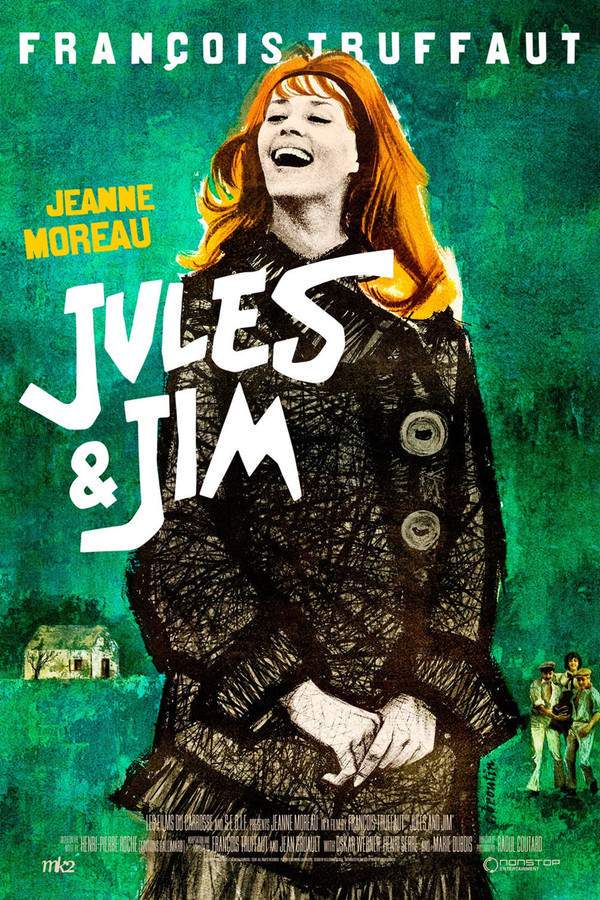
Jules and Jim
1962

Girlfriend's Day
2017
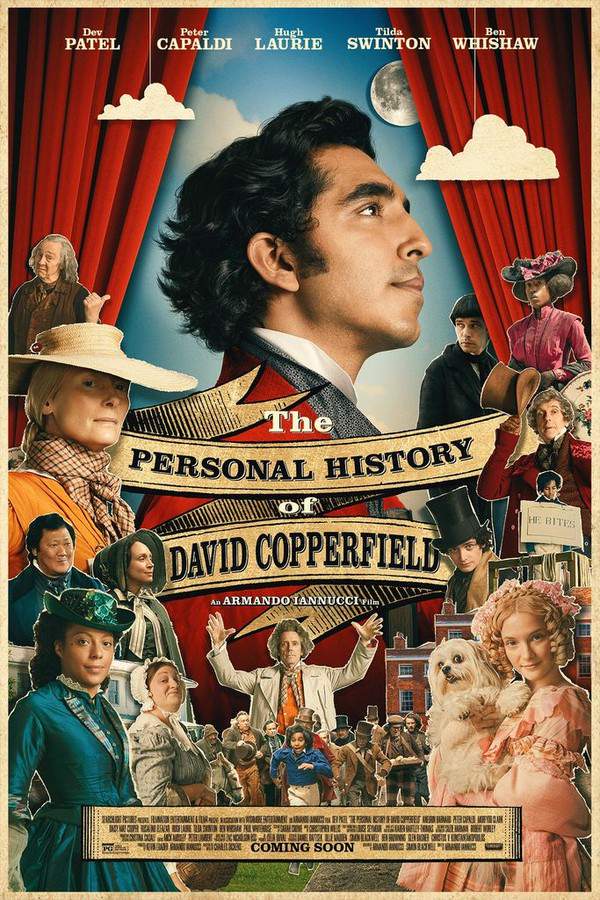
The Personal History of David Copperfield
2020
Narrative Summary
The narrative is non-linear in feeling but often chronological, broken into distinct segments or chapters that each represent a phase, lesson, or pivotal encounter in the protagonist's life. This structure emphasizes the process of becoming over a single destination, with the central conflict being the internal quest for self-knowledge and acceptance.
Why These Movies?
These films are united by their unique narrative structure and core thematic focus. They share a pacing that can shift rapidly between moments of humor, drama, and reflection, all in service of a central character's emotional and identity-driven arc, creating a deeply personal and evocative viewing experience.
Unlock the Full Story of Breakfast on Pluto
Don't stop at just watching - explore Breakfast on Pluto in full detail. From the complete plot summary and scene-by-scene timeline to character breakdowns, thematic analysis, and a deep dive into the ending - every page helps you truly understand what Breakfast on Pluto is all about. Plus, discover what's next after the movie.
Breakfast on Pluto Summary
Read a complete plot summary of Breakfast on Pluto, including all key story points, character arcs, and turning points. This in-depth recap is ideal for understanding the narrative structure or reviewing what happened in the movie.

Characters, Settings & Themes in Breakfast on Pluto
Discover the characters, locations, and core themes that shape Breakfast on Pluto. Get insights into symbolic elements, setting significance, and deeper narrative meaning - ideal for thematic analysis and movie breakdowns.


Similar Movies to Breakfast on Pluto
Discover movies like Breakfast on Pluto that share similar genres, themes, and storytelling elements. Whether you’re drawn to the atmosphere, character arcs, or plot structure, these curated recommendations will help you explore more films you’ll love.
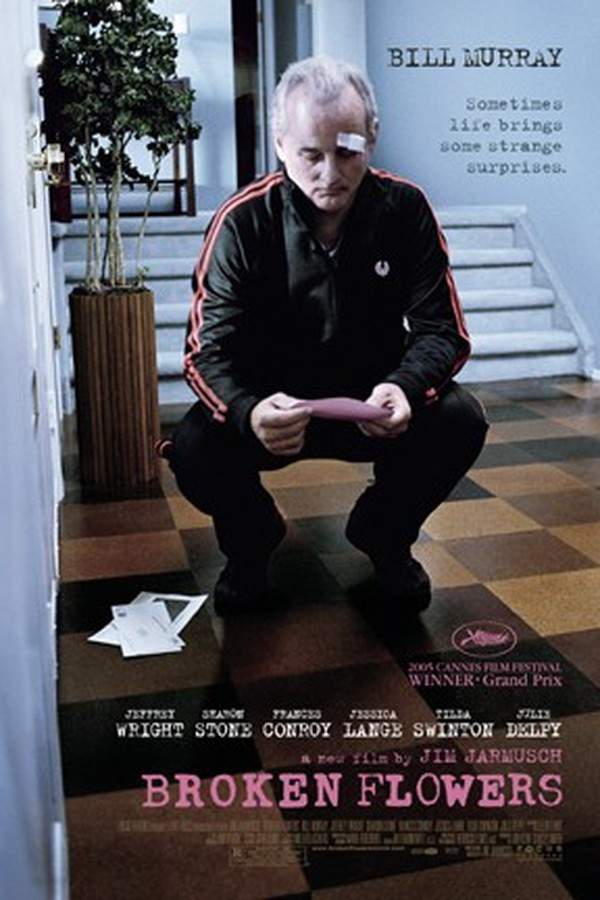
Broken Flowers
2005

Paddington
2015
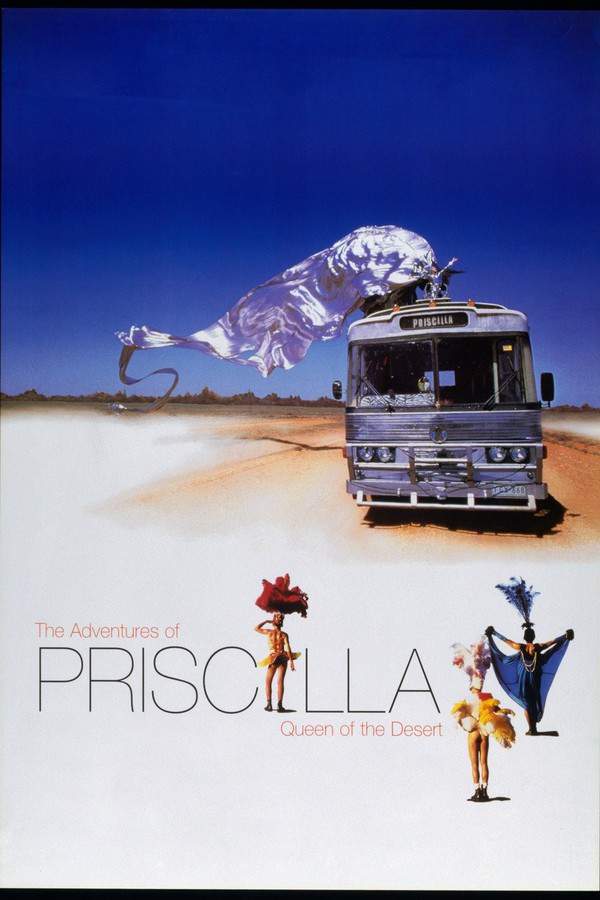
The Adventures of Priscilla, Queen of the Desert
1994
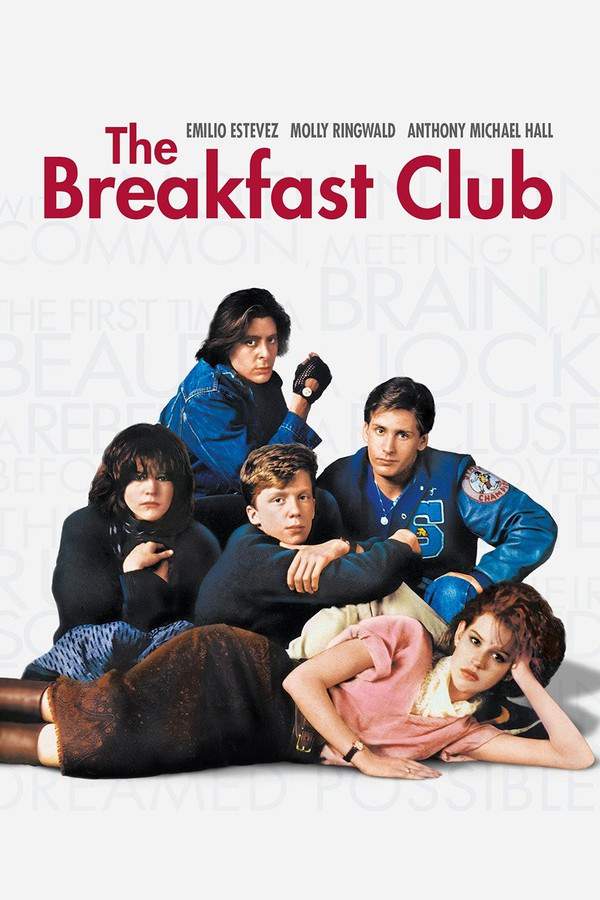
The Breakfast Club
1985

Breakfast of Champions
1999

Good Mourning
2022

Breakfast with Scot
2008

Born Romantic
2001

To Pluto
2017

Frühstück?
2002

Strange Relations
2001

Dwarf Planet
2020

Jupiter
2022

Breakfast in Hollywood
1946

Birds, Orphans and Fools
1969
Explore More About Movie Breakfast on Pluto
Breakfast on Pluto (2005) Plot Summary & Movie Recap
Breakfast on Pluto (2005) Scene-by-Scene Movie Timeline
Breakfast on Pluto (2005) Spoiler-Free Summary & Key Flow
Movies Like Breakfast on Pluto – Similar Titles You’ll Enjoy
Broken Flowers (2005) Complete Plot Breakdown
Paddington (2015) Detailed Story Recap
The Adventures of Priscilla, Queen of the Desert (1994) Movie Recap & Themes
The Breakfast Club (1985) Film Overview & Timeline
Breakfast of Champions (1999) Ending Explained & Film Insights
Good Mourning (2022) Film Overview & Timeline
Breakfast with Scot (2008) Plot Summary & Ending Explained
Born Romantic (2001) Spoiler-Packed Plot Recap
To Pluto (2017) Detailed Story Recap
Frühstück? (2002) Full Movie Breakdown
Strange Relations (2001) Film Overview & Timeline
Dwarf Planet (2020) Full Movie Breakdown
Jupiter (2022) Story Summary & Characters
Breakfast in Hollywood (1946) Movie Recap & Themes
Birds, Orphans and Fools (1969) Movie Recap & Themes