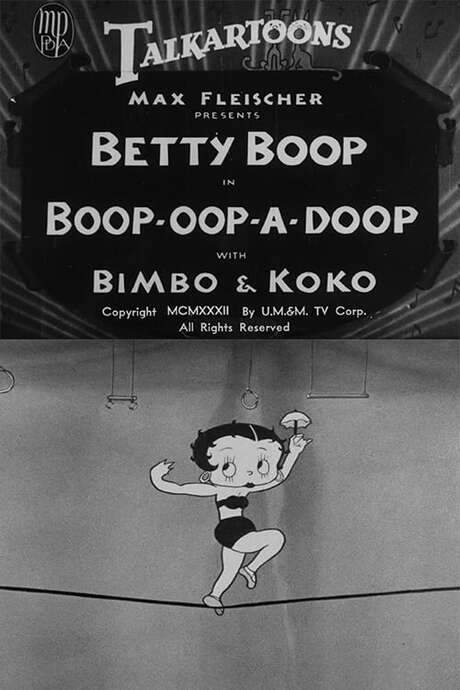
The film opens with Betty Boop Ann Little displayed on a flag fluttering above the circus big top, setting a playful, vaudeville mood from the very first frame. The scene quickly showcases Betty’s versatility: she moves from a fearless lion-taming routine to a high-spirited tightrope walk, her movements precise and confident, drawing cheers from a crowd that seems to lean in with every careful step she takes. The hum of the big top—ropes creaking, drums stamping, and the smell of popcorn in the air—frames her performance, giving the impression that the entire circus is watching as one.
Nearby, Koko the Clown bolts into the action with his usual mix of whimsy and physical comedy, juggling and clowning as a counterpoint to Betty’s elegant danger. The juxtaposition of Betty’s poised danger and Koko’s goofy energy adds texture to the spectacle, reminding viewers that this is a place where laughter and risk walk hand in hand.
Below the rim of the ring, the ringmaster, William Pennell in particular, lingers with a predatory gaze as he observes Betty from the shadows. He sings a sultry number—Do Something—a tune associated with Helen Kane that underscores his desire and the power he wields over the performers. The music swells, and the tension between control and consent threads its way through the applause and the clamor of the crowd, cutting through the cotton-candy atmosphere with a sharper sting of menace.
Betty’s return to her tent marks a turn toward confrontation. The ringmaster follows, stepping into Betty’s space with a coercive advance that threatens her job if she does not submit. The moment tightens, shifting from showmanship to intimidation as the circus walls close in around her, casting a pall over the previously buoyant mood.
To signal her resistance and to reclaim her agency, Betty pleads for him to stop, and she answers with a defiant, melodic refusal that resonates through the tent and beyond. > "Don't Take My Boop-Oop-A-Doop Away." The line isn’t just a lyric; it’s a banner of defiance, sung with the same breath that powers her acrobatic feats.
Hearing the commotion, Koko bursts in from the outside world, his juggling halted mid-flourish as he observes the danger to Betty. He dives into the fray with the kind of bold, slapstick courage that defines his character, striking at the ringmaster with quick, surprising moves. The confrontation escalates until the ringmaster discovers he has pushed too far, and he tries to dispatch Koko by loading him into a cannon. Believing he has dispatched the clown, the ringmaster’s smile fades as Koko nests inside the cannon and, in a reversal of fortune, delivers a savvy counterstrike with a mallet—an act that earns him a triumphant return and the audience’s last laugh.
Betty, watching the exploits with a mix of relief and admiration, is drawn into the moment of resistance and resilience. In a rare moment of warmth and solidarity, she affirms her dignity in the face of manipulation, a sentiment echoed by the clown’s triumphant gesture. > "No, he couldn't take my boop-oop-a-doop away!" The words carry the weight of a hard-won victory, spoken with the same cadence that marked her earlier performances.
As the dust settles and the crowd’s cheers rise anew, the short closes on a simple, intimate beat: Koko returns to Betty’s side and gives her a gentle kiss on the cheek, a quiet seal on a moment of shared relief and mutual respect amid the chaos of a bustling circus. The lights dim, the music tails off, and the screen leaves viewers with a sense of renewal—the promise that artistry and friendship can triumph over coercion, even in a place built on spectacle and showmanship.