




























Plot Explained Spoilers guaranteed!
Plot Explained

Browse by genre

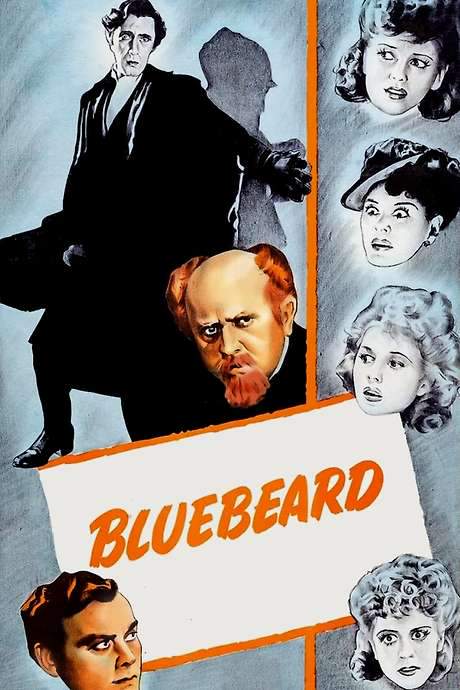
Bluebeard (1944) movie poster

Characters & Themes

Bluebeard (1944) Characters, Setting & Themes Explained

Release, runtime and language
1944 · 72 mins · English
JustWatch #4,897 67
Directed by
Edgar G. Ulmer
Starring
John Carradine, Jean Parker, George Irving, Iris Adrian, Eddie Hall, Harry Cording

The most sinister love story ever told! Young female models are being strangled. Will law enforcement be able to stop the crime wave before more women become victims?

On this page (8)
  1. 1 Where to watch
  2. 2 Characters explained (7)
  3. 3 Where & when it takes place
  4. 4 Themes & meaning (3)
  5. 5 Character & meaning questions
  6. 6 Movie threads
  7. 7 Movies like Bluebeard
  8. 8 Every angle

Where to watch

Where to Watch Bluebeard (1944)

Where can you watch Bluebeard? Stream, rent or buy it in the US, including on Amazon Prime Video, Artiflix and Bloodstream: current JustWatch availability with up-to-date prices.

Streaming availability powered by JustWatch

7 main characters · contains spoilers

Bluebeard Characters Explained: Who Is Who

The main characters of Bluebeard (1944), heroes and villains: what drives them, how they change over the course of the story and what each of them reveals about the film's bigger ideas.

  • Gaston Morrell (John Carradine)

    A puppeteer and painter whose charm masks a homicidal compulsion. His artistic success masks a growing fixation on the women he paints, transforming them into his lost muse. He strangles Renee, then continues to kill whenever a new model awakens the same image in his mind. His final act is a desperate attempt to escape, ending with a plunge into the Seine.

    • 🧪 Dangerous
    • 🖼️ Artist
    • 🔪 Killer
  • Lucille (Jean Parker)

    A modiste drawn to Morrell by a mix of attraction and opportunity. She designs costumes for his puppets and becomes entangled in his crime spiral. She confronts the danger Morrell represents, and ultimately faces the truth about his murders. Her resolve to cooperate with authorities marks a turning point in the pursuit of justice.

    • 👗 Fashion
    • 💡 Wit
    • 🧭 Ally
  • Francine (Teala Loring)

    Inspector Lefevre’s undercover agent and Lucille’s sister. She enters Morrell’s world to gather evidence and breaks ties with danger, recognizing the killer on sight. Her pursuit ends tragically when Morrell murders her, leaving a crucial clue behind—the cravat.

    • 🕵️‍♀️ Detective
    • 🧩 Clue
    • 🗡️ Victim
  • Jean Lamarte (Ludwig Stössel)

    A shrewd art dealer who knows Morrell’s crimes but remains complicit through the profits of Morrell’s paintings. He pressures Morrell into producing one last work for financial independence and tries to flee when danger closes in. Morrell eliminates him, removing a key witness and purchaser from the equation.

    • 💼 Dealer
    • 💵 Greed
    • 🗃️ Witness
  • Inspector Lefevre (Nils Asther)

    A seasoned Sûreté inspector who coordinates the pursuit of the Bluebeard killer. He uses Francine to infiltrate the art world and pursue Morrell, guiding the investigation toward the murderer. He reveals the critical link between the cravat and Morrell at Francine’s funeral, sealing the case.

    • 🕵️‍♂️ Inspector
    • 🧭 Pursuit
    • 🎯 Resolution
  • Renee (Sonia Sorel)

    Morrell’s jealous lover who performs in his puppet show and fears abandonment. She is one of his earliest victims, her disappearance a catalyst for the wave of killings. Her relationships with Morrell help illuminate the killer’s volatile temperament.

    • 💔 Lover
    • 🔪 Victim
    • 🧵 Puppeteer
  • The Duke of Carineaux (George Irving)

    A duke who buys Morrell’s latest painting, unknowingly linking Morrell’s success to a wider circle of aristocratic ones. His recognition of the painting propels the police to connect Morrell’s art with the murders. He embodies the social elite’s taste that sustains Morrell’s facade of genius.

    • 👑 Aristocrat
    • 🎨 Collector
    • 🕵️‍♂️ Catalyst

Last updated: October 04, 2025 at 16:06

Was this helpful?

Setting

Where and When Does Bluebeard Take Place?

The setting of Bluebeard (1944): the year and time period, the places and locations, and how they shape the characters, the mood and the tension of the story.

Time period

Location

Paris, France, Seine River, Louvre Museum

Paris is the noir backdrop for the murders attributed to Bluebeard, reflecting a city of high fashion, art markets, and tight-lipped secrecy. The Seine serves as a grim disposal site for Morrell’s victims, anchoring the killer’s brutality to a famous river. The Louvre becomes a public stage for Morrell’s fame, linking his artistic success to the dark acts behind the scenes. The city’s grandeur and shadowy corners drive the tension between creator and crime.

  • 🏛️ Paris
  • 🎨 Art Scene
  • 🗺️ City of Mystery

Last updated: October 04, 2025 at 16:06

Was this helpful?

3 major themes

Bluebeard Meaning: Themes & Message Explained

What is Bluebeard (1944) really about? The emotional, social and philosophical themes the film keeps returning to, its symbolism and the message beneath the surface.

  • Art Obsession

    Morrell’s fixation on an imagined muse drives him to murder, turning painting into a ritual of control and denial. Each completed work replays the lost lover in his mind, blurring lines between art and life. The pursuit of beauty becomes a dangerous compulsion that eclipses morality.

  • Investigation

    The Sûreté orchestrates an undercover pursuit, with Francine infiltrating Morrell’s circle to uncover the truth. Clues like the cravat tie Morrell’s past to the crimes, gradually tightening the net. The process of discovery foregrounds justice as a patient, methodical effort.

  • Jealousy & Power

    Renee’s possession as Morrell’s lover and rival exposes the film’s jealousy-driven tension. Lucille’s defiance and mounting danger highlight how love and ambition fuel a deadly chain of events. The exploitative dynamics of art, sex, and status propel Morrell toward ever more violent acts.

Last updated: October 04, 2025 at 16:06

Was this helpful?

Character & theme questions

Bluebeard Characters & Meaning: Your Questions Answered

The questions people ask about Bluebeard (1944): who the characters really are, their relationships, what the symbols mean, where it takes place and what the movie is really about. Each answer contains spoilers.

Q1

Where is Bluebeard set?

The film is set in Paris, France, a noir backdrop that blends high fashion, art markets, and tight-lipped secrecy. The Seine River serves as a grim disposal site for the killer's victims, while the Louvre Museum becomes a public stage for the killer's artistic fame, linking his success to the dark acts happening behind the scenes.

  • paris
  • seine
  • louvre
  • art scene
  • 1940s paris
Q2

What time period does the movie take place in?

Bluebeard is set in the mid-20th century, consistent with its 1944 release. The film's Paris setting reflects the era's art world, fashion scene, and police methods, with the Sûreté (French secret police) conducting the investigation using period-appropriate techniques.

  • 1940s
  • mid-century
  • paris
  • time period
Q3

What is the Art Obsession theme in Bluebeard about?

The film explores how Morrell's fixation on an imagined muse drives him to murder, turning painting into a ritual of control and denial. Each completed work replays the lost lover in his mind, blurring the lines between art and life. The pursuit of beauty becomes a dangerous compulsion that eclipses morality.

  • art obsession
  • muse
  • painting
  • compulsion
  • creator
Q4

How does the investigation unfold in Bluebeard?

The Sûreté orchestrates an undercover pursuit, with Francine infiltrating Morrell's circle to gather evidence. Clues like the cravat gradually tighten the net around the killer. The process of discovery presents justice as a patient, methodical effort rather than a quick resolution.

  • investigation
  • sûreté
  • undercover
  • clues
  • cravat
Q5

What does the Jealousy & Power theme explore?

Renee's possession as Morrell's lover and Lucille's defiance expose the film's jealousy-driven tension. The exploitative dynamics of art, sex, and status propel Morrell toward increasingly violent acts. Love and ambition fuel a deadly chain of events that drives the narrative forward.

  • jealousy
  • power
  • love
  • ambition
  • manipulation
Q6

Who is Gaston Morrell in the film?

Gaston Morrell is a puppeteer and painter whose charm masks a homicidal compulsion. His artistic success hides a growing fixation on the women he paints, transforming them into his lost muse. He strangles victims whenever a new model awakens the same image in his mind, making him the film's Bluebeard killer.

  • gaston morrell
  • painter
  • puppeteer
  • serial killer
  • bluebeard
Q7

Who is Lucille and what is her role?

Lucille is a modiste (dressmaker) drawn to Morrell by attraction and opportunity. She designs costumes for his puppets and becomes entangled in his crime spiral. She ultimately confronts the danger Morrell represents and cooperates with authorities, marking a turning point in the pursuit of justice.

  • lucille
  • modiste
  • dressmaker
  • ally
  • justice
Q8

Who is Francine in the story?

Francine is Inspector Lefevre's undercover agent and Lucille's sister. She enters Morrell's world to gather evidence against the killer. Her pursuit ends tragically when Morrell murders her, leaving behind a crucial clue, the cravat, that helps seal the case.

  • francine
  • undercover
  • agent
  • sister
  • cravat
Q9

Who is Inspector Lefevre?

Inspector Lefevre is a seasoned Sûreté inspector who coordinates the pursuit of the Bluebeard killer. He uses Francine to infiltrate the art world and guides the investigation toward Morrell. He ultimately reveals the critical link between the cravat and Morrell at Francine's funeral, sealing the case.

  • inspector lefevre
  • sûreté
  • police
  • investigation
Q10

What role does Jean Lamarte play?

Jean Lamarte is a shrewd art dealer who knows of Morrell's crimes but remains complicit through the profits of his paintings. He pressures Morrell into producing one last work for financial independence. When danger closes in, Morrell eliminates him, removing a key witness and purchaser from the equation.

  • jean lamarte
  • art dealer
  • complicity
  • profit
  • murdered
Q11

Who is Morrell's imagined muse?

Morrell's imagined muse is a lost lover he attempts to recreate through every woman he paints and ultimately kills. This fixation drives his murderous compulsion, the pursuit of beauty becomes a way to resurrect his lost love, but each victim fails to satisfy the vision, leading to repeated violence.

  • muse
  • obsession
  • loss
  • lost love
  • recreation
Q12

What is the significance of the cravat in the film?

The cravat is a crucial piece of evidence that ties Morrell to his crimes. Francine leaves it behind as a clue after being murdered by Morrell. Inspector Lefevre uses this cravat to reveal the critical link between the killer and the murders at Francine's funeral, ultimately sealing the case.

  • cravat
  • clue
  • evidence
  • necklace
  • proof
Q13

What is the Duke of Carineaux's role?

The Duke of Carineaux is an aristocrat who buys Morrell's latest painting, unknowingly linking the killer's success to a wider circle of wealthy patrons. His recognition of the painting helps police connect Morrell's art with the murders, embodying the social elite's taste that sustains Morrell's facade of genius.

  • duke of carineaux
  • aristocrat
  • painting
  • patron
  • high society

Movie threads

More Movies Like Bluebeard, by Mood & Story

Curated lists built around what makes Bluebeard tick: the same mood, the same kind of story or the same emotional payoff. Each list explains why these movies belong together.

Movies about psychological compulsion like Bluebeard

Films that explore the dark descent into psychological turmoil and destructive obsession. If you liked the exploration of a tortured psyche in Bluebeard, you'll find similar gripping tales here. This thread gathers movies about obsessive characters, psychological thrillers, and stories where internal turmoil leads to external violence, perfect for fans of dark character studies.

  • psychological
  • oppressive
  • suspenseful
  • tragic
  • grim
  • fatalistic
  • Tone: dark, oppressive, tragic
  • Pacing: steady, deliberate
Why these movies?

The story pattern: Stories in this thread often follow a central character's downward spiral, where a psychological flaw or traumatic past manifests as a destructive obsession. The plot typically involves a cat-and-mouse element, either with an external force like the law or with their own conscience, building towards an inevitable and often tragic confrontation.

Why they belong together: These films are grouped by their intense focus on a character's internal psychological struggle, which drives the narrative. They share a dark, oppressive tone, a steady pacing that builds dread, and a heavy emotional weight centered on themes of madness, compulsion, and the blurred lines between genius and insanity.
Gothic crime thrillers with a bleak tone like Bluebeard

Bleak murder mysteries set in shadowy, melancholic worlds where hope is fleeting. For viewers who enjoyed the grim, suspenseful crime wave and gothic mood of Bluebeard, this section features similar movies. Discover other thrillers and murder mysteries where a dark, oppressive atmosphere and a sense of inevitable tragedy define the viewing experience.

  • gothic
  • melancholic
  • suspenseful
  • grim
  • fatalistic
  • tragic
  • Tone: dark, melancholic, grim
  • Pacing: steady, suspenseful
Why these movies?

The story pattern: The narrative pattern involves a series of crimes investigated within a stylized, often period-specific setting that enhances the feeling of despair. The focus is less on a clever puzzle and more on the tragic human cost and the oppressive mood. Endings provide a form of closure but are tinged with sadness and loss, reinforcing the film's bleak worldview.

Why they belong together: These movies are united by their unique blend of crime thriller elements with a distinct gothic or noir sensibility. They prioritize mood and atmosphere over plot complexity, featuring a steady pacing that maintains tension, a dark tone, and a bittersweet resolution that leaves a lasting melancholic impression.

If you liked this

Movies Like Bluebeard

Similar movies to Bluebeard: the same genre, themes or kind of story. Each one comes with its own plot summary, timeline and ending explained.

Browse all movie summaries

Every angle

Bluebeard (1944) Explained: Plot, Timeline & Characters

Everything about Bluebeard in one place: what happens in the plot summary, the timeline in chronological order, the characters and meaning and a spoiler-free summary. What's After the Movie adds the cast, box office and post-credit scenes.

Coming soon on iOS and Android

The Plot Explained Movie Summary App

Plot summaries, endings explained and timelines on your phone. Catch up on any movie in minutes, save your favorites and never miss a twist again.

Be the first to know when we launch. Your email stays private, always.

Learn more about the app