Ten years ago, a chilling phone call ends in a gruesome murder after the caller accuses the man of stealing an important archaeological artifact. A woman and a child, believed to be his family, rush to his side, their arrival underscoring a family tragedy that still lingers in the air. The scene hints at a history of secrets and betrayals that will resurface with a vengeance when the present-day story begins.
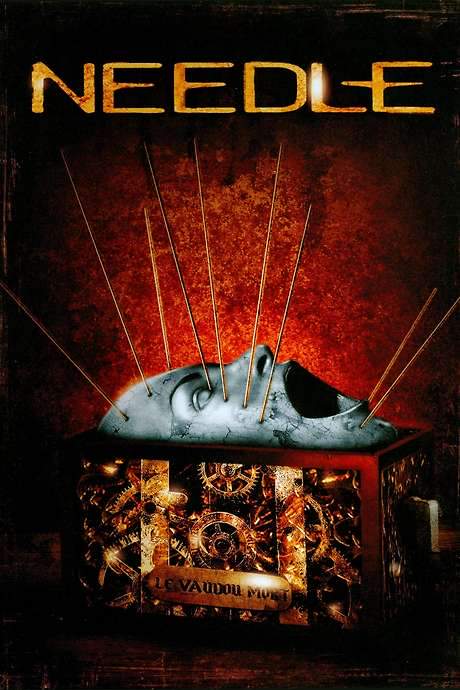
In present-day at St. Mary’s College, Michael Dorman as Ben Rutherford inherits a strange-looking mechanical box named Le Vaudou Mort from his father, who died two years earlier. The box is an odd blend of metal, gears, and suspect symbolism, and its eerie allure pulls in Ben’s circle of friends and companions. That night, he decides to show the box to those closest to him: his best friend Nathaniel Buzolic as Ryan, a thoughtful yet edgy student; Mary Matthews, played by Tahyna MacManus, a figure who harbors romantic feelings for Ben; the pair Kandi and Isabel—two women who form a couple, with Jessica Marais as Kandi and Trilby Glover as Isabel; Nelson, a keen school paper photographer acted by Luke Carroll; and Jed, portrayed by Khan Chittenden. The group’s dynamic is warm and lived-in, even as the box’s odd gleam suggests it may be corrupting the night’s ordinary cadence.
The morning after, Nelson wants to photograph the box, convinced it could be worth a fortune. Ben, though reluctant, agrees to let Nelson try, but the box has vanished by dawn. Suspicion falls quickly on the last two people to see it, and Ben wonders aloud if Mary might have borrowed it, though Mary denies any involvement. The disappearance kicks off a chain of strange events that begin to blur the line between superstition and reality.
Seeking answers, Nelson and Ryan turn to Professor Banyon, an archaeology expert portrayed by Jane Badler. She explains that the Le Vaudou Mort has a reputation as a theatrical prop rather than a genuine relic, but she cautions them that there could be more beneath the surface and promises to alert them if she uncovers anything new. That night, while the group rehearses on campus, an ominous figure is observed cutting Ryan’s face out of a photo taken by Nelson, then inserting the new image into the Le Vaudou Mort. The box responds in a chilling way: a wax figure resembling Ryan materializes and is attacked with heated needles, a vivid and brutal display that becomes all too real when Ryan bleeds to death.
The following day, Ben’s brother Marcus Rutherford, Travis Fimmel, appears on the scene as the crime-scene photographer; the murder of Ryan echoes into their shared memories and forces Ben to confront a painful family history he had long buried. Marcus and Ben’s relationship is complicated, shaped by a painful car crash that severed their trust years earlier when Ben blamed Marcus for their father’s death. Marcus’s presence adds a tense, uneasy layer to the investigation, and his professional eyes start stitching together the night’s disturbing clues.
Nelson’s death follows a similar pattern: the wax figure of Nelson is pulled from the Le Vaudou Mort and dismembered in a vengeful, methodical display. The group mourns in Isabel’s house with a wake for their dead friends, a scene that underscores the fragile bonds among Ben, Marcus, Mary, Kandi, Isabel, and Jed. Professor Banyon reaches out with urgency again, summoning Ben to discuss new revelations; she introduces another archaeology expert, Dr. Halmanay, who helps frame the Le Vaudou Mort as a revenge instrument rather than a mere curiosity. As the night unspools, a deeper truth begins to surface: their father Samuel Rutherford—portrayed by James Hagan—had stolen the Le Vaudou Mort from his friend Robert Shaw [Michael Loney] many years earlier.
With this revelation, the scientists and siblings piece together that the killer’s motive is tied to their father’s past deeds, and the revenge debt is now being collected through Ben and Marcus’s friends. The silhouette behind the killings appears clear: Kandi, who is literally Robert Shaw’s daughter, has been orchestrating the terror to make Ben feel the same pain she felt when her father died. Her motive is personal and brutal, and she uses the Le Vaudou Mort as a conduit to keep the cycle of suffering alive.
The confrontation moves from the college to the old neighborhood, where the brothers uncover more about the box’s origins and its connection to their father’s past. In a pivotal moment at Isabel’s house, Kandi corners Ben with a weapon, aiming to drain his life the way her father’s death did to her family. Mary, who has been forced to watch the carnage unfold, seizes a last chance to retaliate. She seizes the opportunity to strike back at Kandi by retaliating through the very mechanism that has claimed so many lives. Mary uses the Le Vaudou Mort to exact a cruel, poetic revenge, slashing Kandi’s plans and delivering a fatal blow as Kandi’s own wax image is mutilated and rendered powerless.
The carnage finally ceases as Kandi dies, her mind replaying the deaths of her friends as the violent memory fades into silence. Ben, Marcus, and Mary escape the wreckage, their bond strained but intact by the shared ordeal. The aftermath lands with a quiet, somber resolve: the three of them must live with what happened and the consequences of their fathers’ actions.
In the calm after the storm, a reconciled Ben and Marcus find a fragile peace aboard Marcus’s boat, a symbol of the family’s ongoing ties and the risk of repeating the past. They decide to cast the Le Vaudou Mort into the ocean, a final act intended to break the cycle of vengeance and protect anyone else from the device’s curse. The film closes on a note of unfinished healing—how a family’s history can cast long shadows, and how the living must choose whether to let those shadows define them or push forward toward an uncertain, but hopeful, future.