Plot Explained Spoilers guaranteed!
Plot Explained

Browse by genre

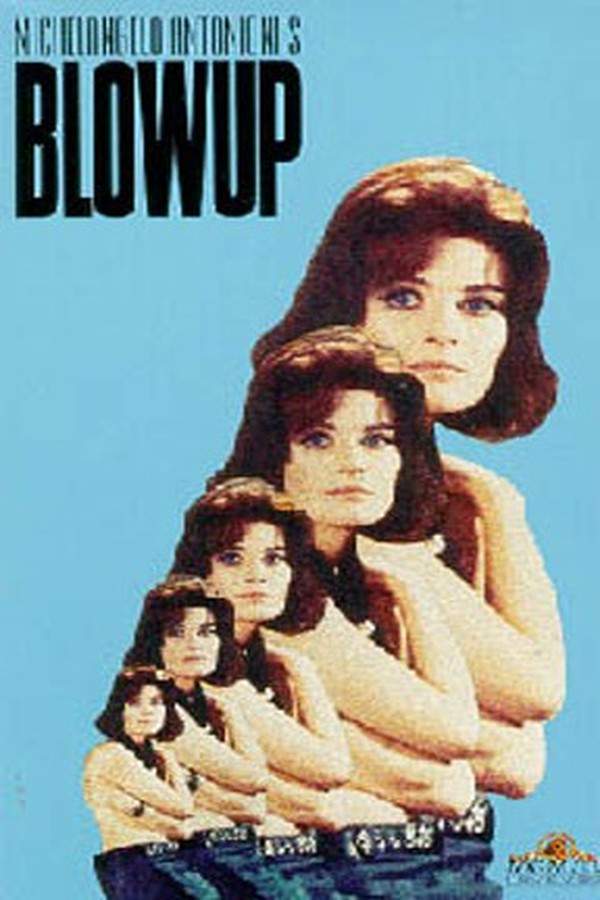
Blow-Up (1966) movie poster

Timeline

Blow-Up (1966) Timeline Explained – Every Event in Order

Release, runtime and language
1966 · 111 min · English
Loading streaming availability…
Directed by
Michelangelo Antonioni
Starring
David Hemmings, Vanessa Redgrave, Peter Bowles, Claude Chagrin, Gillian Hills, Jane Birkin

A fashion photographer, Thomas, inadvertently captures what appears to be a murder while shooting a modeling assignment. Intrigued by the mysterious scene, he obsessively analyzes the photographs, convinced he's witnessed something significant. His investigation draws him into a web of deceit and danger as he attempts to confirm his suspicions. A woman connected to the incident then appears, further complicating matters and blurring the line between reality and illusion, leaving Thomas questioning everything he thought he knew.

On this page (6)
  1. 1 Where to watch
  2. 2 Events in order (13)
  3. 3 Timeline questions answered
  4. 4 Movie threads
  5. 5 Movies like Blow-Up
  6. 6 Every angle
Loading streaming availability…

13 events in order · contains spoilers

Blow-Up Timeline: Events in Chronological Order

Every key event of Blow-Up (1966) in order, scene by scene, with when and where it takes place. Use it to untangle flashbacks, time jumps and parallel storylines, to refresh your memory before the sequel or to find the exact scene you are thinking of.

  1. Thomas, the Fashion Photographer

    The story revolves around Thomas, an extravagant fashion photographer living the vibrant lifestyle of 'Swinging London'. His character is inspired by real-life fashion icon David Bailey, showcasing a world of glamour and artistry.

  2. Night in a Doss House

    Thomas experiences life from a different perspective as he spends a night in a doss house, a basic lodging often occupied by the homeless. This venture provides him with insight into the struggles of ordinary people, which he strives to capture in his photography.

    Where
    Doss House
  3. Photo Shoot with Veruschka

    In a rush after his night in the doss house, Thomas arrives late to a photo shoot with the breathtaking model Veruschka. Despite grievances about the delay, he manages to shoot captivating photographs that highlight his skill in capturing emotional depth.

    When
    11 AM
    Where
    Thomas's Studio
  4. Disastrous Shoot with Six Models

    Thomas's behavior deteriorates during a chaotic shoot with six models, where he treats them poorly and ultimately abandons the set. His frustration culminates in a hasty exit, marking a downturn in his professionalism as a photographer.

    Where
    Thomas's Studio
  5. Encounter with Aspiring Models

    After leaving the photo shoot, Thomas is approached by two aspiring models, Jane and Gillian. Instead of engaging with them, he dismisses their overtures and diverts his attention to an antiques shop.

    Where
    Antiques Shop
  6. Buying a Propeller

    In the antiques shop, Thomas interacts briefly with the owner and assistant, purchasing a propeller as a unique memento. The purchase symbolizes his search for creative inspiration amidst the chaos of his life.

    Where
    Antiques Shop
  7. Candid Moment in Maryon Park

    While wandering through Maryon Park, Thomas captures a romantic moment of a couple, juxtaposing his artistic eye with the beauty of everyday life. This moment triggers an unexpected confrontation with Jane, who demands the film containing her image.

    Where
    Maryon Park
  8. Eerie Discovery in the Darkroom

    After developing the film, Thomas is shocked to uncover unsettling images that resemble a corpse in the park. This revelation hints at a lurking danger and makes him question his previous interactions with Jane and the narcissistic world he inhabits.

    Where
    Thomas's Studio
  9. Pursuing Jane Again

    With a burgeoning sense of urgency, Thomas decides to pursue the truth behind the eerie images and track down Jane. His search leads him back to Maryon Park, only to find the body he photographed has mysteriously vanished.

    Where
    Maryon Park
  10. Performance of The Yardbirds

    Thomas's search for Jane introduces him to a vibrant club where he witnesses the electrifying performance of The Yardbirds. In a moment of agitation, he impulsively grabs a broken piece of guitar neck, representing his frayed state of mind.

    Where
    Club
  11. Wild Party Near the Thames

    At a raucous party near the Thames, Thomas reconnects with Veruschka and his agent Ron, yet he remains emotionally distanced. The weight of his earlier discoveries troubles him even among the revelry, isolating him in a crowd.

    Where
    Near the Thames
  12. Return to the Park

    As the sun rises, Thomas returns to Maryon Park, filled with hope of uncovering answers. However, he is met with disillusionment as the body he sought has vanished yet again, leaving him with more questions than resolutions.

    When
    Sunrise
    Where
    Maryon Park
  13. Mimed Tennis Match

    In a surreal conclusion to his tumultuous day, Thomas finds himself watching a mimed tennis match in the park. This bizarre scene encapsulates his sense of disconnection, as the vibrant life around him continues to dissolve into nothingness.

    Where
    Maryon Park

Last updated: November 15, 2024 at 19:40

Was this helpful?

Timeline questions answered

Blow-Up Timeline Explained: Your Questions Answered

When does it happen, and why in that order? The questions people ask about the chronology of Blow-Up (1966): time jumps, flashbacks, cause and effect between scenes and the correct order of events, each answered with spoilers.

Q1

Why does Jane demand that Thomas give her the film?

Jane demands the film because she's connected to the man Thomas photographed in the park. When Thomas develops the images, he sees what appears to be a corpse next to Jane, suggesting she was either a witness to or participant in a murder. Her desperate attempt to retrieve the photos, even offering sex in exchange, reveals she's trying to cover up something sinister that occurred in Maryon Park.

Foreshadowing: Jane's angry confrontation at the park, insisting Thomas hand over the photos, hints at her urgent need to suppress whatever evidence the images contain.

  • jane
  • film
  • photos
  • maryon park
  • demand
Q2

What does Thomas discover when he develops the park photographs?

When Thomas develops the film, he discovers eerie images that appear to show a corpse in Maryon Park. The photographs reveal what looks like a murdered man lying on the ground near where Jane was standing. This disturbing discovery transforms his casual snapshot into potential evidence of a crime, compelling him to investigate further despite his usual self-absorption.

Foreshadowing: During the photo shoot in the park, Jane's furious reaction to being photographed foreshadows that something dangerous was occurring just beyond the frame.

  • photographs
  • development
  • corpse
  • evidence
  • maryon park
Q3

Why does the body disappear when Thomas returns to the park?

The body vanishes twice from Maryon Park, creating central ambiguity in the film. Thomas finds the exact location where he photographed the corpse, but the body is gone both times he returns. This disappearance suggests multiple possibilities: the murder may never have occurred, the body was removed by others involved in the crime, or Thomas's perception of reality is fundamentally unreliable. The film never confirms which explanation is true.

Foreshadowing: The increasing uncertainty around whether Thomas actually witnessed a murder reflects his growing paranoia and the film's theme of subjective reality.

  • body
  • disappearance
  • park
  • mystery
  • reality
Q4

Why does Thomas give up investigating the murder?

Thomas ultimately abandons his investigation after experiencing a profound crisis of confidence and purpose. His darkroom is vandalized, most of his work is destroyed, and he's left questioning whether what he saw was real or imagined. At the wild party near the Thames, surrounded by friends and revelry, he feels isolated by his discovery. When he returns to the park at sunrise and finds the body gone yet again, he seems to accept that truth may be permanently elusive, choosing to walk away rather than pursue answers that may not exist.

Foreshadowing: Thomas's earlier decision to toss aside the broken guitar neck he grabbed from The Yardbirds performance symbolizes his abandonment of creative ambition and drive, mirroring his later放弃 of the investigation.

  • investigation
  • 放弃
  • truth
  • paranoia
  • doubt
Q5

What is the meaning of the mimed tennis match at the end?

The mimed tennis match in Maryon Park represents the ultimate expression of the film's central theme: the line between reality and illusion has completely dissolved for Thomas. He's surrounded by people playing an imaginary sport with invisible rackets and an invisible ball, a performance that Thomas watches until it literally dissolves into nothing. This surreal final image suggests Thomas has become untethered from reality, unable to distinguish between what's real and what's constructed, much like his experience with the photographs that may or may not have captured a real murder.

Foreshadowing: Throughout the film, Thomas obsessively enlarges and analyzes photographs, trying to extract definitive truth from images, only to find that reality becomes more elusive the closer he looks.

  • tennis
  • mime
  • ending
  • surreal
  • reality
Q6

Who is Jane and what is her relationship to the murder?

Jane is an aspiring model who approaches Thomas after his disastrous photo shoot, but her true connection to the events in Maryon Park remains deliberately obscure. She appears unexpectedly at the exact location where Thomas photographs a couple and becomes frantic when she sees she's been captured on film. The developed photographs show her standing next to what appears to be a corpse, suggesting she either witnessed the murder or was involved in it. Her fake phone number to Thomas and her desperate attempts to retrieve the film indicate she's tied to whatever sinister event occurred, though the film never clarifies the exact nature of her involvement.

Foreshadowing: Jane's mysterious knowledge that danger was nearby, implied by her urgent demand for the photos, reveals she's aware of the murder before Thomas ever develops his photographs.

  • jane
  • model
  • murder
  • involvement
  • mystery
Q7

What happens to Thomas's darkroom and photographs?

Thomas discovers his darkroom has been vandalized and most of his work is destroyed, likely by those trying to eliminate evidence of the park incident. This violation represents a turning point in the film, it signals that powerful forces are actively working to suppress the truth and that Thomas's life may be in danger. The destruction also means he can no longer definitively prove what he witnessed, leaving him with only his uncertain memory of the photographs.

Foreshadowing: The vandalism confirms that someone with motive and access knows about Thomas's photographs, suggesting the murder (or whatever occurred in the park) involves dangerous individuals willing to eliminate evidence.

  • darkroom
  • vandalism
  • photographs
  • destruction
  • evidence
Q8

What does Thomas grabbing the broken guitar neck represent?

When Thomas impulsively grabs a broken piece of guitar neck from The Yardbirds stage during their performance, it symbolizes his frayed mental state and desperate grasp for something concrete in a confusing situation. The guitar neck, shattered, useless, a fragment of something that once made music, mirrors Thomas's own fractured understanding of reality. Later, he tosses it away in disillusionment, representing his abandonment of both his creative ambitions and his belief that he can uncover meaningful truth through his art.

Foreshadowing: This moment occurs right after Thomas enters the club specifically to track down Jane, showing his investigation has pushed him to extreme, erratic behavior.

  • guitar
  • yardbirds
  • symbolism
  • desperation
  • art
Q9

Why does Thomas spend the night in a doss house?

Thomas deliberately spends a night in a doss house, an inexpensive lodging for the homeless, to experience life beyond his privileged fashion photographer existence. Inspired by his idol David Bailey, Thomas wants to connect with ordinary people and capture authentic emotions in his work. This search for authenticity drives his entire character arc, making his later obsession with the park photographs feel like an extension of his genuine desire to document real human experiences, even when that reality becomes terrifying.

Foreshadowing: Thomas's venture into the doss house establishes his ongoing tension between authentic experience and the superficial world of fashion photography, setting up his later journey into a darker reality.

  • doss house
  • authenticity
  • london
  • david bailey
  • perspective
Q10

Why does Thomas buy a propeller from the antiques shop?

Thomas purchases a propeller from the antiques shop as a symbolic quest for meaning and inspiration. Wandering through the shop while avoiding the aspiring models Jane and Gillian, he's searching for something unique and authentic, objects with history and character, reflecting his broader dissatisfaction with the artificiality of his fashion work. The propeller, an aviation relic representing flight and transcendence, symbolizes his desire to rise above his superficial career and discover something genuinely meaningful, even if he can't articulate what that might be.

Foreshadowing: The propeller purchase occurs between Thomas's dismissal of the aspiring models and his arrival at Maryon Park, where his life will become entangled with mystery, showing his passive search for meaning transforming into something more dangerous.

  • propeller
  • antiques
  • shop
  • meaning
  • search

Movie threads

More Movies Like Blow-Up, by Mood & Story

Curated lists built around what makes Blow-Up tick: the same mood, the same kind of story or the same emotional payoff. Each list explains why these movies belong together.

Movies where obsession blurs reality like in Blow-Up

When a single clue spirals into a deep questioning of what is real. If you enjoyed the psychological unraveling in Blow-Up, these movies feature similar stories where a character's obsessive investigation leads them to question their own perception of reality. Discover more psychological mysteries and paranoid thrillers that explore the elusive nature of truth.

  • paranoid
  • disorienting
  • uncanny
  • investigative
  • obsessive
  • psychological
  • Tone: tense, paranoid, disorienting
  • Pacing: variable, with periods of frantic analysis and quiet dread
Why these movies?

The story pattern: The narrative typically begins with a seemingly insignificant event or piece of evidence that captures the protagonist's attention. Their intense focus and analysis, however, magnify the ambiguity rather than resolving it, pulling them into a subjective whirlpool where reality becomes malleable and ultimately untrustworthy.

Why they belong together: These films are grouped by their shared focus on the psychological collapse that occurs when a rational pursuit of truth exposes the frailty of human perception. They create a cohesive, unsettling vibe through themes of voyeurism, unreliable narration, and the anxiety of not being able to trust what you see.

Atmospheric urban paranoia movies similar to Blow-Up

A creeping sense of dread and alienation within a modern city. Fans of the tense, disorienting mood of Blow-Up will appreciate these films that explore urban alienation and slow-building paranoia. Find more movies like Blow-Up that use the cityscape to create an uncanny, dreamlike atmosphere and a profound sense of existential dread.

  • anxious
  • melancholic
  • dreamlike
  • isolating
  • uncanny
  • urban alienation
  • Tone: tense, melancholic, isolating
  • Pacing: slow burn, variable
Why these movies?

The story pattern: Stories in this thread often feature isolated individuals navigating sprawling, impersonal cities. The narrative conflict is internal as much as external, focusing on the protagonist's growing anxiety and the feeling that the environment itself is hostile or deceptive. The plot unfolds through atmosphere and mood rather than fast-paced action.

Why they belong together: They are linked by a distinctive vibe: a melancholic, dreamlike tension born from the intersection of a specific era's urban aesthetic and a protagonist's psychological fragility. The shared experience is one of atmospheric dread, where the setting amplifies the character's sense of alienation and existential unease.

If you liked this

Movies Like Blow-Up

Similar movies to Blow-Up: the same genre, themes or kind of story. Each one comes with its own plot summary, timeline and ending explained.

Browse all movie summaries

Every angle

Blow-Up (1966) Explained: Plot, Timeline & Characters

Everything about Blow-Up in one place: what happens in the plot summary, the timeline in chronological order, the characters and meaning and a spoiler-free summary. What's After the Movie adds the cast, box office and post-credit scenes.

Coming soon on iOS and Android

The Plot Explained Movie Summary App

Plot summaries, endings explained and timelines on your phone. Catch up on any movie in minutes, save your favorites and never miss a twist again.

Be the first to know when we launch. Your email stays private, always.

Learn more about the app