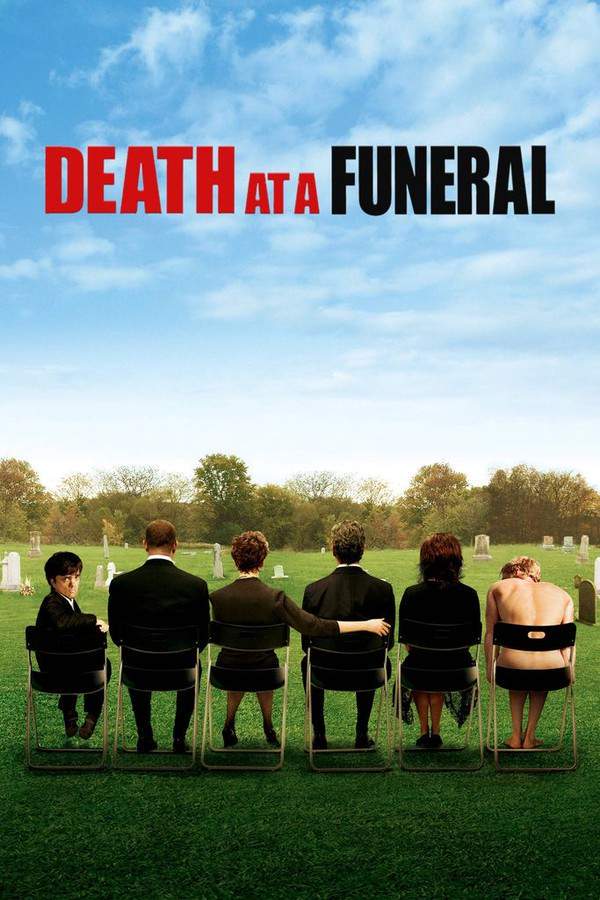
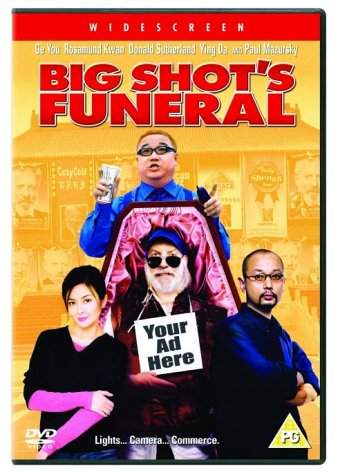
World-renowned American film director Don Tyler (Donald Sutherland) arrives in Beijing to shoot a remake of The Last Emperor inside the Forbidden City. His assistant Lucy Rosamund Kwan Chi-Lam hires a Beijing cameraman YoYo Ge You to shoot a behind‑the‑scenes documentary, hoping the project will capture the magic of cinema and the spectacle of a major production. As the shoot unfolds, Tyler’s health falters and the film’s producer pushes him off the set, casting a shadow over the ambitious plans. After witnessing a Chinese funeral for the elderly, Tyler confesses to YoYo that he wants to stage a funeral with the same emotional pull—only this time, with a comic, celebratory twist.
When Tyler slips into a coma, YoYo is officially entrusted with planning the director’s funeral, a responsibility he carries with quiet dignity. He enlists the help of Louis Wang, a blunt, savvy businessman who runs a show company and claims to have produced countless large-scale events. The two men, driven by different motivations, set out to orchestrate an event that could become the most talked‑about media spectacle of the year. The prospect excites the press and dazzles potential sponsors, turning a funeral into a rare business opportunity where every detail is negotiable and every palm greased with publicity.
Louis Wang’s plan casts the funeral as a “rich and colorful program,” a hybrid of a Spring Festival Gala, traditional variety shows like Happy Camp, and a touch of disaster-relief charity work, all broadcast live to audiences around the world. The production becomes a stage for endless sponsorships and product placements, with a newly signed actress positioned “next to” Tyler as part of the marketing machine. Before long, the advertising auction drives up the cost to cover more than three million in funeral expenses, and the solemn portrait of Tyler is repurposed as a glossy advertising medium, sliding from top to bottom like a wave and turning into a bright, ridiculous fitness drink commercial. The entire funeral becomes a spectacle of commerce, where even counterfeit goods are not shy about riding the publicity wave.
As the scheme nears its zenith, the news arrives that Tyler has somehow come back from death. King Louis’s confidence wavers, his grip on the plan falters, and he slips into a mental spiral. Youyou, overwhelmed by the sheer scale and the commercial pressure, pretends to be ill and ends up in a mental hospital, a dramatic turn that underscores how far the enterprise has strayed from genuine mourning. The film uses this reversal to reveal the strain and satire at the heart of the spectacle, illustrating how quickly reverence can be subsumed by publicity and profit.
Through the chaos of the carnival-like funeral, Youyou and Lucy come to understand each other on a more personal level. Their shared exposure to the absurdity around them softens their initial distance, and the experience becomes a catalyst for a quiet, evolving romance. In the end, the two characters find genuine connection amid the rubble of a commodified memorial, choosing each other as the human counterweight to a world consumed by hype. The closing scene finds Youyou and Lucy embracing, a tender kiss signaling a real, if improbable, human connection amid the noise of a spectacle that began with a director’s dying wish and ended in a new beginning for them both.
> "Don't forget, I need a comedy funeral."