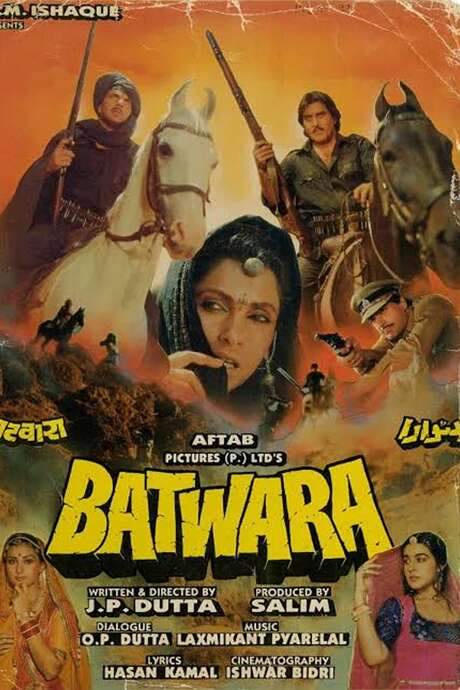
Year: 1989
Runtime: 201 mins
Language: Hindi
Director: J. P. Dutta
Amidst the collapse of princely states after India's independence, the bond between aristocratic Vikram and his humble peasant friend is strained. When Vikram's brother is murdered in the peasant settlement, his grief turns to vengeance, forcing him to confront loyalty, class divisions, and the turmoil of a changing nation.
Find where to stream, rent, or buy Batwara (1989) in the US with current JustWatch availability, up-to-date pricing, and platform listings for subscription, rental, and digital purchase options.
Warning: spoilers below!
Haven’t seen Batwara yet? This summary contains major spoilers. Bookmark the page, watch the movie, and come back for the full breakdown. If you're ready, scroll on and relive the story!
Explore the full timeline and setting of Batwara (1989). Follow every major event in chronological order and see how the environment shapes the story, characters, and dramatic tension.
Last updated: October 04, 2025 at 13:36
Meet the key characters of Batwara (1989), with detailed profiles, motivations, and roles in the plot. Understand their emotional journeys and what they reveal about the film’s deeper themes.
Last updated: October 04, 2025 at 13:36
Explore the central themes of Batwara (1989), from psychological, social, and emotional dimensions to philosophical messages. Understand what the film is really saying beneath the surface.
Last updated: October 04, 2025 at 13:36
Browse frequently asked questions about Batwara (1989) focused on characters, relationships, themes, symbols, setting, and story context. This movie info FAQ gives spoiler-aware explanations for character arcs, world details, and thematic interpretation so readers can better understand what the film is really about.
The film takes place in a rural Indian village centered around a feudal estate. The landscape features haveli mansions, sprawling fields, and ravines that become stages for conflict between landowners and peasants. The setting highlights the clash between old feudal power structures and the emerging new social order.
The story unfolds in post-independence India, shortly after 1947. The narrative centers on the land reform policies introduced by the new government, specifically a sealing law that caps land ownership. This period of constitutional reform creates tension as centuries-old feudal privilege is challenged, fundamentally altering the social fabric of rural communities.
The film explores Power Struggle as feudal landlords clash with farmers when new land-sealing laws threaten centuries of privilege. Wealth and influence become tools to manipulate records, control communities, and crush dissent. The narrative examines how power is preserved through fear, violence, and political maneuvering, revealing the fragility of law in a society built on tradition.
Vikram is the son of a powerful landlord who transforms into a bandit after land reform threatens his family's wealth. His rage and grief over his brother Deven's killing triggers a spiral into outlaw life, creating a rival faction and fueling the cycle of revenge that consumes the village.
Sumer is the village cop whose deep bond with Vikram is well-known in the community. He faces a profound moral dilemma when events pull his two friends onto opposing paths. After marrying Jina, he must reconcile his duty as a cop with family loyalties and the changing village dynamics, evolving from ally to skeptic as the feud takes its toll.
Bade Thakur is the patriarchal estate owner whose wealth and influence drive the central conflict. His attempts to maintain control over his vast lands through any means necessary lead to violent consequences for the entire village. He represents the old feudal order desperately clinging to power as reform threatens his dynasty.
Betrayal is a central theme as loyalties fracture and family ties are exploited for gain. Sumer's duty as a cop collides with his hometown ties, while Deven's schemes betray both farmers and kin. Trust erodes as leaders sell outcomes to the highest bidder. The film portrays betrayal as a corrosive force that fuels the cycle of revenge and destroys lifelong bonds.
Vikram and Sumer chase revenge as their personal wounds widen the conflict. This quest for vengeance drives banditry, raids, and escalating violence that threatens the entire village. Alliances blur as former friends become rivals, then reluctantly collaborate to survive. The climactic showdown tests whether revenge can ever yield justice.
Land reform is the political catalyst that sets the entire conflict in motion. The government's sealing law caps land ownership, threatening the estates of the Thakur families. This policy triggers economic and social upheaval in rural communities, fueling violent confrontations between those clinging to feudal privilege and those seeking new rights under the law.
The film portrays class divisions as the village becomes a battleground where centuries-old power structures are challenged. The social fabric is strained as new land reform policies threaten the dominance of landowner families. Loyalties shift as peasants gain legal standing, while violence becomes the default response from those defending inherited privilege.
Jina is Sumer's beloved who becomes a focal point of tragedy in the film. As an orphaned figure, her life is bound tumultuously to the violence around her. Her suffering, including a miscarriage incited by Hanumant's brutality, exemplifies how the conflict destroys even those not directly involved in the power struggle.
Discover curated groups of movies connected by mood, themes, and story style. Browse collections built around emotion, atmosphere, and narrative focus to easily find films that match what you feel like watching right now.
Stories where an unbreakable bond is shattered by violence, leading to a destructive cycle of revenge.For viewers who liked Batwara, this list features movies about friendships torn apart by vengeance. Discover similar intense dramas and action films where loyalty is tested by brutal feuds, class conflict, and the devastating consequences of revenge.
These narratives typically begin with a strong, often cross-class, bond that is fractured by a murder or betrayal. The plot then accelerates into a series of violent retaliations and counter-attacks, driven by grief and a thirst for vengeance. The journey is one of moral descent, where characters are consumed by their conflict, often culminating in a tragic but cathartic final confrontation.
Movies are grouped here based on their shared focus on the destruction of a core relationship through violence. They share a dark tone, high emotional intensity, fast pacing driven by revenge cycles, and a bittersweet or tragic resolution that underscores the futility and cost of the feud.
Gritty tales of societal change tearing apart the established order in rural settings.If you enjoyed Batwara's setting of post-independence turmoil, explore these films about crumbling feudal systems and rural class warfare. Find similar gripping stories of corruption, loyalty, and violence amidst a changing nation's landscape.
The narrative pattern involves a stable, but often unjust, rural order being disrupted by a larger historical event. This creates instability, allowing long-simmering class resentments and personal ambitions to surface. The story unfolds through conflicts over land, power, and justice, often depicted with visceral violence, and explores the human cost of such transitions on all sides of the social divide.
These movies share a specific world and context: a rural setting in the throes of significant upheaval. They are united by an oppressive mood, themes of class conflict and corruption, a dark tone, and a focus on how large-scale change destroys individual lives and relationships.
Don't stop at just watching - explore Batwara in full detail. From the complete plot summary and scene-by-scene timeline to character breakdowns, thematic analysis, and a deep dive into the ending - every page helps you truly understand what Batwara is all about. Plus, discover what's next after the movie.
Read a complete plot summary of Batwara, including all key story points, character arcs, and turning points. This in-depth recap is ideal for understanding the narrative structure or reviewing what happened in the movie.
Track the full timeline of Batwara with every major event arranged chronologically. Perfect for decoding non-linear storytelling, flashbacks, or parallel narratives with a clear scene-by-scene breakdown.
Discover movies like Batwara that share similar genres, themes, and storytelling elements. Whether you’re drawn to the atmosphere, character arcs, or plot structure, these curated recommendations will help you explore more films you’ll love.
Batwara (1989) Plot Summary & Movie Recap
Batwara (1989) Scene-by-Scene Movie Timeline
Batwara (1989) Spoiler-Free Summary & Key Flow
Movies Like Batwara – Similar Titles You’ll Enjoy
Kurbaan (1991) Spoiler-Packed Plot Recap
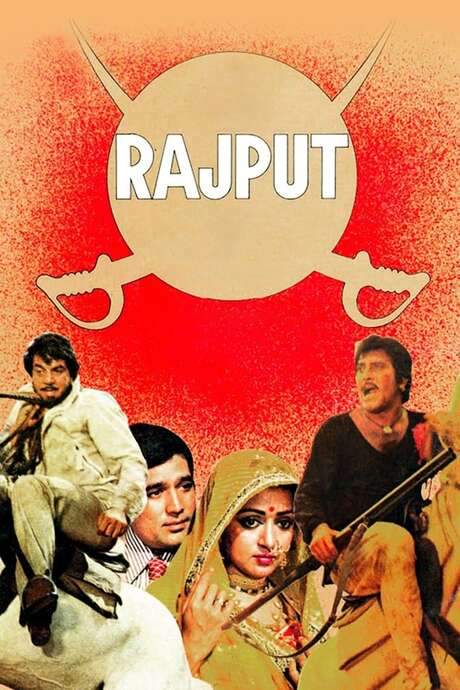
Rajput (1982) Complete Plot Breakdown
Himmatwala (1983) Full Movie Breakdown
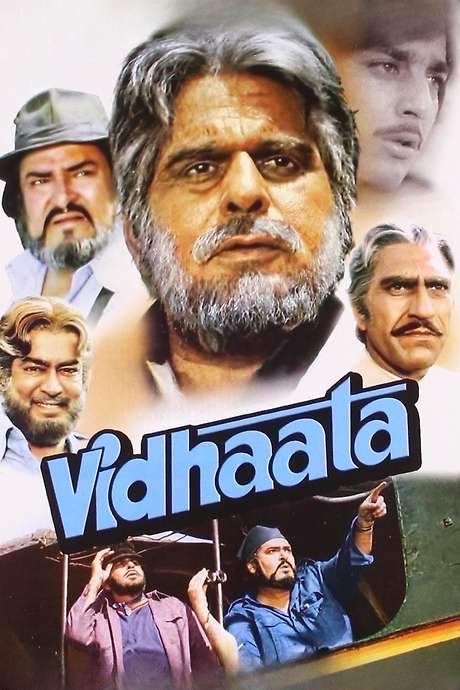
Vidhaata (1982) Detailed Story Recap
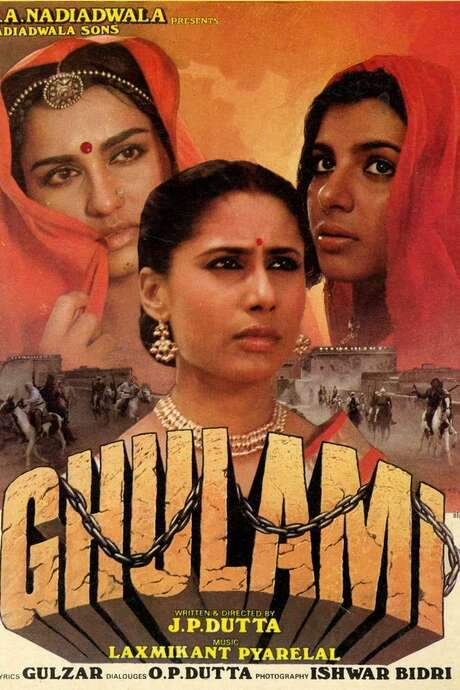
Ghulami (1985) Movie Recap & Themes
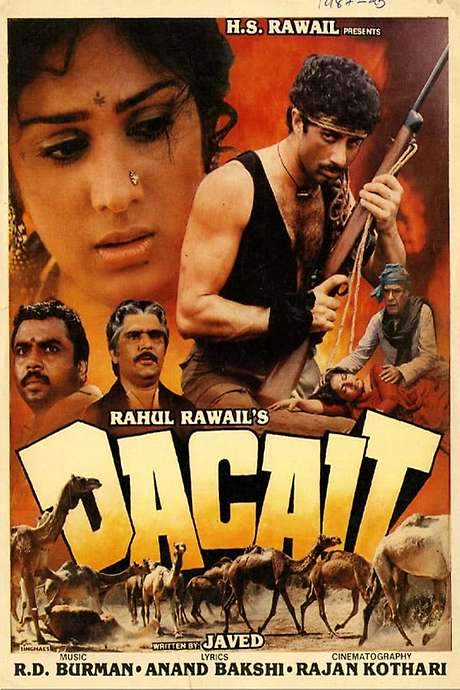
Dacait (1987) Detailed Story Recap
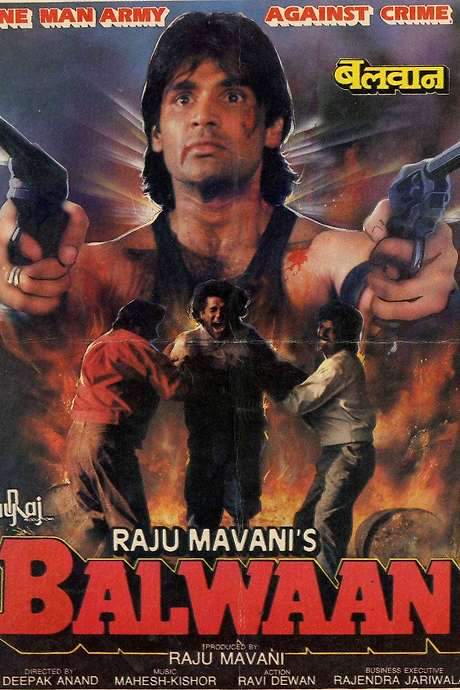
Balwaan (1992) Plot Summary & Ending Explained
Barsaat (1995) Spoiler-Packed Plot Recap
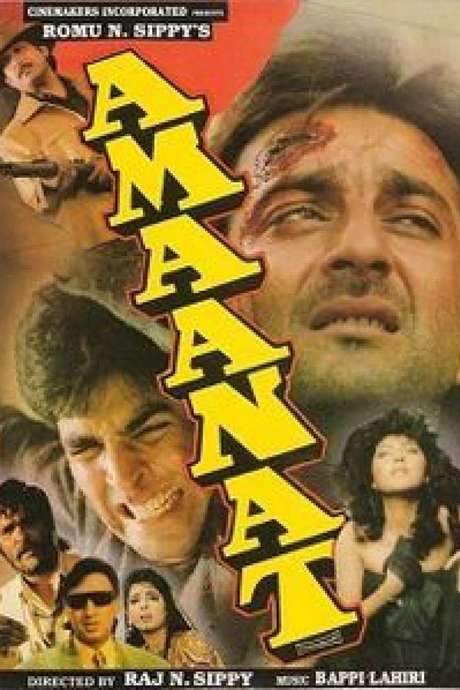
Amaanat (1994) Full Movie Breakdown
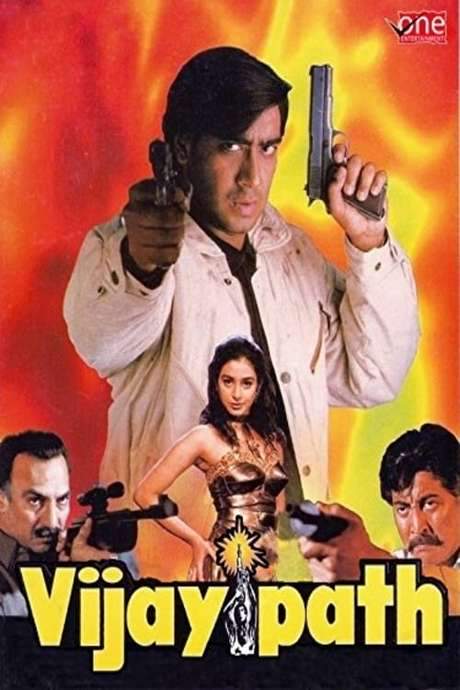
Vijaypath (1994) Detailed Story Recap
Daava (1997) Film Overview & Timeline
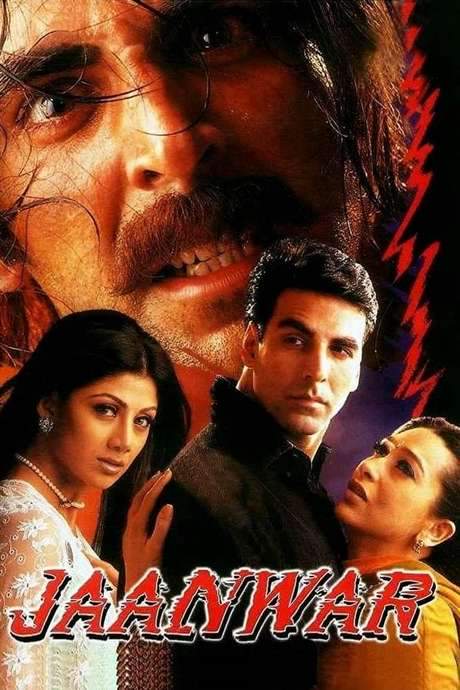
Jaanwar (1999) Spoiler-Packed Plot Recap
Anthahpuram (1998) Movie Recap & Themes
Dasara (2023) Story Summary & Characters
Indian (1996) Movie Recap & Themes