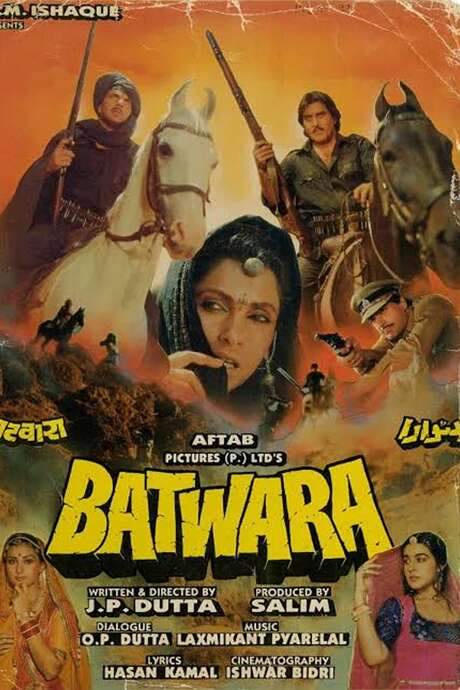
Year: 1989
Runtime: 201 mins
Language: Hindi
Director: J. P. Dutta
Amidst the collapse of princely states after India's independence, the bond between aristocratic Vikram and his humble peasant friend is strained. When Vikram's brother is murdered in the peasant settlement, his grief turns to vengeance, forcing him to confront loyalty, class divisions, and the turmoil of a changing nation.
Warning: spoilers below!
Haven’t seen Batwara yet? This summary contains major spoilers. Bookmark the page, watch the movie, and come back for the full breakdown. If you're ready, scroll on and relive the story!
Read the complete plot breakdown of Batwara (1989), including all key story events, major twists, and the ending explained in detail. Discover what really happened—and what it all means.
Sumer and Vikram are two close friends whose bond is well known in the village. Sumer serves as a cop, while Vikram belongs to the landowning class. The film unfolds in a post-independence setting, where a new land sealing law restricts how much land a person can own. This is a drastic blow to the powerful Thakur family, who own vast acres of land. The rule says the excess land must be surrendered to the government and redistributed to farmers, a change that threatens their grip on power.
In this tense climate, Deven plans a scheme to keep the land within the family by backdating transactions and forging signatures or thumb impressions from the farmers who till the land (which is mortgaged to the Thakurs). The village Sarpanch Lakhiya—the Sarpanch Lakhiya—stands with them, agreeing to help manipulate records and persuade farmers to approve the changes.
During a crowded meeting, the farmers stand firm in their resolve to keep their land. Anger erupts, and Deven panics and fires his rifle, killing one villager. The mob, enraged by the act, lynches him on the spot. Grief-stricken, Vikram returns to his village to perform the last rites of his brother and cannot bear the sight of the carnage. Fueled by rage, he travels to the farmers’ dwellings with his rifle, mows down several farmers, and sets their homes ablaze. He slips into the ravines and joins a band of outlaws, forming a gang of his own. In return, the bandits gain money and protection from the influential Thakur family.
Meanwhile, Vikram’s youngest brother, Rajendra Singh, who is also a cop, comes back to the village. He is appalled by the turn of events and refuses to aid the Thakurs in crushing the rebellion. His father urges him to shield Vikram and punish the villagers who defied their supremacy, but Rajendra stays true to his oath as a lawman.
When Sumer returns, the weight of what has happened tears at him. He cannot reconcile his friendship with Vikram and ends up marrying his beloved Jina, who is orphaned after her brother’s death at Vikram’s hands. Sumer confronts Vikram and declares that their friendship is over. Bade Thakur, Vikram’s father, then brings in Hanumant Thakur—Hanumant Thakur to suppress the rebellion led by Sumer, while Rajendra’s junior ally finds his own ways to control the situation. Hanumant’s arrival brings a harsh reign of terror; he even assaults pregnant Jina, causing a miscarriage, which inflames Sumer and leads him to assault the police station, killing many officers before escaping with some of the stolen arsenal, distributing weapons to villagers and turning his own gang into a rival force to Vikram’s.
What follows is a high-stakes game of cat and mouse. Sumer and Vikram each raid the others’ strongholds—Sumer plundering the Thakurs’ granary and Vikram lifting money earned from selling produce. In retaliation, Sumer strikes at the Thakurs’ Haveli (mansion). The police eventually regain control as Rajendra is restored to leadership, but Vikram plans to burn the entire village. He learns of a police trap laid for him by a rival gang, but escapes, though many of his men are killed. Sumer escalates by raiding the Haveli again, and soon the two gangs stand on opposite sides of a massive showdown.
Rajendra investigates the rebellion and uncovers the brutalities inflicted by Hanumant. He contemplates suspending Hanumant and his accomplices, while Hanumant plots to eliminate Rajendra in the looming confrontation. A cop overhears the plan and passes the information to Vikram. At a critical moment, the two women in their lives—Sumer’s wife and Vikram’s wife—step forward. They reveal how the gang leaders are betraying them for money, and their words help to unite the two former rivals.
Deciding to end the bloodshed, Sumer and Vikram join forces, first taking out the leaders of their respective gangs and then heading to the designated showdown point, where the police have already laid a trap. They pretend to surrender, only to kidnap Hanumant. In a quiet moment that harkens back to their childhood, they remember earlier times and kill Hanumant, a deadly echo of a long-forgotten memory. As the battle erupts around them, bullets rain down like a cold hail, and the two friends, now mortal enemies turned unlikely allies, are mortally wounded in the struggle, their fates sealed as their memories of youth collide with the brutal realities of their present.
This sweeping tale blends personal loyalty, betrayal, and the corrosive thirst for power against a backdrop of rural upheaval, where two former friends must confront the consequences of a social order bent on control, and where the lines between justice and vengeance blur until the very end.
Last Updated: October 09, 2025 at 14:31
Discover curated groups of movies connected by mood, themes, and story style. Browse collections built around emotion, atmosphere, and narrative focus to easily find films that match what you feel like watching right now.
Stories where an unbreakable bond is shattered by violence, leading to a destructive cycle of revenge.For viewers who liked Batwara, this list features movies about friendships torn apart by vengeance. Discover similar intense dramas and action films where loyalty is tested by brutal feuds, class conflict, and the devastating consequences of revenge.
These narratives typically begin with a strong, often cross-class, bond that is fractured by a murder or betrayal. The plot then accelerates into a series of violent retaliations and counter-attacks, driven by grief and a thirst for vengeance. The journey is one of moral descent, where characters are consumed by their conflict, often culminating in a tragic but cathartic final confrontation.
Movies are grouped here based on their shared focus on the destruction of a core relationship through violence. They share a dark tone, high emotional intensity, fast pacing driven by revenge cycles, and a bittersweet or tragic resolution that underscores the futility and cost of the feud.
Gritty tales of societal change tearing apart the established order in rural settings.If you enjoyed Batwara's setting of post-independence turmoil, explore these films about crumbling feudal systems and rural class warfare. Find similar gripping stories of corruption, loyalty, and violence amidst a changing nation's landscape.
The narrative pattern involves a stable, but often unjust, rural order being disrupted by a larger historical event. This creates instability, allowing long-simmering class resentments and personal ambitions to surface. The story unfolds through conflicts over land, power, and justice, often depicted with visceral violence, and explores the human cost of such transitions on all sides of the social divide.
These movies share a specific world and context: a rural setting in the throes of significant upheaval. They are united by an oppressive mood, themes of class conflict and corruption, a dark tone, and a focus on how large-scale change destroys individual lives and relationships.
Don't stop at just watching — explore Batwara in full detail. From the complete plot summary and scene-by-scene timeline to character breakdowns, thematic analysis, and a deep dive into the ending — every page helps you truly understand what Batwara is all about. Plus, discover what's next after the movie.
Track the full timeline of Batwara with every major event arranged chronologically. Perfect for decoding non-linear storytelling, flashbacks, or parallel narratives with a clear scene-by-scene breakdown.
Discover the characters, locations, and core themes that shape Batwara. Get insights into symbolic elements, setting significance, and deeper narrative meaning — ideal for thematic analysis and movie breakdowns.
Get a quick, spoiler-free overview of Batwara that covers the main plot points and key details without revealing any major twists or spoilers. Perfect for those who want to know what to expect before diving in.
Visit What's After the Movie to explore more about Batwara: box office results, cast and crew info, production details, post-credit scenes, and external links — all in one place for movie fans and researchers.
Discover movies like Batwara that share similar genres, themes, and storytelling elements. Whether you’re drawn to the atmosphere, character arcs, or plot structure, these curated recommendations will help you explore more films you’ll love.
Batwara (1989) Scene-by-Scene Movie Timeline
Batwara (1989) Movie Characters, Themes & Settings
Batwara (1989) Spoiler-Free Summary & Key Flow
Movies Like Batwara – Similar Titles You’ll Enjoy
Kurbaan (1991) Plot Summary & Ending Explained
Rajput (1982) Ending Explained & Film Insights
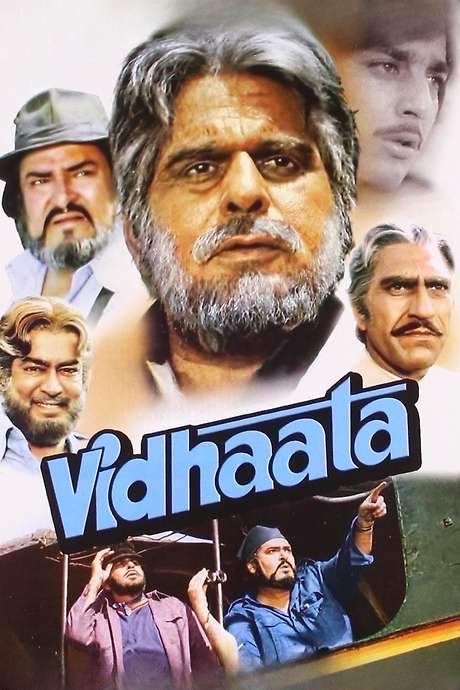
Vidhaata (1982) Story Summary & Characters
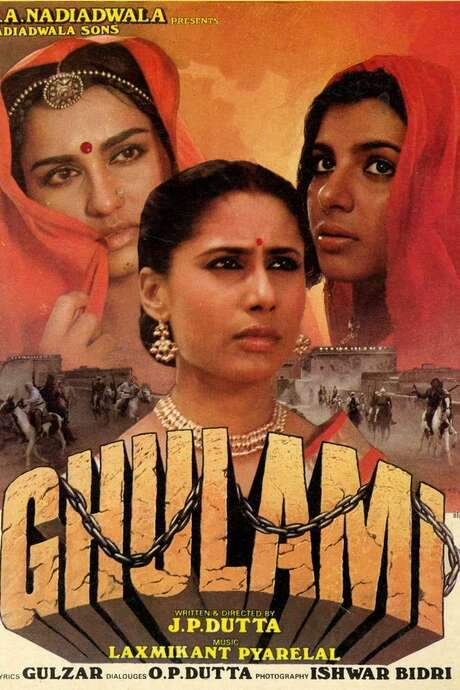
Ghulami (1985) Spoiler-Packed Plot Recap
Dacait (1987) Plot Summary & Ending Explained
Balwaan (1992) Story Summary & Characters
Barsaat (1995) Spoiler-Packed Plot Recap
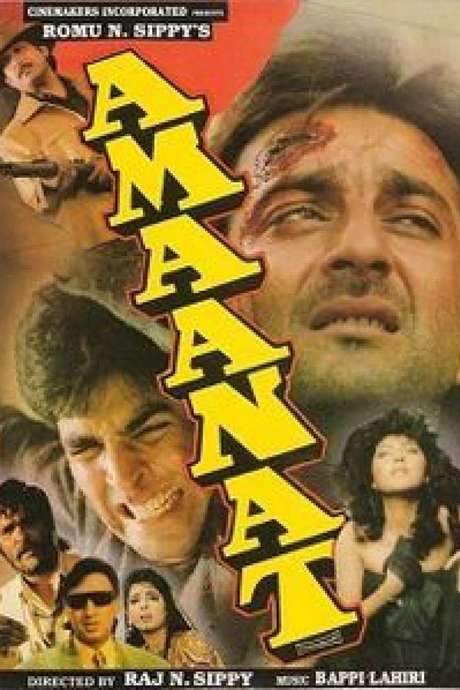
Amaanat (1994) Film Overview & Timeline
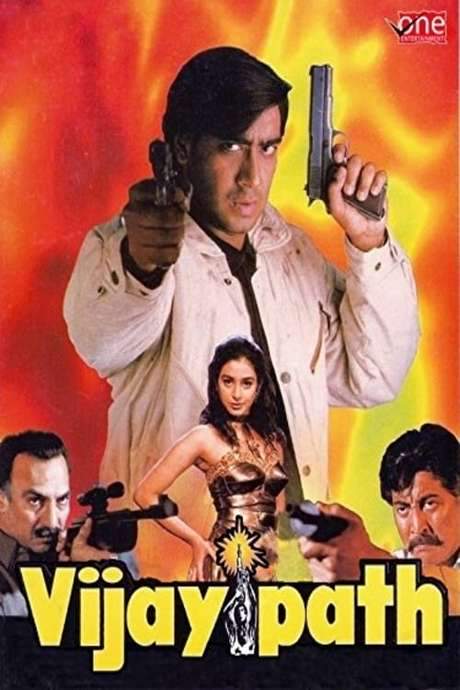
Vijaypath (1994) Detailed Story Recap
Daava (1997) Story Summary & Characters
Jaanwar (1999) Full Summary & Key Details
Anthahpuram (1998) Detailed Story Recap
Dasara (2023) Complete Plot Breakdown
Indian (1996) Complete Plot Breakdown
Sikandar (2025) Spoiler-Packed Plot Recap