

Plot Explained Spoilers guaranteed!
Plot Explained

Browse by genre

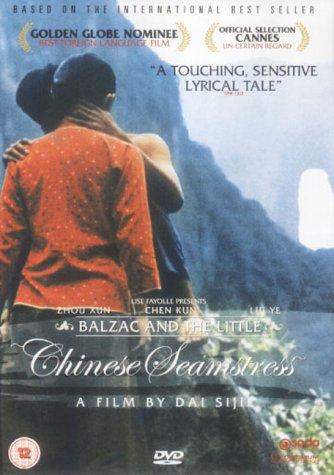
Balzac and the Little Chinese Seamstress (2005) movie poster

Characters & Themes

Balzac and the Little Chinese Seamstress (2005) Characters, Setting & Themes Explained

Release, runtime and language
2005 · 110 min · Chinese
Directed by
Sijie Dai
Starring
Xun Zhou, Ye Liu, Kun Chen

During the Cultural Revolution in China, two young men, Ma Jianling and Luo Min, are sent to a remote mountain village for re-education. There, Luo becomes infatuated with the Little Seamstress, a local girl fascinated by Western culture. He begins sharing forbidden books with her, opening her eyes to new ideas and sparking a transformative journey of self-discovery and challenging the oppressive political climate.

On this page (7)
  1. 1 Where to watch
  2. 2 Characters explained (3)
  3. 3 Where & when it takes place
  4. 4 Themes & meaning (3)
  5. 5 Character & meaning questions
  6. 6 Movie threads
  7. 7 Every angle

Where to watch

Where to Watch Balzac and the Little Chinese Seamstress (2005)

Where can you watch Balzac and the Little Chinese Seamstress? Stream, rent or buy it in the US, including on Kanopy: current JustWatch availability with up-to-date prices.

Streaming availability powered by JustWatch

3 main characters · contains spoilers

Balzac and the Little Chinese Seamstress Characters Explained: Who Is Who

The main characters of Balzac and the Little Chinese Seamstress (2005), heroes and villains: what drives them, how they change over the course of the story and what each of them reveals about the film's bigger ideas.

  • Luo Min (Kun Chen)

    Luo is a resourceful and compassionate teenager who often takes it upon himself to lead and protect his friend Ma. His love for the Little Seamstress drives many of his actions throughout the film, showcasing his emotional depth. His character embodies the struggle between personal desires and the expectations placed upon him by society.

    • 👦 Youth
    • ❤️ Love
    • 🎻 Music
  • Ma Jianling (Ye Liu)

    Ma is a passionate and artistic young man devoted to music, particularly his violin. He navigates the challenges of love and friendship, providing a counterbalance to Luo's more pragmatic approach. His journey reflects the pursuit of one's dreams amidst societal restrictions.

    • 🎻 Musician
    • 💔 Friendship
    • 🎒 Re-education
  • Little Seamstress (Xun Zhou)

    The Little Seamstress is a spirited and curious girl whose life transforms through literature and her relationships with the boys. Her character represents both the innocence of youth and the yearning for a better life. As she learns to read and discovers the world through books, her personality blossoms, revealing resilience and agency.

    • 👧 Transformation
    • 📚 Literature
    • ❤️ Love

Last updated: October 22, 2024 at 22:04

Was this helpful?

Setting

Where and When Does Balzac and the Little Chinese Seamstress Take Place?

The setting of Balzac and the Little Chinese Seamstress (2005): the year and time period, the places and locations, and how they shape the characters, the mood and the tension of the story.

Time period

1971 - 1974, Late 1990s

The film is set during the Chinese Cultural Revolution, a period marked by political turmoil and social upheaval, affecting countless lives across China. By fast forwarding to the late 1990s, it reflects on the long-term impacts of these historical events, such as the construction of the Three Gorges Dam, which symbolizes change and loss.

Location

Sichuan province, Shanghai, France, Shenzhen, Hong Kong

The film primarily takes place in a secluded village in Sichuan province, known for its mountainous landscape and traditional customs during the Cultural Revolution. It swings between the rural backdrop of the village and urban settings like Shanghai, showcasing the stark contrast between the simplicity of village life and the bustling city. The journey also includes references to places like France, where one character pursues a musical career, and cities like Shenzhen and Hong Kong, hinting at broader cultural transitions.

  • 🏞️ Nature
  • 🌆 City
  • 📚 Literature

Last updated: October 22, 2024 at 22:04

Was this helpful?

3 major themes

Balzac and the Little Chinese Seamstress Meaning: Themes & Message Explained

What is Balzac and the Little Chinese Seamstress (2005) really about? The emotional, social and philosophical themes the film keeps returning to, its symbolism and the message beneath the surface.

  • Literature

    Literature plays a central role in the narrative, serving as a means of escape and personal transformation for the characters. The boys introduce the Little Seamstress to Western literary giants, profoundly influencing her perspective on life. This theme emphasizes the power of knowledge and storytelling as tools for empowerment, especially in oppressive environments.

  • Love and Sacrifice

    The complex relationships among the characters explore themes of love, longing, and sacrifice. The Little Seamstress's dilemma, caught between her feelings for Luo and her societal constraints, highlights the personal struggles faced under rigid societal norms. Sacrifices are made for friendship and love, illustrating the emotional weight of their decisions.

  • Nostalgia

    Nostalgia permeates the film as characters reflect on their experiences and the lost innocence of youth. As Ma returns to the now-submerged village, it becomes a poignant reminder of the passage of time and the memories tied to a place. This theme evokes a sense of longing for a past that has irrevocably changed.

Last updated: October 22, 2024 at 22:04

Was this helpful?

Character & theme questions

Balzac and the Little Chinese Seamstress Characters & Meaning: Your Questions Answered

The questions people ask about Balzac and the Little Chinese Seamstress (2005): who the characters really are, their relationships, what the symbols mean, where it takes place and what the movie is really about. Each answer contains spoilers.

Q1

Where is the movie set?

The film primarily takes place in a remote mountain village in Sichuan province during the Chinese Cultural Revolution. The story contrasts this rural setting with urban locations like Shanghai, and later references to France, Shenzhen, and Hong Kong, showcasing the stark divide between traditional village life and modern cities.

  • setting
  • sichuan
  • village
  • china
  • location
Q2

When does the story take place?

The main narrative occurs during the Chinese Cultural Revolution from 1971 to 1974, when the two young men are sent to the mountain village for re-education. The film then jumps to the late 1990s, showing the long-term consequences of that era, including the construction of the Three Gorges Dam.

  • cultural revolution
  • 1970s
  • 1990s
  • time period
  • history
Q3

What are the main themes of the film?

The film explores three core themes: literature as a force for personal transformation and escape; love and sacrifice within the constraints of societal expectations; and nostalgia for youth and places that have been irreversibly changed. These themes interweave to examine how knowledge, emotion, and memory shape individual identity.

  • themes
  • literature
  • love
  • sacrifice
  • nostalgia
Q4

Who is the Little Seamstress?

The Little Seamstress is a local village girl whose life transforms through literature and her relationships with the two re-educated youths. Initially innocent and curious, she evolves through reading Western classics, gaining new perspectives and agency. She represents both the constraints placed on women in that era and the transformative power of education.

  • little seamstress
  • character
  • role
  • transformation
Q5

Who is Luo Min?

Luo Min is a compassionate and resourceful teenager who becomes the leader figure among the two friends. His deep love for the Little Seamstress drives much of the story, and he embodies the struggle between personal desires and societal expectations during the Cultural Revolution.

  • luo min
  • character
  • love
  • motivation
Q6

Who is Ma Jianling?

Ma Jianling is the other young man sent to the village, a passionate musician devoted to his violin. He provides emotional support to his friend Luo and navigates his own challenges with love and friendship, representing the pursuit of artistic dreams under political restrictions.

  • ma jianling
  • character
  • music
  • violin
Q7

What is the significance of the village setting?

The secluded Sichuan village represents a world frozen in tradition, where modern political upheaval collides with ancient customs. Its isolation makes it both a prison for the re-educated youths and a catalyst for transformation through literature. The village's eventual flooding symbolizes the irreversible loss of innocence and the passage of time.

  • village
  • rural
  • urban
  • contrast
  • sichuan
Q8

What happens to the village in the ending?

In the late 1990s, the village has been submerged due to the construction of the Three Gorges Dam. When Ma returns, he finds the landscape permanently altered, serving as a powerful metaphor for how historical events flood over and erase the past, leaving only memories of what once existed.

  • three gorges dam
  • ending
  • village
  • flooding
Q9

How do forbidden books impact the story?

The Western literary classics that Luo shares with the Little Seamstress, works by Balzac, Dickens, and others, become tools of liberation and transformation. These forbidden books open her eyes to new ideas, challenging the political indoctrination of the era and sparking her intellectual and emotional awakening.

  • books
  • literature
  • forbidden
  • transformation
  • education
Q10

How does nostalgia function in the film?

Nostalgia pervades the narrative as both a thematic element and structural device. The film looks back on youth, lost innocence, and relationships that could only exist in that specific historical moment. The flooded village at the end crystallizes this theme, showing how the past can be physically and emotionally submerged.

  • nostalgia
  • memory
  • past
  • reflection

Movie threads

More Movies Like Balzac and the Little Chinese Seamstress, by Mood & Story

Curated lists built around what makes Balzac and the Little Chinese Seamstress tick: the same mood, the same kind of story or the same emotional payoff. Each list explains why these movies belong together.

Movies about young love and rebellion like Balzac and the Little Chinese Seamstress

Young lives finding freedom and love under the shadow of political control. If you enjoyed the story of intellectual and romantic awakening against a backdrop of political oppression in 'Balzac and the Little Chinese Seamstress', you'll find similar movies here. These films explore coming-of-age journeys where forbidden ideas and love challenge authoritarian systems, often with a reflective and yearning tone.

  • yearning
  • transformative
  • oppressive
  • nostalgic
  • melancholic
  • hopeful
  • Tone: bittersweet, reflective, yearning
  • Pacing: steady, character-driven
Why these movies?

The story pattern: The narrative pattern centers on young characters sent to remote locations or living under strict control, where they discover illicit culture, literature, or love. This discovery sparks a transformation that liberates their spirit but often places them in conflict with the system, culminating in an ending that acknowledges both the beauty of their awakening and the cost of their rebellion.

Why they belong together: Movies are grouped here by their shared focus on the collision between youthful idealism and political reality. They share a bittersweet tone, a steady, character-driven pace, and a medium emotional intensity, creating a cohesive experience of thoughtful, transformative stories set against historical or fictional oppression.
Movies about the power of books like Balzac and the Little Chinese Seamstress

Where secret literature opens new worlds and alters destinies forever. For viewers who loved how literature transformed the characters in 'Balzac and the Little Chinese Seamstress', this section features similar movies about the life-altering impact of forbidden stories. These films celebrate the subversive power of art and knowledge to ignite change, challenge authority, and shape personal identity.

  • intellectual
  • transformative
  • forbidden
  • nostalgic
  • hopeful
  • melancholic
  • Tone: reflective, bittersweet, transformative
  • Pacing: steady, thoughtful
Why these movies?

The story pattern: The narrative revolves around a hidden trove of knowledge—books, films, or music—that is discovered and shared among characters. This exposure acts as an awakening, challenging their beliefs and the status quo. The story explores the ripple effects of this new perspective, focusing on intellectual rebellion, personal transformation, and the poignant cost of possessing dangerous knowledge.

Why they belong together: These films are united by the core theme of art and literature as instruments of liberation and change. They typically share a reflective mood, a moderate complexity in weaving together personal and political themes, and a bittersweet emotional core that acknowledges both the power of ideas and the price of enlightenment.

Every angle

Balzac and the Little Chinese Seamstress (2005) Explained: Plot, Timeline & Characters

Everything about Balzac and the Little Chinese Seamstress in one place: what happens in the plot summary, the timeline in chronological order, the characters and meaning and a spoiler-free summary. What's After the Movie adds the cast, box office and post-credit scenes.

Coming soon on iOS and Android

The Plot Explained Movie Summary App

Plot summaries, endings explained and timelines on your phone. Catch up on any movie in minutes, save your favorites and never miss a twist again.

Be the first to know when we launch. Your email stays private, always.

Learn more about the app