














Plot Explained Spoilers guaranteed!
Plot Explained

Browse by genre

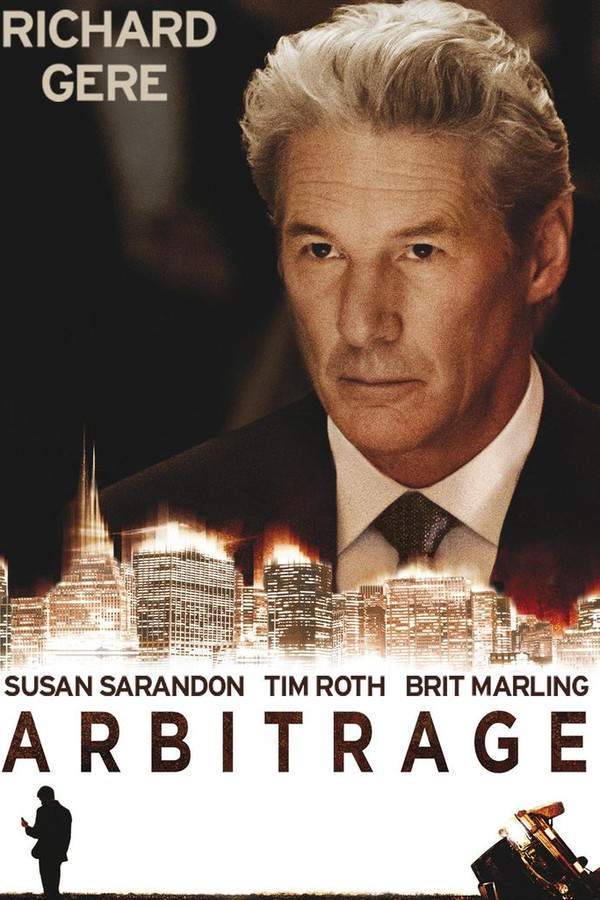
Arbitrage (2012) movie poster

Timeline

Arbitrage (2012) Timeline Explained – Every Event in Order

Release, runtime and language
2012 · 107 min · English
JustWatch #27,127 7
Directed by
Nicholas Jarecki
Starring
Tim Roth, Susan Sarandon, Richard Gere, Brit Marling

A billionaire investor, Robert Miller, struggles to complete the sale of his trading empire while battling financial troubles and personal conflicts. As his world closes in around him, he finds himself entangled in a desperate situation involving shady deals, family tensions, and a young driver who becomes an unexpected accomplice. With his reputation and freedom at stake, Miller must confront the consequences of his actions and fight to protect everything he has built.

On this page (6)
  1. 1 Where to watch
  2. 2 Events in order (14)
  3. 3 Timeline questions answered
  4. 4 Movie threads
  5. 5 Movies like Arbitrage
  6. 6 Every angle

Where to watch

Where to Watch Arbitrage (2012)

Where can you watch Arbitrage? Stream, rent or buy it in the US, including on Amazon Prime Video, Philo and Fawesome: current JustWatch availability with up-to-date prices.

Streaming availability powered by JustWatch

14 events in order · contains spoilers

Arbitrage Timeline: Events in Chronological Order

Every key event of Arbitrage (2012) in order, scene by scene, with when and where it takes place. Use it to untangle flashbacks, time jumps and parallel storylines, to refresh your memory before the sequel or to find the exact scene you are thinking of.

  1. Introduction to Robert Miller

    Robert Miller, a 60-year-old multi-billionaire, is introduced as the head of a profitable hedge fund. Alongside his daughter Brooke, he appears to be on the cusp of selling the company for a significant profit, masking deeper troubles beneath his smooth exterior.

  2. Financial Deceit

    Miller is revealed to be manipulating the company’s financial records to hide a major investment loss. This manipulation is crucial for maintaining the impending sale and avoiding potential fraud charges, showcasing the lengths he will go to protect his empire.

  3. Driving with Julie Cote

    On a fateful evening, Miller drives with his mistress, Julie Cote. His exhaustion leads to a tragic accident, resulting in Julie’s death, a pivotal moment that propels him into a spiral of deceit and desperation.

  4. Fleeing the Scene

    In the wake of Julie's death, Miller chooses to flee the scene of the accident. This decision not only reflects his desperation but also sets off a series of events that complicate his life and threaten his secrets.

  5. Police Investigation Begins

    The following day, Miller finds himself the subject of a police investigation led by detective Bryer. The scrutiny intensifies as Bryer seeks to uncover the truth behind the fatal accident involving Julie.

  6. Fabricating an Alibi

    As the investigation heats up, Miller concocts a false story, asserting that he was at home with his wife Ellen during the time of the accident. This lie complicates the investigation as Bryer digs deeper into Miller’s activities.

  7. Discovery of the Apartment Lease

    Police uncover a concealed lease for an apartment linked to Julie, raising further suspicion about Miller's involvement. This discovery adds pressure to Miller as Bryer begins to connect the dots.

  8. Brooke's Discovery

    Brooke uncovers troubling financial irregularities within the hedge fund. This revelation leads to a tense confrontation with her father, where Miller attempts to justify his risky investment decisions and the firm's need to proceed with the sale.

  9. Jimmy Grant's Loyalty

    As Bryer’s investigation tightens, he links Jimmy Grant, a young man Miller previously assisted, to the accident. Despite the mounting pressure, Jimmy chooses loyalty over truth, choosing not to reveal Miller's secrets.

  10. Negotiating the Sale

    Miller confronts Mayfield, the potential buyer, who reveals that delays threaten their transaction. Using his negotiation skills, Miller secures a deal worth $525 million, but the pressure of his circumstances continues to grow.

  11. Legal Maneuvering

    Miller navigates the legal challenges posed by Bryer’s investigation. He manages to prove that Bryer fabricated evidence against Jimmy, leading to the dismissal of all charges, momentarily alleviating his immediate legal woes.

  12. Ellen's Scheme

    As Miller's life seems to stabilize, Ellen devises a plan to leverage the ongoing investigation against him. She seeks a separation agreement that would allow her to gain a portion of his wealth, revealing underlying tensions in their marriage.

  13. Confronting Personal Strain

    Miller faces the complexities of his strained relationship with Ellen while also reflecting on his professional accomplishments. This introspection raises questions about the true cost of his success and the moral compromises he has made.

  14. Banquet Celebration

    In a dramatic finish, Miller attends a banquet celebrating his business triumphs. Amid the accolades, he contemplates whether his successes are genuine achievements or overshadowed by the consequences of his actions and choices.

Last updated: November 04, 2024 at 01:57

Was this helpful?

Timeline questions answered

Arbitrage Timeline Explained: Your Questions Answered

When does it happen, and why in that order? The questions people ask about the chronology of Arbitrage (2012): time jumps, flashbacks, cause and effect between scenes and the correct order of events, each answered with spoilers.

Q1

Why did Robert Miller leave the scene of the accident?

Robert Miller fled the scene because he was driving his mistress Julie Cote when the fatal accident occurred. He was exhausted at the wheel, and since his wife Ellen knew nothing about Julie, Miller feared the affair would be exposed along with his involvement in the crash. Rather than face the consequences, he chose to abandon Julie's body and escape, prioritizing his marriage and public image over helping her.

Foreshadowing: Miller's pattern of deception is established early, he's already hiding massive financial fraud, making fled ing the scene consistent with his character.

  • robert miller
  • accident
  • julie cote
  • fled scene
  • hit and run
Q2

How did Robert Miller hide the financial loss in his hedge fund?

Miller manipulated the company's financial records to obscure a major investment loss, specifically related to a risky copper mine investment in Russia. He concealed these irregularities to avoid fraud charges and to ensure the sale of his company could proceed. His daughter Brooke eventually discovered these financial irregularities during her audit of the firm.

Foreshadowing: The financial deceit is introduced in the opening as Miller prepares to sell, he's already juggling a web of deception before the accident occurs.

  • financial fraud
  • hedge fund
  • copper mine
  • manipulated records
  • brooke
Q3

Why did Jimmy Grant stay loyal to Robert Miller?

Jimmy Grant was a young man Miller had helped in the past, and he recognized that implicating Miller would not only destroy the man who helped him but also potentially derail the company sale that would cost many employees their jobs. Despite police pressure and the implications of his silence, Jimmy chose loyalty over truth, even accepting arrest to protect Miller's secrets.

Foreshadowing: Miller's history of helping Jimmy is referenced when Bryer connects Jimmy to the accident, showing Miller's past good deeds create present-day complications.

  • jimmy grant
  • loyalty
  • robert miller
  • arrested
  • protege
Q4

What was the $412 million loan that hung over Robert Miller?

The $412 million loan was from a shrewd investment banker who was aware of Miller's precarious financial situation. This substantial debt loomed over Miller as he attempted to complete the sale of his hedge fund, creating additional pressure since defaulting on the loan could jeopardize the entire transaction and expose his financial manipulation.

  • $412 million
  • loan
  • investment banker
  • debt
  • sale
Q5

How did Robert Miller prove the evidence was fabricated?

Miller navigated the legal challenges by demonstrating that detective Bryer had fabricated critical evidence against Jimmy Grant. This legal maneuvering led to the dismissal of all charges against Jimmy, temporarily relieving Miller's immediate legal jeopardy and allowing him to continue pursuing the company sale.

Foreshadowing: Bryer's aggressive investigation tactics throughout the film build toward this confrontation, showing how his methods eventually backfired.

  • bryer
  • fabricated evidence
  • legal
  • charges dismissed
  • jimmy grant
Q6

What happened to the sale of Miller's company?

The sale of Miller's hedge fund faced delays due to the ongoing investigation and complications, but Miller successfully navigated the negotiations with buyer Mayfield. Using his negotiation skills, he secured a deal worth $525 million, completing the sale despite the mounting pressures from multiple fronts.

  • sale
  • mayfield
  • $525 million
  • company
  • hedge fund
Q7

Why did Ellen Miller want a separation agreement?

Ellen devised a plan to leverage the ongoing police investigation against Robert. Seeking a separation agreement, she aimed to claim a portion of his wealth before any potential legal consequences befell him. This revealed the deep strain in their marriage and showed Ellen was looking out for her own financial security given Robert's precarious situation.

  • ellen
  • separation
  • wealth
  • divorce
  • marriage strain
Q8

What was the significance of the concealed apartment lease?

Police discovered that Miller had a concealed lease on an apartment used by his mistress Julie Cote. This evidence directly linked Miller to Julie, contradicting his fabricated alibi and raising substantial suspicion about his involvement in the accident. It was a critical piece of evidence that made Bryer more certain of Miller's deception.

  • apartment lease
  • julie cote
  • evidence
  • police
  • alibi
Q9

Why did Robert Miller make the risky copper mine investment?

Miller justified the risky copper mine investment in Russia as a high-stakes attempt to recover the company's losses. When Brooke confronted him about the financial irregularities, Miller argued that the investment was necessary to offset the losses and keep the firm viable. The failed investment was the root cause of the financial manipulation he attempted to hide.

  • copper mine
  • russia
  • investment
  • financial loss
  • brooke
Q10

What happens at the end of Arbitrage?

At the end, Miller attends a banquet celebrating his business success after securing the $525 million sale. However, his personal life has shattered, his wife Ellen attempted to leverage the investigation against him, his relationship with his daughter Brooke is fractured, and he reflects on whether his professional triumph is genuine or hollow. He gets away with his crimes legally but remains emotionally isolated, creating a bittersweet conclusion.

  • ending
  • banquet
  • success
  • isolated
  • bittersweet
Q11

Why did detective Bryer focus on Jimmy Grant?

Detective Bryer followed the investigation breadcrumbs and linked Jimmy Grant, a young man Miller had previously helped, to the night of the accident. Bryer believed Jimmy might have witnessed or known something about the incident, making him a key person of interest in piecing together what actually happened that night.

  • bryer
  • jimmy grant
  • investigation
  • detective
  • witness

Movie threads

More Movies Like Arbitrage, by Mood & Story

Curated lists built around what makes Arbitrage tick: the same mood, the same kind of story or the same emotional payoff. Each list explains why these movies belong together.

Movies about moral collapse like Arbitrage

Powerful figures whose deceptions trigger a desperate, high-pressure downward spiral. If you enjoyed the high-pressure downfall in Arbitrage, you'll find similar tension in these movies about powerful people whose unethical choices lead to desperate cover-ups and intense scrutiny. These stories explore the corrosive effects of white-collar crime, infidelity, and the struggle to preserve a crumbling empire.

  • anxious
  • paranoid
  • pressured
  • claustrophobic
  • corrosive
  • suspenseful
  • Tone: tense, corrosive
  • Pacing: fast, relentless
Why these movies?

The story pattern: Stories in this thread typically follow a protagonist at the peak of their power who commits a critical error or engages in fraud. This single act sets off a chain reaction of escalating consequences, forcing them into increasingly desperate and unethical actions to avoid exposure, often involving a police investigation and familial distrust.

Why they belong together: They are grouped by their shared focus on the psychological and practical unraveling of a privileged life, driven by consistent high tension, fast pacing, and a heavy emotional weight stemming from themes of betrayal and moral decay.


Movies with bittersweet endings like Arbitrage

Stories where achieving a goal comes with profound personal loss and isolation. For viewers who appreciated the complex, hollow victory at the end of Arbitrage, this list features similar movies where characters achieve their goals but at a terrible personal cost. These films often leave you contemplating the true price of success in dramas and thrillers about moral compromise.

  • bittersweet
  • melancholic
  • thought-provoking
  • solemn
  • regretful
  • isolating
  • Tone: bittersweet, heavy
  • Pacing: steady to fast
Why these movies?

The story pattern: The narrative pattern involves a protagonist striving for a clear, often professional, objective. They overcome significant obstacles, but their methods or the collateral damage fracture their personal world. The conclusion delivers the desired outcome, but the emotional focus is on the emptiness and isolation that now defines their 'success'.

Why they belong together: They share a specific emotional arc and conclusion: the fusion of external success with internal collapse. This creates a distinct, bittersweet feeling that resonates due to its realistic complexity, blending a sense of achievement with heavy themes of loss and moral compromise.

If you liked this

Movies Like Arbitrage

Similar movies to Arbitrage: the same genre, themes or kind of story. Each one comes with its own plot summary, timeline and ending explained.

Browse all movie summaries

Every angle

Arbitrage (2012) Explained: Plot, Timeline & Characters

Everything about Arbitrage in one place: what happens in the plot summary, the timeline in chronological order, the characters and meaning and a spoiler-free summary. What's After the Movie adds the cast, box office and post-credit scenes.

Coming soon on iOS and Android

The Plot Explained Movie Summary App

Plot summaries, endings explained and timelines on your phone. Catch up on any movie in minutes, save your favorites and never miss a twist again.

Be the first to know when we launch. Your email stays private, always.

Learn more about the app